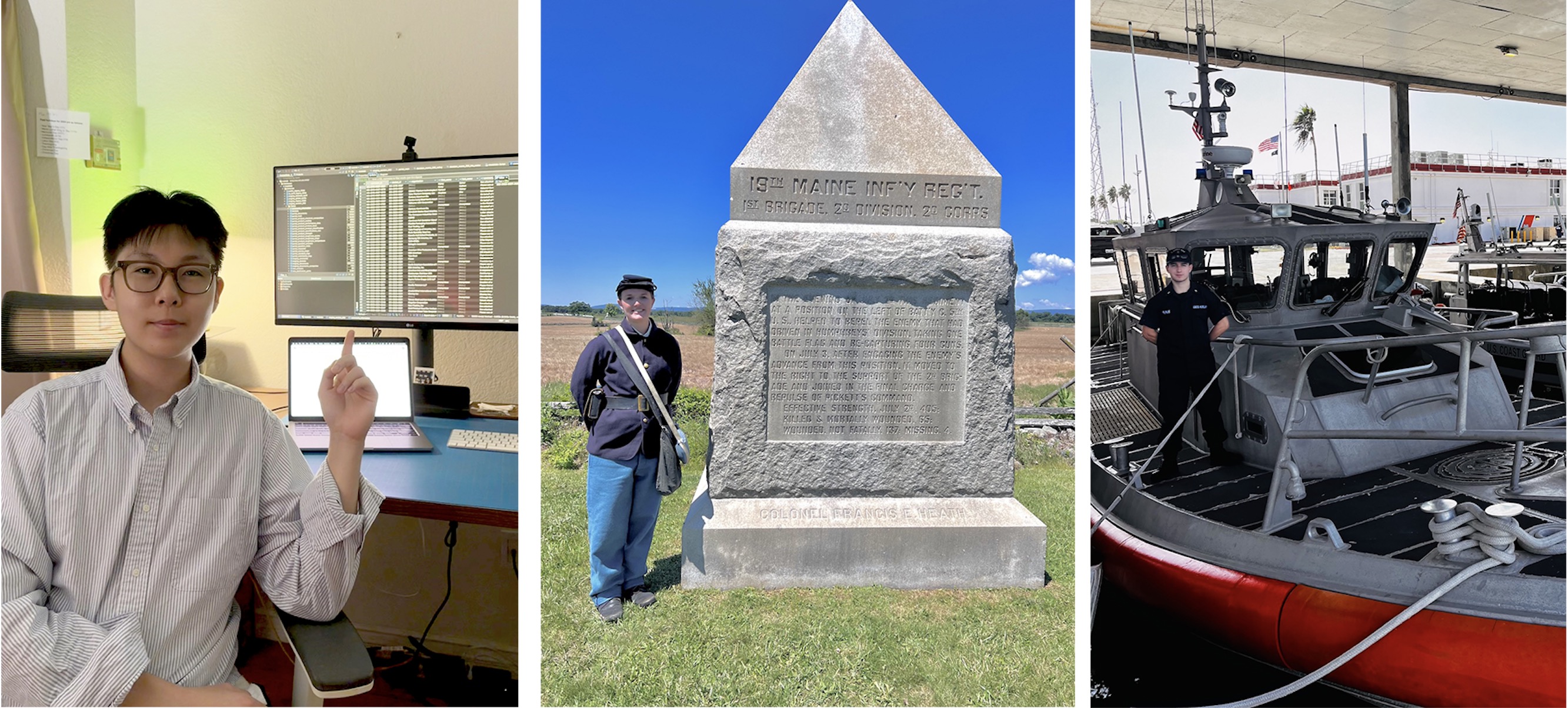
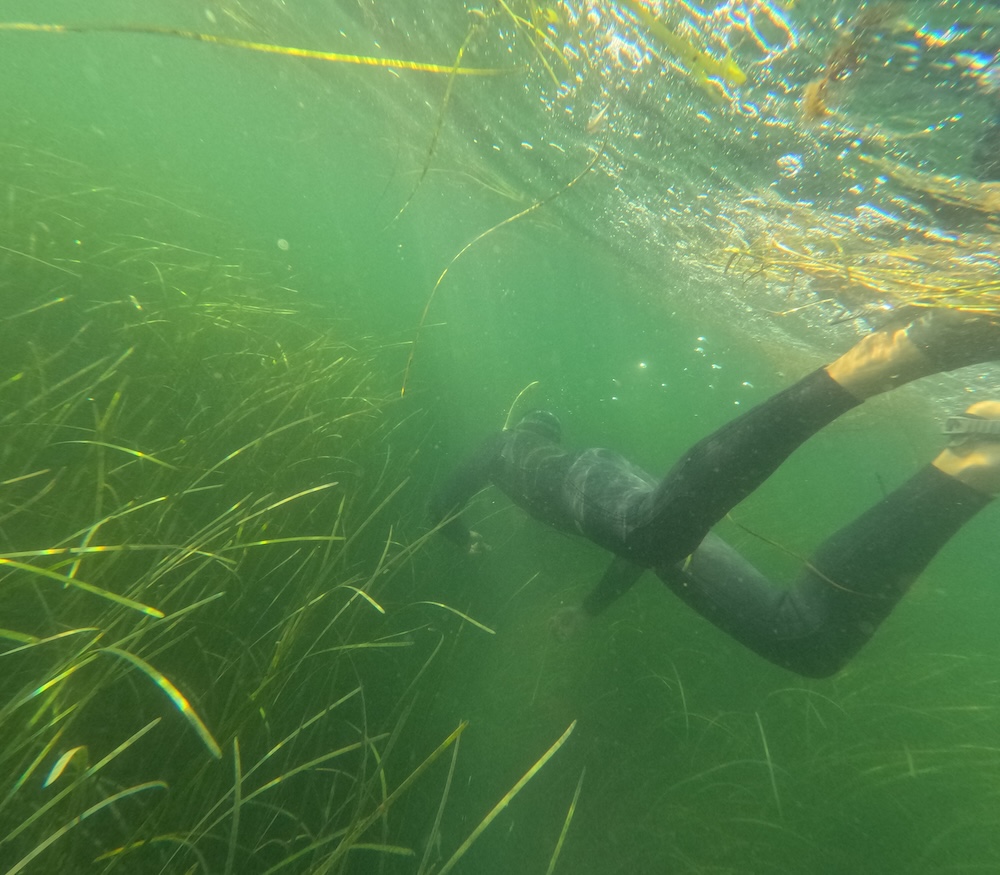
Bowdoin undergraduates are pursuing a wide range of funded academic projects over the break. In all, 180 students have received research fellowships this summer, many of whom are undertaking their work on campus, advised by a faculty member.
They are among the 456 Polar Bears who have secured funding during the break to pursue internships and fellowships.
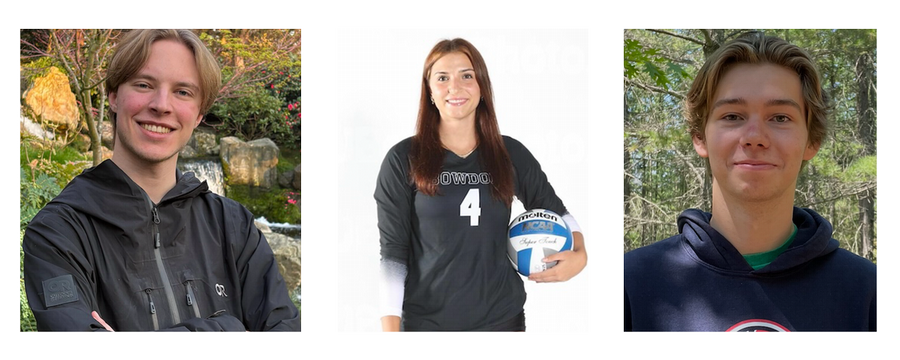
In the latest of a series of summer fellowship profiles, we meet an earth scientist, an economist, and a historian:
Amelia Alpren ’28
Fellowship name: Rusack Coastal Studies Fellowship
Faculty advisor: Professor of Earth and Oceanographic Science (EOS) Philip Camill
Project title: Investigating the Effects of Salinity and Tidal Inundation on CO2 and CH4 Emissions in Maine Salt Marshes
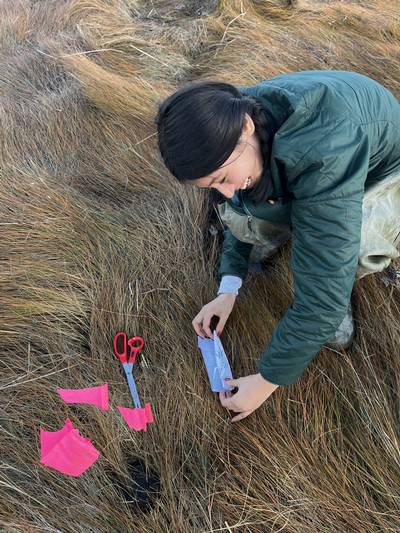
The EOS major has been spending much of her summer tramping across four salt marshes in Brunswick and Harpswell, where she is researching the effects of sea level rise—in particular how it may impact their long-term carbon sequestration capacity. Salt marshes are among the most efficient natural carbon sinks in the world, says Alpren, but changing environmental conditions may alter the rate at which these ecosystems release carbon to the atmosphere.
Alpren’s research combines field and laboratory work to explore how salinity and water table depth affect greenhouse gas emissions. She hopes these two approaches will help improve our understanding of how carbon cycling in Maine salt marshes may respond to rising sea levels.
“One reason I wanted to conduct research this summer was to get a better sense of what day-to-day research in marine biogeochemistry entails,” remarked Alpren. “Getting stuck in a mudflat and working through a dozen iterations of a gas-tight PVC pipe cap wasn't what I initially imagined, but finding ways to adapt my methods to the realities of the field and the lab has been my favorite part of research so far.”
Elias McEaneney ’27
Fellowship name: Matilda and John Riley Research Award
Faculty advisor: Assistant Professor of Sociology Shruti Devgan
Project title: Caring With/Out Restriction: Care Work(ers) Along the US-Mexico Border and Community Resilience
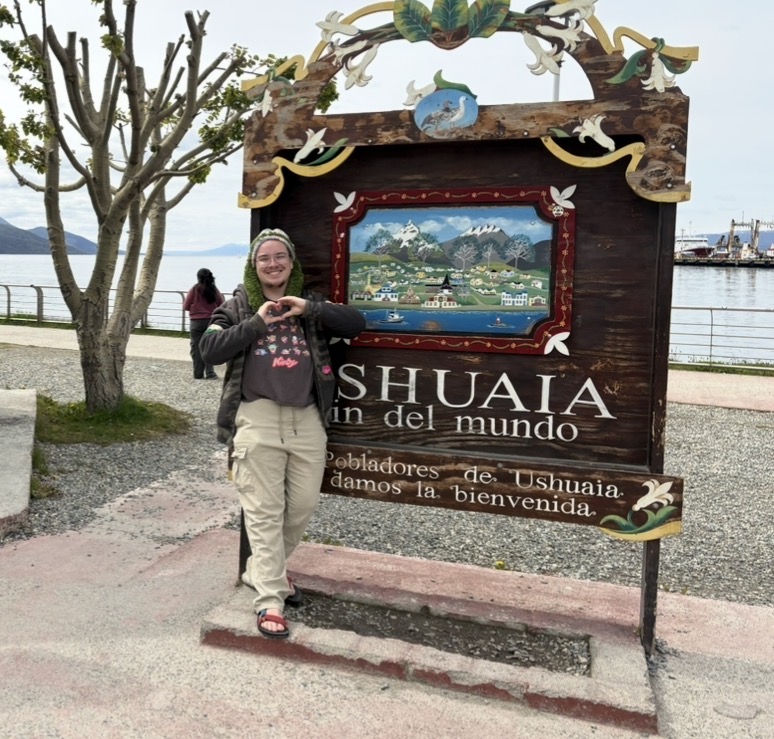
Care work along the US-Mexico border has deep historical roots, says the sociology and history major, shaped by migration patterns, industrial capitalism, and colonial legacy. Much of the region’s essential care has been provided by community members, especially women of Mexican and Indigenous descent, as well as healers using folk medicine, often without formal recognition. McEaneney is focusing on how these informal but resilient systems of mutual aid and culturally informed care practices have developed within an increasingly industrialized world. Encompassing the period from the late nineteenth century through the 1970s, he is exploring how these systems maintained legitimacy and authority as providers of care despite increasing efforts by medical, legal, and state institutions to regulate health practices.
McEaneney, who has taken intermediate level Spanish language classes, has been researching this area since being admitted into the Mellon Mays Undergraduate Fellowship in his sophomore year and is now working toward developing an outline to complete two honors projects over the course of his senior year. “This summer is really giving me, as an interdisciplinary researcher working toward graduate school, not only the theoretical tools, but also the opportunity to actually work full-time on my research and work with experts in borderlands studies, disability justice, workers' and women's rights, and labor history.”
Saruul Jagdagdorj ’27
Fellowship name: Micoleau Family Fellowship in the Creative and Performing Arts.
Fellowship title: The Water. A Short Film.
Faculty advisor: Professor of Theater Davis Robinson
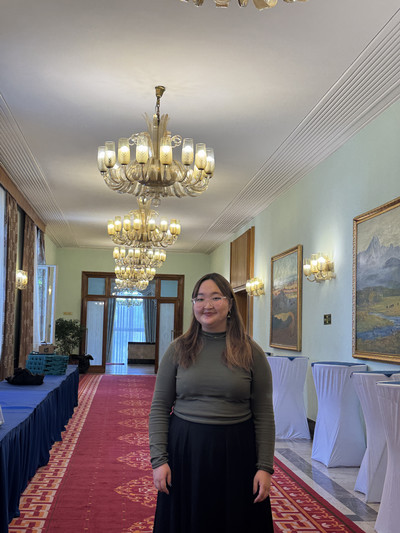
Jagdagdorj has been spending time in Chicago over the summer exploring a folk tradition with origins in both Celtic and Norse mythology: the myth of the “selkie,” a creature that is half-human, half-seal (not to be confused with mermaids). Her research will culminate in an eleven-page script and a fifteen-minute short film that she will shoot in the fall for an independent study. The film follows the life of Clea, who represents humanity, and Eudora, who represents the ocean. Clea lives for semantics, language, and law, says Jagdagdorj, while Eudora is partially nonverbal, mostly communicating through short phrases and imagery. Her aim is to capture the dynamic of a relationship where the two characters live in different worlds.
“As a theater major and earth and oceanographic science minor, I’ve always been interested in combining folklore with environmental stories,” she explained. “I am excited to work on a short film that combines these two interests in a meaningful way.”