Bowdoin undergraduates are pursuing a wide range of funded academic projects during the break. In all, 180 students have received research fellowships this summer, many of whom are undertaking their work on campus, advised by a faculty member.
They are among the 456 polar bears who have secured funding during the break to pursue internships and fellowships.
In the first of a series of summer fellowship profiles, we meet a computer scientist, an economist, and a historian:
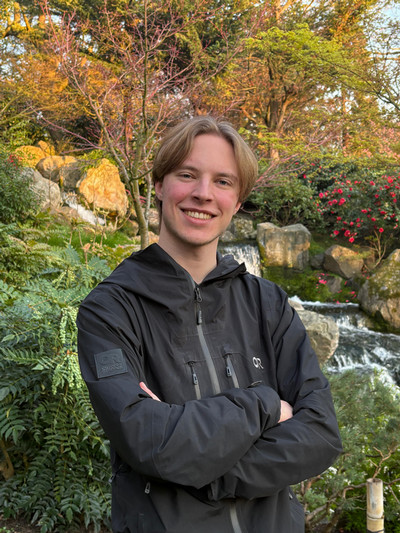
Nicholas Enbar-Salo ’27
Fellowship name: Surdna Foundation Undergraduate Research Fellowship
Faculty advisor: Assistant Professor of Computer Science Jeová Farias
Project title: Temporal Brain Connectivity and Alzheimer's Prognosis: A Machine Learning Approach.
The math and computer science major is using brain imaging data and machine learning to study Alzheimer's disease. Specifically, he’s looking at how different regions of the brain are connected to each other, using measures derived from social network analysis, and testing whether the strength of certain hub regions can reveal diagnostic signs of the disease that traditional biomarkers might miss.
Enbar-Salo says he was inspired to pursue Alzheimer's research after previously working in the Vannini lab at Massachusetts General Hospital (MGH). He says he wants to find a way to combine the clinical side of that work with his computational coursework at Bowdoin to explore questions that the traditional statistical methods he was using at MGH cannot answer.
"Overall, this has been a very enjoyable summer! In previous research projects, I've mostly worked on the data analysis side, so it's been challenging yet rewarding to run a project from start to finish. It was especially exciting to get my first results and see the answer to my question that, for a moment, no one else on earth except myself knew the answer to.”
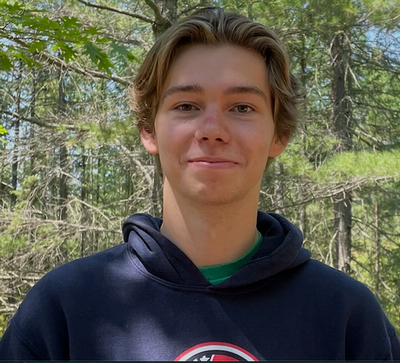
Felix Field ’28
Fellowship name: Bowdoin Summer Research Fellowship
Faculty advisor: Assistant Professor of Economics Jessica LaVoice
Project title: The Cost of Computation: Evaluating the Effect of AI Data Centers on Energy Costs.
An average AI data center uses 7.2 million kilowatt hours per month, which is 700,000 times the average monthly US household consumption, observes Field. Furthermore, with the AI boom expected to nearly treble this number over the next four years, data centers are expected to consume around 12 percent of US power by 2030. Data centers will therefore likely have a significant impact on electricity use and pricing, says the economics major, especially in areas where they are concentrated, such as Northern Virginia and Texas.
Exactly how much these data centers will affect prices, and which consumers will bear the increased costs, are questions Field is tackling in his project. By analyzing electricity usage data and comparing it with data center locations, he can assess the past effects data centers have had on local electricity pricing. Using this information, he aims to model how the creation of future AI data centers will affect electricity prices (and, therefore, the population at large).
Field hopes this project could uncover valuable insights into the economic impacts of AI growth as well as generate some interesting predictions and policy recommendations. “It’s an interesting topic because AI is so new. There has not been time for many economists to conduct research on AI, particularly on data centers.”
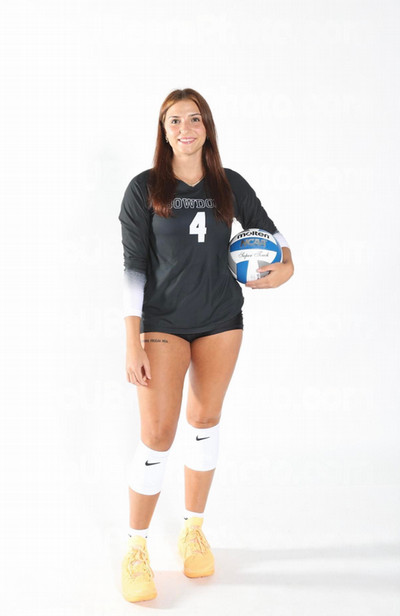
Skye LaMendola ’27
Fellowship name: Alfred E. Golz Summer Research Fellowship
Faculty advisor: Associate Professor of Africana Studies and History Brian Purnell
Project title: A History of American History
Having attended both public and private schools where she grew up in Texas, LaMendola says she has different experiences of being taught American history. Through her summer project, she wants to explore “how American history has been taught to Americans during times of increased polarization, and why.”
For the first half of her project, the government major and history minor is examining what has been taught in US high school and college history classes since the Vietnam/civil rights era by poring through primary sources, such as textbooks, course syllabi, autobiographical excerpts, and interviews with history professors. For the second half of the project, she is looking “to illuminate the why regarding choices about American history course content,” through the study of education guidelines, congressional hearings, newspaper coverage, and public correspondence through varying media platforms, among other sources. This research will be used to create her own “class syllabus,” as if a Bowdoin course were to be taught about the topic.
“History, especially in high school, is often regarded as being objective,” she observes. “In my previous experience, it is seldom noted that history is a narrative, and like many narratives, can be tailored to the perspectives and needs of those telling it. This research intends to challenge this practice.”