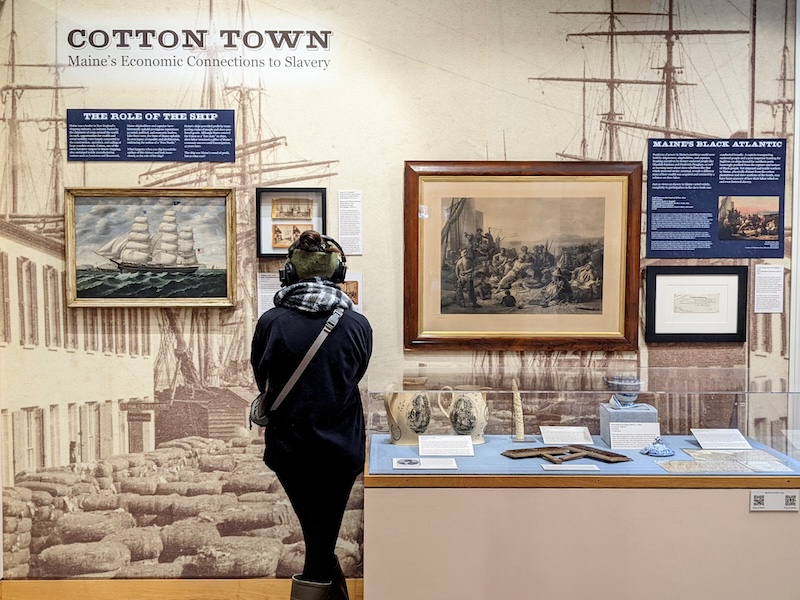
Bowdoin graduates have a well-deserved reputation for public service, said Allen Wells. Polar Bear alumni include one US President, three cabinet secretaries, seventeen state governors, and twenty-five US Senators, and nearly fifty have served in the House of Representatives.
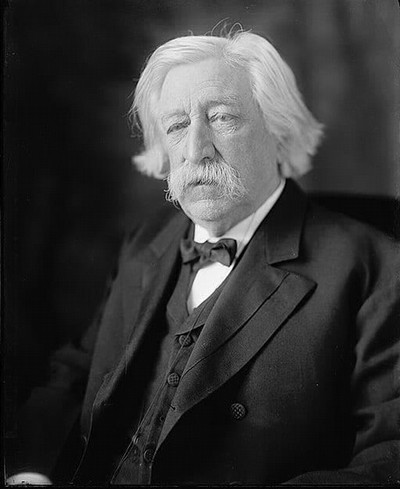
“Countless more have worked in all three branches of the federal government, as well as state and local government. But,” he stressed, “only two graduates have served on the highest court in the land—Melville Weston Fuller, Class of 1853, and Harold Hitz Burton, Class of 1909.”
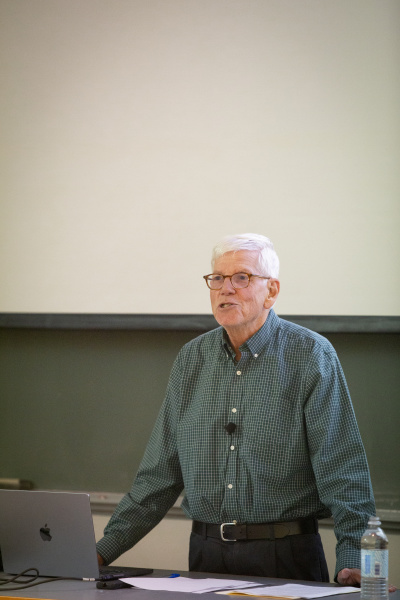
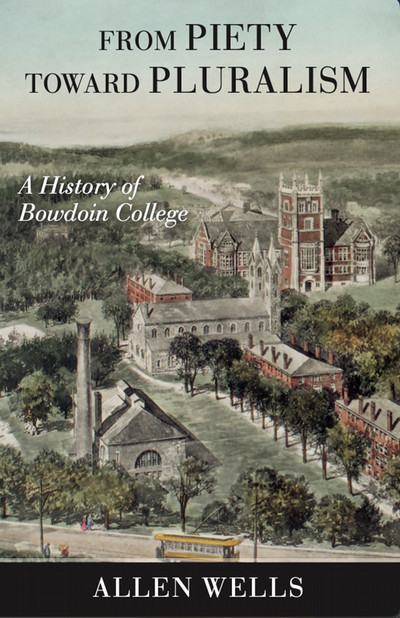
Wells, who is the Roger Howell Jr. Professor of History Emeritus, was addressing a room full of more recent Bowdoin graduates and others at the 2026 Reunion Weekend. Wells said he encountered Fuller and Burton while researching his latest book project—From Piety Toward Pluralism: A History of Bowdoin College(Brunswick: Pink Eraser Press, forthcoming August 2026).
He was struck by the fact that these two Bowdoin graduates, while decades apart, both served on the Supreme Court when it was involved in two landmark racial policy decisions, siding with the majority each time: Fuller was on the bench for the Plessy v. Ferguson decision in 1896, which established the doctrine that came to be known as “separate but equal,” while Burton helped secure the court’s ruling in Brown v. Board of Education in 1954, which desegregated public schools in America. “Brown was the landmark decision that rolled back Plessy and lit a fire under the civil rights movement,” remarked Wells.
Fuller’s Views
It may be difficult to fathom from today’s perspective, explained Wells, but Fuller was opposed to slavery while also being against abolitionism. He was a Union loyalist during the civil war, but also increasingly at odds with President Abraham Lincoln’s administration as the war progressed, sharply criticizing the Emancipation Proclamation, which he said would bring “shame, disgrace, and eternal infamy” upon the nation.
Interestingly, observed Wells, this was also the prevailing viewpoint at Bowdoin during the antebellum period, when Fuller was a student. Members of the Bowdoin community may have been largely opposed to slavery, but very few of them were abolitionists.
They were much more likely to favor “colonization” over abolition, supporting a system where slaves would be gradually emancipated and resettled abroad. Some supported the relocation of former slaves to West Africa, where they would spread Christianity—the motivation behind the creation of Liberia.
As for Fuller, he thought abolitionists were as much to blame as Southern slave owners for the outbreak of war. “In Fuller’s eyes the Constitution did not permit the federal government to meddle with slavery. Simply put, slavery was a domestic institution subject to state jurisdiction, not federal.”
The Plessy v Ferguson decision of 1896 upheld a Louisiana law enacted a few years earlier, known as the “railway car law,” mandating “equal but separate accommodations for the white and colored races” for in-state travel on all passenger railways. The landmark decision, said Wells, led to the introduction of a number of laws segregating libraries, parks, public accommodations, and housing. “Fuller’s court did little to stop efforts in Southern states to disenfranchise African Americans,” he stressed.
“Separate but equal remained the law of the land in the South for the next half-century,” said Wells, enshrining an attitude to race relations that reverberated abroad through the early twentieth century, particularly in Nazi Germany, he noted, where America’s efforts to legislate racial purity were praised by the Reich leadership.
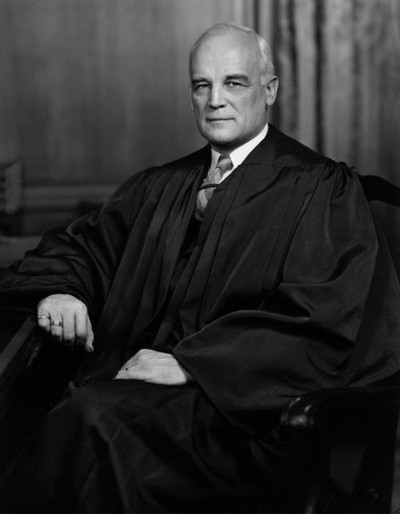
Harold Hitz Burton, Class of 1909
Burton’s Perspective
By the time Justice Harold Burton voted on the Brown v Board of Education decision in 1954, attitudes toward racial discrimination, both at Bowdoin and in the nation at large, were shifting, said Wells, although the College still maintained its conservative character.
It’s important to bear in mind that when Burton attended Bowdoin in the early 1900s, the College was undergoing a transformation from a religiously affiliated institution to a secular small college, albeit a conservative one, stressed Wells. Unlike Fuller, Burton would likely have interacted with students of other faiths and nationalities—among his classmates was Arthur Madison, only the third African American student to attend Bowdoin.
As Burton’s career developed following military service in World War I , he moved from a successful legal practice into the world of politics, becoming mayor of Cleveland, where he earned a reputation for fighting corruption and crime. After then serving in the US Senate, Burton was appointed to the Supreme Court in 1945, a time when the ground was starting to shift on matters of race relations with developments such as President Truman’s desegregation of the military and the breaking of the color bar in baseball, said Wells.
“The court now felt it had the license to address ‘separate but equal,’ although the justices knew they had to proceed with caution as any effort to override Plessy would meet fierce opposition in the South and elsewhere.”
Click here to reserve a copy of the book
In the years leading up to the Brown decision, the Court began whittling away at segregation and outlawing aspects of Jim Crow, said Wells. The decision itself ruled that public school segregation violated the Fourteenth Amendment's Equal Protection Clause.
Brown was the consolidation of five cases challenging school segregation across five states, affecting twelve million children and upending nearly six decades of settled precedent. To Burton’s way of thinking, Wells observed, the decision reflected how much the country had changed since Plessy. For Burton, the constitution was “a living document that must be interpreted in relation to the facts of the time in which it is interpreted.”
Bowdoin College, too, was changing with the times in its attitude to race relations, but change was happening slowly. “Under the presidency of Casey Sills [1918–1952] the College continued the practice of admitting one or two students of color a year. As in the past, no real effort was made to integrate these students in a meaningful way,” said Wells.
“Digging into the College's history one quickly becomes disabused of the misconception that for much of its history Bowdoin has been a beacon of liberalism.” This was not the case even as late as the 1950s, Wells noted, when the Brown decision would set the stage for the civil rights movement to follow.