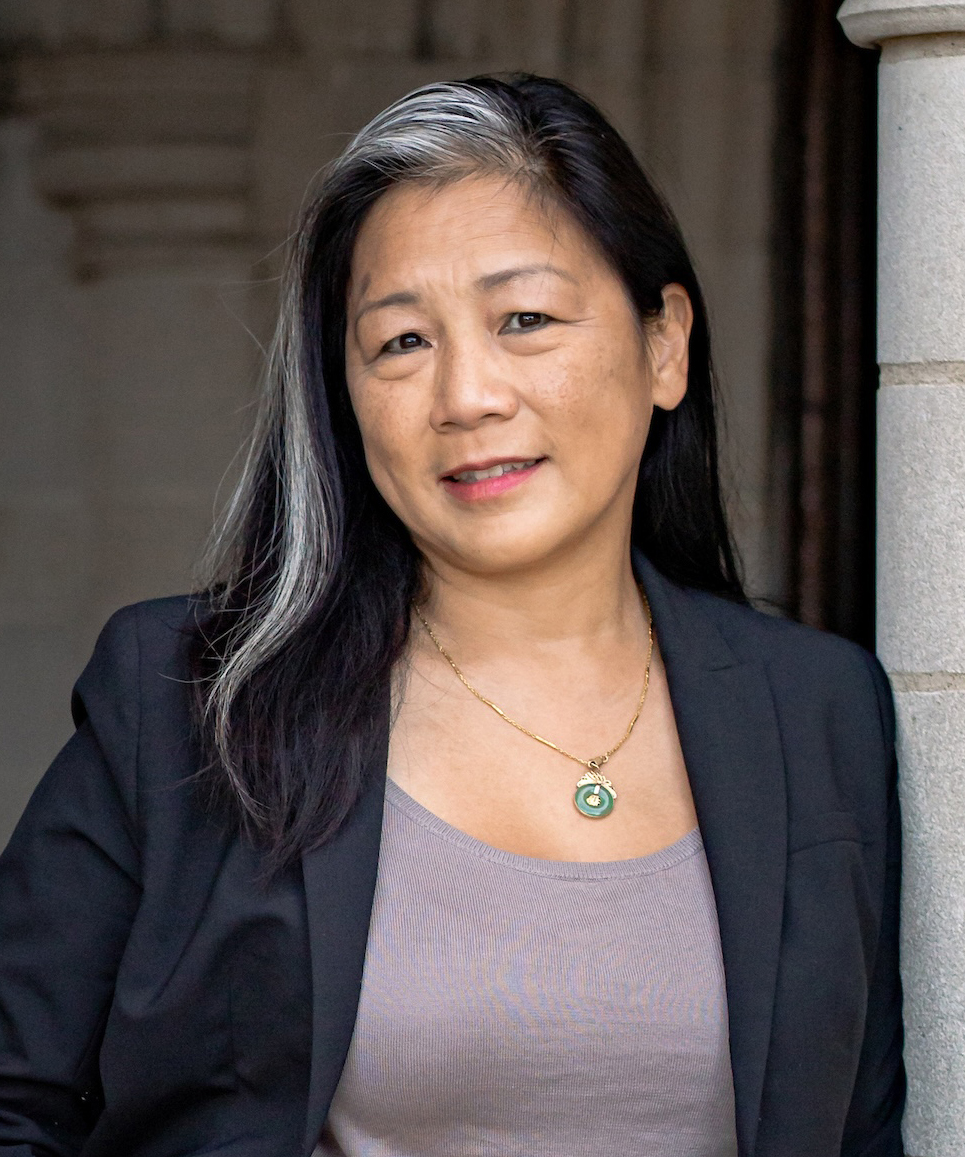
“I wanted students to understand the relevance of Africana studies, not to the study of places and people living far away and long ago but to where we live and work today,” writes Professor of Africana Studies and English Tess Chakkalakal.
She is referring to Cotton Town: Maine’s Economic Connections to Slavery, an exhibition staged at the Maine Maritime Museum (MMM) in Bath in 2021 and 2022 that was curated by her students, in collaboration with staff at the museum.
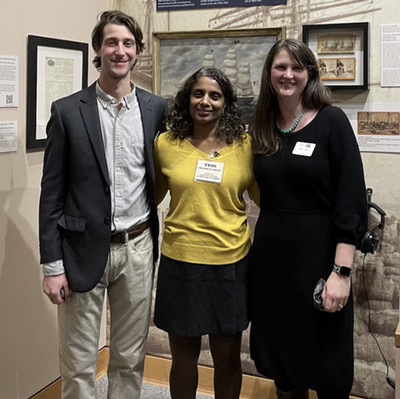
“[The project] developed over the course of the semester through a series of readings, presentations by Maine Maritime Museum curators and educators, and close readings of historical documents,” observes Chakkalakal.
Her reflections on the event feature in a book published this month that shines a light on understudied aspects of Maine’s seafaring history.
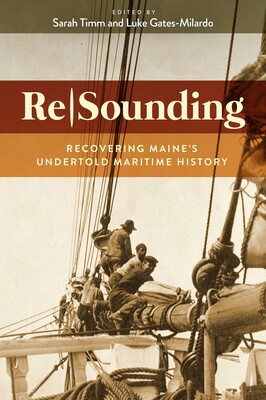
Edited by Luke Gates-Milardo ’14, director of exhibits and learning at MMM, and Sarah Timm, who, until last year, was the museum’s director of education, ReSounding: Recovering Maine's Undertold Maritime History, traces Maine’s historic roots to slavery and explores the contributions of Indigenous and Black Americans to the state’s rich maritime history.
The book features archival material from the museum’s collection of never-before-exhibited journals, letters, photographs, and maps, as well as reflective essays by six experts.
Chakkalakal’s chapter describes how her students collaborated with the museum to stage their exhibition. Cotton Town focused on Bath, Maine, where the museum is located—about ten miles north of Bowdoin’s Brunswick campus—and the city’s role in sustaining the practice of slavery in the southern states before the Civil War.
Bath was a city of sea captains and shipbuilders whose efforts provided the means to transport commodities like cotton, tobacco, and sugarcane, all of which were produced by enslaved people on southern plantations. Cotton was one commodity in particular that linked Maine to the southern slave states, which provided the raw material for lucrative textile mills in town such as Brunswick and Lewiston. So, despite the fact that slavery was illegal in Maine, many in the state, particularly in places like Bath, supported the practice due to its economic importance.
Advised by the museum's educational team, thirty-five students from Chakkalakal’s introductory Africana studies course researched, designed, and installed Cotton Town. They highlighted artifacts that underlined previously understudied connections between Maine’s maritime history and the Atlantic slave trade, including letters, ships’ logs, and bills of sale. “Working with MMM gave students access to objects and events that helped them to understand the local and immediate impact of the history of slavery,” said Chakkalakal. “Moreover,” she added, “students were able to gain skills beyond the theoretical understanding of the meaning of Africana studies”— an interdisciplinary program that explores how Africa and the African diaspora have influenced the modern world.
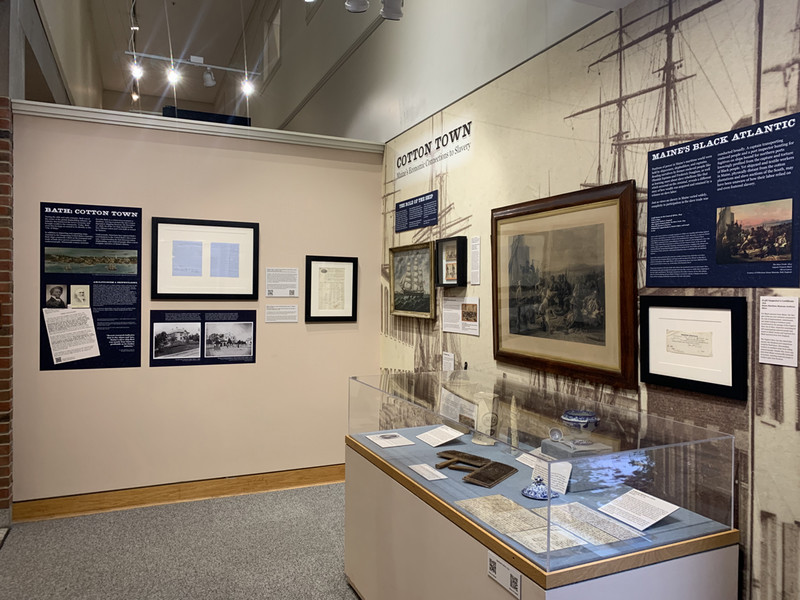
The students read several texts, including a fictional account of a slave rebellion by the Black abolitionist Frederick Douglass, who grew up in slavery before escaping, titled “The Heroic Slave.” “When coupled with historical artifacts found by educators at the museum, these readings came alive in surprising ways,” wrote Chakkalakal.
“A goal of this project,” she concluded, “was to build a bridge between what Bowdoin students learn in the classroom and what MMM visitors learn in the galleries regarding the history of Maine, slavery, and the greater African Diaspora.”
With the publication of ReSounding, other scholars and teachers will now be able to access the work of Chakkalakal and her students, making the exhibit itself another artifact in Maine’s rich maritime history.
"Tess Chakkalakal’s willingness to collaborate and take a chance on a new educational model in her classroom yielded one of the most meaningful student experiences I have been a part of as a museum educator." Sarah Timm, Maine Maritime Museum educator.