Continuing a Tradition of Arctic Adventure
By Tom PorterHenry Penfold ’26 and Caleb McDaniels ’25 are no strangers to Arctic adventure. As Bowdoin undergraduates, in 2024 they traversed the southwest coast of Greenland—a three-month, 750-mile journey, all under their own steam.
Now, in their latest challenge, they are coming to the end of a 2,300-mile expedition circumnavigating North America’s second largest island—Baffin Island, in the Canadian Arctic territory of Nunavut.
In late May, with the ink barely dry on his Bowdoin diploma, biology major Penfold joined McDaniels, a physics major, for the five-month journey, traveling by foot, ski, and packraft—small, inflatable boats, lightweight enough to fit inside a backpack.
The two have been documenting their journey online, maintaining a web travelog featuring photographs, text, and a live map showing their progress. They have been posting regular updates as they journey along the island's coastline hauling their own supplies. They have paddled through fjords, traversed mountains and tundra, and navigated sea ice—resulting in the occasional cold-water plunge, which the adventurers all took in their stride, being well equipped with dry suits and throw ropes.


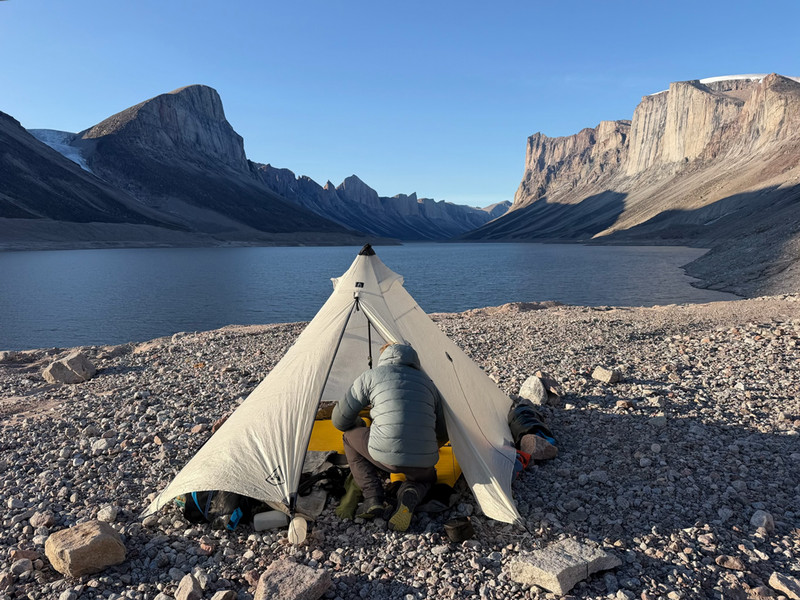
In one entry, the duo described a memorable encounter with a group of Inuit hunters who shared food (a blubbery snack known as a “muktuk”) and stories with them. On another occasion, the resourceful pair had to carve a new packraft paddle out of driftwood after one of Henry’s was swept away.
There have also been numerous encounters with wildlife, including narwhals, whales, and, naturally, polar bears: “After mistaking so many distant boulders and patches of snow for bears,” they noted on July 18, “it felt exhilarating to finally see the real thing.”
Penfold and McDaniels are also using the expedition to collect data to investigate the effects of climate change on the region, including vegetation expansion and the impacts of thawing permafrost on Baffin's rivers.
As they approached the final leg of their expedition, their diary entry for September 1 described how they had been paddling for several days toward the tundra that dominates the western side of the island: “It was hard to bid farewell to the peaks and fjords of the east coast after two-and-a-half months of traveling through their majesty, but we soon began to enjoy the tundra’s particular charm. Trumpeting sandhill cranes and cackling snow geese were ever-present, and we began seeing caribou for the first time in weeks.”
Many in the Bowdoin community, especially those who remember McDaniels and Penfold, have been keenly following their progress across Baffin Island.
“I admire Caleb's and Henry’s sense of curiosity and adventure, am envious of some of their northern experiences,” remarks Professor of Anthropology Susan Kaplan, who directs Bowdoin’s Arctic Studies Center and has much experience of the region. Moreover, adds Kaplan, who also directs the Peary-MacMillan Arctic Museum, she will be “tremendously relieved” when they are back home.
“When Henry rowed his dory to the center from Deer Isle at the start of his sophomore year, we knew we had a true adventurer on our hands,” says Holly Parker, director of the Schiller Coastal Studies Center in Harpswell. She’s referring to the 100-mile, four-day journey Penfold made by rowing a boat from his home in Downeast Maine to the Schiller Center in August 2023. “We’re really proud of him,” she added.
William R. Kenan Professor of Earth and Oceanographic Science Collin Roesler taught McDaniels in a number of classes, on one occasion supervising a solo kayaking trek he undertook in Greenland for an independent study, collecting sediment samples from glaciers. Roesler also recalls McDaniels developing his own optical sensor for one of his projects. In many ways, she says, McDaniels is the ideal explorer. “He prepares for all outcomes, understanding the worst that could happen in any situation and being ready for that, but all the time also being optimistic. I mean, he is the kind of person that can make a paddle out of a piece of driftwood.”
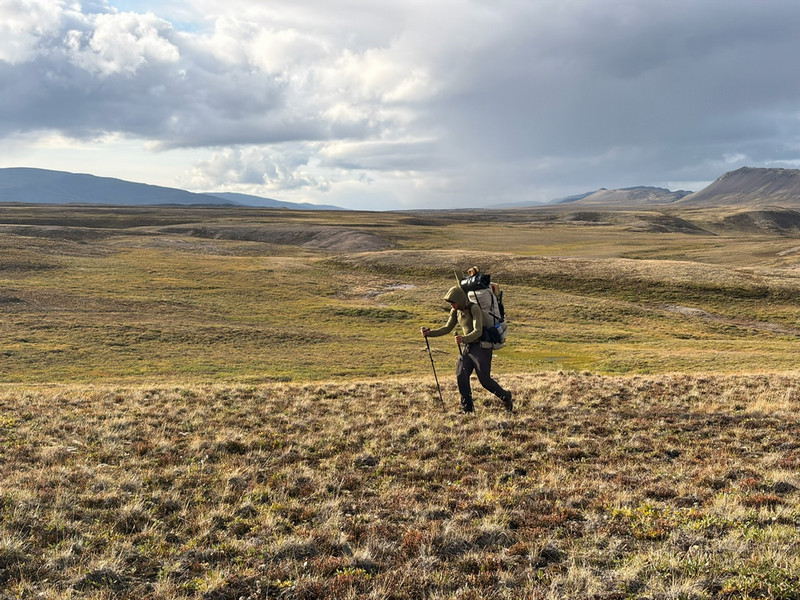
As McDaniels and Penfold navigate the final stretch of their expedition, Roesler, who has also made numerous trips to the Arctic herself, has every confidence that they will resist the urge to rush and take their time as harsher, wintry weather starts to move in making conditions more treacherous. “This is the most dangerous time, when it's icy and snowy,” she says, “but it’s really an astounding accomplishment, and I look forward to them getting back.”
Check out their progress and more spectacular photography at https://sanfords.org/