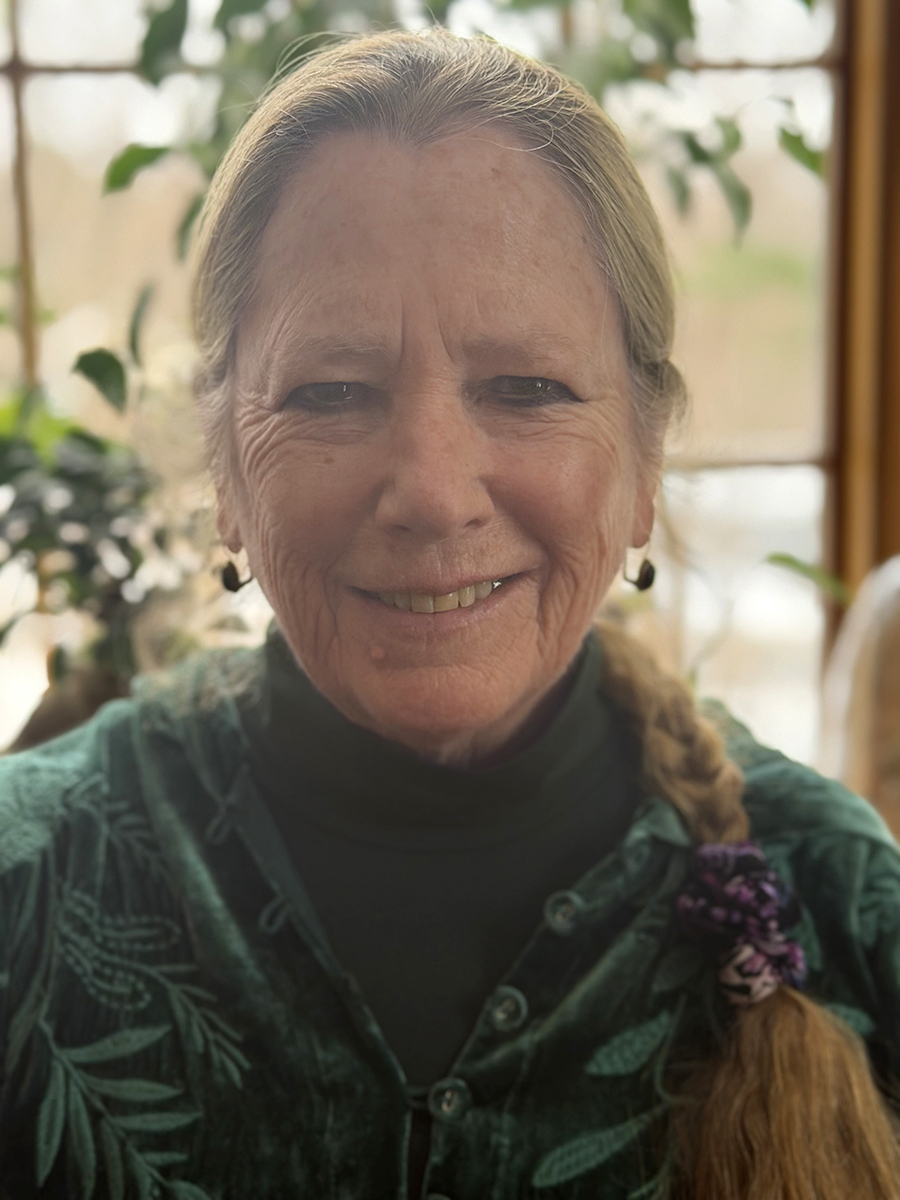
For more than forty years, Baxter has dedicated her career to advocacy and housing development as a champion for the homeless population in New York City and across the country. A pioneer of supportive housing, Baxter founded Broadway Housing Communities (BHC) in 1983. Under Baxter’s leadership, this nonprofit community-based organization has led the vision, programmatic planning, and development of seven buildings in Washington Heights and West Harlem, five of which it continues to manage. BHC has also created two early childhood centers, three community art galleries, and a new cultural institution, the Sugar Hill Children’s Museum of Art and Storytelling. BHS’s mission has evolved to redress homelessness and poverty by integrating deeply affordable housing and early education and educational advocacy with investment in cultural arts.
"BHC is my life’s work,” said Baxter upon retiring from her role as founding executive director in August 2023. “It is work of love, creativity, and tenacity challenging the inhumanity of racism, poverty, and homelessness. The stories homeless people told me in the early 1980s charted BHC’s early path. Artists opened my heart wider to new ways of feeling, seeing, and understanding. Listening closely, I’ve realized over the years, is the most elemental dimension of transforming leadership into action. Action along with kindness is the strategic path forward.”
BHC’s model has provided permanent homes for thousands of adults, children, and families; high-quality early childhood programs that serve resident and community children; and opportunities for local artists to exhibit their work and engage the community, improving outcomes for children, families, and entire neighborhoods. In 2011, BHC became New York City’s twenty-seventh settlement house, and in 2012 received a prestigious national ArtPlace award for strategic community investment in the arts utilizing federal New Market Tax Credits to build the Sugar Hill Museum.
Across the decades, the innovative quality of BHC’s work and Baxter’s leadership have been widely recognized in both the private and public sectors, including a Governor’s Award for Excellence in Housing (1994), Banker’s Trust Award for Non-Profit Management (1993), a Johnson Fellowship Award from the Fannie Mae Foundation (2006), Equity Champion honoree of the Education Equity Center, a Neighborhood Activist from the New York Women’s Foundation (2010), and honorary doctorates from Mount Holyoke and Bowdoin Colleges.
The root of Baxter’s work was established in 1979, when she was a founding member of the nonprofit Coalition for the Homeless of New York, which brought a landmark class action lawsuit to New York State Supreme Court—Callahan v. Carey—and established the legal right to shelter mandate in support of the unhoused population of New York City. The mandate resulted in a 1981 Consent Decree that remains in effect today. Baxter continues to serve as a steward to the advocacy organization on its board of directors.
Baxter, who graduated from Bowdoin summa cum laude and Phi Beta Kappa, has said that a most impactful experience for her was the yearlong Thomas Watson fellowship following graduation that afforded her the opportunity to live in Geel, Belgium, where persons with mental disabilities had been welcomed into the homes of townspeople for centuries. Following her Watson fellowship, she earned a master of public health degree at Columbia University.
Baxter has been involved with the College over the years, serving as a panelist at the Bowdoin Women in Business Conference in March 2012. For her fortieth reunion in 2015, she served as a member of the gift committee and as a panelist for "Bowdoin Women: Then and Now." In recognition of her unwavering service to humanity, Bowdoin presented Baxter with a Common Good Award in 1994 and with an honorary degree in 2005.
The Bowdoin Prize
The Bowdoin Prize was established in 1928 as a memorial to William John Curtis of the Class of 1875 by his wife and children. It is awarded every five years “to the graduate or former member of the College, or member of its Faculty at the time of the award, who shall have made during the period the most distinctive contribution in any field of human endeavor.” The Bowdoin Prize is presented to those who are “recognized as having won national and not merely local distinction, or who, in the judgment of the committee, is fairly entitled to be so recognized.”
Since 1933, The Bowdoin Prize has been awarded to medical professionals, public servants, educators, and business leaders, among other distinguished recipients.