

Bowdoin College Museum of Art will Celebrate America’s 250th with Exhibition Exploring Decades of American Stories through Art
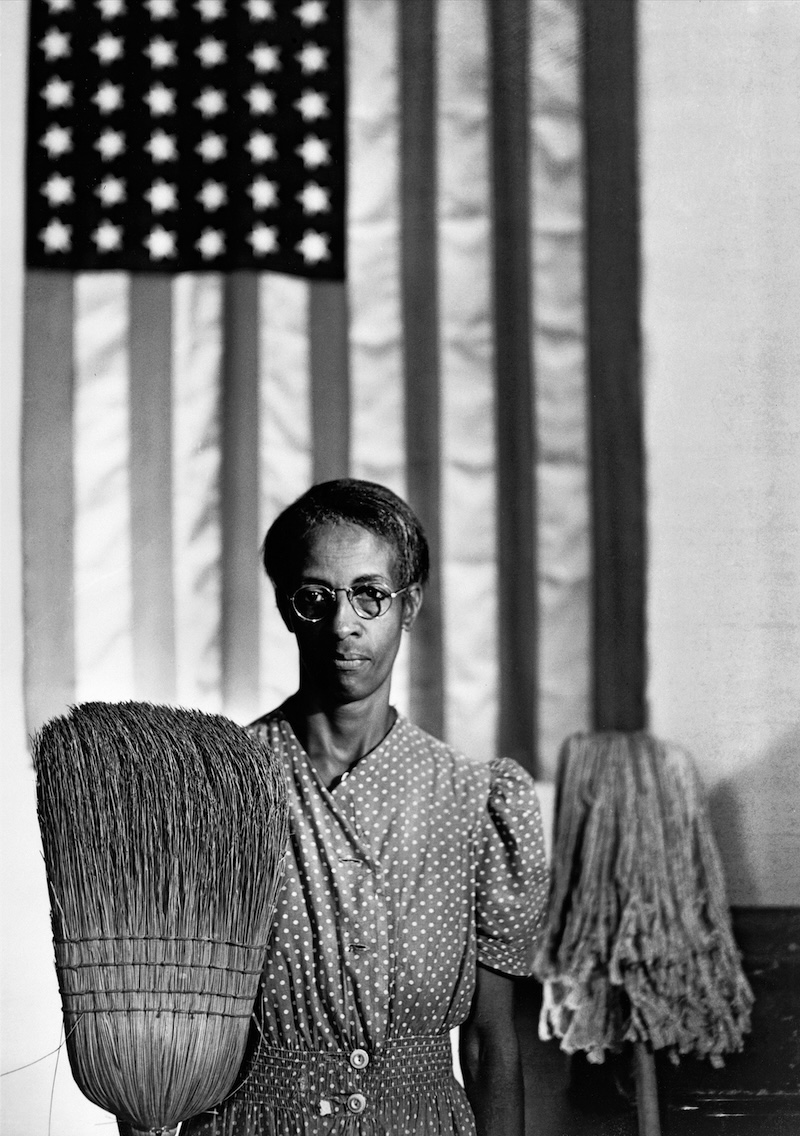
Brunswick, ME—March 18, 2026—To commemorate the 250th anniversary of American independence, the Bowdoin College Museum of Art (BCMA) will present USA @ 250, a major exhibition that examines 250 years of American history through art. Spanning the period from the Revolutionary era to the current decade, the exhibition presents 25 thematic “episodes” that trace how artists have documented, shaped, celebrated, and contested the nation’s evolving identity. Grounded in the BCMA’s longstanding commitment to inclusive and critically engaged storytelling, the exhibition uses artworks to illuminate the diversity and complexity of American experience, drawing on 118 works from its collection. USA @ 250 will open to the public on June 27, 2026 and run through November 29, 2026; admission is free for all visitors. “We are very proud to be marking this anniversary with an exhibition that brings together more than 100 artworks from the museum’s collection. Together they tell rich stories about the United States, demonstrating how the history of American art is intertwined with that of the nation,” said Frank Goodyear, Co-Director of the Bowdoin College Museum of Art and curator of the exhibition. Anne Collins Goodyear, Co-Director of the BCMA, added: “The artworks in USA @ 250 help us to examine the ideals that have guided the United States, both in times of triumph and in times of turbulence that have tested the resilience of the nation and brought about critical transformations. We hope audiences will find the historical moments highlighted by the exhibition meaningful as we collectively consider where the nation has been and where it is going.”
Each of the 25 “episodes” uses two or more works from the BCMA’s collection to explore a defining theme in American history. Among these different sections are:
- Americans in Paris (Episode 1): Diplomatic efforts and cultural exchange were as crucial asmilitary actions during the Revolutionary era. Portraits of Benjamin Franklin, James Bowdoin III,and Sarah Bowdoin, highlight international ties that helped shape the new American identitythrough ongoing European engagement.
- Enlightenment Science (Episode 2): Benjamin Franklin’s scientific reputation circulatedglobally, and his portrait bust by Jean-Jacques Caffieri reflects this status. The episode pairs thebust with a monumental 1783 air pump used for demonstrations in early American “temples oflearning,” linking intellectual aspiration to the growing economy that made such instrumentspossible. Together, these objects show how scientific pursuit, social prestige, and colonial laborsystems intertwined.
- Beginnings of the American Presidency (Episode 4): Gilbert Stuart’s portraits of ThomasJefferson and James Madison helped define expectations for the presidency, reinforcing theimage of presidents as citizen-leaders rather than monarchs and actively shaped emergingdemocratic norms.
- Native Americans in the Age of Jackson (Episode 7): The Jacksonian era broughtdispossession and cultural violence to Native nations. Works such as Karl Bodmer portraits andJohn Quidor Leatherstocking’s Rescue highlight the gap between romanticized imagery of Nativepeople and the realities of U.S. federal policy.
- Abolitionism (Episode 9): Political prints, portraits, and paintings—such as Practical Illustration of the Fugitive Slave Law and William Gale’s The Captured Runaway—reflect the fierce national struggle over slavery, the moral urgency felt by activists, and center the leadership of Black abolitionists. The episode underscores how visual culture energized debate in the decades before the Civil War.
- The American Civil War (Episode 10): Artworks from this period convey the war’s unprecedented human and political toll—and reveal how images became tools for grappling with trauma and commemorating sacrifice. Among the works included are Winslow Homer’s engraving of Lincoln’s inaugural and Alexander Gardner’s battlefield photographs.
- The Struggle for Women’s Rights (Episode 12): Works by Mary Cassatt, Cecilia Beaux, John Singer Sargent, and Anne Whitney chart the shifting roles and representation of women in public life: from their shifting domestic roles to the growing recognition of women as cultural and political actors.
- World’s Columbian Exposition (Episode 13): The 1893 World’s Columbian Exposition both celebrated American progress and supported the construction of new national myths. Paintings by Winslow Homer, Kenyon Cox, and Elihu Vedder evoke the spectacle and ambition of the event, demonstrating how art and architecture shaped narratives of modernity at the turn of the century.
- The Birth of Abstraction (Episode 16): Abstraction became a key mode through which American artists reimagined perception and form—here focused on artists such as John Marin (Weehawken Sequence), Man Ray (Rayograph), and works by Marius de Zayas and Morris Kantor.
- Fashion and Celebrity Culture (Episode 19): Photography by Alfred Eisenstaedt and Irving Penn captures the rise of 20th-century celebrity as a defining cultural force, with portraits of Marilyn Monroe, Georgia O’Keeffe, Duke Ellington, Louis Armstrong, and Sophia Loren tracing how media industries crafted global icons whose images shaped the public’s understanding of glamour, influence, and persona.
- The Recent Past (Episode 25): The final episode of the exhibition reflects on the turmoil and transformations of early 21st century America, with works by Titus Kaphar, Geo Neptune, and Katherine Bradford providing perspectives on identity, resilience, and public vulnerability. These pieces mark how artists have responded to a period defined by political fracture, social activism, profound uncertainty—and the first global pandemic in a more than a century.
In tandem with the exhibition, the BCMA will organize a robust schedule of public programs throughout the run of USA @ 250, including lectures, conversations, performances, and partnerships with regional institutions. Programming will open on June 27, 2026, with a keynote address by John W. Franklin, Managing Member Franklin Global LLC and Senior Manager Emeritus, National Museum of African American History and Culture, Smithsonian Institution. Additional programs will be announced in the coming months.
Celebrating Independence! Fifty Years of Spindleworks, 1976-2026
Established fifty years ago, Spindleworks Art Center—based in Brunswick, Maine, and a short distance from the Museum—is a nationally recognized progressive art studio. In tandem with recognizing our national semi-quincentennial, the BCMA will present Celebrating Independence! Fifty Years of Spindleworks, 1976-2026, exploring the power of creative vision. The exhibition and related programming will showcase over fifty works—drawn from Spindleworks’ own collection as well as those of private lenders—featuring fifty years of painting, sculpture, poetry, weaving, new media, spoken word, dance, and performance. Demonstrating the power of creative vision, Celebrating Independence! will illuminate both the organization’s history and the dynamic artwork that continues to be produced at Spindleworks.Celebrating Independence!, organized by Mya Benally ’26 and Anne Collins Goodyear, the BCMA’s Co-Director, will be on view at the Museum from May 20, 2026 - August 16, 2026.
Bowdoin College Museum of Art
The Bowdoin College Museum of Art is the cornerstone of the arts and culture at Bowdoin. One of the earliest collegiate art collections in the nation, it came into being through the 1811 bequest of James Bowdoin III of 70 European paintings and a portfolio of 141 old master drawings. The collection has been expanded through the generosity of the Bowdoin family, alumni and friends, and now numbers more than 20,000 objects, including paintings, sculpture, works on paper, decorative arts and artifacts from prehistory to the present from civilizations around the world. www.bowdoin.edu
To request interviews and for access to images and supporting materials, contact the Assistant Director of Museum Communications.