In a series of stories over the next few months, we’ll be visiting courses in economics, English, philosophy, computer studies, and digital and computational studies that approach AI not as a tool to learn, but as a subject for inquiry.
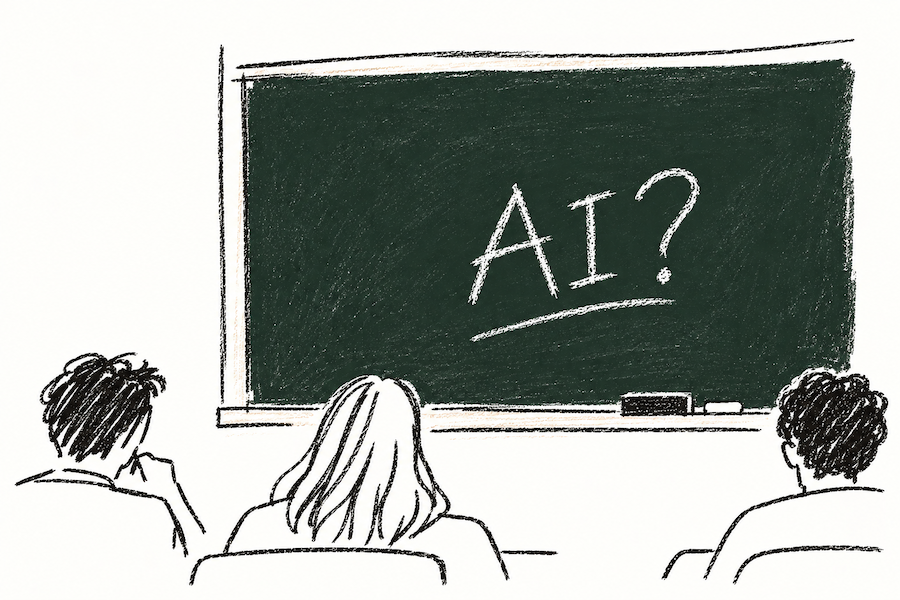
Several Bowdoin classes are focusing on AI while also teaching the distinctly human skills of communication, interpretation, and skepticism. (Sketch generatedby AI)
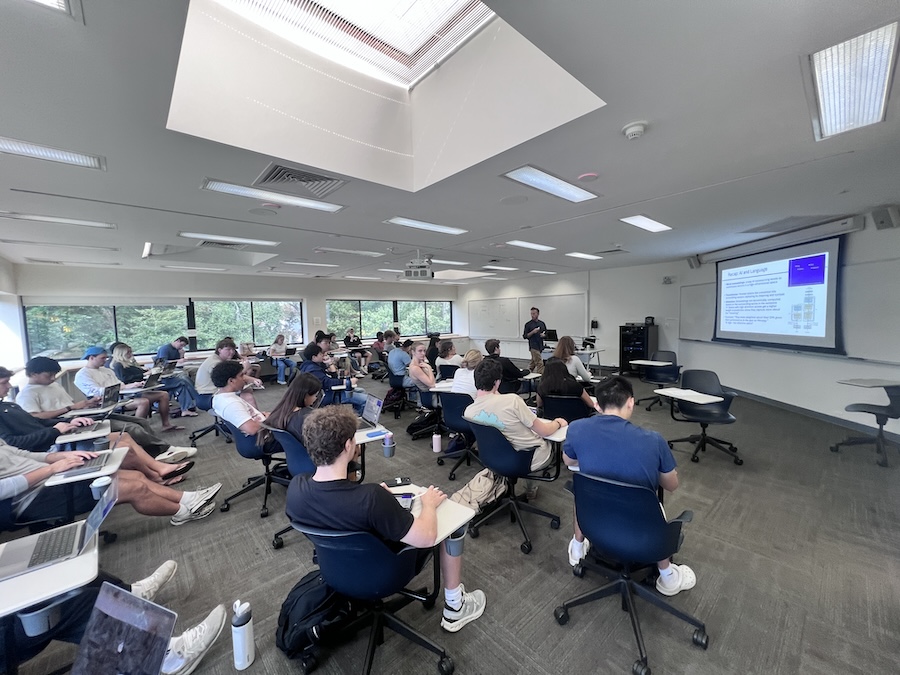
About thirty minutes into economist Martin Abel’s ECON 2225: AI and Economics, the conversation shifted into a debate about whether AI companions—for the elderly or as romantic partners, for instance—were a net benefit to society.
The students opened an app and recorded their responses, which appeared as a graph on a screen. Most disagreed, but a few agreed or even strongly agreed. Abel asked one of them to explain their answer.
“There are people who are lonely, depressed, or feel they’re on the outside of society,” a student replied. “They can use a companion to have something to communicate with.”
But another rebutted: “Yes, there are benefits, but it’s not a net benefit to society.”
“It’s akin to putting a Band-aid on a wound,” a third student spoke up. “Depression rates are high, attention spans are low, and this is pushing us farther away from having positive, real, human interactions. Maybe it’s good for older people but not young people; it’s absolutely terrible for them.”
Abel also offered his thoughts: “AI companions might help with loneliness in the short run but possibly will contribute to loneliness in the long run. If the AI companion is always pleasant and affirming, you don’t get challenged or develop the skills you need in a relationship, like how to navigate conflict or how to work through disagreement. And young people could get the wrong impression of what a relationship will look like.”
The conversation continued, with the class examining AI therapists and even querying an actual AI companion Abel pulled up on his phone, asking it questions like “Do you have values?” “Do you have friends besides [Martin]?” and “Is there anything you’re not allowed to say or do?”
But the class had to move on. “We could discuss this for hours and hours,” Abel said, turning the class’s focus to economics, including how companies plan to maximize profits, possibly by developing user dependency or “attachment hacking.”
“One of the goals for the class is learning the potential and limitations of AI and how it affects different aspects of society, specifically through the lens of economics,” Abel explained in a meeting after class. His students begin by studying the fundamentals of AI and its impacts on companionship, mental health, and creativity. They then examine its effects on productivity and employment across sectors such as health, education, law, and finance.
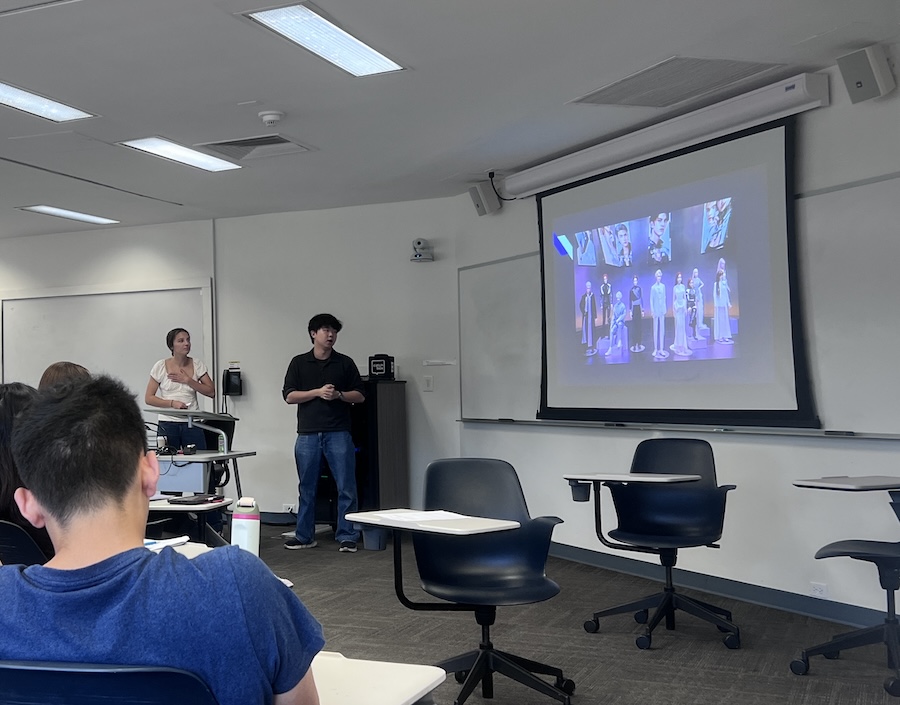
Throughout the semester, small groups of students are assigned to research topics related to the syllabus and to lead class presentations. Following each one, Abel provides his observations not just on the information they gather and analyze, but on how they lead their lesson.
For one pair who presented about AI companionship and loneliness, he emphasized the importance of facing the group rather than turning to their PowerPoint slides, and he also encouraged them to dig deeper or push back after a peer shared a strong statement or opinion.
This kind of feedback, Abel said, is just as important as teaching the concepts and tools of economics. “The class also develop skills that matter beyond economics: critical thinking, reasoning through complexity, and intellectual humility.”
AI and Writing
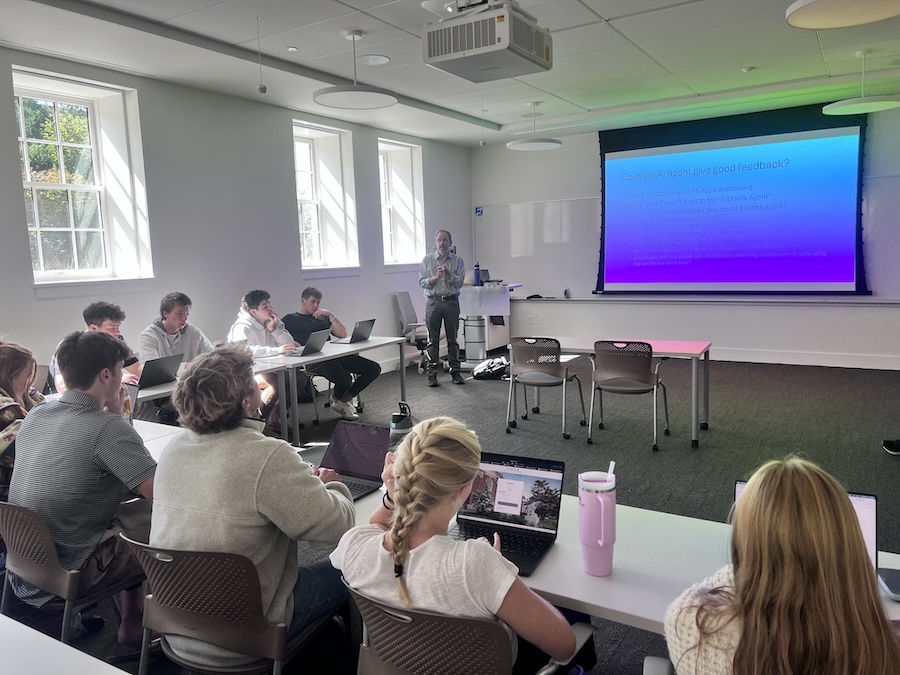
In his first-year writing seminar, ENGL 1021: Writing With and About Generative Artificial Intelligence, Associate Director of the Baldwin Center for Learning and Teaching John Paul Kanwit is pursuing another set of questions on writing, the value of creative works, and what happens when a machine becomes a cowriter or editor.
For an exercise in a recent class session, Kanwit instructed his students to open their laptops and feed their as-yet ungraded essay drafts into an AI chat tool. “Ask it questions like, ‘Are my topic sentences analytical? Are my transitions logical? Does the organization make sense? Do I have a balance of claims and evidence?’” he prompted.
After students spent a few minutes focused on their screens, Kanwit spoke up: “Did it help without rewriting your stuff?”
- What are your values and why do they matter in an AI world?
- To what extent have we been here before? How do discussions about earlier technologies, such as photography, the novel, and writing itself inform our current moment?
- How might AI assist us as we seek to develop our own ideas and writerly voices? When does AI get in our way?
- How can we navigate the most pressing challenges of generative AI, including those related to its ethical use and environmental impacts? Who wins and who loses in a GenAI world?
One student said she had found it constructive. “It started by telling me what I did well but then said I should fix this and that and expand on a specific idea. It was critical, but it started out gently.”
Another said she requested it point out grammatical and spelling errors, and “it found some!”
One complained, however, that while it offered suggestions for revisions, “The sentences it recommended were too fluffy. There are eight adjectives in them and two em dashes.”
Kanwit offered his own thoughts: “There is a myth that AI is a good writer. I don’t think it’s true.”
This is the third year Kanwit has taught this class as a first-year writing seminar. These required classes cover a variety of subjects, but all share a focus on developing students’ writing skills.
Kanwit said he designed his course because he thought young people would be interested, and that he was interested in “engaging with them over what the studies have to say about AI and writing—whether it gets in the way of developing our voices or gets in the way of developing our own thoughts.”
”Where does it get in the way and where does it help? Should we use it at all?”
The class also considers AI through the lens of cultural studies. “Can we analyze an AI-produced text or image in the same way we would look at a human product?” he asks. “I am interested in having them help figure this out.”
Over the course of the semester, each student writes four essays. They first turn in a draft and after receiving feedback, turn in a rewritten version. “The premise is that writing is a process, and you’re going to produce better writing with feedback,” Kanwit said.
Because his seminar is also examining AI, Kanwit asks that they seek feedback not just from him, their classmates, and writing assistants, but also from AI. This way, they can compare human and machine responses and even evaluate which source they end up trusting more.
Their final essay prompt is to outline a problem related to AI and and propose a solution. Past paper topics have focused on energy, water, privacy, surveillance, aligning AI with human values, and art. One even suggested that Bowdoin build its own sustainably powered data center.
Jacob Colton ’29, a learning assistant for the course, joined the students for the first half of the class. He said he had taken the course last year, choosing it among the many seminar options, because he wanted to think about “how to use AI as a tool and how to use it ethically.”
Related Stories
-
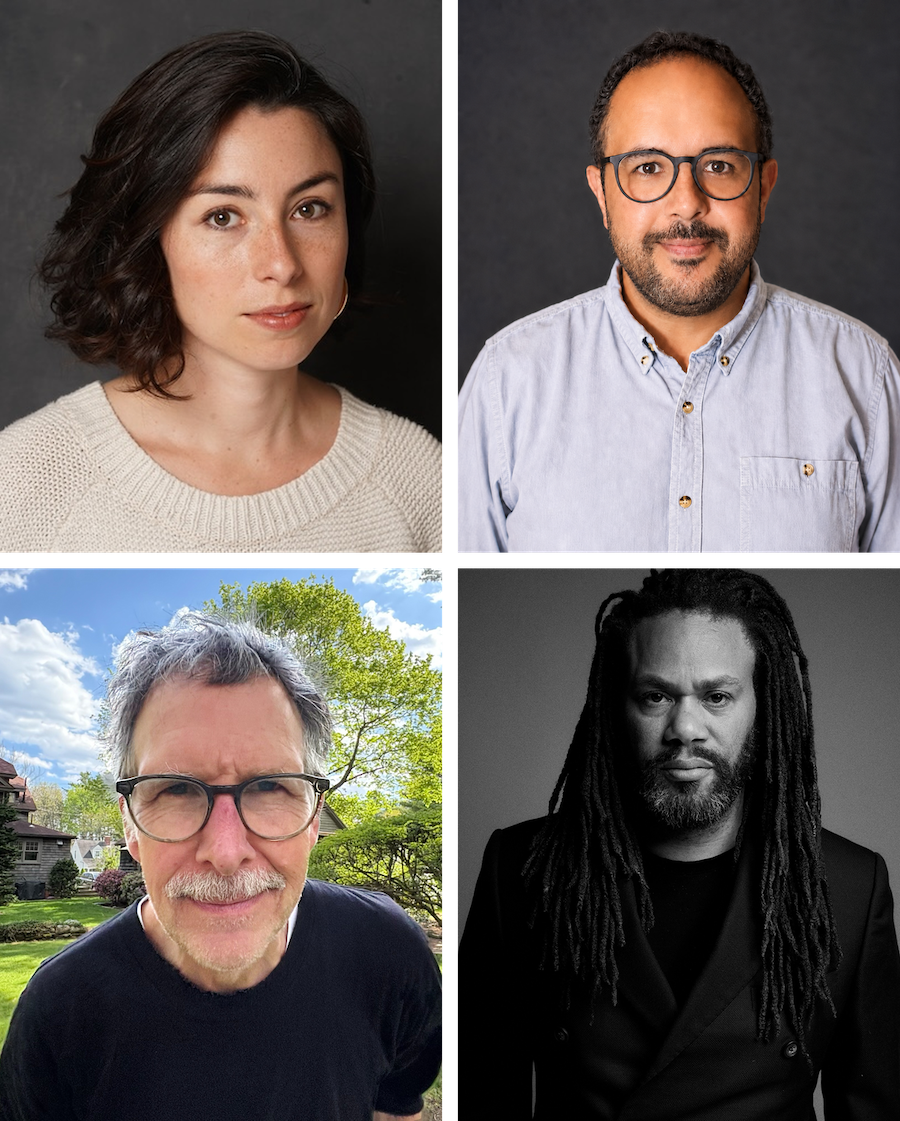 October 01, 2026The Hastings Initiative for AI and Humanity recently brought together four people whose lives center around creativity to consider an old question in light of new technology: What is creativity? And how might it change with the rise of artificial intelligence?
 -
-