From cinema studies to German, from biology to Russian, Bowdoin faculty from across the academic spectrum were rewarded for their excellence in research and teaching during the fall semester with funding awards from external sources.
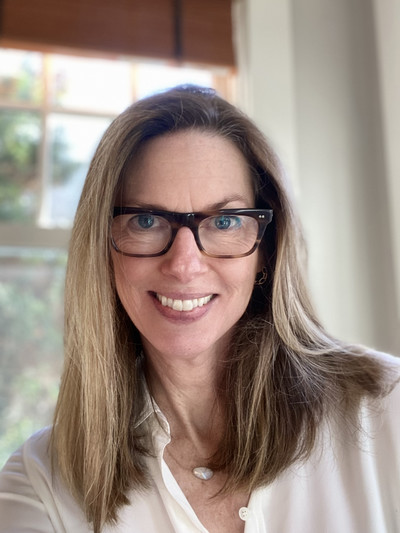
Cinema studies scholar Allison Cooper, who also teaches Italian, is being honored as part of a joint initiative being pursued with colleagues at UC Berkeley (which is leading the effort) and the University of Richmond.
The project, Bridging Large-Scale Computational Analysis and the Close Viewing of Film and Television, is one of twenty-three being recognized by the nonprofit Schmidt Sciences, which is shelling out $11 million to bring artificial intelligence to humanities research.
Cooper, associate professor of Romance languages and literatures and cinema studies, said the team will combine large-scale computational analysis in AI with humanistic scholarship in film and television. “Analytical AI can facilitate at scale exploration of some of the most meaningful developments in onscreen storytelling,” she explained, “from the evolution of the close-up and camera movement over time and across genres to the proliferation and interrelation of storylines in different television series.
“The $750,000 award,” she added, “will support collaboration between established digital humanities laboratories like Kinolab here at Bowdoin, the Distant Viewing Lab (U of Richmond), and David Bamman’s lab (UC Berkeley) to develop AI tools to advance this kind of work. It also provides funding to involve colleagues in our work who use more traditional research methodologies, so that they can weigh in on the development of AI tools for the film and television studies community at a relatively early stage.”
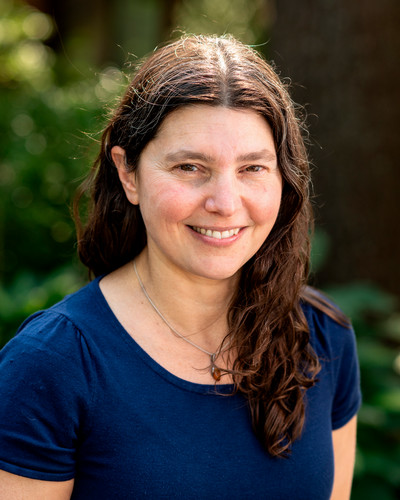
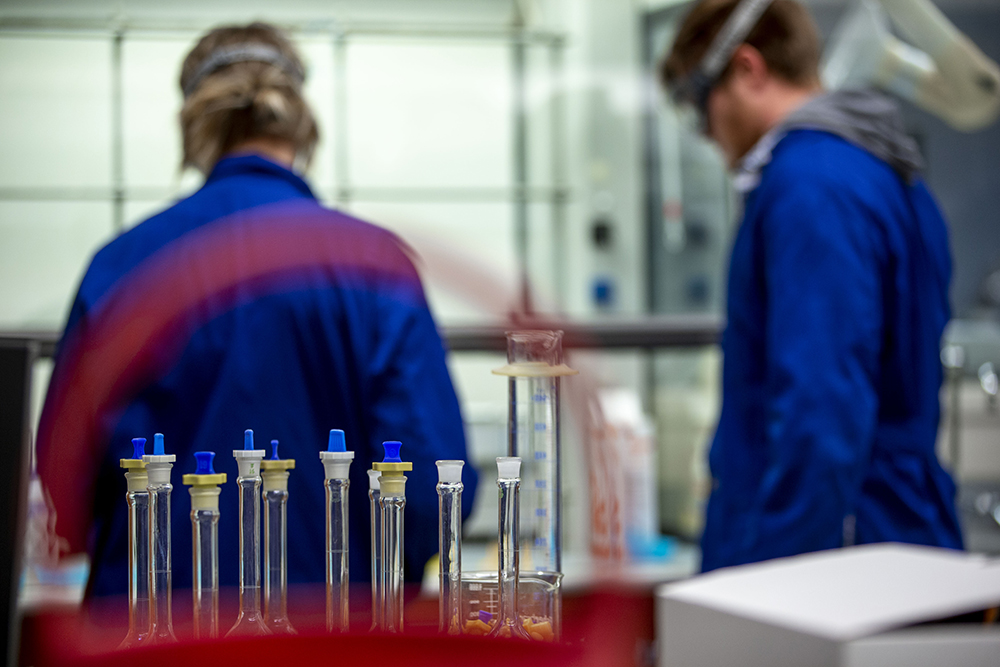
Chemical biologist Danielle Dube runs a laboratory that works on developing ways of studying the sugars that coat the surface of disease-causing bacteria, a process she refers to as bacterial glycosylation. Her work, which has important implications for the development of urgently needed antibiotics, has been boosted with a Pilot Award ($68,122) from the Maine IDeA Network of Biomedical Research Excellence (INBRE). The Maine INBRE is a coalition of Maine colleges, universities, and research institutions sponsored by the National Institutes of Health.
“My lab seeks to harness the power of chemistry to enable fundamental studies of bacterial glycosylation, particularly with respect to human disease,” explained Bowdoin’s Norma L. and Roland G. Ware Jr. Professor of Chemistry and Biochemistry. Dube has been working for several years to develop and apply chemical tools to probe the role of glycans (the complex sugar structures found on all living cells) in the gastric pathogen Heliobacter pylori’s (Hp’s) interactions with host cells.
Her latest project should yield more insight into how these Hp glycans recognize and bind with their host cells, and uses a technique called metabolic labeling. “We are well poised to undertake the proposed research because of our proficiency using metabolic labeling and our exceptional research-active undergraduates,” said Dube. “We are especially grateful for support of the Maine INBRE for funding this proposal, as it will allow my laboratory to collect preliminary data for this pilot project that will position us to become competitive for a multiyear award from the National Institutes of Health."
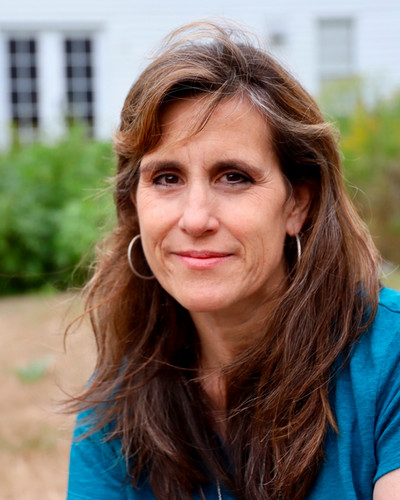
Russian history scholar Page Herrlinger has secured funding for a foreign language teaching assistant (FLTA) on campus. For the second time in three years, the Russian, East European, and Eurasian studies (REES) department, of which Herrlinger is chair, is hosting a teaching fellow through the Fulbright FLTA program, which is sponsored by the US Department of State.
“Our current fellow is Zhanar Orazkeldiyeva, who holds a master’s degree in educational leadership from Nazarbayev University in Astana, the capital of Kazakhstan,” explains Herrlinger, who is also the Frank A. Munsey Professor of History.
Since arriving on campus in September, Orazkeldiyeva has been leading weekly one-on-one Russian conversation practice sessions with Russian language students, as well as regularly participating in REES-sponsored campus events, she added.
"Students benefit from learning not only from a native Russian speaker but also an educator from Kazakhstan who is eager to share all about her country and culture—from geography and history to popular music, film, and food, all while enriching and diversifying the cultural competencies we teach in our courses."
Herrlinger said credit should also go to her department colleague, Senior Lecturer Reed Johnson, who, as well as helping with the application, is at “the heart of the program on a daily basis,” working regularly with teaching fellow Orazkeldiyeva.
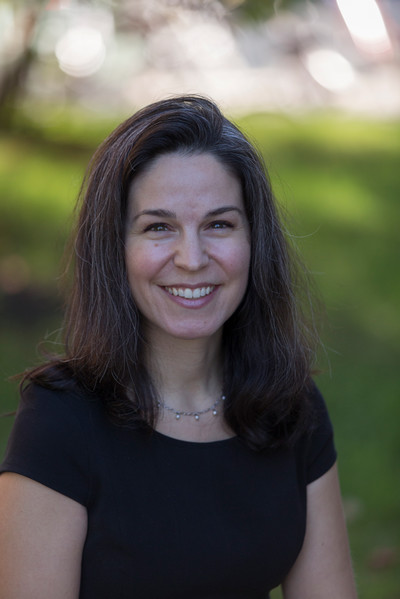
For the third year in a row, Associate Professor of German Jill Smith, who is also department chair, received funding from the German Embassy in Washington, DC. It’s part of an ongoing embassy initiative called “Germany on Campus” that supports an annual series of events at colleges across the US highlighting German culture through seminars, readings, media screenings, and discussions.
Like the REES Fulbright award, this is not a research grant, explained Smith: “It’s used to support cocurricular programming for German.” The funding, she says, has enabled the department to showcase various aspects of what the study of German can mean for students. “In 2023 we highlighted the varied career paths of three of our alumni; in 2024 we brought one of the creators of the acclaimed streaming series Babylon Berlin to campus; and most recently, in 2025, we brought to campus a scholar of German philosophy and global literature, UCLA’s David D. Kim, to deliver a well-attended lecture about his new book and spend time with students.” Kim’s book Arendt’s Solidarity: Anti-Semitism and Racism in the Atlantic World tracks various manifestations of the concept of solidarity in the works of the German political theorist Hannah Arendt.
“The interdisciplinary and global focus of Kim's work and his kindness and generosity with our students exemplified what German studies scholarship can look like in the twenty-first-century United States.”
Key to the program, stresses Smith, is the bringing together of faculty from different disciplines, with cosponsorship this year from the Departments of Government and Legal Studies, Philosophy, Religion, and Romance Languages and Literatures.