History of the Benjamin W. Hill-Lam ’13 Observatory
The Bowdoin College’s original observatory was designed by Samuel B. Dunning and built on the central campus in 1891. The 12″ Maksutov telescope was used on student projects up until the early 90s, when it was deemed insufficient for research projects and too labor intensive to maintain for public observation.
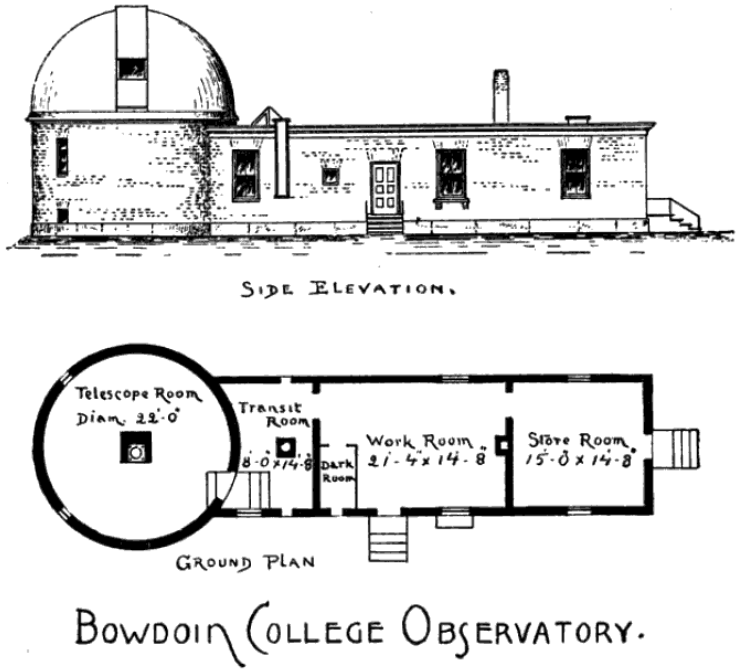
The initial observatory featured a domed telescope room at a diameter of 22 feet, a transit room, a work room and a "Store Room", also used for instructional purposes.
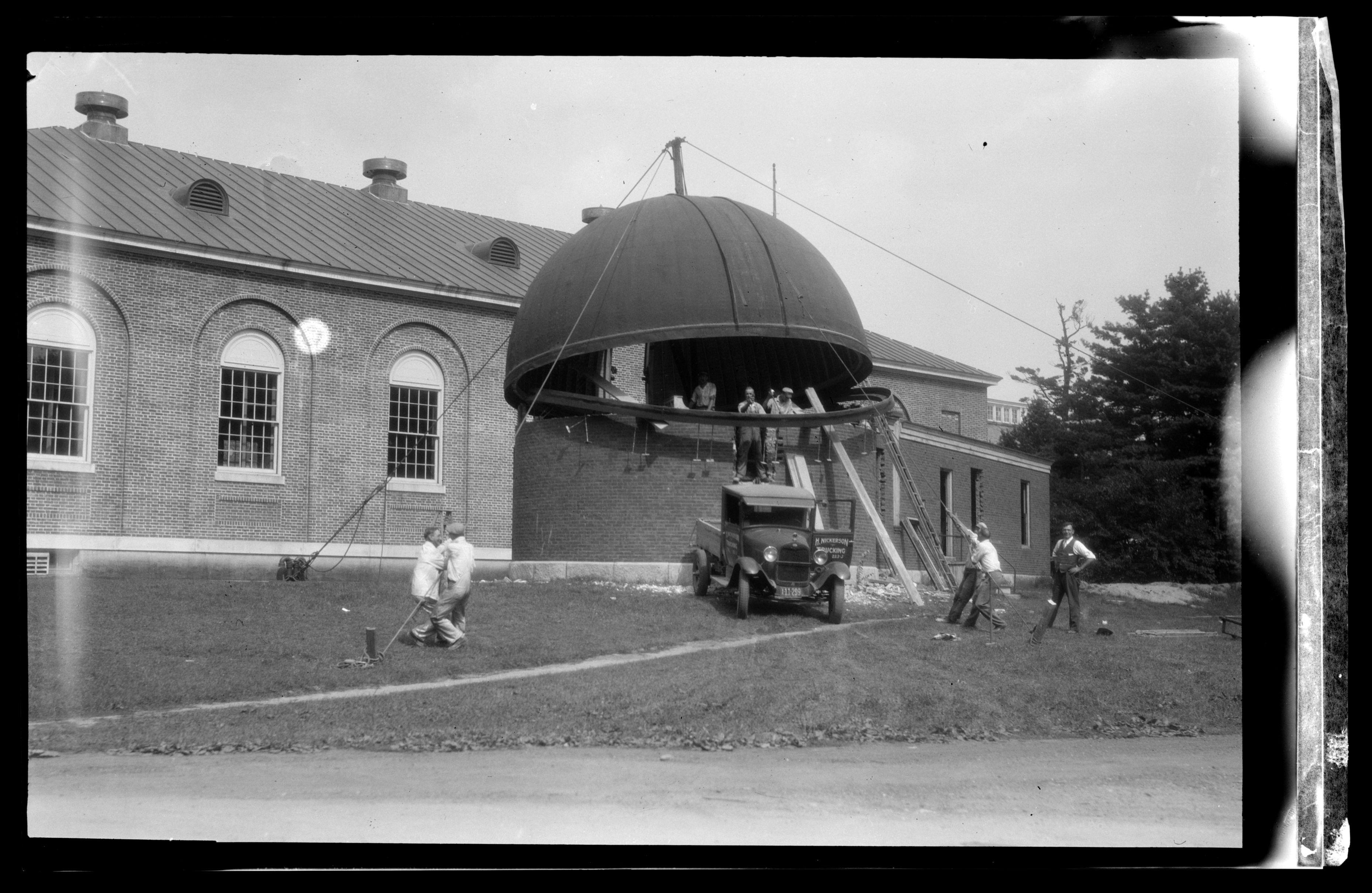
In the 1930s, the Bowdoin Observatory was relocated to the southern edge of campus, Pickard Field, where it resided until 2023. Based on the available information, the observatory was taken apart and moved brick by brick. The Building and Grounds committee also voted (8/11/1930) to remove the classroom attached to the observatory.
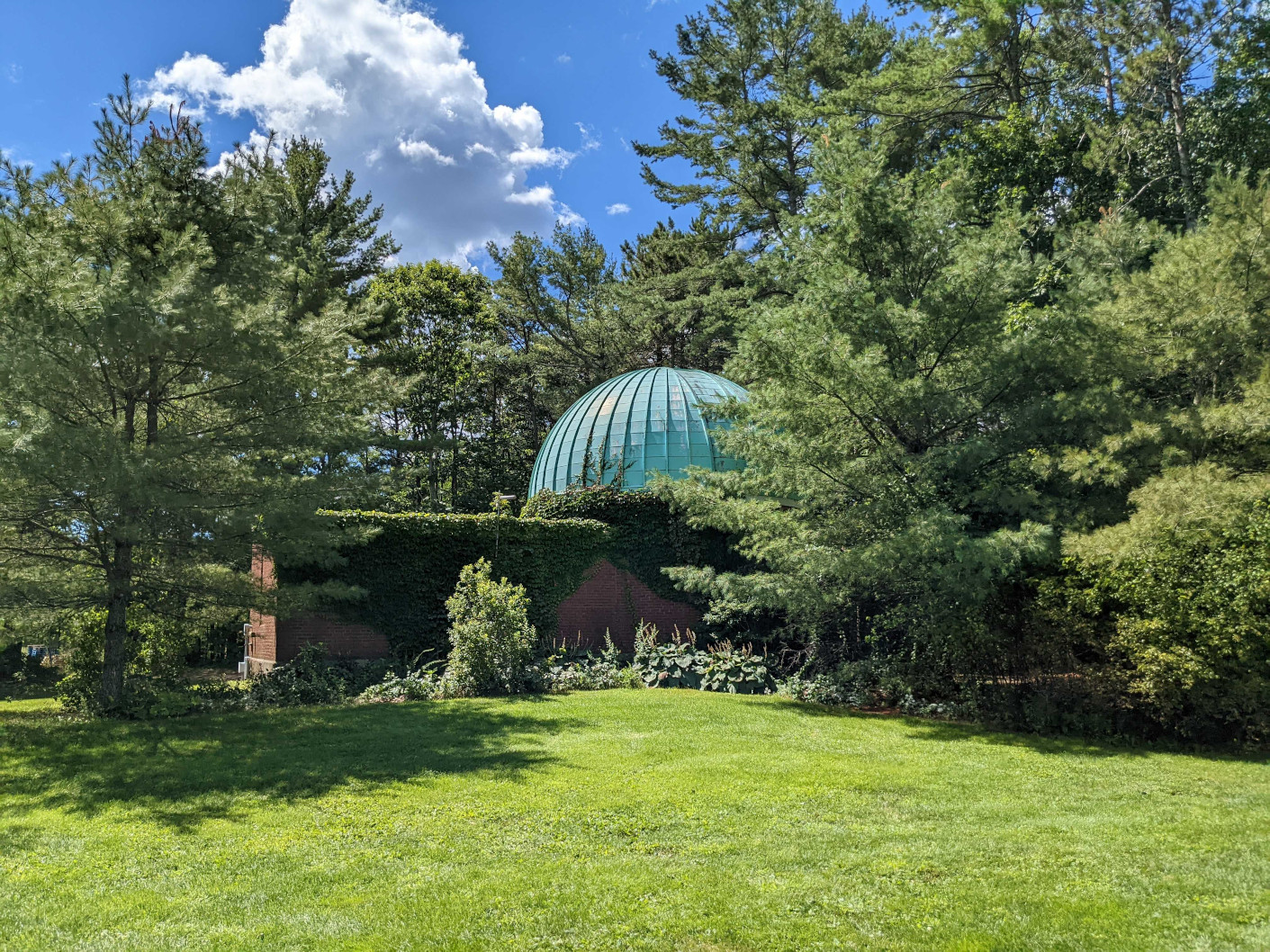
The historic observatory structure stood on the edge of the athletic fields, but growth of the surrounding trees severely limited its view of the skies.
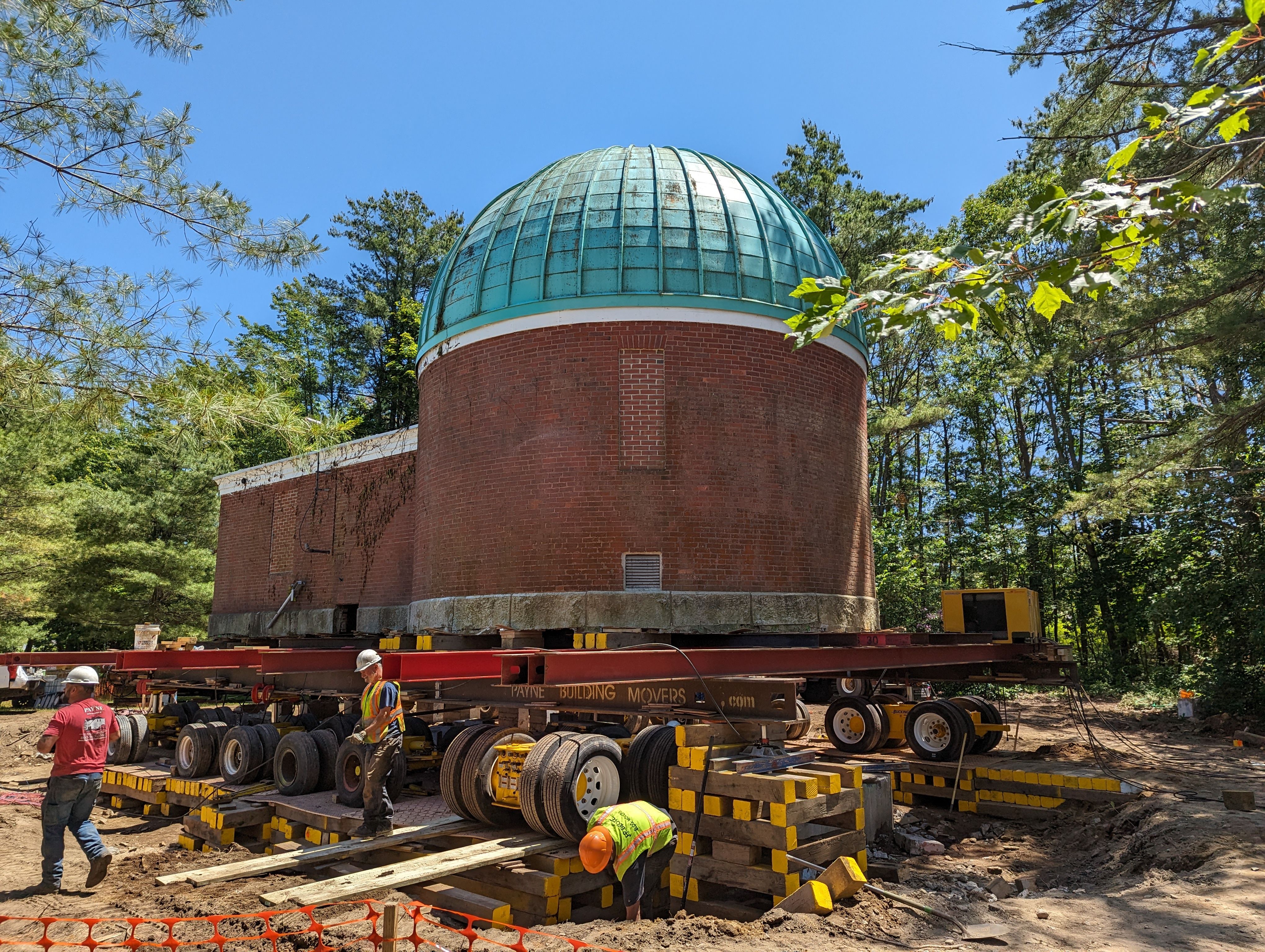
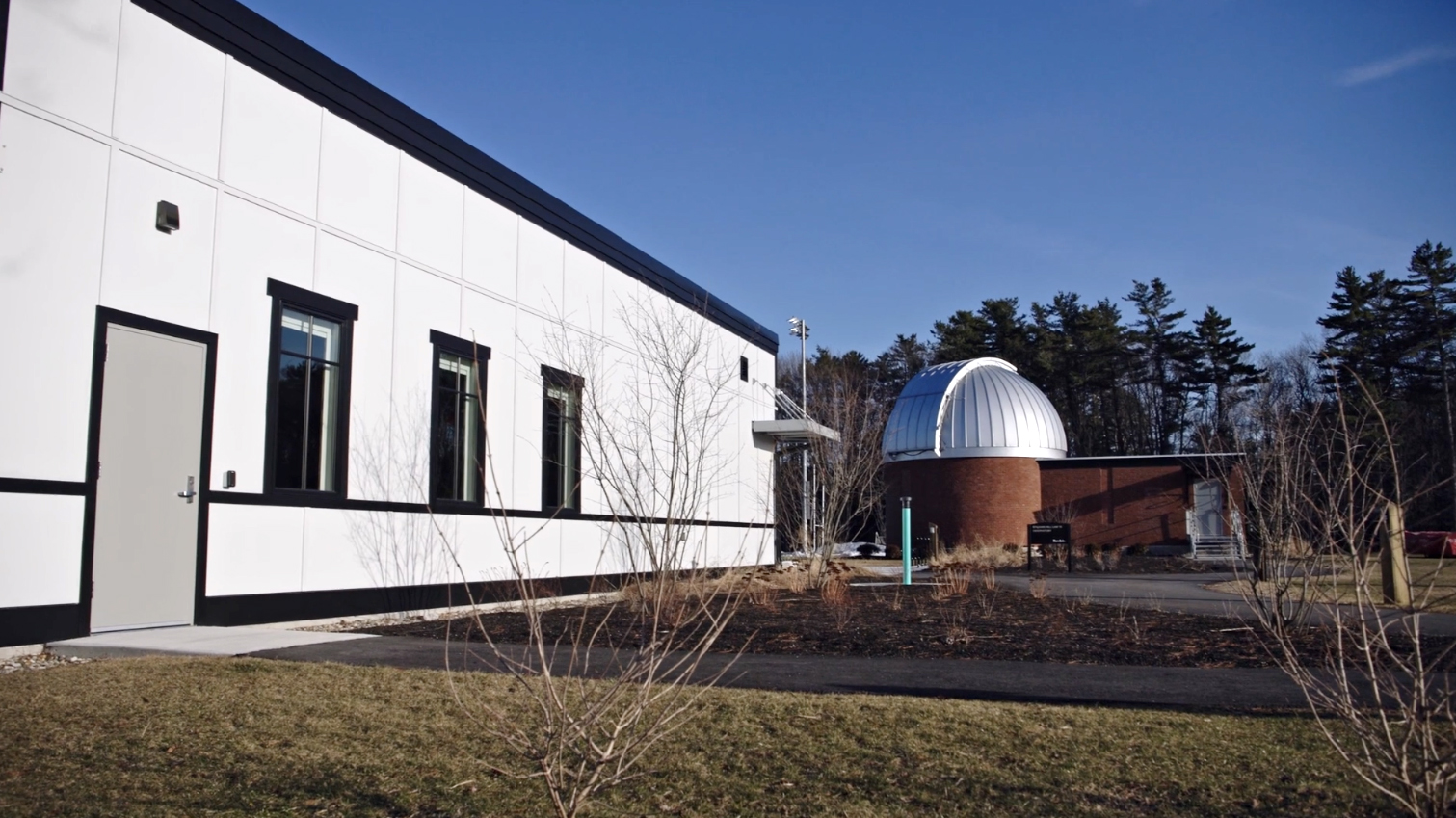
In June 2023, the Observatory was moved from its location to the center of the athletic fields near Farley Field House. This ensures the telescope will have an unobscured view of the sky.
In 2025, the dome was replaced with a steel dome, and the new mount and telescope were lifted in place as well.
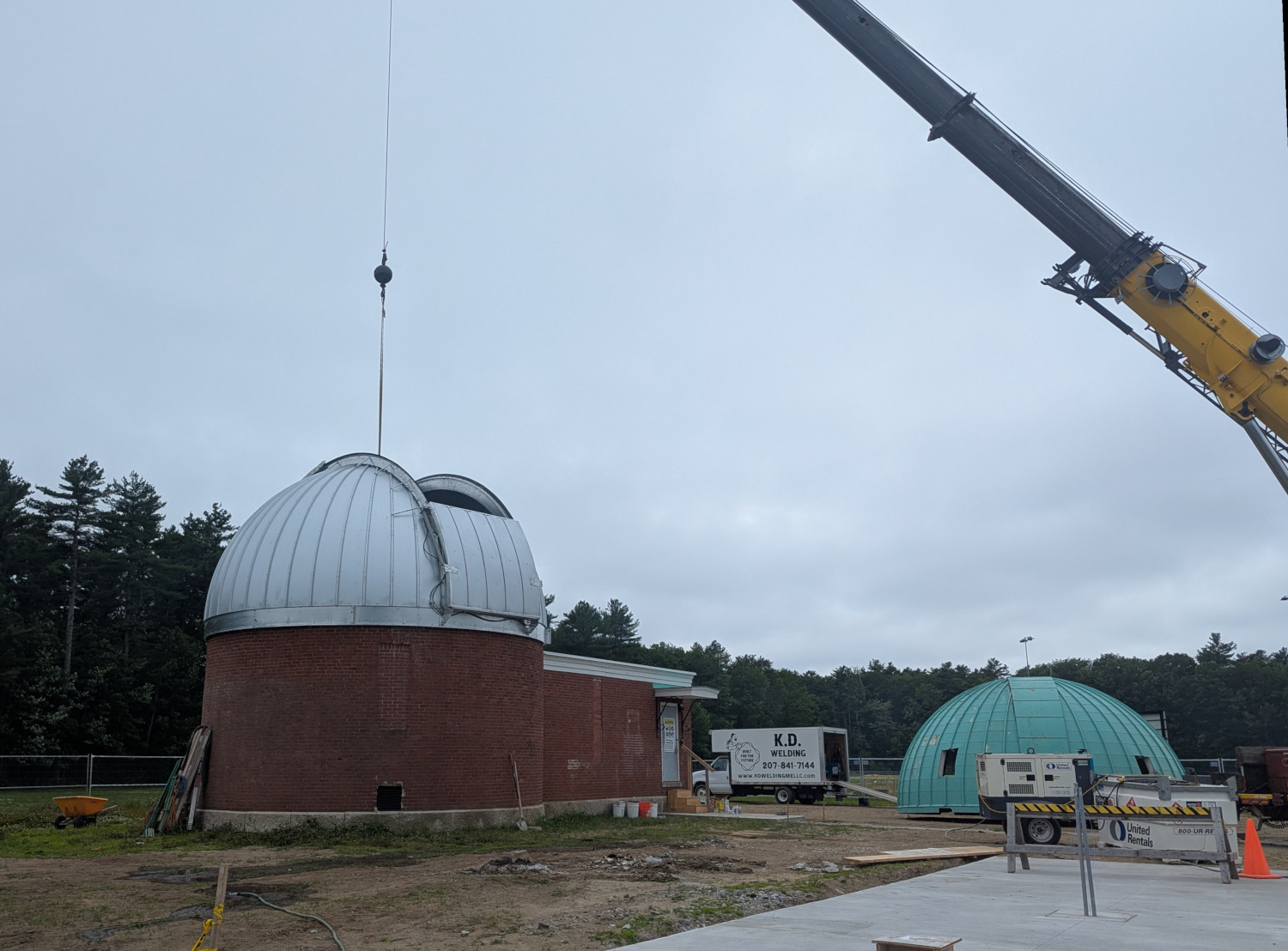
In May 2026, the Observatory was officially dedicated.
Additional Resources:
- (Orient) College explores moving observatory ahead of Pickard Field renovations
- (Bowdoin News) Celestial Motion: The College Relocates the Observatory, Part of Plans to Revamp Astronomy at Bowdoin
- (Orient) Board of Trustees approves plan to renovate the observatory and add an adjacent classroom building
- (Bowdoin News) New Observatory Named for Physics Major, Rocket Fuel Engineer Ben Hill-Lam ’13 (1991–2021)
- (Bowdoin News) Hill-Lam Observatory Nears Completion as New Steel Dome Moves into Place
- (Orient) Hill-Lam Observatory moves toward testing stage of renovations
- (Press Herald) Refurbished and relocated Bowdoin observatory to open in spring
- (Bowdoin Magazine) Look to the Sky
- (Bowdoin News) The Dedication of the Benjamin W. Hill-Lam ’13 Observatory