“What Did They Wear?” Opens at the Bowdoin College Museum of Art
By Bowdoin College Museum of Art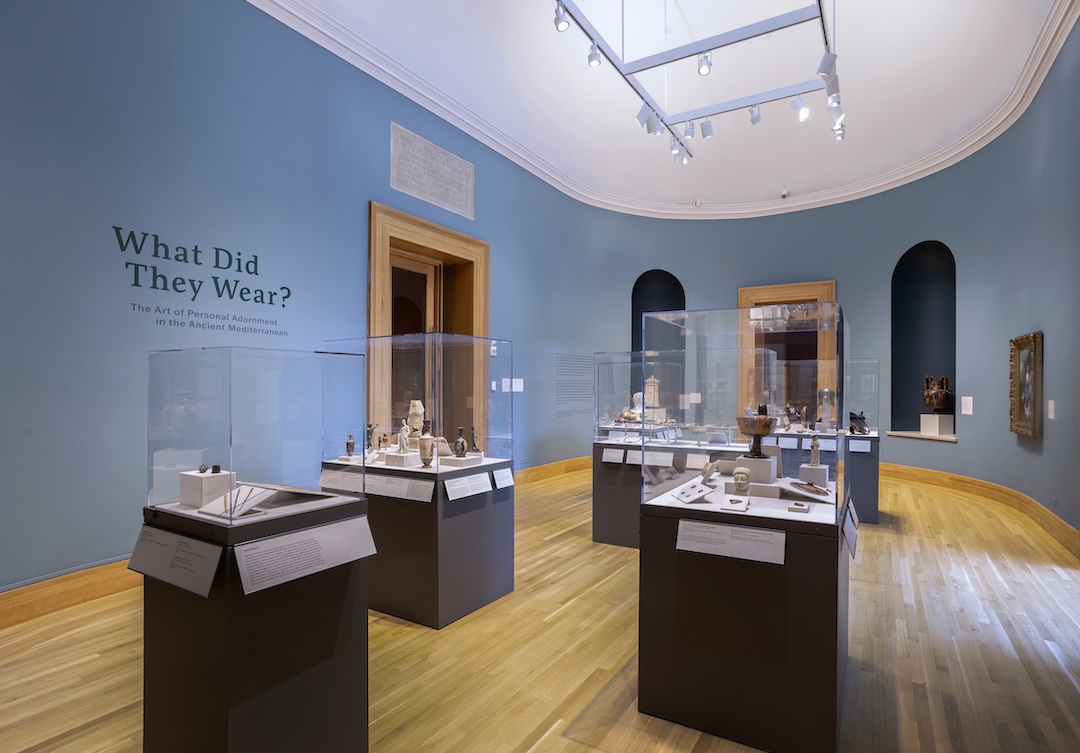
Installation view of What Did They Wear?: The Art of Personal Adornment in the Ancient Mediterranean, Bowdoin College Museum of Art, Brunswick, Maine, September 19, 2026– August 29, 2027. Photography by Tim Greenway.
What Did They Wear? The Art of Personal Adornment in the Ancient Mediterranean opened at the Bowdoin College Museum of Art (BCMA) on September 19. In the following conversation, curator Professor James Higginbotham discusses how clothing, jewelry, fragrance, and accessories reveal the social lives of ancient Egyptians, Greeks, and Romans, and how perhaps the ancient world is not as distant as we might think. The transcript has been condensed and edited for clarity.
Amanda Skinner (AS): The exhibition title leads with a question, “What Did They Wear?”, which feels deliberately accessible. What made you want to approach ancient Mediterranean culture through the lens of clothing and personal adornment?
James Higginbotham (JH): It's something everyone does. We get up in the morning and think about what we're going to wear that day—we look in the mirror, we consider our activities for the day. That link to the ancient world is real and direct. We have certain preconceived notions about what the Greeks or Romans wore, but I wanted to bring what's usually in the background to the front.
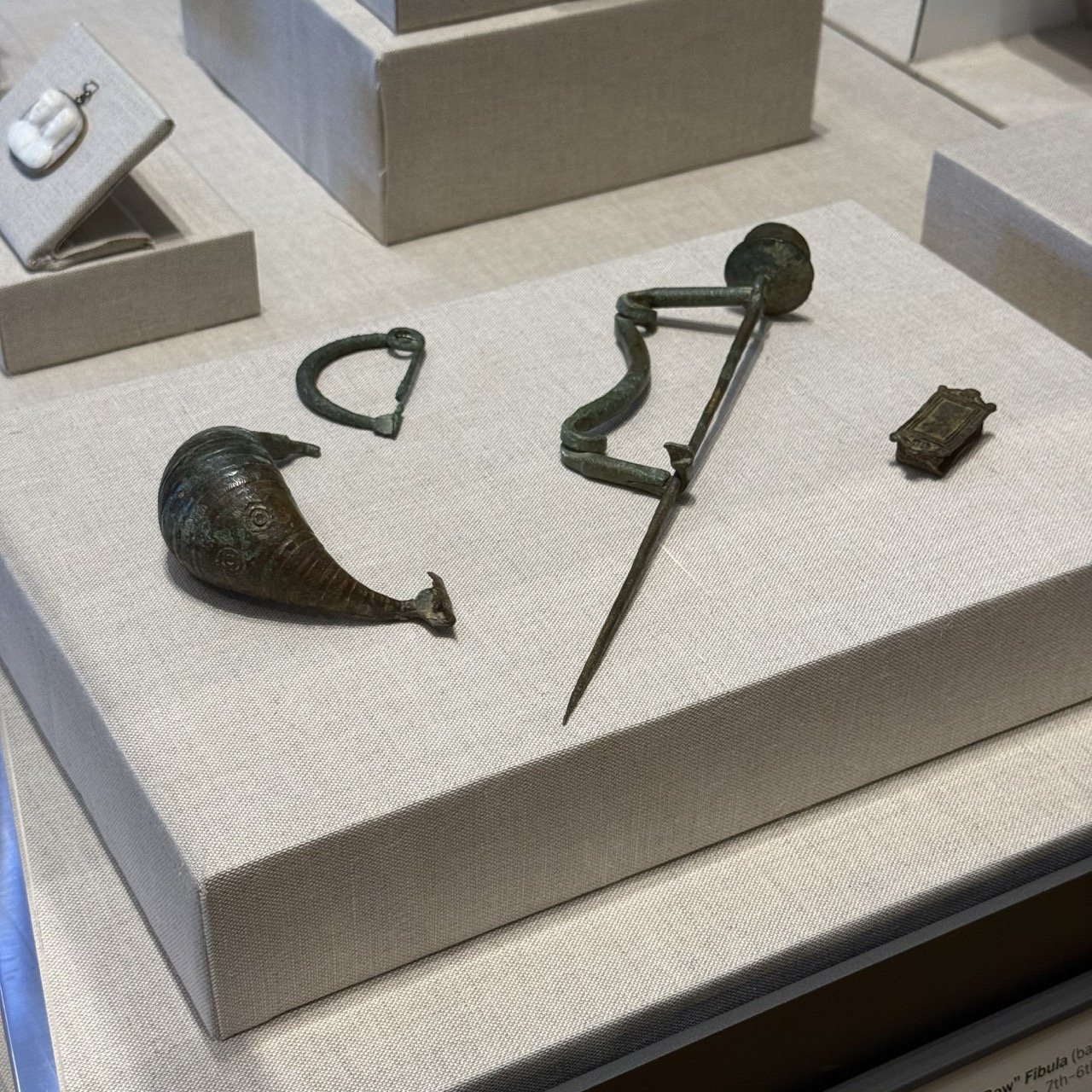
There are remarkable commonalities between then and now. The fibula, for instance, is essentially a safety pin—the same basic design of a needle folding under a clasp—used for the same purposes 5,000 years ago. Belts and sashes kept fabric on the body. These are things a viewer can recognize immediately: “I have a belt on right now too.”
As for textiles, the most common materials were linen and wool. The Greeks and Romans knew about cotton, but it was difficult to process; silk had to be imported from Asia. Those limitations tell their own story about trade and culture.
AS: The exhibition spans Egyptian, Greek, and Roman cultures across more than a thousand years. Were there surprising similarities, or were the differences more striking?
JH: In some ways, the similarities are remarkable. The tunic, a rectangular piece of cloth draped around the body, secured with a fibula and belted, appears across all three cultures with relatively little variation. Linen is common throughout, tied to both climate and availability.
Where you really see difference is in headwear. There's a figurine in the exhibition of a woman wearing a wide-brimmed sunhat. Sunhats appear frequently in art from western Anatolia and Boeotia, agricultural regions where women were regularly outdoors. But just a short distance south toward Attica, women didn't go outside as often, and hats are far less common. A small regional difference, but it tells you a great deal about daily life.
AS: You're working entirely with objects from the Museum’s permanent collection. Did any pieces reveal something you hadn't noticed before?
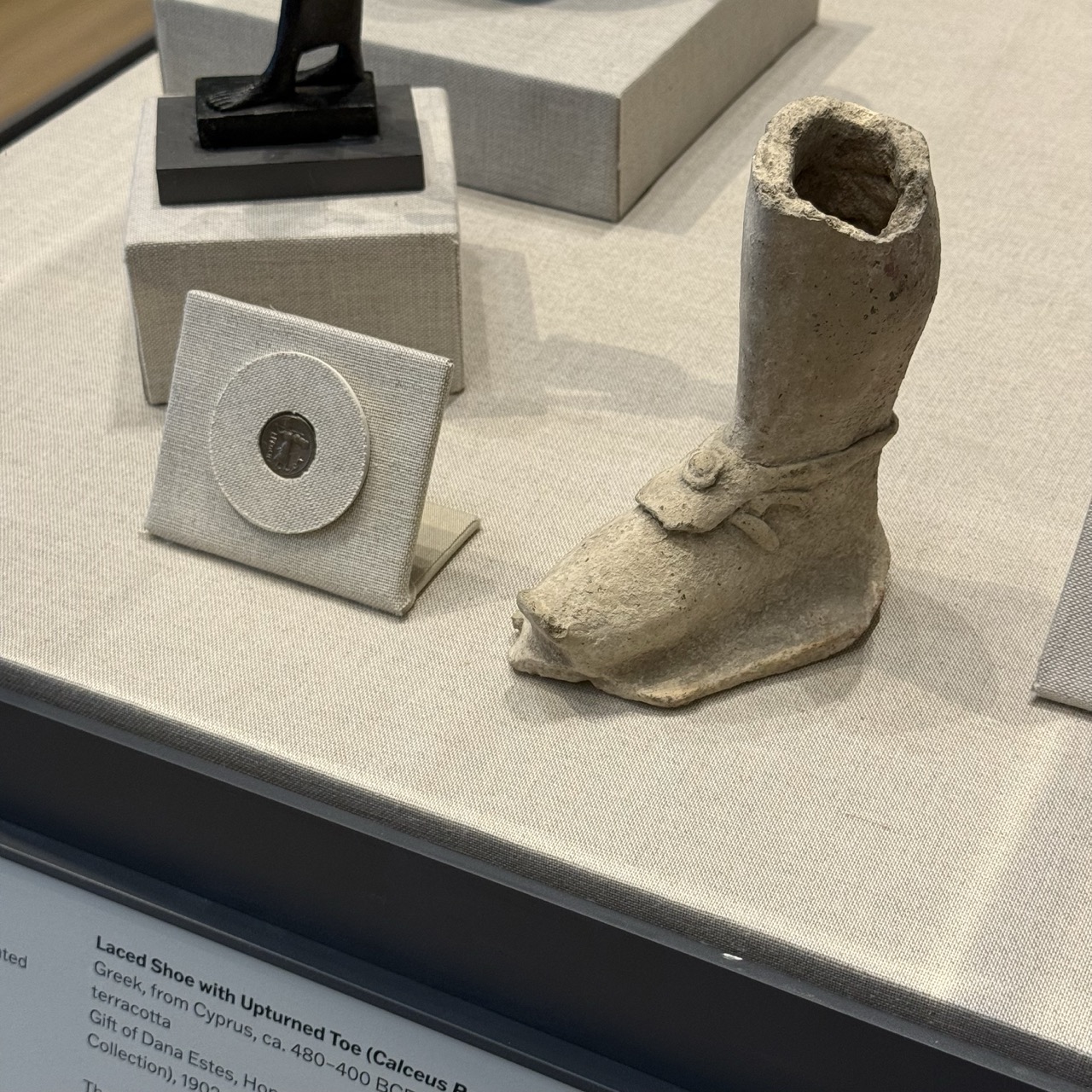
JH: The whole idea for the exhibition came from one piece: a small terracotta foot wearing a boot. It's something I've always loved—it's laced, it has an upturned toe, it's really a charming little object. But I'd rarely had an opportunity to put it in an exhibition. That boot has a history. The upturned toe originates in Asia and travels into the Mediterranean world, where it becomes fashionable in certain coastal cultures and among the Etruscans. Even Cicero comments on it.
There are also objects that have been displayed before but can now be seen through a new lens. There’s a drinking cup depicting young men out at night—columns suggest an outdoor setting, figures dressed in various cloaks. One young man, clearly the center of attention, has his coat pulled around him as if trying to be inconspicuous. It's a social scene that feels immediately recognizable.
I should also mention: we wish we had more of the female voice in the historical record. It's mostly men writing about fashion. One telling detail is that ancient Greek men were genuinely concerned about the pins women were wearing—the needle on certain examples was long enough to be used for self-defense, which prompted efforts to restrict them through sumptuary laws.
AS: The exhibition description mentions fragrance. That's an unexpected element—can you talk about it?
JH: Fragrance comes in through the archaeological record. A large number of perfume and oil containers survive, found in burial contexts and in representations of daily life. People put oils and scented preparations on their bodies for moisturizing, for athletic preparation, for ritual purposes.
The trade in scented resins, such as frankincense, myrrh, terebinth, coming from Arabia and Asia was substantial, and these materials were considered genuinely exotic. Olive oil served as the common carrier for perfumes. The exhibition includes containers in glass, agate, alabaster, and clay, including an Egyptian jar that would have held makeup. The containers themselves were precious because the contents were.
AS: There's a line in the exhibition description: "Then, as now, appearance mattered." How much do you want visitors to draw those connections?
JH: Very much. You walk across campus today and you see symbols of status everywhere—colors, brands, accessories—all sending messages. It was the same in the ancient world.
One thing I find particularly striking is the mirror. I've placed examples of ancient mirrors in two places in the exhibition. We look in a mirror today and see ourselves with complete clarity—but ancient mirrors were polished metal. The reflection was imperfect. You'd rely more on what others told you about how you looked, or on a commissioned portrait filtered through an artist's interpretation. Your sense of your own appearance was partly a social construction. That's a genuinely different relationship with the self.
AS: For someone who doesn't consider themselves a classics or art history person—what do you hope they take away?
JH: I hope they leave with a sense of the ancient world as simultaneously close and foreign. Many things we do today we share with people who lived 2,000 years ago, and at the same time, the cultural differences are real and worth understanding. Both things are true.
Amanda SkinnerAssistant Director of Museum Communications