Anna Boberg's "The Blue Roof [Det blå taket]": The Arctic, Modernism, and the Reimagining of Place
By Bowdoin College Museum of Art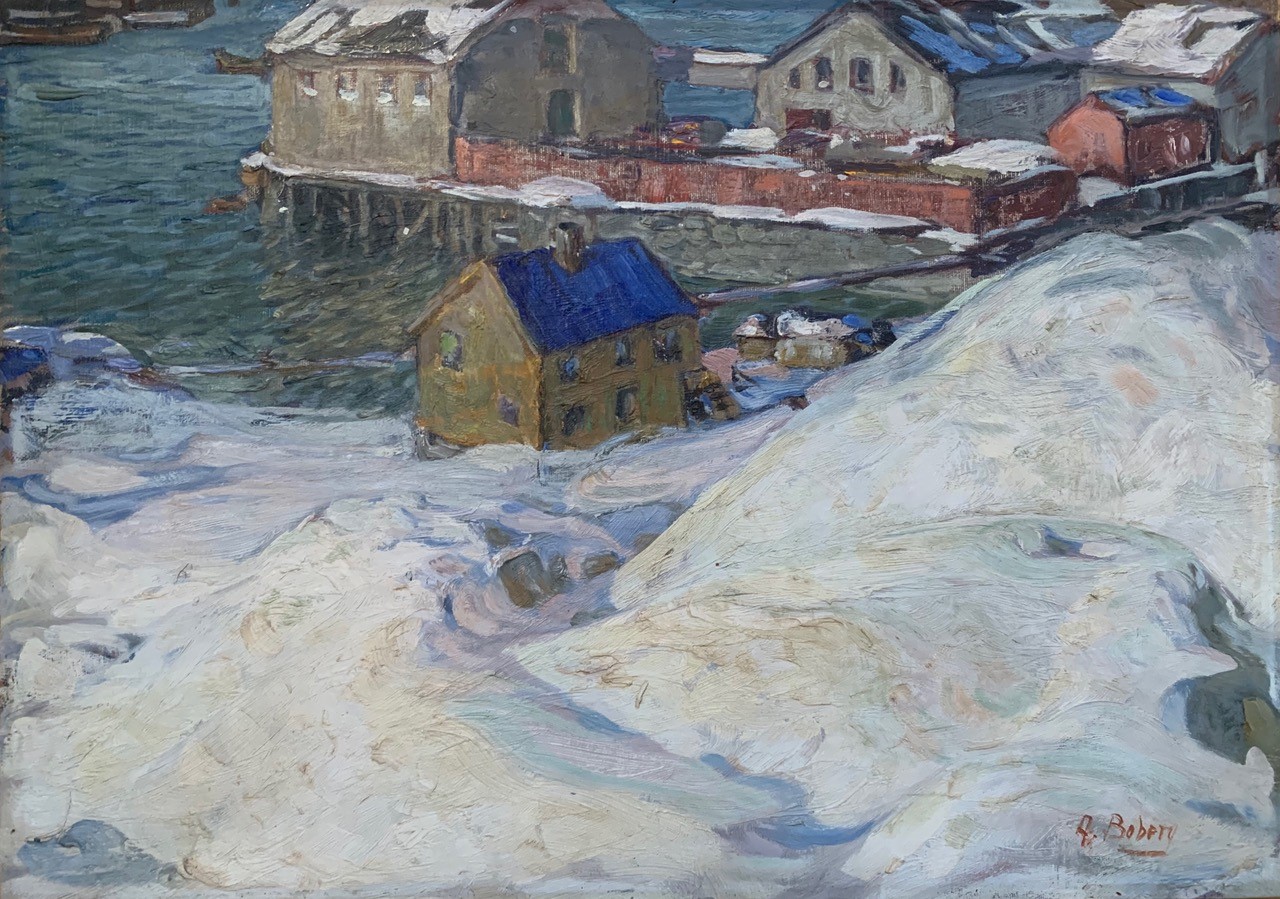
The Bowdoin College Museum of Art is pleased to announce the acquisition of Anna Boberg’s The Blue Roof [Det blå taket] (Figure 1) from Ben Elwes Fine Art, London. The painting both complements and expands our collection of depictions of the Arctic region, including works by her contemporary, the American painter Rockwell Kent, and by our contemporary, the Japanese photographer Hiroshi Sugimoto. Entranced by the Arctic landscape during her first trip to the region in 1901, the Swedish-born Anna Boberg and her husband, architect Gustaf Ferdinand Boberg, would go on to build a home in Lofoten, a picturesque archipelago governed by Norway. Describing the first impressions that proved transformative personally and professionally, Boberg recounted: “[I] was so taken with the Lofoten nature that I simply refused to travel home. I wanted to stay and paint, paint, paint.”
Although her formal training was limited to a brief time at the Académie Julian in Paris in 1884, Boberg’s work received international acclaim during her lifetime through international exhibitions that drew praise from critics on both sides of the Atlantic. Her integration into circles of professional women is reflected in her membership in Nya Idu, a Swedish women’s cultural organization established in 1885. Boberg exhibited a series of watercolors of Venice and a decorative folding screen in the Swedish Pavilion of 1893 Columbian Exposition in Chicago. The installation received praise from the celebrated art critic Royal Cortissoz.
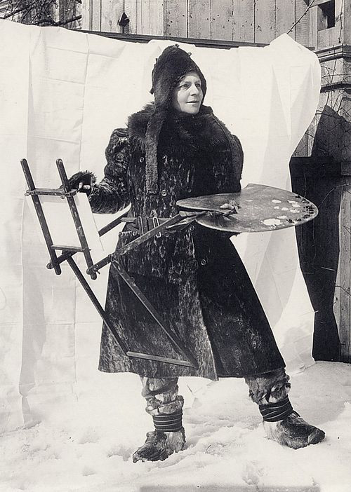
Figure 2: Unknown Photographer, Anna Boberg with her mobile painting equipment, 1910
The high regard in which the artist’s work was held internationally, and particularly her paintings of the Arctic, is indicated by her featured inclusion in such exhibitions as the Venice Biennale in 1907; the Exhibition of Contemporary Scandinavian Art in 1912-13,which opened in New York and traveled to several American cities; the Panama-Pacific Exposition in San Francisco 1915; and the Carnegie International Exhibition of 1922-23. Testifying to the impact she made on audiences in the United States, the American painter Maynard Dixon offered this account to an interviewer in 1922: “Don’t you remember the work of the Swedish painter in the Palace of Fine Arts [in San Francisco]? Wasn’t it immense? Well, Anna Boberg did a lot for me. She knew how to paint.”
The artist found spiritual gratification in the natural beauty of the Lofoten Islands. She continued to travel and paint in the region throughout her life, exploring and documenting glaciers and the vessels and villages of the local fishing community. As art historian Isabelle Gapp has noted, Boberg defied stereotypical representations of the Arctic as “a white, desolate, and uninhabited environment,” revealing instead its vivid hues and vibrant culture. A passage from the artist’s autobiography captures her keen attentiveness to the visual environment she experienced in circumpolar north:
The sea breathed deeply. … Mountain islands rose up high, rose up and down in a silver mist. The last glimpse of the sun had long since been extinguished by the highest peak of Stjärneholdet, but the heavens still bathed in a golden light. … at the same time as the glow faded over the setting sun, dusk crept up on the landscape, an ethereal peacock blue.
Boberg’s verbal description of the atmosphere clearly resonates with the brilliant colors visible in the fishing villages and fleets that she so often captured on her canvases, including the titular “blue roof” of the Museum’s new acquisition. Further testifying to her deep sense of connection with the environment, Boberg did not make her work from memory, but rather worked en plein air, allowing her immediate impressions to animate her composition. To work outdoors, she used an easel of her own design in order to secure her canvas to her body at the appropriate distance (Figure 2). The resulting works might later be used by Boberg to develop a larger composition. That is the case with The Blue Roof, which, as Isabelle Gapp has recently discovered, was used as the basis for a larger painting, now in the Swedish national collection (Figure 3).
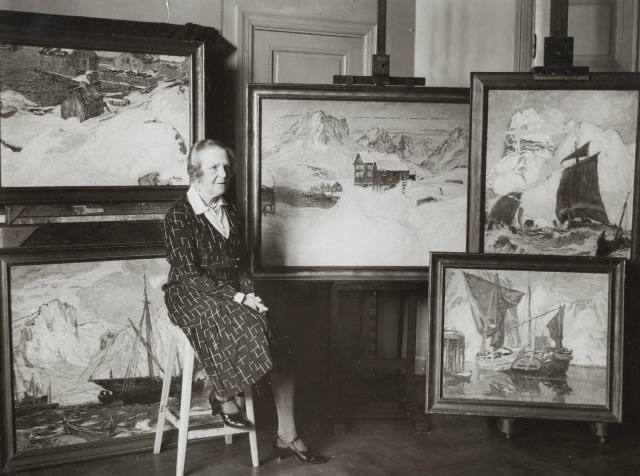
Figure 3: Herman Ronniger, The Artist Anna Boberg, c. 1933-34, gelatin silver print, 7 x 4-3/4 in (18.1 x 12. 4 cm). Moderna Museet, Stockholm
Boberg’s use of vibrant color and expressionist brushstrokes to capture the brilliance of lingering illumination she experienced during the summer months in the Lofoten Islands may also bespeak her interest in Theosophy. This spiritual movement, highly influential at the turn of the twentieth century, posited an underlying connection between the microcosm of the human being and the macrocosm of the universe. Notably, in 1913 Boberg participated in two exhibitions sponsored by the Swedish Theosophical Society, held in concert with an international Congress convened in Stockholm. (This gathering was attended, among others, by Boberg’s contemporary Hilma Af Klint, whose own paintings have recently been rediscovered.) Boberg’s resistance to dating her painting, positing her works as “timeless” may also reflect her espousal of Theosophical doctrine, echoing founder Helena Petrovna Blavatsky’s assertion that “‘time’ is only an illusion produced by the successive states of our consciousness as we travel through eternal duration.”
If an interest in Theosophy underpinned Boberg’s work, this was by no means incompatible with her commitment to scientific observation and documentation, and, indeed, Boberg described herself as a “polar researcher.” In addition to capturing fishing communities, she also committed herself to exploring and painting the glacial landscape of the Lofoten Islands, providing a valuable record of the region a century ago.
Although Boberg painted in numerous locations, including Jerusalem, Italy, France and Switzerland, it was in the Lofoten Islands that she undertook her most sustained campaign of work. And, indeed, the artist would maintain careful records of her travels in the region in her autobiography, Envar sitt ödes lekboll (1934) [Each One’s Destiny], published shortly before her death.
Challenging the trope of the male explorer and chronicler of Arctic region, Boberg’s painting largely disappeared from view following her death. But recent work by scholars such as Marianne Nyström, Eva-Charlotta Mebius, and Isabelle Gapp has helped to restore her to visibility, bringing back to light an important Scandinavian modernist. Boberg’s pioneering work a century ago promises to add depth to our understanding of early twentieth century painting and to offer a new perspective on our understanding of the evolving Arctic region and the myths it has long perpetuated.
Anne Collins GoodyearCo-Director