Staff Highlight: David Francis, Senior Interactive Developer
By Bowdoin College Museum of Art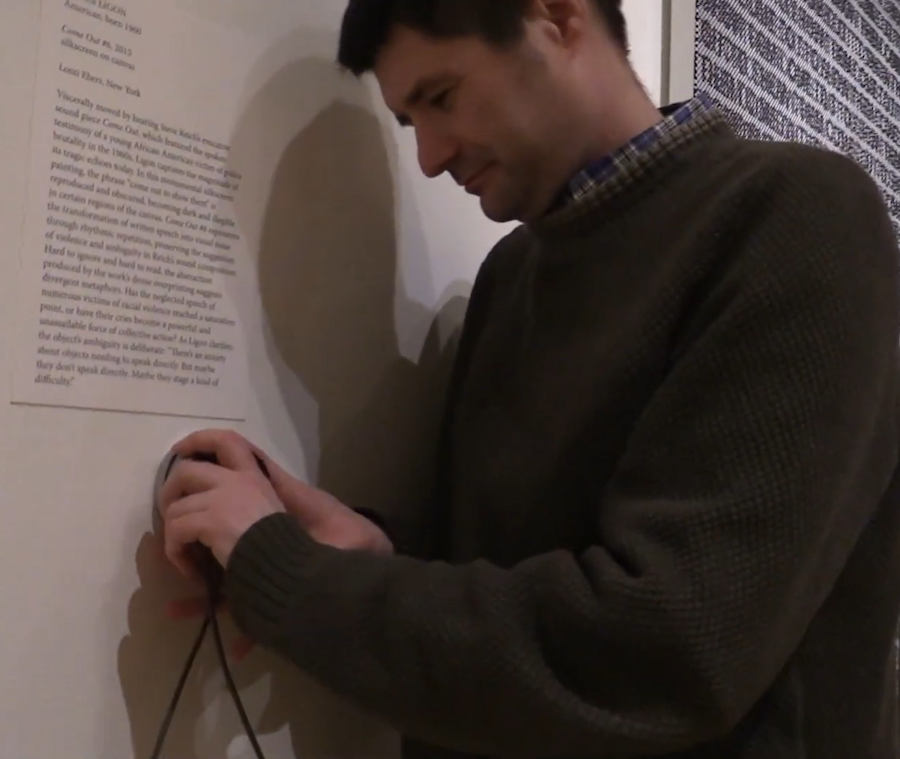
From touch screens that let visitors explore ancient Assyrian reliefs, to handheld digital medal experiences, to audio devices that other institutions have asked to replicate, David Francis, senior interactive developer, has been helping to shape how people discover and engage with the Museum's collections. In the following conversation, we discuss how technology, accessibility, and problem-solving fits in at the BCMA. The transcript has been condensed and edited for clarity.
Amanda Skinner (AS): Thanks, David, for chatting with me today. A lot of people around campus know you for your work with Information Technology (IT), and for your book Haunted Bowdoin and related ghost tours, but may not know that you work closely with the Bowdoin College Museum of Art (BCMA).
David Francis (DF): That's right. I'm the IT liaison for all of Bowdoin's collecting institutions, which includes the BCMA, the Peary-MacMillan Arctic Museum, and the George J. Mitchell Department of Special Collections & Archives.
AS: For those curious about what goes on behind the scenes at a museum, how would you describe your day-to-day work?
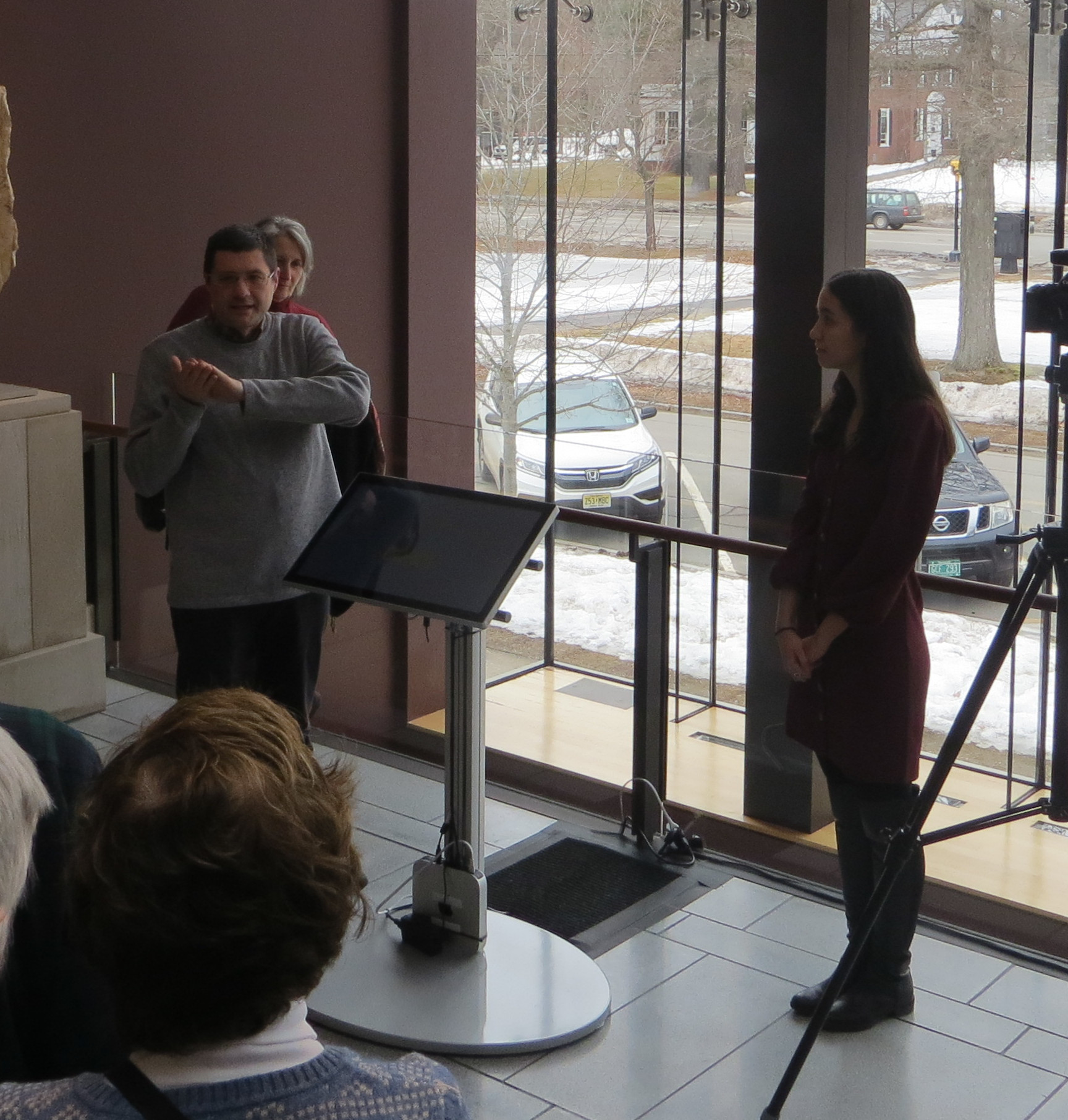
DF: My overarching goal is to provide a new level of discoverability, which means helping people find and engage with things they might otherwise miss. One very visible way that happens is through digital enhancements to exhibitions. For Assyria to America, for example, we set up touch screens so visitors could explore the reliefs more deeply—moving through timelines, zooming into details, learning things that labels alone couldn't convey.
Another side of the work is standardizing how we input and output data. Recently we created an XML feed using the Open Archives Initiative Protocol for Metadata Harvesting that allows objects from all Bowdoin's collecting institutions to appear as searchable assets in the library's catalog as a unified platform where people can discover things they might not have found otherwise.
AS: How did you end up in this role? Was working in a museum context something you anticipated?
DF: Not at all, it was pretty roundabout. I was working in IT’s Digital and Social Media department, and when my manager couldn't make a regular meeting at the BCMA, I filled in. It kind of took off from there. I was originally brought more formally into the fold by Anne Collins Goodyear, former co-director of the BCMA. Prior to that, I was your typical programmer — sitting in the back of the room, working behind the scenes. Working with the BCMA has been a genuinely fun experience.
AS: Is there a moment where you've seen your work directly shape how a visitor experiences the BCMA?
DF: The Assyrian reliefs technology is one example. Another is what we built for A Handheld History: Five Centuries of Medals from the Molinari Collection at Bowdoin College. Medals are objects made to be held, so we built a digital experience around that idea—visitors could use their smartphones as a kind of surrogate for the medals themselves, flipping them digitally in a way you can't do with objects in a display case.
Then there were the "hockey pucks" for Second Sight: The Paradox of Vision in Contemporary Art. We wanted a lot of audio but weren't sure how to deliver it, so Adam Lord, our Senior Infrastructure Engineer, and I built small micro audio devices. They hung on the wall with magnets like a telephone receiver—when you broke the magnetic connection, the audio started playing, and when you replaced it, it stopped. I ended up presenting those at a conference, and other institutions reached out for the specs. We've reused them for several exhibitions since.
AS: Accessibility is a real priority for us at the BCMA. How does your work connect to that?
DF: Discoverability and accessibility are deeply linked. The more you standardize your data, the easier it is to make accessible—a reliable format, for instance, can be turned into something a screen reader can navigate. I think about it in terms of universal design: if you build for everyone from the start, you don't end up having to retrofit for special cases later. Accessibility becomes inherent rather than an afterthought.
AS: Does the BCMA's mission of encouraging creative thought and learning for all resonate with how you think about your work?
DF: Very much so. One thing I think is important to the future of museums is the opportunity to put something out there and ask, "Does this inspire you? Does this make you think?" rather than prescribing what people should think. In the digital realm, there's more room for input from multiple sources, and therefore more room for creativity. I've been involved with several exhibitions tied to specific classes, where students do their own research on the objects on view. That kind of open engagement is exciting to me.
AS: What would you say to a student who loves both technology and the humanities but isn't sure how to put those together?
DF: Students today have something previous generations didn't: an almost limitless number of ways to express themselves and share their interests. When I was a student, there were only so many channels. Now, between social media, blogs, podcasts, and everything else, you can create your own platform and find your own audience. I'd say take advantage of that.
AS: What's something about this work that surprises people, or that you wish more people understood?
DF: Some people still feel like museums are for "other people.” They worry they'll feel out of place because they don't know much about art. But the museum isn't about feeling comfortable because you already know the material. It's about coming to learn something new. That's what it's there for.
AS: That is a message that we are really hoping to get out there—that the BCMA is open to all and is a place for learning and discovery. Anything else you'd like to add?
DF: I'm not just an IT person—I'm a problem solver.
AS: We know! (laughs)
Amanda SkinnerAssistant Director of Museum Communications