Four faculty members have been promoted from the rank of associate to full professor and one lecturer promoted to senior lecturer based on their excellence in teaching, distinction in scholarly or artistic engagement, and service to the College.
The appointments, which are effective July 1, 2026, were announced in a letter from President Safa Zaki sent to the professors at the recommendation of Senior Vice President and Dean for Academic Affairs Jennifer Scanlon, following reviews in their respective departments and by the Committee on Appointments, Promotion, and Tenure.
“I’m delighted to celebrate these scholars, each of whom demonstrates remarkable talent in their disciplines and a strong commitment to sharing their knowledge with students,” said Dean Scanlon. “These promotions reflect both their personal dedication and the meaningful impact they have on the College and the broader Bowdoin community.”
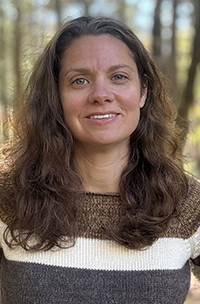
Professor of Art Jackie Brown
Sculptor Jackie Brown explores the shifting processes of growth and transformation that connect human life with the living systems around us. Working primarily in clay, she uses 3D printing and mold-making as starting points for experimental forms that invite reflection on how we perceive and relate to the natural world. For Brown, sculpture allows these ideas to take physical form, offering an embodied experience that engages both the brain and the body.
Her exhibitions include works at the Indianapolis Art Center in Indiana, American Museum of Ceramic Art in California, and Atlantic Gallery in New York City. Brown’s honors include a Maine Artist Fellowship and a Lighton International Artists Exchange Program Award, which supported a residency at the European Ceramic Work Center in the Netherlands. Additional residencies include the Watershed Center for the Ceramic Arts, the Archie Bray Foundation, and the Museum of Arts and Design. Brown serves as chair of the visual arts department and teaches a broad range of studio courses, including beginning sculpture, mold making and casting, interdisciplinary practices, and advanced capstone work. Brown earned an MFA from Virginia Commonwealth University and a BA from Hamilton College.
“What I find most rewarding is how students discover that art is not separate from life but a way of understanding and experiencing it more fully,” Brown said. “The act of making challenges them to experiment, iterate, and take creative risks, developing not only artistic fluency but also new ways of perceiving and questioning the world around them. Through hands-on processes, students learn to navigate ambiguity and persevere in the face of obstacles, cultivating capacities that are vital across disciplines and throughout life. Their curiosity and growth continually invigorate my own thinking as an artist.”
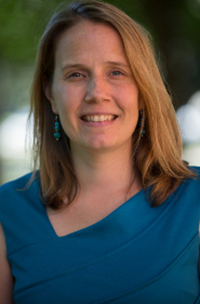
Professor of Digital Humanities Crystal Hall
With a varied array of research and teaching interests that include digital humanities research and pedagogy, early modern Italian literature, science and literature, Renaissance Florence, and second language acquisition, Crystal Hall has taught courses that include How to Read 1,000,000 Books, Introduction to Digital and Computational Studies, and Data-Driven Societies, among others. She has focused her scholarship into various publications, including Galileo’s Library: Data, Methods, and the Humanities (forthcoming with Oxford University Press) and How Digital Artifacts Are Accountable, in development with DCS colleagues Eric Chown and Fernando Nascimento. She collaborated with another colleague, Birgit Tautz, on the edited volume German and European Cultural Histories 1760–1830: Between Network and Narrative (Liverpool University Press, 2024) and is the author of dozens of book chapters, peer-reviewed articles, and reviews. Her peer-reviewed article "The Versions of Vincenzo Viviani's Library," written in 2025 with two first-year students, was published in Bibliothecae.
Hall is also a frequent conference presenter and lecturer; earlier this year, she was joined by two of her students at a literary festival in Florence, Italy, as they shared results of their data-driven analysis of the contribution of female writers promoting the creative labor of Italian women at the turn of the twentieth century. Her most recent project, again in partnership with Bowdoin students and collaborators, examines the potentials and pitfalls of using large language models as tools for historical research. Hall, who arrived at Bowdoin in 2013, earned her bachelor’s degree at Cornell University before earning a master’s degree and doctorate at the University of Pennsylvania.
“Working on computational text analysis right now is offering valuable insight about how large language models function and their impact on human expression,” Hall said. “Broadly, the collaborative environment with colleagues across the divisions and students from such a variety of majors enriches every project in valuable and unexpected ways.”
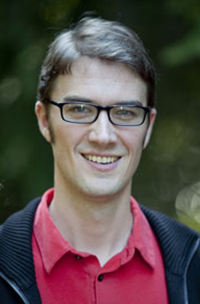
Professor of Government and Asian Studies Christopher Heurlin
Christopher Heurlin came to Bowdoin in 2011 having earned a PhD from the University of Washington, where he gained an expertise in Chinese politics. Heurlin received a master’s degree in 2006, also from the University of Washington, and in 2002 earned a bachelor’s in international relations at Carleton College. Heurlin’s research deals with fundamental questions of authoritarianism, such as why some dictators manage to cling to power for long periods of time while many others are quickly overthrown.
His first book, Responsive Authoritarianism in China: Land, Protests and Policy Making (Cambridge University Press, 2016), examines the impact of protests on policy in the world’s biggest manufacturing nation, shedding light on this important question through case studies of land takings and demolitions—two of the most explosive issues in contemporary China. Heurlin’s latest work, The Enduring Power of Communism: The International Origins of Authoritarian Consolidation, was recently published by Oxford University Press. Writing it was very challenging, explained Heurlin, because it was such a radical departure from his first book. “While Responsive Authoritarianism in China focused on contemporary China, The Enduring Power of Communism marked a transition in my expertise to comparative politics more broadly, examining all seven non-European communist regimes—China, Vietnam, North Korea, Laos, Cambodia, Mongolia, and Cuba—over the course of the Cold War.”
The book required Heurlin to explore previously untapped sources to assemble a new dataset, showing how Soviet economic aid was distributed and its impact on the survival of dictatorships in the developing world. “I had to bury myself in the East German archives for nearly a year, as well as learn new techniques of quantitative analysis,” he said. “In the end it was well worth it, but it was quite an ambitious project to tackle.”
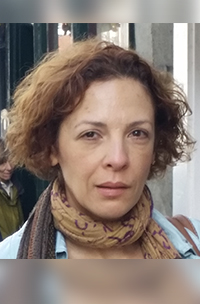
Senior Lecturer in Arabic Batool Khattab
Batool Khattab joined the Bowdoin faculty in 2018, having previously taught Arabic studies at Williams College, where she helped establish the Arabic program and grow it from a critical language offering into a robust department with an established major. She has also held teaching positions at Middlebury College and Tufts University and worked at the Middlebury Arabic Summer Language School, where she taught, supervised, and administered placement and exit exams and participated in the training and supervision of junior faculty in the program.
Her research focuses on the significance of space and memory in theater performance, post-Egyptian revolution street theater, cross-cultural theater, second-language pedagogy, and the role of culture in second-language acquisition. Khattab teaches all levels of Arabic language and culture at Bowdoin and is currently developing a fourth-year Arabic curriculum with a range of offerings, including Contemporary Arab Culture(s), Readings in Diplomacy and Current World Politics, and Introduction to Arabic Theater(s). She was a Fulbright fellow at the University of Washington’s School of Drama and earned her BA in English literature, an MA, and her PhD from Ain Shams University in Cairo, Egypt.
“Teaching is a lifelong journey of self-discovery, both for myself and my students,” said Khattab, adding that the most rewarding aspect of teaching is building lasting connections with her students, especially after they graduate. “Receiving words of thanks are small gifts from students—whether they are graduating or have already graduated—and it means a great deal to me. It reassures me that I have made a meaningful difference in their lives, one that they continue to value and appreciate.”
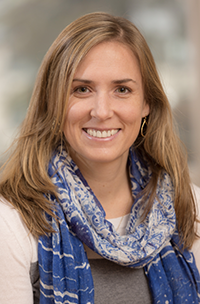
Professor of Earth and Oceanographic Science Emily Peterman
A scientist with myriad research interests, Emily Peterman, who arrived at Bowdoin in 2012, is known for her collaborations with students and scientists at universities in the US and abroad. She and her students use petrology, mineralogy, geochronology, and geochemistry to quantify the timing and rates of metamorphic recrystallization, deformation, melting, and other processes that affect how Earth’s crust has evolved in time and space. With her research team, Peterman measures variations in mineral chemistry and crystal lattice orientations to determine the conditions and timing of mineral recrystallization. Much of her work involves sample characterization using the scanning electron microscope, which was funded through a grant through the Major Research Instrumentation Program at the National Science Foundation. Her research has been supported by external grants and fellowships, and she has published numerous articles in journals such as Science, Journal of Metamorphic Geology, American Mineralogist, and Microscopy and Microanalysis.
In June 2022, Peterman cohosted the sixth Biennial Structural Geology and Tectonics Forum at Bowdoin, funded by the National Science Foundation. In 2023, she was recognized by the College’s Accessibility Task Force for her work to make the College environment a better one for students. Peterman earned her bachelor’s degree in geology and Spanish at Middlebury College and her doctorate at the University of California–Santa Barbara.
“I’m excited by questions that sit at the intersection of geology, materials science, and biology….I'm inspired and motivated by those 'aha' moments in interdisciplinary research—when a concept from one field unlocks a question in another,” Peterman said. “One of my favorite parts of my job is mentoring students in authentic research. Whether we're making field observations or collecting data in the lab—usually both—I love the moments when students realize that they're contributing new knowledge, not just completing an assignment.”