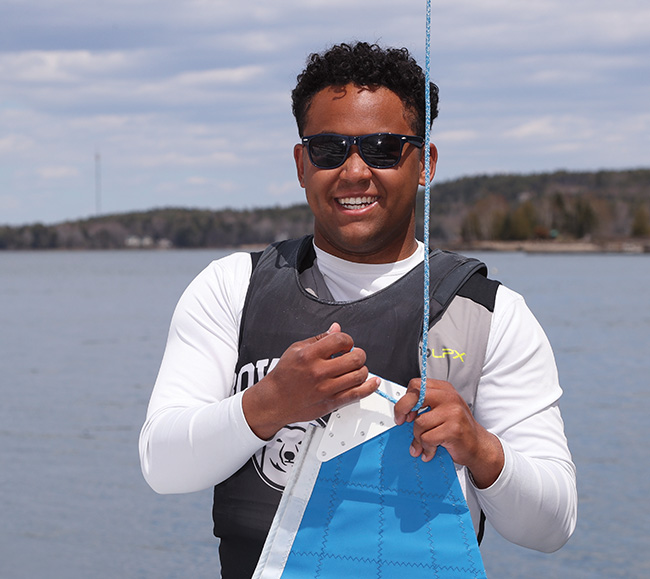
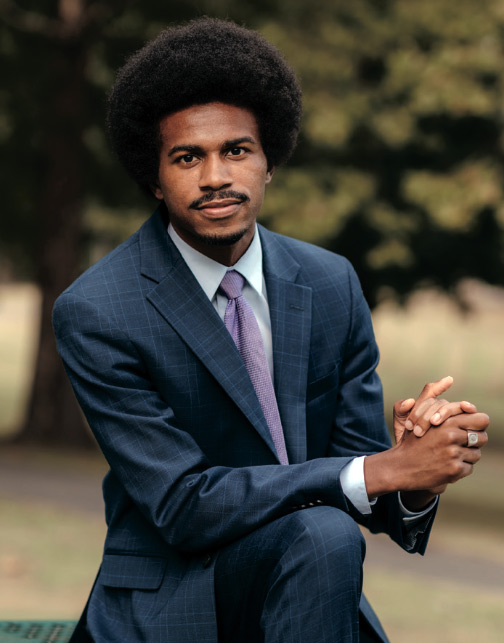
Isabella Ardell ’26 reflects on four years of intramural sports and what she learned about competition, friendship, and finding joy in imperfection.

My first fall at Bowdoin, I wanted to play intra-mural soccer. I had played a bit in high school, but I was not that good. That wasn’t my main problem, though. My main problem was that I didn’t know enough people to field a team. So I did what I could: I knocked on doors on my floor until I got lucky and saw someone with a soccer ball. He was on the men’s club soccer team and, importantly, he knew other people who could kick a ball in the right direction.
We showed up to our first game with enough bodies and a team name that made us laugh: the Pyramid Schemers. I don’t remember who came up with it or why it stuck, but it did. What I do remember is that we won. Then we kept winning. By the end of the season, we had claimed the intramural soccer championship.
Riding that high, we figured: why stop there? Winter came, and we moved to ice hockey. Same team, different sport, same result. Championship again. Sophomore year rolled around, and we did it all over—soccer in the fall, hockey in the winter. No such luck dabbling with basketball, but we claimed two more championships later. At that point, it felt almost inevitable, like we’d stumbled into some kind of intramural dynasty purely by accident.
Then junior year happened. Everyone scat-tered abroad for different semesters, in different countries and different time zones. The Pyra-mid Schemers went on indefinite hiatus. I won-dered if we’d ever get the band back together.
We did, during our senior fall, for soccer. But something had shifted. We were all back on campus, technically, but we were also busier than we’d ever been. Night classes, senior commitments, thesis deadlines, job applications—all the things that make senior year feel like you’re simultaneously sprinting toward the finish line and trying to savor what’s left. People were less available. Games were squeezed between everything else demanding our attention.
We didn’t win the championship this year. For the first time since we’d started, we fell short. But here’s the thing: it didn’t devastate me the way I thought it might. Somewhere along the way, intramural sports had stopped being about winning and started being about something else entirely.
I've been thinking a lot lately about what distinguishes play from competition, and how rarely we give ourselves permission to exist in that in-between space, especially as women. In most of the athletic spaces I’d occupied before Bowdoin, there was always an endpoint, a metric, a ranking. You were either good enough to make the team, or you weren’t. You either won, or you lost. The scoreboard was what told you your worth.
Intramurals offered something different—a space where the stakes were simultaneously real and not real at all. We kept score, yes. We wanted to win, absolutely. But we also knew that showing up mattered more than our skill level and that the person who’d never played hockey before was just as essential to the team as the one who’d grown up on skates. There was a competitive aspect for sure; we weren’t out there just going through the motions, but it was competition wrapped in permission to be imperfect, to be learning, to be there purely because it was fun. So much fun.
There was still adrenaline, still the rush of a close game, still the satisfaction of a goal or a good defensive play. But underneath it all was this baseline of ease, this knowledge that whether you were brilliant or terrible on any given night, you were still welcome, and you’d still play. If you wanted in, you were in.
Sometimes the most meaningful things are the ones you choose simply because they make you feel more like yourself.
My first year, my experience with intramurals was intentional in a way I didn’t fully appreciate at the time. I was actively trying to build some-thing—a team, a friend group, a place to belong in this new environment. I wanted to replicate the feeling of being part of something, of having people who expected you to show up. It worked, probably better than I could have hoped.
But now, senior year, standing on the other side of that intentionality, I’m confronted with a different question: How do I carry this forward? In a few months, I’ll be moving into the next phase of life, whatever that looks like, and there won’t be a convenient intramural sports system waiting for me. There won’t be an email telling me when my games will be or a built-in group of people who show up at the same time every week to do something purely for the joy of it.
When prospective students ask me about my athletic involvement at Bowdoin, it is easy for intramurals to come up. I try not to oversell it—I’m not some IM sports evangelist—but I do tell them the truth: it’s actually fun. Fun in the way that makes you forget to check your phone, fun that gets you up to walk to the field at 10:30 p.m., fun that leaves you slightly sweaty and completely present, and fun that doesn’t require you to be good at anything in particular, even if it sometimes helps.
I’ve talked to people over the years who have drifted from team sports, often because they felt they weren’t good enough, or because they assumed everyone else was taking it more seriously than they were. And I get it—there’s vulnerability in showing up to something you’re not naturally skilled at, especially when you’re surrounded by people who seem to know what they’re doing. But that’s exactly what makes intramurals valuable. It’s one of the few spaces left where mediocrity is not just acceptable but expected, where half the team might be learning the rules as they play, where someone will absolutely trip over their own feet at a crucial moment and everyone will laugh, including them.
Here's what I’m starting to realize, though: this particular flavor of competition—playful, structured enough to matter but loose enough to breathe—is astonishingly rare outside of college. We were good at soccer and hockey. Some of us were better than others, of course, but we all brought something. What made intramurals special wasn’t that we were bad at sports; it’s that we got to exist in this middle ground between casual pickup games and serious athletic commitment. We cared about winning, showed up consistently, built real team chemistry. But we also knew that this wasn’t our whole identity or even the largest part of our Bowdoin experiences. It was just… well, Monday, Wednesday, and occasionally Sunday nights.
The Pyramid Schemers gave me that. Three and a half years of those nights where the only requirement was showing up. Most games we dominated. Some games we barely won. Some games, especially senior year, we barely had enough people to field a full team. But we were there. We kept showing up.
The lack of structure, paradoxically, sort of created its own kind of structure. We didn’t have mandatory practices or coaching staff or performance reviews. We had a group chat, a game schedule, and a collective understanding that this mattered to us, even if we couldn’t always articulate why. That informality meant we had to choose it, week after week. Nobody was making us be there. We wanted to.
We're back for ice hockey this winter, senior year, one last run at a championship. The team looks a little different now; people’s schedules are more complicated, commitment levels vary, we’re all managing different levels of senioritis.
What I do know is this: I’ll remember the particular kind of exhaustion that comes from playing a sport you’re only moderately good at but deeply enjoy. I’ll remember the elaborate celebrations after mediocre goals, the fun we had.
More than that, I’ll remember what it taught me about building the kind of life I want to live after Bowdoin. Not everything needs to be excellent. Not everything needs to have a clear purpose or outcome. Sometimes the most mean-ingful things are the ones you choose simply because they make you feel more like yourself.
When I leave campus in May, I won’t be able to take the Pyramid Schemers with me. But I can take this: the knowledge that it’s worth seeking out spaces where joy matters more than skill, where showing up is enough, where you’re allowed to be imperfect and still belong. I can take the muscle memory of choosing play over perfection, of building community around shared laughter and shared excellence.
The Pyramid Schemers played and won countless games that mattered and didn’t matter in equal measure. We showed up for each other, week after week, year after year, because we chose to. Somewhere in all that, we figured out how to hold competition and joy in the same hand, how to care deeply about something while knowing it’s ultimately just a game, how to create space for play in a serious world, and how to be part of something bigger than ourselves without losing ourselves in the process.
That’s the thing about intramural sports that nobody tells you—it’s not really about sports at all.
Isabella Ardell ’26 is a sociology major with an economics minor who has worked at Bowdoin as an admissions intern and research associate and is a cofounder of the Philippine Society and social captain for the alpine ski team. She is from Houlton, Maine.
This story first appeared in the Winter 2026 issue of Bowdoin Magazine. Manage your subscription and see other stories from the magazine on the Bowdoin Magazine website.