The student-produced political podcast “Pine State Politics” is back for a second season, this time focused on Maine’s packed governor’s race.
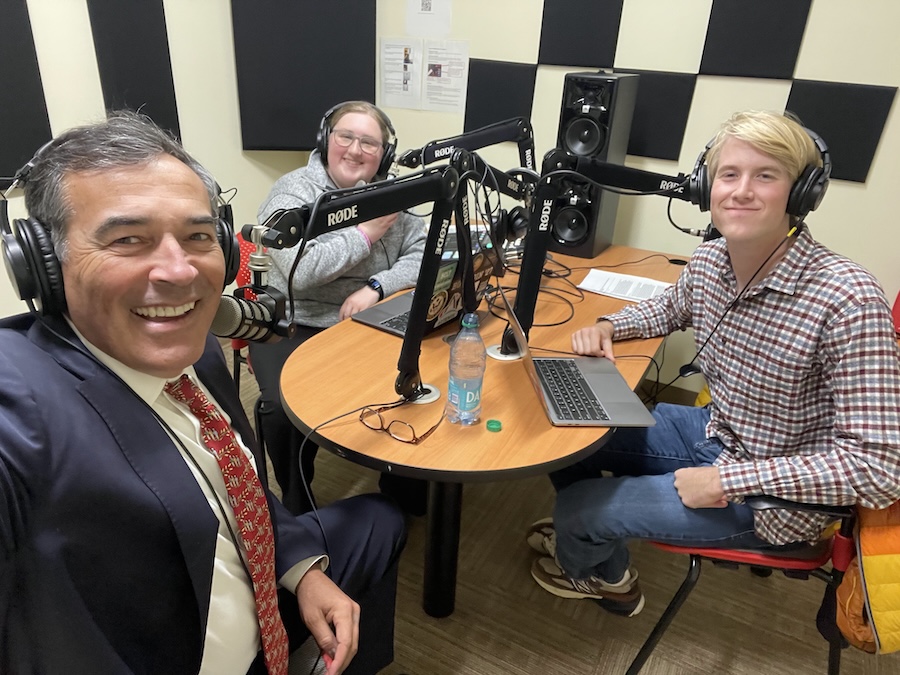
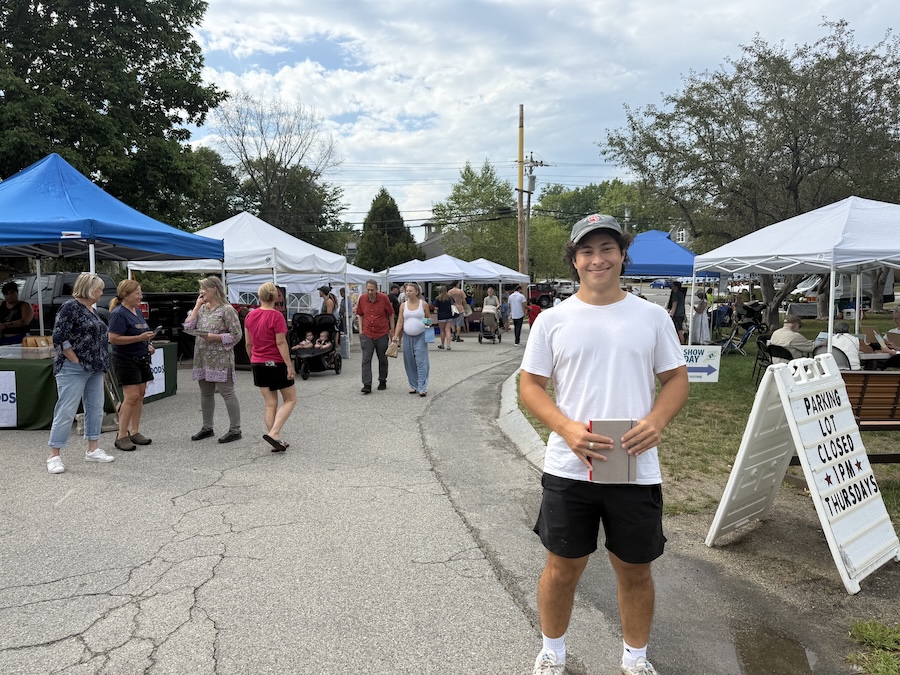
Natalie Emmerson ’27 launched the podcast last year with collaborator Larsen Van Horn ’27. The first season featured interviews with political leaders in Maine answering questions about how government and elections operate. Guests included Senator Angus King and former Secretary of Defense, Senator, and Congressman William Cohen ’62.
That inaugural season “prioritized process over politics,” said Emmerson, a government and legal studies and history double major. Episodes covered general political topics like campaign strategy, how reporters cover campaigns, clean elections funding, referendums, the petition process, and ranked choice voting.
This season, the two students—plus Bowdoin senior Sofia Fogg ’26—are taking a different tack, diving into Maine’s exciting gubernatorial primaries.
“We have a ton of well-established candidates with name recognition and big followings,” Emmerson said. “Any one of them could be running for Maine’s US Senate seat.”
But they are not, she added, because being governor is “the best job in Maine, the best job in Maine politics. Maybe, nationally, it’s not as flashy as the Senate role, but you can get things done.”
Season two of Pine State Politics, which will be available April 7 on all major podcast platforms, features nine episodes, each about forty minutes long.
All five Democratic candidates are interviewed—Nirav Shah, Shenna Bellows, Hannah Pingree, Troy Jackson, and Angus King III—as well as three Republican candidates—David Jones, Jim Libby, and Owen McCarthey—and one Independent, Rick Bennett.
The students drafted a separate list of questions for the candidates based on party affiliation. “We wanted to interview each candidate based on what primary voters would want to know,” Emerson said.
While she emphasized that the podcast is politically neutral, “This season is more focused on bipartisanship, and we ask inherently partisan questions. We just wanted to do it fairly and equally on both sides.”
One question the students asked Democratic candidates was to name an issue on which they depart from Janet Mills, Maine’s Democratic governor, and one area where they would “double down” on their support.
For Republican candidates, they asked the same question, but about President Donald Trump.
They asked all the candidates about their backgrounds, what first motivated them to enter politics, and a book or movie that influenced their thinking. “Our job in the interviews was to amplify their voices and the messages they want to share,” Emerson said.
While Emmerson won’t reveal who she’ll be voting for, she said conducting the interviews helped her make up her mind.
“It’s a super special collection of interviews,” she said. “I don’t know of anyone else who has gathered information like this, and it is pretty cool.”
Pine State Politics is a student-run, educational podcast made possible in part through funding support from the McKeen Center for the Common Good at Bowdoin College. The views and opinions expressed by Pine State Politics guests do not reflect an endorsement, express or implied, by the cohosts, producer, or Bowdoin College. Bowdoin College does not endorse, support, or oppose any political candidates, parties, or platforms. Episodes are intended solely for educational and informational purposes.
In preparation for Season Two, Pine State Politics made every effort to provide equal opportunity to participate in the podcast by inviting all candidates in Maine's gubernatorial race known to the cohosts at the time of recording. All episodes of Season Two have been published simultaneously.