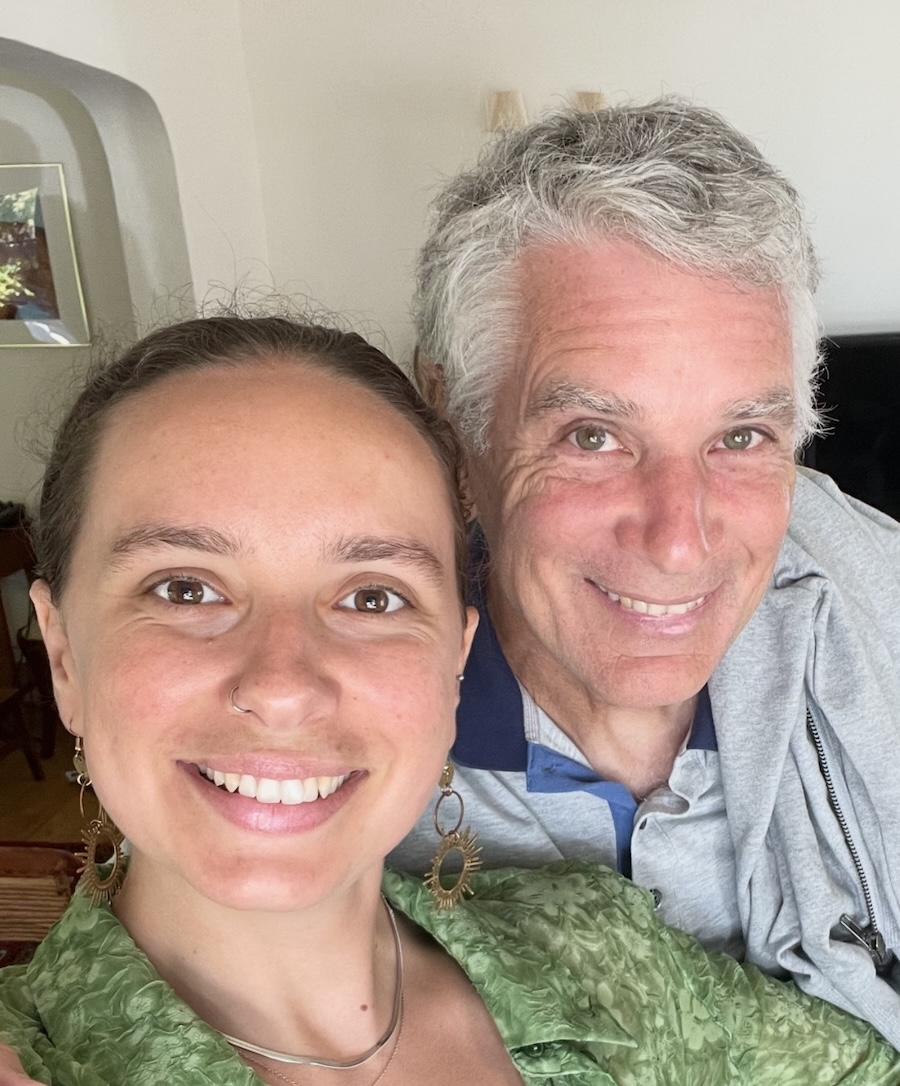
It was the spring of 2020, and the world had shut down amid the global COVID pandemic.
To help students transition from Bowdoin into a uncertain job market, the Office for Career Exploration and Development (CXD) offered a temporary lifeline: small grants that allowed seniors to pursue independent projects or earn certifications—experiences they could leverage as they entered the workforce.
At the time, Kate Rusk-Kosa ’20 had no plans for that summer. But her father, documentary filmmaker Frank Kosa, was trying to get a new project off the ground: a podcast series called Brain Stories to share people's personal stories of mental illness.
He wondered whether his daughter might be able to join him. “When the Bowdoin grant became available to her, I was just starting out on this incredibly ambitious series and was desperate for any help I could get,” he said.
For Rusk-Kosa, the opportunity offered more than a summer job. Working alongside her father gave her a window into his worlds of journalism and filmmaking, and a chance for the two of them to learn podcasting, a medium new to them both.
“Bowdoin’s CXD department funded my initial $2,000 grant payment to help get Brain Stories off the ground,” Rusk-Kosa said. It also gave her a new suite of skills beyond those she acquired with her education and sociology majors and related work experiences. “It’s incredible to have this under my belt,” she said, “and my prospects for jobs look different now.”
Hiring his daughter felt, Kosa joked, a little like a “nepo” move. But it didn’t take long for him to recognize her talent. “She’s immensely capable at audio editing,” he said. “Having spent thirty years working with editors in film and television, I know the good ones. It’s impossible to teach. It’s all about timing; it’s intuitive.”
After dedicating herself to Brain Stories that summer, Rusk-Kosa went on to teach English in Mexico through a Fulbright fellowship. Kosa continued producing the podcast, with Rusk-Kosa contributing when she could. Today, she works full-time job with Planned Parenthood in New York City.
Five years later, Brain Stories is now available across major podcast platforms.
Kosa traces the project’s origins to a National Alliance on Mental Illness (NAMI) meeting he attended with a friend, who was training to teach family education classes. In that confidential setting, people spoke openly about their lives.
“The storyteller part of me was listening and thinking, ‘Wow, that’s an incredible story,’” he said. “And then the next person would start, and I’d think the same thing. After four people in a row, I realized there was a real treasure trove of stories.”
When he searched for a production company highlighting these types of narratives, he found none. “I surveyed the landscape and saw that no one was doing this,” he said. “That also appealed to me. I’m always drawn to underreported, untold stories.”
Serious mental illness, he added, remains one of the last areas where discrimination is tolerated. People may be denied housing or employment, or quietly pushed out of social circles. “The more I learned, the more I felt these stories needed to be told,” he said.
The podcast features thirteen episodes profiling individuals from a range of backgrounds. While mental illness can affect anyone, Kosa pointed to research showing higher prevalence among people facing poverty, racism, or immigration-related stress. “Mental illness touches every walk of life,” he said, “but it appears more common where stressors are greater.”
Ultimately, Kosa hopes the podcast fosters empathy and understanding. One in five Americans experiences mental illness, he said, yet our society tends to push these individuals out of sight. “Today, the county jails in Los Angeles, Chicago, and Miami are the three largest institutions housing people with mental illness in the country,” according to the Brain Stories website.
“We’re failing to support a vulnerable population,” Kosa said. “I’m trying to change hearts, and partner with people who can change minds, laws, and funding.”
Looking back, Rusk-Kosa said the project not only bolstered her résumé—it also gave her an opportunity to collaborate with her father. “Producing a piece of art through storytelling and audio has been fascinating,” she said. “It’s really meaningful that it’s finally out, and that we’re still working on it together.”