One of the McKeen Center’s most popular and longest-running programs—and one that has made a significant impact on local communities and Bowdoin students—is celebrating its twenty-fifth anniversary this year.
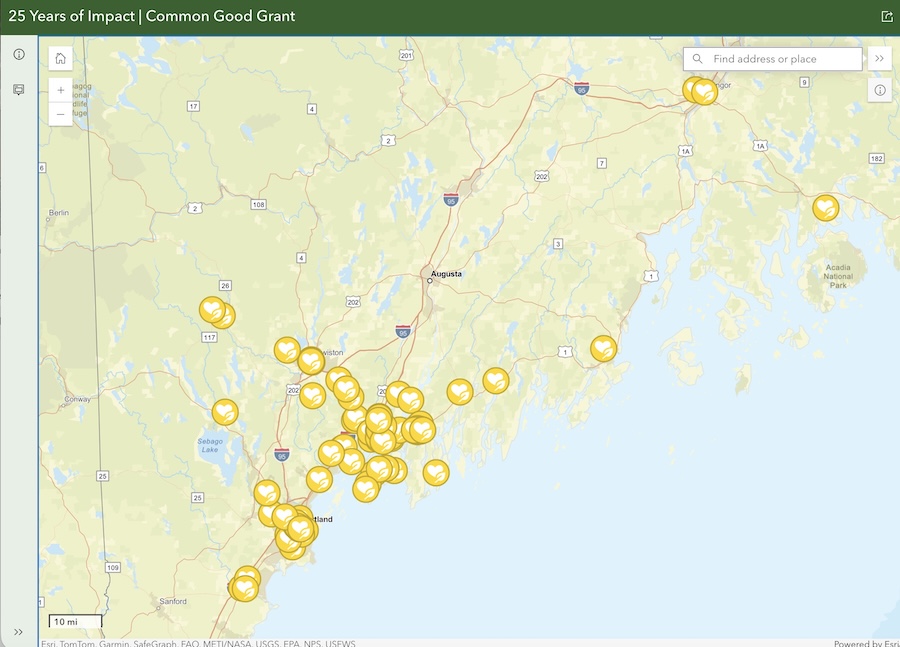
Within the wider public engagement focus of the McKeen Center, the Common Good Grant (CGG) program functions like a small foundation, offering students hands-on experience in philanthropic giving.
Mike Poor ’64 seeded the program in 2001 with an initial $10,000 gift, wanting to empower students to make decisions about how best to support the nearby community with small grants. (He's since set up an endowed fund for the initiative.)
Today, students who are accepted to the CGG effort are divided into two committees: the grant committee, which evaluates applications from area organizations, and the development committee, which raises additional donations to add to the original fund. All students also participate in a yearlong seminar about the nonprofit sector.
The McKeen Center is using this anniversary year to elevate the program’s profile. “We want organizations to know about us as a resource,” said McKeen Center Director Sarah Seames. “There is an increased need in our community,” she added, and encouraged organizations that fit the grant parameters to apply.
Last year, for instance, forty-three nonprofits submitted proposals for grants, but only ten were funded from a pot of $36,000. This year, the students are assessing 59 proposals.
To make its biggest impact yet, this year's CGG team is aiming to raise and award $50,000, to fly past $500,000 in total donations made since the program's start. Over the years, grant beneficiaries have included Midcoast Hunger Prevention Program, Oasis Free Clinics, the Portland Housing Authority, and many others.
Long-Lasting Impacts
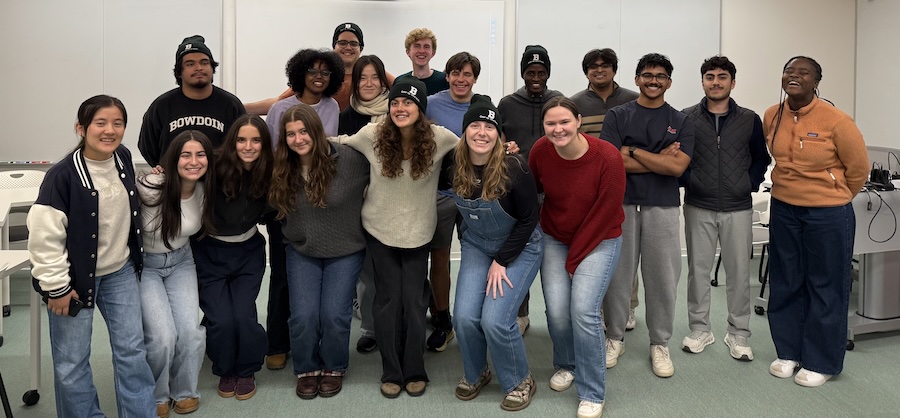
CGG offers a uniquely collaborative pre-professional experience, said McKeen Center Associate Director Sam Cogswell ’11, who runs CGG and participated as an undergraduate. The program brings together students with diverse backgrounds, skills, and priorities who must reach a consensus about which nonprofits and issues to support.
“On Decision Day, it’s not uncommon for a student to ask a question like, ‘Why is it important to save milkweed?’ and another student to respond, ‘Well, yesterday in my ecology class we were talking about this,’” Cogswell said.
Charlotte Tagupa ’26, a CGG co-leader, called Decision Day “the hallmark of the program,” when students gather to debate the merits of each application and how to ensure the donations do the most good.
Each year, the CGG grant committee outlines broad themes to focus on—such as arts and culture; health and basic needs; the environment, agriculture, and sustainability—and then funds a range of nonprofits within these categories, giving each awardee a grant up to $4,000.
Beyond gaining practice in consensus-based decision-making, CGG imparts many other practical skills, Cogswell noted. “This is a program that helps students get a job,” she said. “If you’re a student graduating and want to work in nonprofits, this prepares you for that work.”
Since its founding, 370 students have participated in CGG, not including this year's cohort, and they have made 214 grants, totaling $491,696, to 127 organizations. On March 26, the McKeen Center will invite all the graduates back to Brunswick for a combined award ceremony and twenty-fifth-anniversary gala.
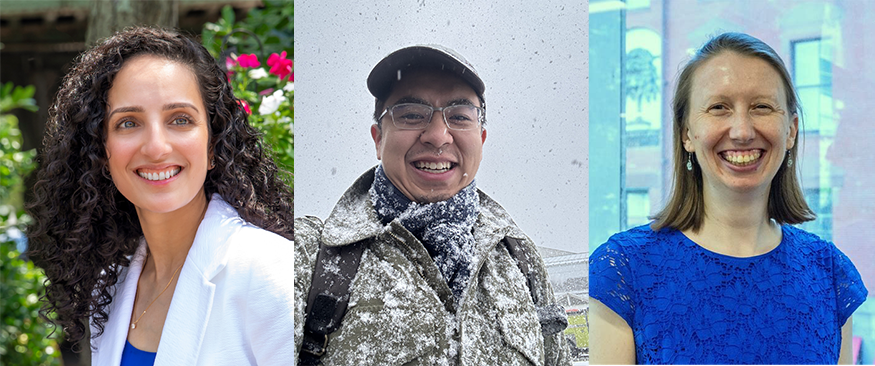
Pooja Desai Patel ’08 was involved in CGG’s early years, and co-led it her senior year. She now works as an executive coach. She said the experience has influenced her career, the values she sought in a partner, and how she decided to raise her children, whom she's teaching the importance of being involved in their communities and giving back.
She said she first learned in CGG that fundraising transactions are never just about money, even though it’s central to the exchange. Rather, raising money and motivating people to action are about relationships, “storytelling, and bringing people along for the journey, rather than just saying, ‘Please open up your wallet,' and it’s this one-time thing.”
Chris Zhang ’25 participated in CGG last year and now works in annual giving for Colby College in Waterville, Maine. Describing CGG as “Nonprofit 101,” he said it showed him and his fellow students that “this is how you run a community foundation and this is how you look at grant proposals, both from the perspective of reviewing them and also from the perspective of writing them.”
Part of CGG's anniversary programming includes a February 16 event focused on how to leverage AI to boost fundraising. Two alumni from Project Evident—Matt Hillard ’12 (who is also a CGG alum) and Cedric Charlier ’16—will give a public talk and lead a seminar for students and community nonprofit leaders.
Joining CGG students for the workshop will be students in the spring course Technology and the Common Good, taught by Fernando Nascimento, assistant professor of digital and computational studies.
For a class project, Nascimento's students will collaborate with community nonprofits to generate reports on how they might best employ AI.
Caitlin Callahan ’11 participated in CGG when she was at Bowdoin and later worked at the McKeen Center. She is now chief operating officer of Urban College in Boston, an online, open-enrollment institution that awards associate degrees and certificates.
CGG strengthened her grant-writing skills, she said, helping her get a job with Catholic Charities Boston after she graduated from Harvard Kennedy School. “I knew what it was like to wade through a stack of applications, and the importance of clarity—of being clear about what you’re requesting money to do and answering questions as directly and succinctly as possible.”
Development and community-oriented work, she continued, “have been a part of my career for the last ten years. I hadn’t mapped that out when I was in CGG, but it has been a wonderful throughline in a way I never expected.”
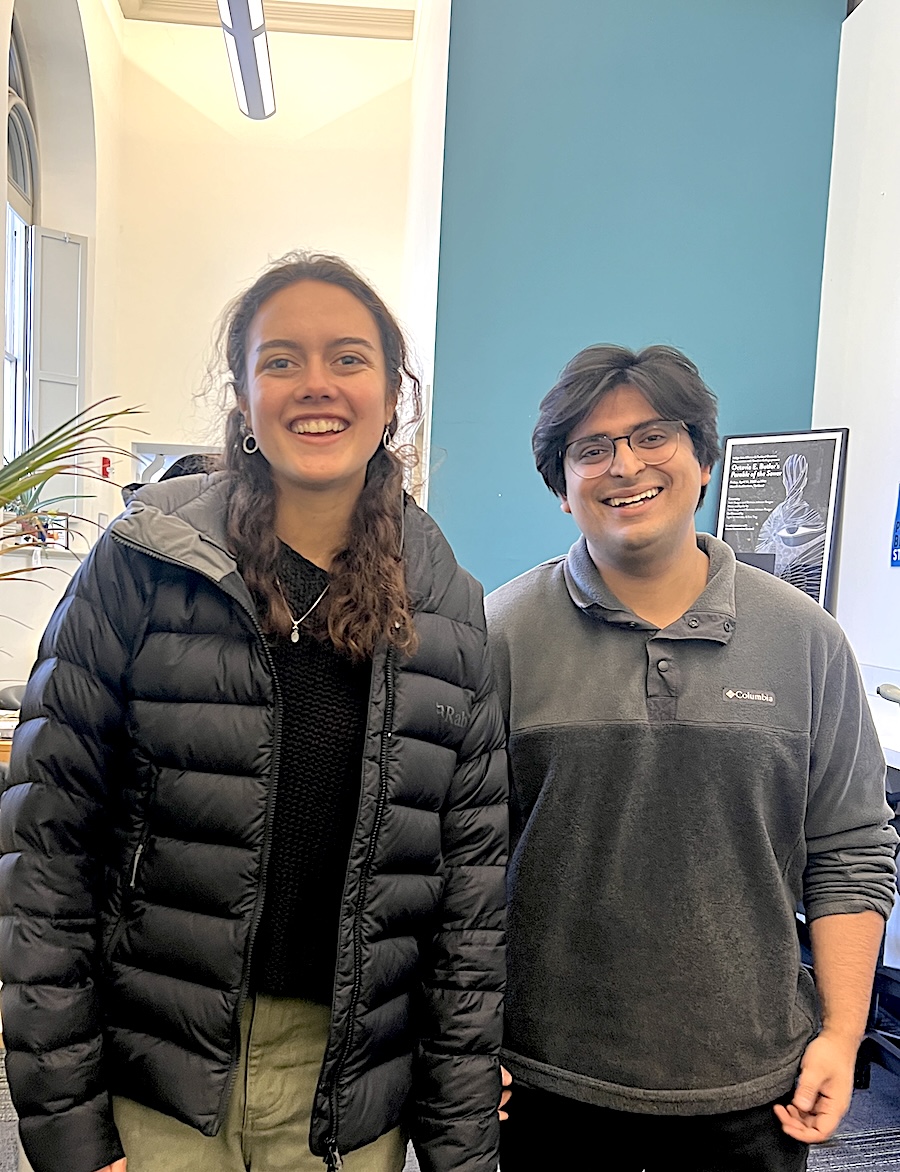 This year, the two student leaders of the Common Good Grant program, Charlotte Tagupa ’26 and Pranav Vadlamudi ’26, had the chance to write their own grant application. They applied to the Edith W. & John A. Dockray Charitable Foundation, in partnership with foundation director Mike Miller ’84, P’15, and with guidance from the McKeen Center and the Bowdoin Grants Office.
"The Dockray Foundation has a long record of supporting various initiatives at the College. After learning about the CGG program and its impact on the community, they became very interested in this initiative and appreciated the additional benefit of working directly with Bowdoin students,” said Maria Stone, one of Bowdoin’s leadership gifts officers.
The application by Tagupa and Vadlamudi was well received, and they were given $5,000 to contribute to the total to be donated to local nonprofits by the CGG grant committee this year.
If you’d like to become a part of the Common Good Grant program, contact Sam Cogswell or donate directly to the program. 100 percent of gifts are given to Maine nonprofits. Thank you!