Rotunda Murals

Museum of Art Museum of Art

Exhibition: Rotunda Murals

Two archways with classical depictions of ancient cities

Dates:

March 01, 1974 - ongoing

Location:

Rotunda
Banner: 

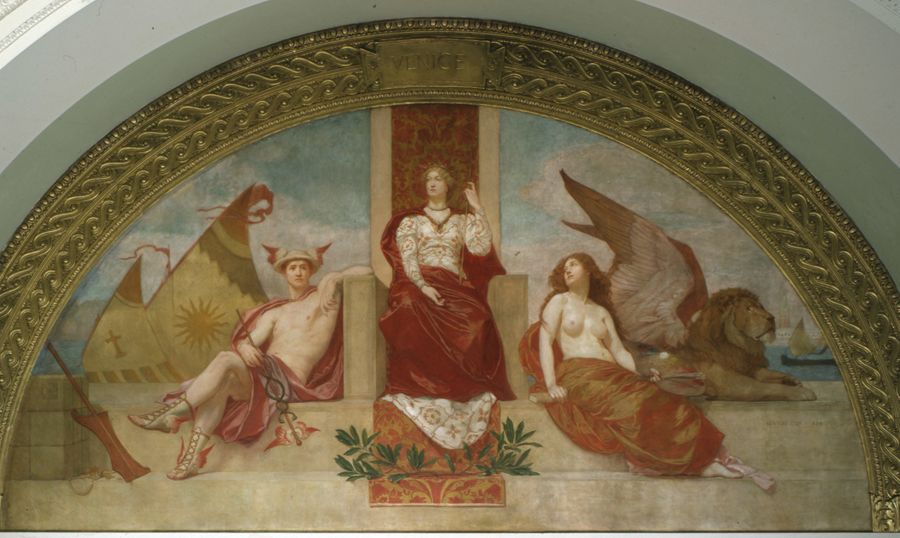
Kenyon Cox, Venice, 1894, oil on canvas. Bowdoin College Museum, Brunswick, Maine. Gift of the Misses Harriet Sarah and Mary Sophia Walker , 1893.38

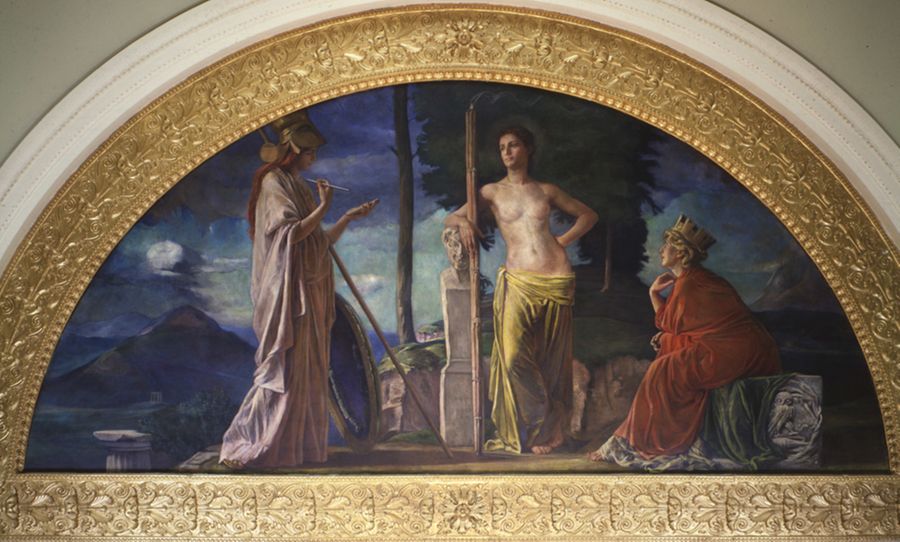
John La Farge, Athens, 1898, oil on canvas. Bowdoin College Museum, Brunswick, Maine. Gift of the Misses Harriet Sarah and Mary Sophia Walker , 1893.35

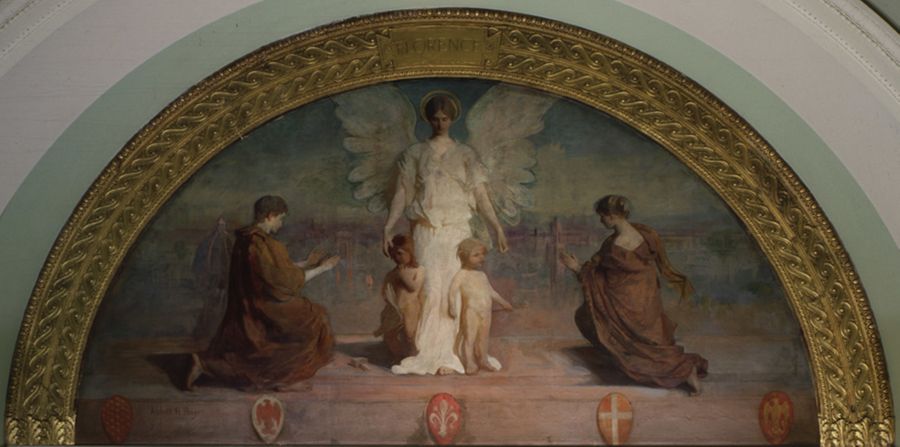
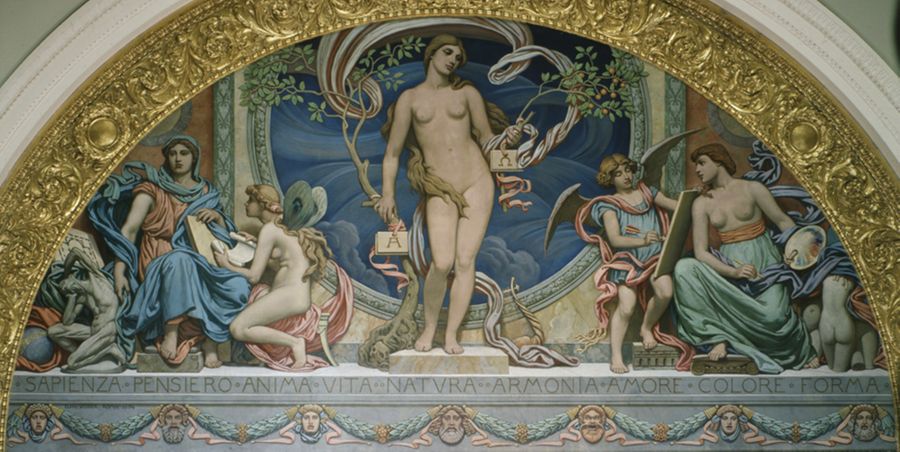
Monumental in scale, this four-part program pays tribute to European cities whose art was deemed the high point of Western civilization. Moving clockwise from above the original entrance, the paintings represent Athens, Florence, Rome, and Venice. Together they manifest a late nineteenth-century belief that the classical tradition had been reborn on this side of the Atlantic. The artists chosen to decorate the building's rotunda had all studied in Europe where they acquired mastery of figure painting and knowledge of art history. Each used symbols to characterize the city represented and its culture. Each used symbols to characterize the city represented and its culture.

In Athens, John La Farge shows the goddess Athena sketching the presiding nymph of a sacred grove. Abbott Thayer conceived an angelic guardian figure to represent Florence's patronage of the arts. For Elihu Vedder, a female nude in contrapposto pose embodied Nature as the source of Rome's achievement. Kenyon Cox portrayed Venice as a regal Queen of the Adriatic attended by Commerce (Mercury), Painting, and the winged lion of Saint Mark. Each image centers on a standing female figure and shallow foreground stage, but the artists' color and brushwork differ markedly. The harmonious blending of compositional similarities and stylistic differences exemplifies unity in diversity, and ideal held forth as a model for American society in a period of historical fragmentation.