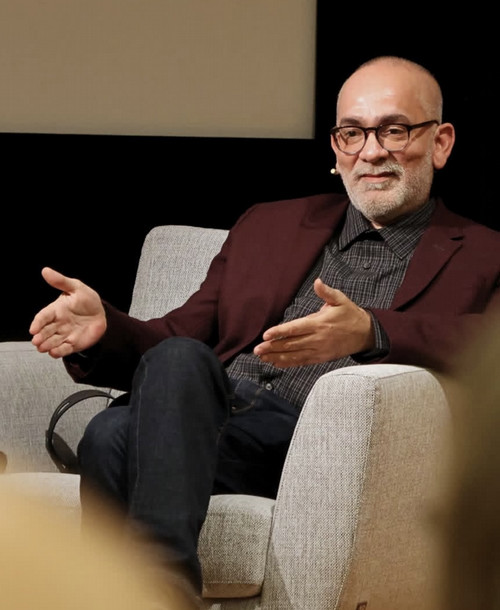
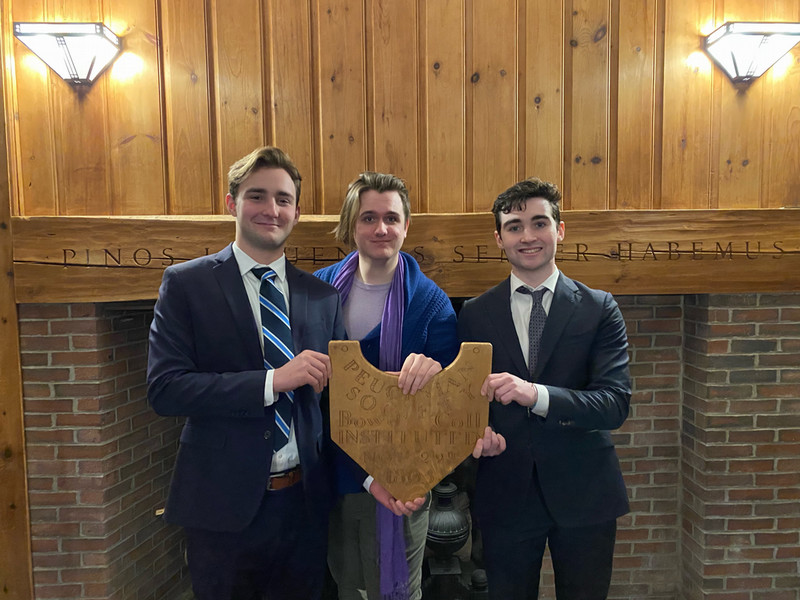
“When Cuban writer Néstor Díaz de Villegas was our age, he was thrown in prison for a poem,” wrote students in the Spanish nonfiction writing class Hispanic Studies 2306. “Now he speaks to our class about artistic expression as a form of resistance.”
The students, taught by Professor of Romance Languages and Literatures Carolyn Wolfenzon Niego, recently got to meet with Díaz de Villegas on a Zoom call. They were then tasked with writing a collective article about the meeting and the issues it raised.
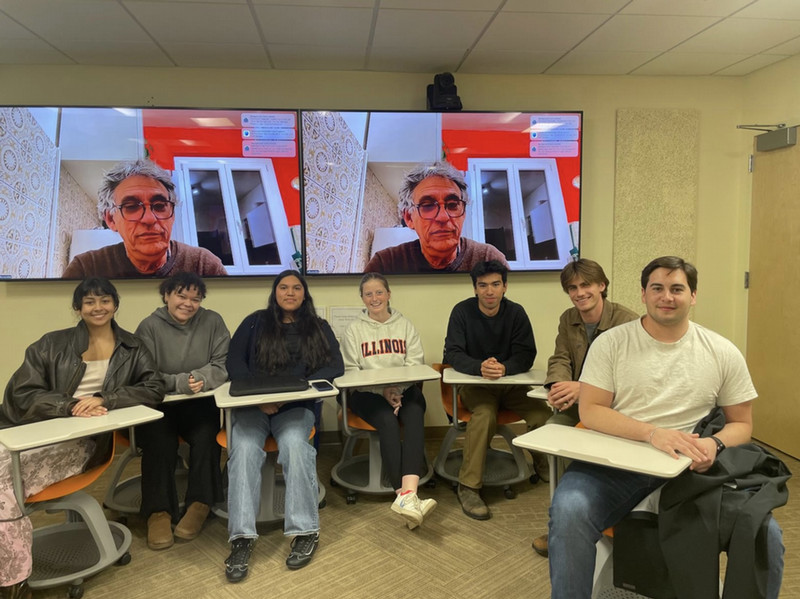
The students wrote: “For our Spanish nonfiction writing class, we had the opportunity to speak with Néstor Díaz de Villegas, a Cuban poet and writer. We discussed his unreleased personal narrative, Como entrar a una cárcel, detailing his upbringing under Fidel Castro’s regime and the years of abuse he experienced in prison.
“When he was eighteen, a poem Díaz de Villegas had written critiquing the renaming of a street fell into the hands of the police. He was charged with ‘ideological diversionism,’ or the alleged promotion of counterrevolutionary ideas, a term often deployed by Castro to suppress political dissent. Díaz de Villegas was jailed for five years in an Ariza prison.
“His experience in prison was represented by internationally renowned Cuban American director Coco Fusco in her film La Noche Eterna, which focused on the efforts of Díaz de Villegas and fellow prisoners to build a makeshift movie theater.
“In the film, the guards are persuaded to procure a projector, and the prisoners used cement blocks to build rows of seats. While they were only allowed to watch Soviet films, Díaz De Villegas reminisced about how this project allowed them to enjoy art together, creating community despite their imprisonment.
“The film highlights the deep bonds Díaz de Villegas formed with his fellow revolutionaries, creating a sense of brotherhood felt throughout the film. Although the prison was designed to reform their ideologies through physical and mental mistreatment, they sustained their beliefs by sharing stories of their defiance and by continuing to criticize the Castro regime among themselves.
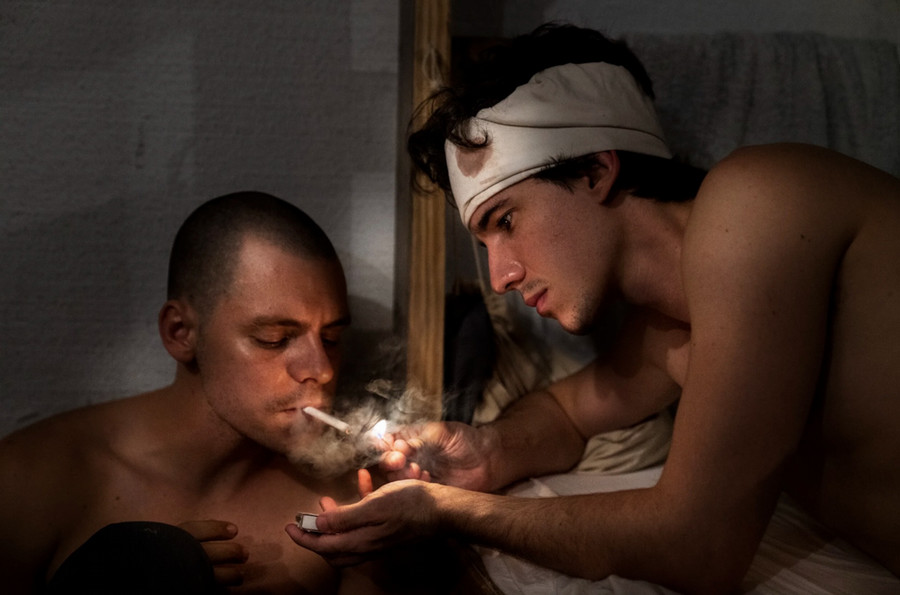
“While the film focuses on Díaz de Villegas’s time in prison, Como entrar a una carcel [the memoir] details the ideological indoctrination Díaz de Villegas experienced growing up. During his adolescence, Díaz de Villegas was sent to a boarding school, where the students would labor in fields, perform military exercises, and at night learn from art teachers whom he described as very talented, but he recognized the school’s main goal of political indoctrination.
“Later in life, living in the United States and Italy, Díaz de Villegas still felt tethered to his upbringing in Cuba. He found it difficult to communicate the oppression and indoctrination that everyday Cubans face. Even in Italy, a country familiar with the horrors of authoritarianism, he has found that people are quick to trivialize or downplay the challenges that the Castro regime imposes on its citizens. Díaz de Villegas added that one cannot fully understand the situation in another country without having lived it.
“Similarly, in the present day, Díaz de Villegas has noticed this same lack of understanding toward Cuba and even Venezuela from Americans. He says it’s easy for the US to accept that the Castro regime is still active, but it is unaware of the harsh realities in the country. The US has an idealized perspective of Cuba, notwithstanding the fact that it continues to be a country facing starvation and poverty. These themes persist throughout his writing, showing that, despite leaving Cuba over forty years ago, a large part of him remains enveloped in the oppressive dictatorship that marked his upbringing.
“Díaz de Villegas’s insight was especially timely for our class. Throughout the semester, we have been learning techniques to portray different issues, groups, and events in nonfiction writing, preparing us for our final narratives. Hearing his perspective on the shortcomings of communication (especially on topics like the Cuban experience, where information is often censored or insufficient) has made us especially aware of the freedom journalists and nonfiction authors alike need to surmount these issues.
“As our time with Díaz de Villegas came to a close, he reminded us of how lucky we are to have access to higher education. While reflecting on his life experiences, he highlighted the importance of free thought in classroom settings. He invited us to consider our role in a world of increasing polarization and the responsibility that goes along with our freedom to express ourselves.”