Being able to swim was something Siara Soule ’26 had always taken for granted. “I grew up in Maine in a school district where everyone received swim lessons, every year, for free.”
Given this, she said, it was distressing to learn of the numbers of accidental drownings in the US—an estimated 4,000 deaths per year, according to the US Centers for Disease Control and Prevention, while drowning is the leading cause of death for children aged one to four.
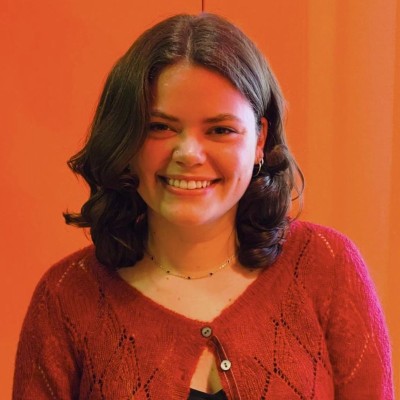
Soule was also disturbed to hear about the extent to which America’s immigrant communities are disproportionately affected, particularly the Latino population, because many of them do not have sufficient opportunity to access swim lessons.
So, being a Hispanic studies and education major, Soule dived into the subject and, with the help of an Allen Wells Travel and Research Award, spent the summer of 2025 visiting different US cities talking to Latino immigrant communities
“I collected stories from Latinx people in New York City and Boston, as well as Portland, Maine, and I heard a lot of scary accounts of near drownings.”
Having amassed all these testimonies for her independent study project, Soule decided to highlight the issue by writing it up in a fictional style often used by Latin American writers.
Under the guidance of Professor of Romance Languages and Literatures Carolyn Wolfenzon Niego, Soule produced a “cronica” (“chronicle” in English), using a literary approach that adopts a broad range of fictional styles to describe a subject that is based on reality, written in Spanish.
“I don’t write fiction in English, so I was nervous about capturing these voices in a respectful way,” explained Soule, “but Professor Wolfenzon has been incredibly helpful. I have ended up weaving a number of these narratives together.”
This was quite a departure from her original plan, she explained, which was to produce a literature review, exploring the importance of water in certain Indigenous cultures.
“A very sensitive student, Siara decided to interview people from disadvantaged backgrounds who had experienced accidents at sea,” said Professor Wolfenzon. “She transformed these experiences into a chronicle, using literary techniques such as poetry, narrative, and dialogue. Sometimes it’s good to deviate from the planned method and discover how to reach our goals through alternative paths,” she added.
Soule said her eventual goal is to create an art installation project inspired by her paper, using printmaking techniques. “I want to demonstrate the complicated barriers that exist for those who can't swim, focusing on one particular community.”
Soule said she learned that, while swimming is inherently a communal activity, there are many factors that impact a person’s ability to swim, especially among immigrant communities in urban areas. These include language barriers, whether your parents can swim, and when and where free swimming lessons are offered.
Another key issue to highlight, she added, is the importance of admitting to people around you that you can’t swim. “Many people are embarrassed if they can’t swim, but they shouldn’t be. It’s so important to be honest about your ability in the water. Lives could depend on it.”
The process of writing the chronicle has been very impactful, said Soule, who loves the creativity it involves. “It’s really helping my Spanish, as well as demonstrating how real communities are affected by these socially constructed barriers.”