What do a man disguised as a polar bear, a sculpture of a hamburger patty full of animals’ spirits, and microplastics have in common? You can see them all in the Arctic museum’s newest exhibit, Mamaqtuq! It is Delicious! Traditional Foods of the North, now open at the John and Lile Gibbons Center for Arctic Studies.
Each of these items helps tell the story of how Inuit communities across the north are working to ensure that they and future generations have access to nutritious traditional northern foods.
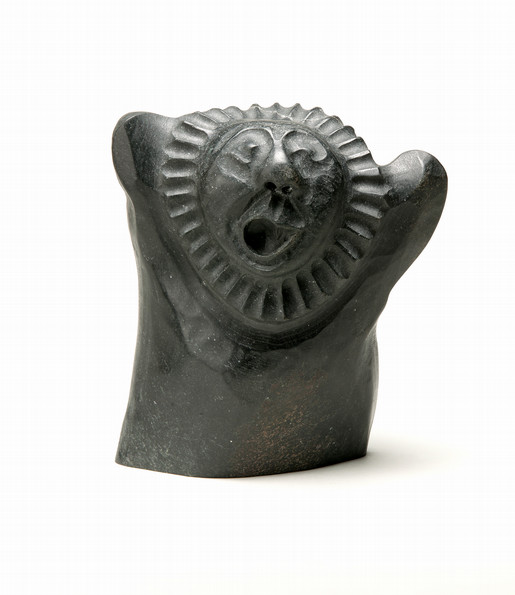
Gilbert Hay, When Miner’s came to Dinner They Had Lamb, Nain, Nunatsiavut, Canada, 1996. Soapstone. Museum Purchase. Photo by Dean Abramson.
The exhibit uses contemporary art alongside historic and modern objects to explore some of the ways Inuit are trying to counter multiple threats to their traditional foods. “Inuit are working on many levels and in many different ways to preserve their access to a healthy, local, diet,” said curator Genevieve LeMoine. The examples include local government-funded studies of microplastics in Nunatsiavut, Canada, grass-roots organizations dedicated to helping Alaskan Indigenous communities maintain access to salmon, and scholarly research in Greenland documenting highly specialized hunting techniques that are no longer being passed down to the next generation as climate change makes them obsolete.
This exhibit has something for everyone and even those familiar with northern lifeways will learn something new. In addition to artworks, hunting implements, and dioramas, interactive elements in the gallery encourage visitors to explore issues such as the high cost of food across the north by learning about the dramatic price differential for common grocery items in Brunswick, Maine, and Canadian and Alaskan communities. Visitors can also learn how key northern food species are impacted by external factors such as contaminants that arrive in the north from industrial regions. People can use a microscope to see the different kinds of microplastics recovered from Nunatsiavut waters. “Inuit are facing various issues associated with food and are using many different approaches to try and resolve them. We felt the exhibit should reflect that diversity,” LeMoine said.
“We hope people leave the exhibit appreciating Inuit’s profound respect for and care of animals and one another, and their impressive problem-solving skills as they combine traditional knowledge and western science to solve food security issues,” said Susan Kaplan, the museum’s director.

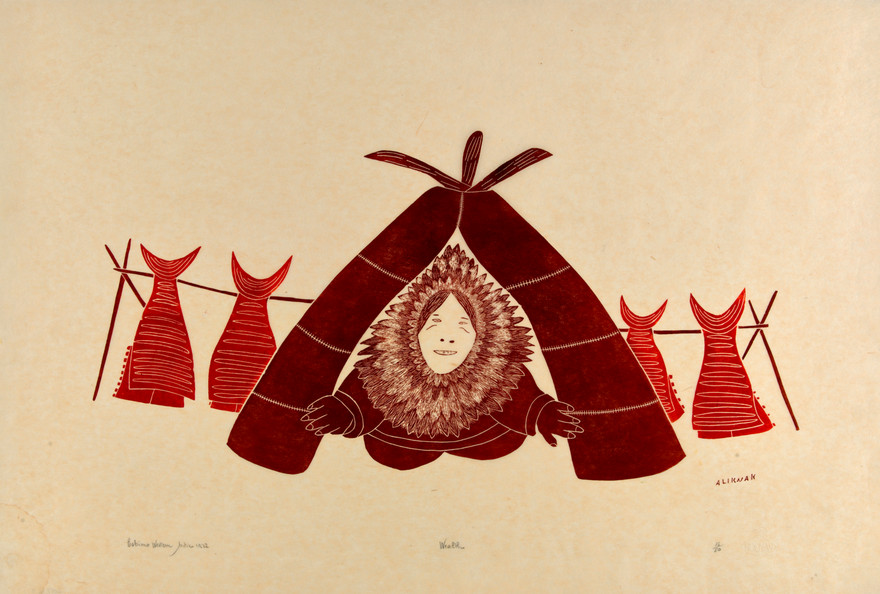
A celebration marking the exhibit’s opening will take place on Thursday, May 14, 2026, at 7:00 p.m. in the Center for Arctic Studies. LeMoine will lead a gallery tour followed by light refreshments. The exhibit runs through December 2026. The museum, which is free and open to the public, is open Tuesday–Saturday, 10:00 a.m. to 5:00 p.m. and Sunday, 1:00 p.m. to 5:00 p.m., and is closed Mondays and National Holidays. Visit the Arctic museum website for more details or call 207-725-3416.