Throughout February, student organizers of Black History Month at Bowdoin arranged a full slate of events, focusing on the themes they believe are most important right now.
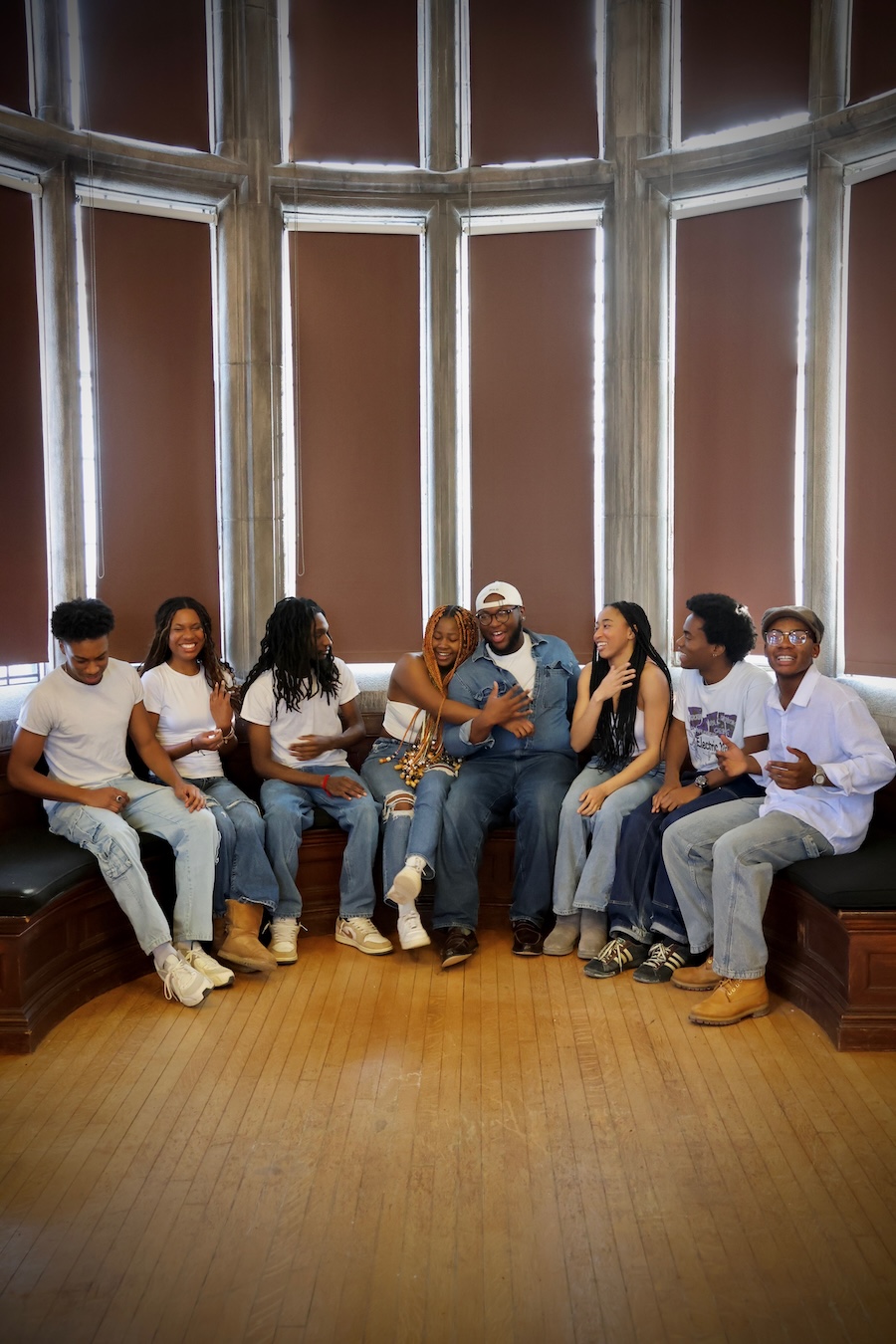
“Our main goals are to foster community and to ensure everyone feels cared for, and to offer a political education and overall historical analysis of all the Black achievements we’ve had across the diaspora,” said Jickinson Louis ’26, president of the Black Student Union (BSU). He added that the theme for the whole month could be wrapped up in two words: Black love.
“We’re not just celebrating and taking care of ourselves within a community of our peers, we’re also showing that we are people with cultures that we are open to sharing,” Louis continued. “We want to show that we belong at Bowdoin, and belonging at Bowdoin includes bringing in many of our different identities that we’re prideful of.”
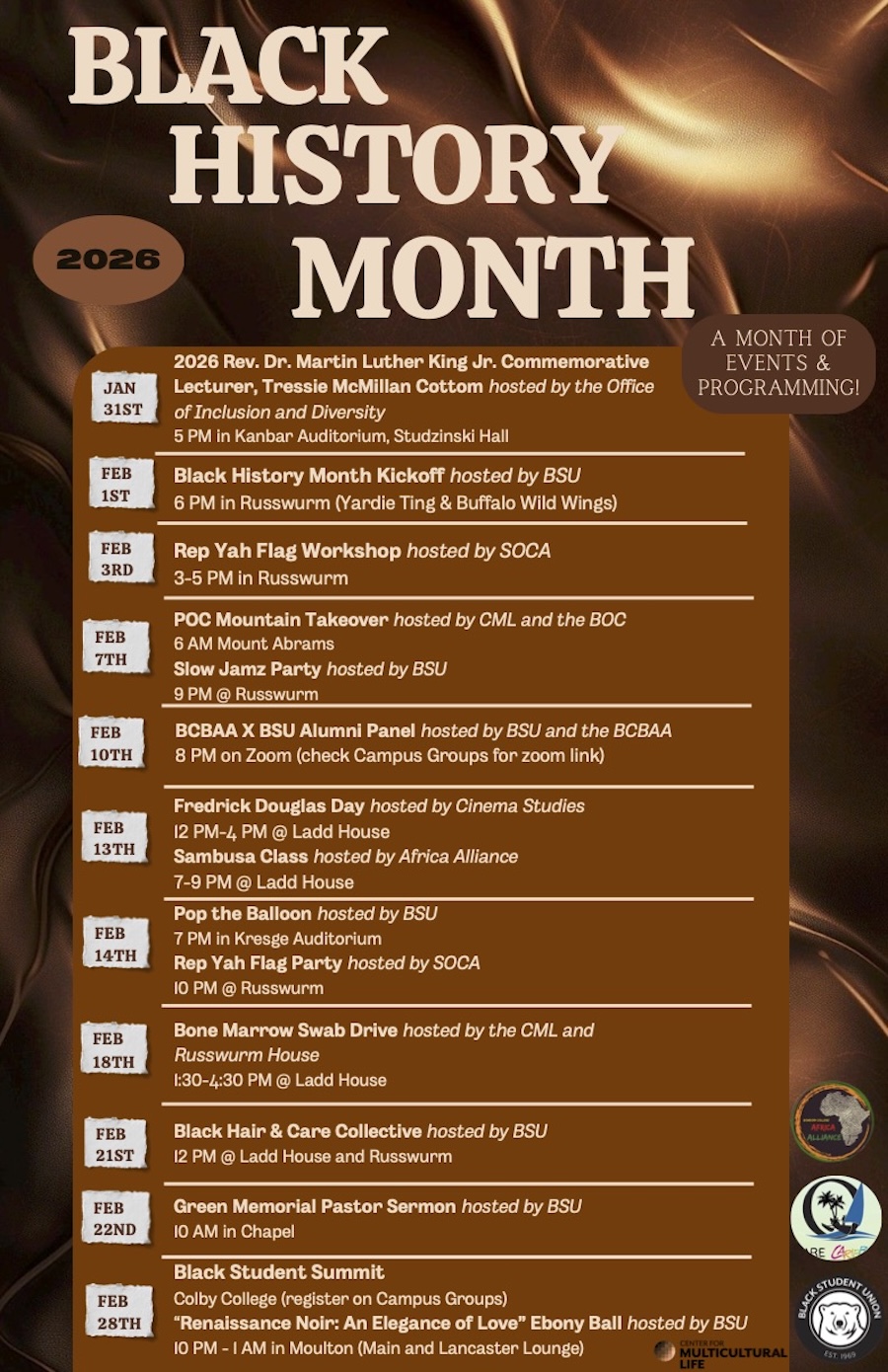
Other collaborators worked with the Black Student Union to create a full month of talks, panels, skiing, cooking, networking, community service, and fun. These included Africa Alliance, Students of Caribbean Ancestry, Black Men’s Society, Center for Multicultural Life, and Bowdoin Outing Club.
“We wanted to make the month as fun or impactful as possible and have a lot of events that people wanted to go to, to bring the community together,” said Anthony Bernier ’26, vice-president of the Black Student Union.
Bernier organized a mental health panel for Black men, and also noted that this year, a Portland pastor, Kenneth Lewis of Green Memorial AME Zion Church, had been invited to give a sermon in the Bowdoin chapel, open to all faiths. “We’re bringing him because we want to bring people together who might have different values,” Bernier said.
“Our main goals are to foster community and to ensure everyone feels cared for, and to offer a political education and overall historical analysis of all the Black achievements we’ve had across the diaspora.”
—Jickinson Louis ’26, president of the Black Student Union
Caring for One Another
Black men's mental health: Early in February, the Bowdoin Black Men’s Society invited faculty, staff, and students to discuss mental health, bringing to the forefront a topic that often remains private.
Bernier, a psychology and philosophy major, hosted the event. “I value mental health and wanted to break the stigma against tending to mental health in the Black community, especially men,” he said.
Bernier first moderated a panel that included Benje Douglas, senior vice president for inclusion and diversity; Guy Mark Foster, associate professor of English; Shelley Roseboro, associate director for Bowdoin’s counseling services; Brian Purnell, associate professor of Africana studies and history; Doug Dieuveuil, assistant class dean; Mohamed Diawara, athletics administrator, and Mo Nunez, director of THRIVE.
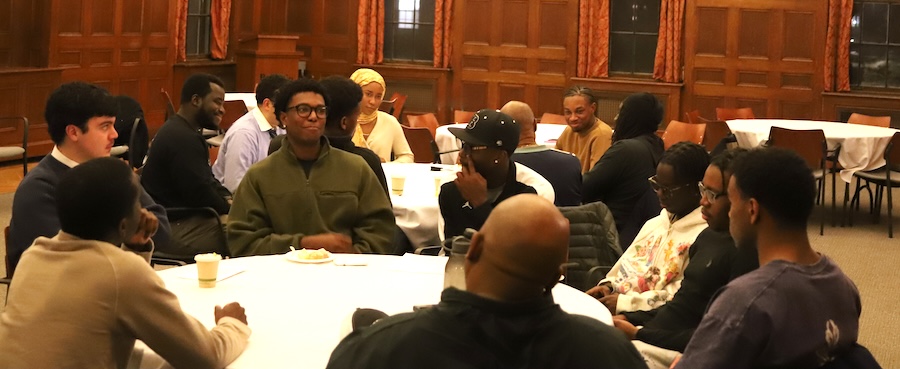
The session then transitioned into small groups, where attendees discussed what it means to be a Black man at Bowdoin and identified structural shifts that could better accommodate their needs. In these groups, attendees shared their experiences navigating the unseen hurdles and challenges that Black men on Bowdoin’s campus endure.
Because of events like this and subsequent gatherings during the spring semester, Bernier expressed hope that continued dialogue would encourage institutional change. “Faculty, staff, and students do want to have these conversations,” he said. “I had the interest, but I didn't know other people shared my interest.”
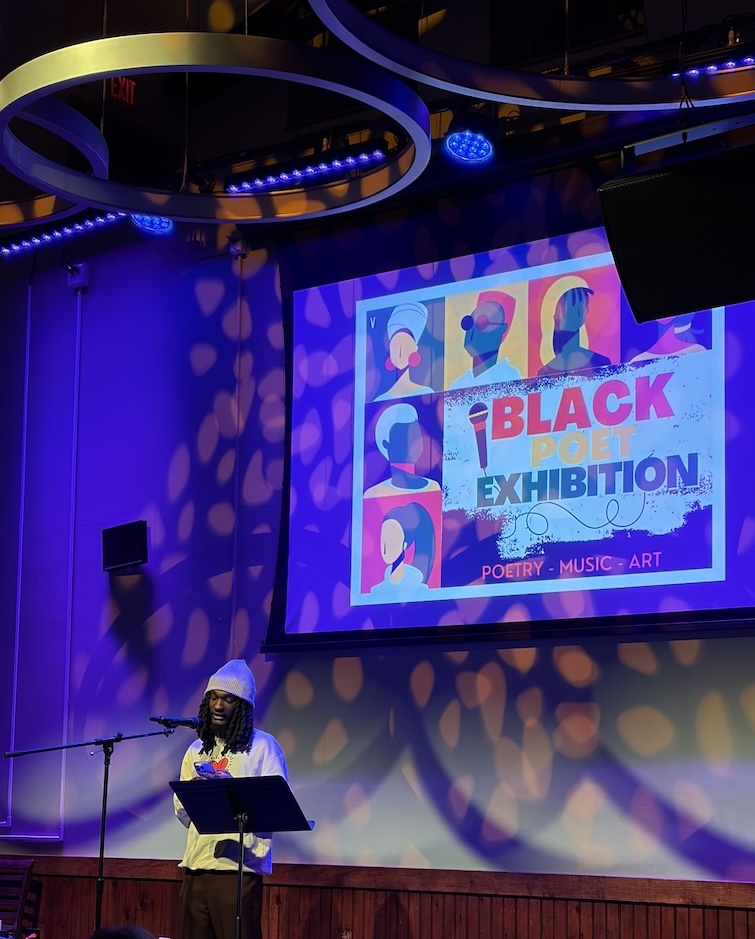
Black Hair and Care Collective: The Black Student Union also invited students to a “Black Hair and Care Collective” this February. At a historically white college, some Black students and students of color feel pressure to alter their self-expression and presentation, Louis said. “There are certain challenges and nuances to how people think Black people should present themselves in certain spaces.”
The event, which included handing out goody bags with products for all types of hair and styles, created a space where “Black students don’t have to feel judged by how they look,” Louis said. And it celebrated the cultural prominence of hair, especially Black hair. “Hair has always been a form of expression and community.”


Having Fun, Building Community
Ebony Ball: The annual party, which takes places the last Saturday night of February, has a different theme each year. This year it’s Renaissance noir.
“Think 1920s Black Renaissance, with a Sinners movie feel,” said Arianna Rodriguez, assistant director of the Center for Multicultural Life. “It’ll be dramatic, with low light, jazz in the background, love in the center, Black love. Ebony Ball will celebrate passion, mystery, and the beauty of loving boldly and unapologetically.”
The ball’s décor and color scheme—red, gold, black, and white—will enhance the elegance of the theme, Louis said, as will its dark, moody, jazzy Harlem vibe.
Louis said the ball is the most anticipated Black History Month event every year. “The Ebony Ball is another Bowdoin tradition that’s right up there with the lobster bake and the Bowdoin–Colby hockey game. It’s turned into Bowdoin’s version of the Met Gala.”
Rep Yah Flag: Bowdoin’s SOCA (Students of Caribbean Ancestry) group hosted its annual flag-making event, led by Chrissy Francis ’26 and Solencia Hamilton ’28. Rep Yah Flag is meant to help people find common ancestry and to celebrate the success of current students and their ancestors.
In this spirit, the SOCA board curated an immersive environment with Caribbean food, drinks, and music in Ladd House. They also supplied an array of flags and craft materials, encouraging students to move beyond standard representations and make whatever felt true to them. Later that day, students were invited to a party at Russwurm, bringing the flags they had made earlier and dancing to Caribbean music through the night.
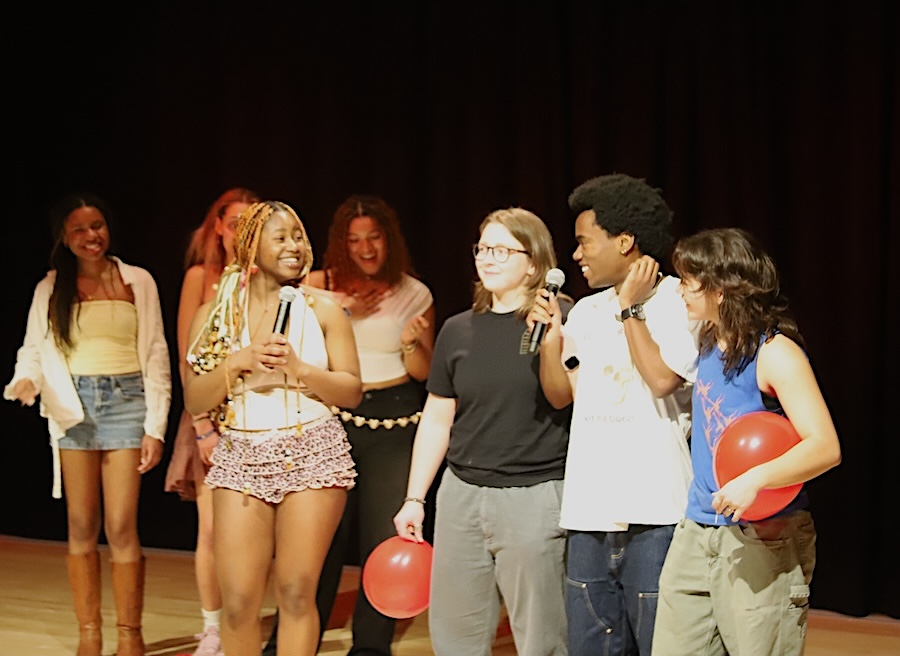
Pop the Balloon: The Black Student Union introduced a high-energy addition to its social calendar by hosting its inaugural Pop the Balloon dating show in Kresge Auditorium. Inspired by the viral series popularized on Instagram and YouTube, the event challenged participants to navigate public courtship. If a contestant on stage felt a disconnect with a potential suitor, they popped a balloon.
Despite the anxiety of public rejection, the event was playful, thanks to hosts Rachea McDonald ’26, Jickinson Louis, and Tomilola Adegoke ’26. To preserve anonymity and encourage participation, organizers allowed contestants to use aliases—turning the stage into a performance space and transforming the spectacle of dating from potential horror show to comedy.
“I think some of the biggest risks we considered when planning for Pop the Balloon was how to make it a fun and improvised event,” Louis said. “For many people, standing up on a stage can be terrifying but the Black community showed up and were extremely supportive.”
“Think 1920s Black Renaissance, with a “Sinners” movie feel. It’ll be dramatic, with low light, jazz in the background, love in the center, Black love. Ebony Ball will celebrate passion, mystery, and the beauty of loving boldly and unapologetically.”
—Arianna Rodriguez, assistant director of the Center for Multicultural Life


Making Connections
With alumni: Students were invited to a Zoom panel hosted by Praise Hall ’20, vice president of the Bowdoin College Black Alumni Association. Arianna Rodriguez said that students, especially seniors, seek out opportunities to network with alumni to hear about post-graduate opportunities and gather advice.
“They’re interested in asking alumni about their experiences at Bowdoin when they were students and what happened after Bowdoin—how they connected or adapted to the career world, and how other Bowdoin alumni helped in finding jobs,” she said.
The panelists, Kayr Robinson ’05, Kiraney Loving ’19, Latasha Ball ’12, Nancy Norman ’79, and Sherrone Torres ’12, represented diverse fields: finance, technology, education, medicine, and law.
With other college students: Students from Bowdoin, Bates, and Colby Colleges have an annual tradition of gathering for a summit, rotating among the three campuses. Bowdoin hosted the inaugural Black Student Summit in 2024, inviting Bates President Garry Jenkins and others to speak and lead workshop. Bernier said that having all the students together in the same room, talking and learning from one another, increases connections, “literally bringing more community together.” This year the summit will be at Colby College.
Serving the Community
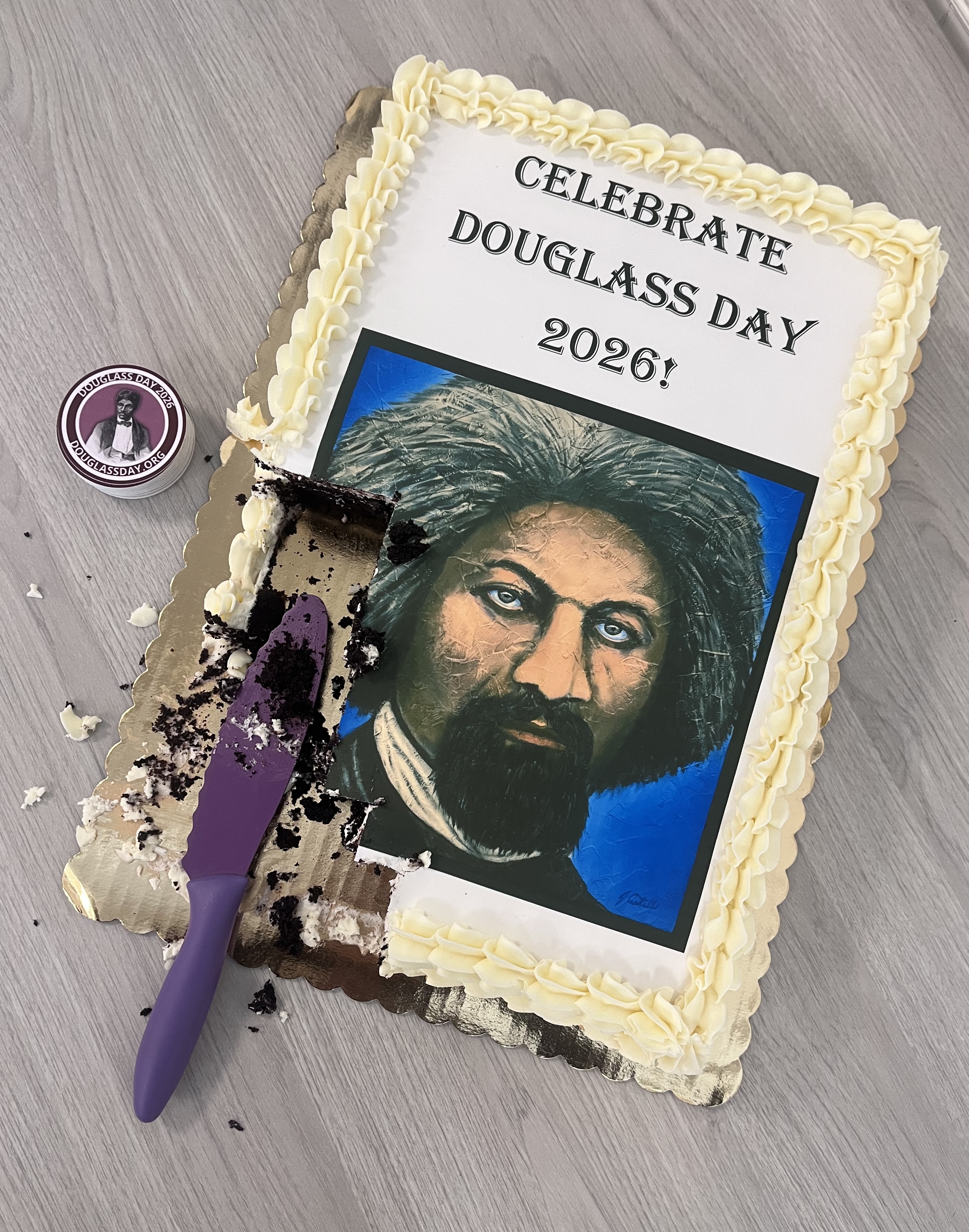
Fredrick Douglass Day: Though Douglass’s true birthday is not known, it’s observed on February 14 because his mother called him her “Little Valentine.” This February, history buffs gathered in Ladd House to celebrate the famed abolitionist, statesman, and writer for Bowdoin's second annual Douglass Day. The party drew students, staff, faculty, and community members who helped transcribe documents from the Library of Congress’s Colored Conventions collection.
The event’s purpose is to honor Douglass’s legacy by preserving rich historical documents of Black history. Access to many of these documents has historically required in-person visits to Washington, DC. By creating an event around digital transcription, Bowdoin joined nationwide efforts to expand access so that anyone can explore Black history through searchable, online archives.
Bone Marrow Swab Drive: The Center for Multicultural Life held a Bowdoin bone marrow swab drive to encourage people of Black and Caribbean descent to send in their cheek swabs to a national registry.
Rodriguez said patients with Black and Caribbean ancestry often have trouble finding matches when they require bone marrow or stem cell transplants. The swab drive was easy for participants: Bowdoin students just had to take a Q-tip to their cheek, and if their cells ended up being a match, they could make a decision later on whether to become a donor.