

Dates:
Location:
Arctic Museum main galleriesMuseum collections vary in size. This museum is home to around 70,000 items, including everything from photographs and artworks to a 100-year-old mounted muskoxen! The collection grows as generous individuals donate treasured possessions or funds for collection acquisitions and curatorial staff members make selective purchases.
Here we present a small selection of items added to the collection through donation or purchase over the last ten years. They represent only the tip of the iceberg, a small fraction of the items we added to the collection in the last decade. Collectively they tell the story of diversity of our collection; individually and in groups they tell a variety of stories. Here we have selected objects that highlight aspects of both traditional and contemporary Inuit art and craft, expeditions to the Arctic and the souvenirs associated with them, and the frequent and sometimes surprising connections among donated collections.
Selected Works
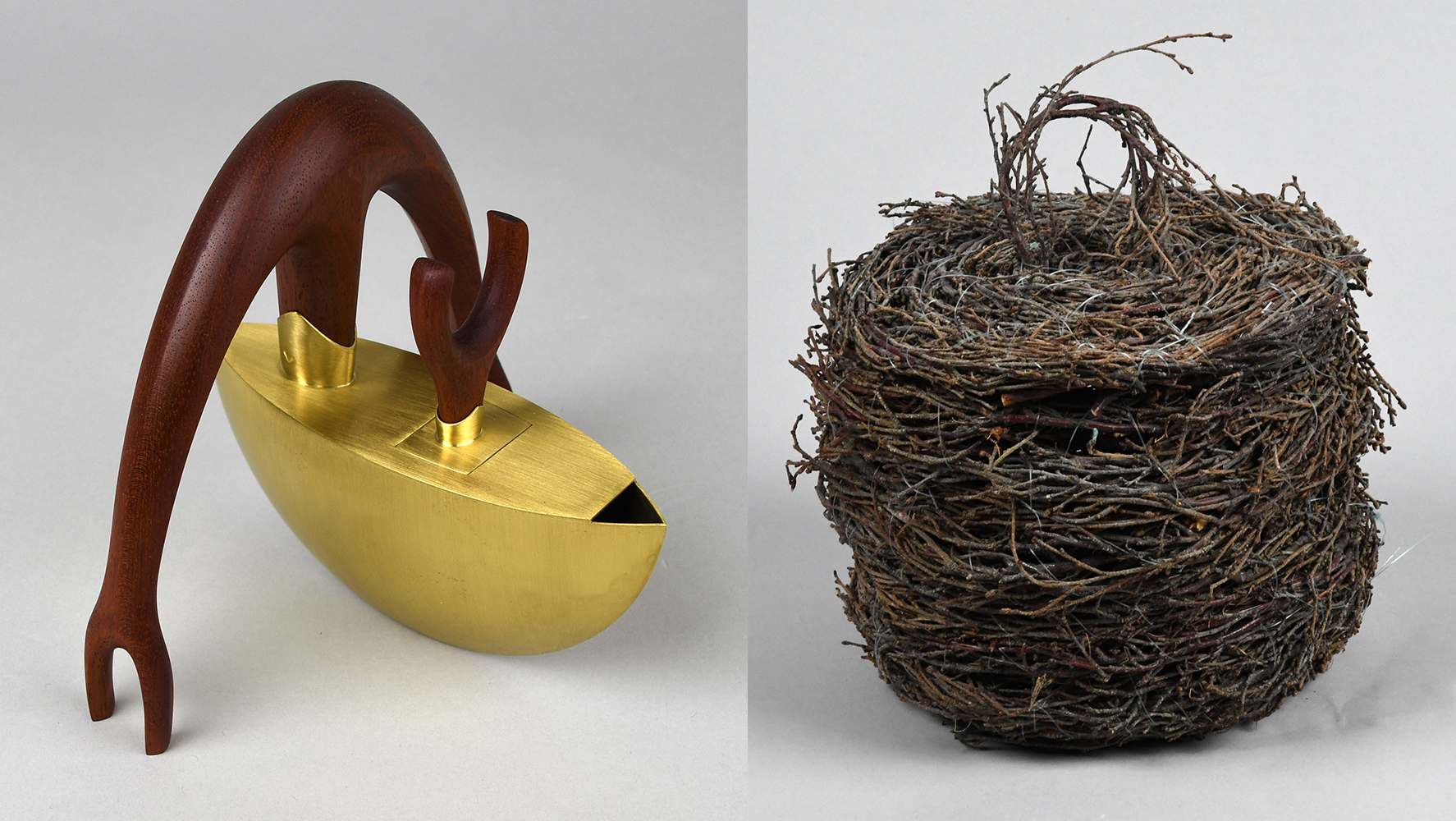
Modern and Ancient
Inuit artists often experiment with new materials and re-interpretations of traditional themes. Michael Massie is well-known for his stylish and beautifully crafted metal teapots, which began as an homage to his tea-drinking grandmother. This one, left-tea/right-tea, evokes an ulu, the traditional Inuit woman’s knife, with a handle that allows pouring from either side.
Angie Angmak Eetak combined willow twigs with monofilament to create a lidded basket that reflects both traditional and modern sensibilities. She most likely gathered the twigs around her home community of Arviat, Nunavut. Did she gather the monofilament the same way, repurposing discarded fishing line?
Left: Michael Massie, left-tea/right-tea, Happy Valley-Goose Bay, Labrador, 2019. Brass and jacoba wood. Museum purchase.
Right: Angie Angmak Eetak, Lidded Basket, Canada, 2021. Willow and monofilament line. Robert and Judith Toll Collection.
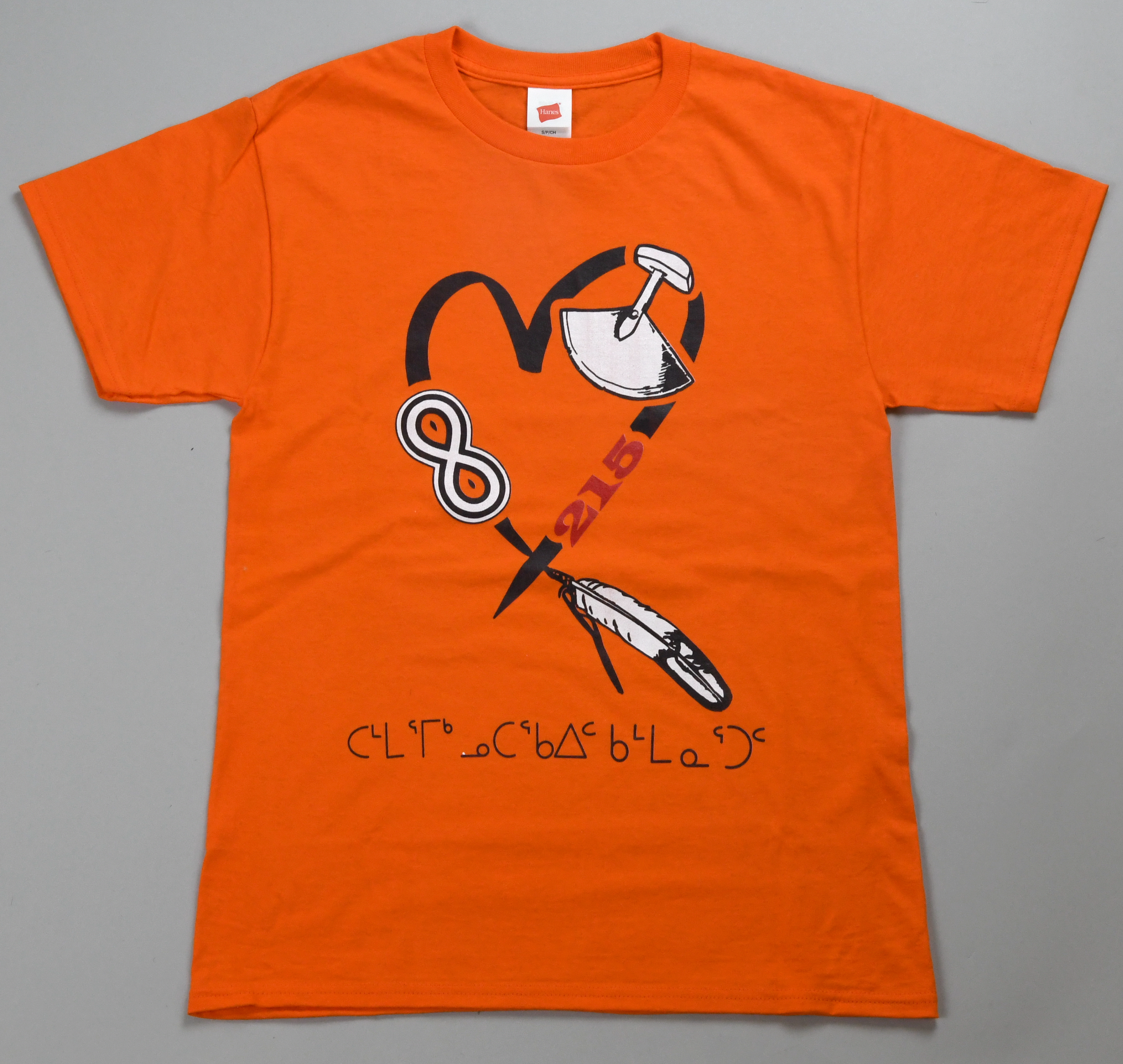
Every Child Matters
In Canada, September 20 is the National Day for Truth and Reconciliation, recognizing the trauma experienced by Indigenous families caused by the Government forcing their children to attend residential schools. Indigenous groups in Canada selected an orange shirt to represent this trauma, based on the story of Secwpemc (Shuswap) leader Phyllis Webster. At age six, her grandmother gave her a brilliant orange shirt to wear on her first day at school. On her arrival, she was forced to change her clothes, and she never saw that shirt again. At the school she was made to feel that she did not matter. Now, Orange Shirt Day reminds us that Every Child Matters. The Museum purchased this 2021 shirt from Kadluk Kreations, an Inuit-owned clothing business. In addition to symbols of Inuit culture, it includes the number 215 representing the number of child burials found at the former Kamloops (British Columbia) Residential School in 2021.
Kadluk Kreations, Inuktitut Orange Shirt Day T-shirt, Tikirarjuaq (Whale Cove), Nunavut, 2021. Museum purchase.
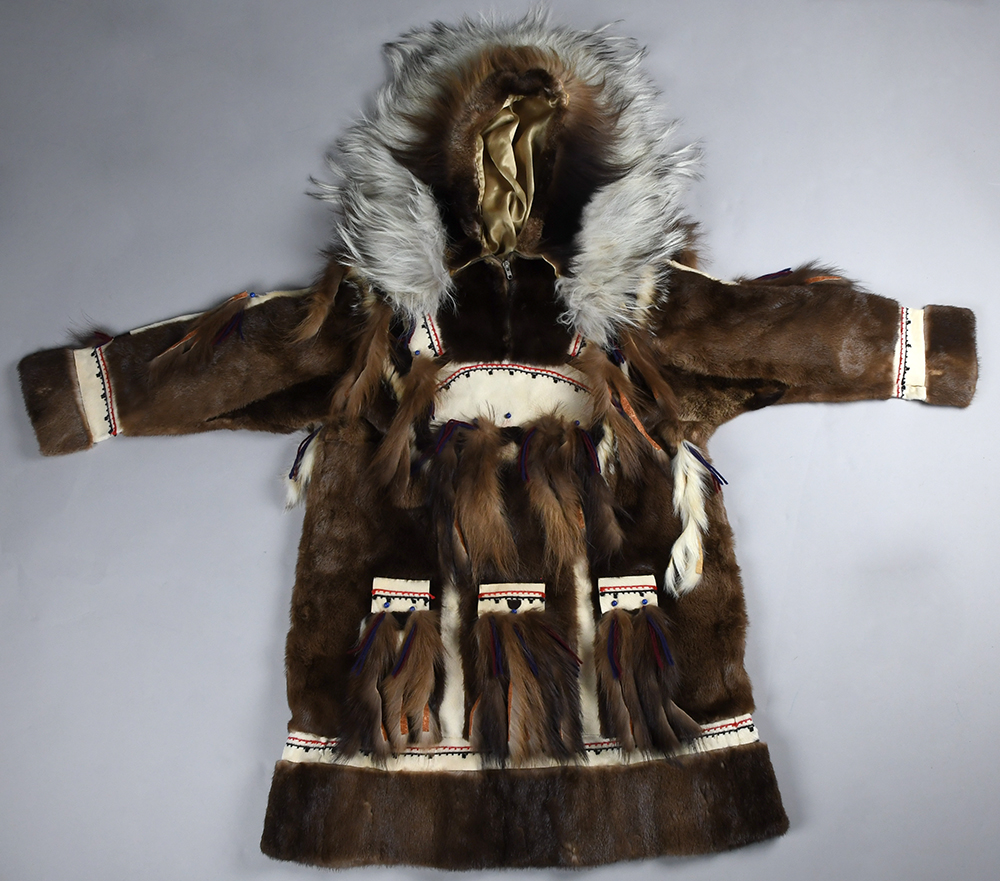
Yup’ik Parka
This beautiful woman’s parka is attributed to Lucy Beaver, a well known Yup’ik seamstress who, over the course of her long life, made many parkas for her family and for sale. The parka’s design includes white calfskin panels with red and black glass beads, using a design specific to the family. A woman would make such a parka for her daughter-in-law, communicating her status as a married woman, and passing along the family design.
Lucy Beaver, Yup'ik woman's parka, Alaska. Various furs. Museum purchase.
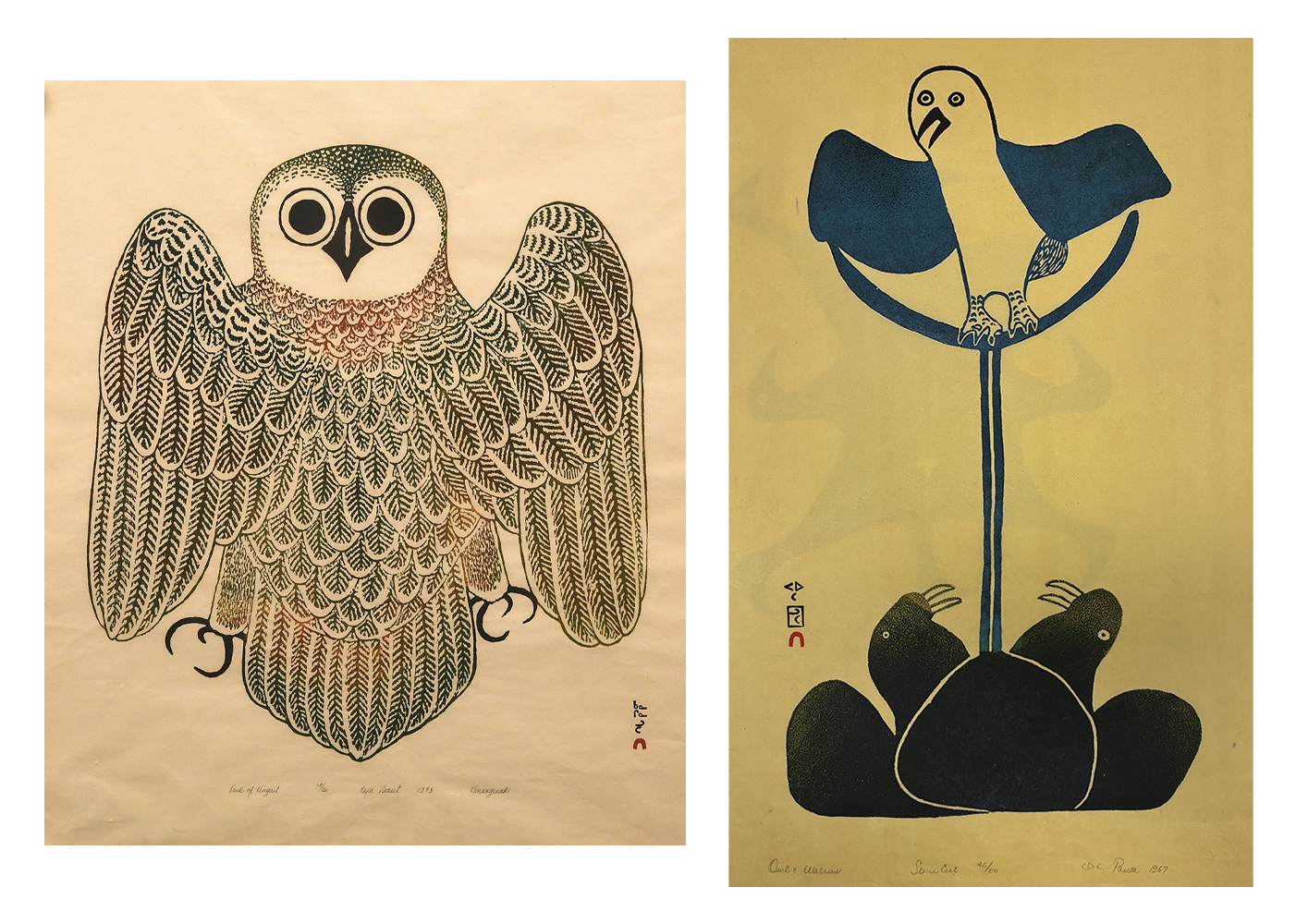
Ukpik
The ukpik (snowy owl) is the only owl that inhabits most of the Arctic where, unlike its southern cousins, it often hunts in summer daylight. Many artists draw inspiration from these large and graceful predators, although the snowy white color implied by their English name is not necessarily the bird’s most important feature. Three artworks, two donated and one purchased, convey some of the ways Inuit artists have portrayed these magnificent birds.
Lutka Qiatsuk, who printed both of these images, chose a vibrant yellow paper for Pauta Salia’s Owl and Walrus, in which an owl soars above two startled walruses. In Owl of Kinngait Kananginak Pootoogook highlights the owl’s large eyes, strong beak, and dangerous talons, rather than its snowy white color.
Kananginak Pootoogook, Owl of Kingait, Cape Dorset, 1973. Ink on paper. Gift of Kate Sewall Beaudette.
Pauta Saila, Owl & Walrus, Canada, 1967. Paper. Bequest of Richard Finlay.
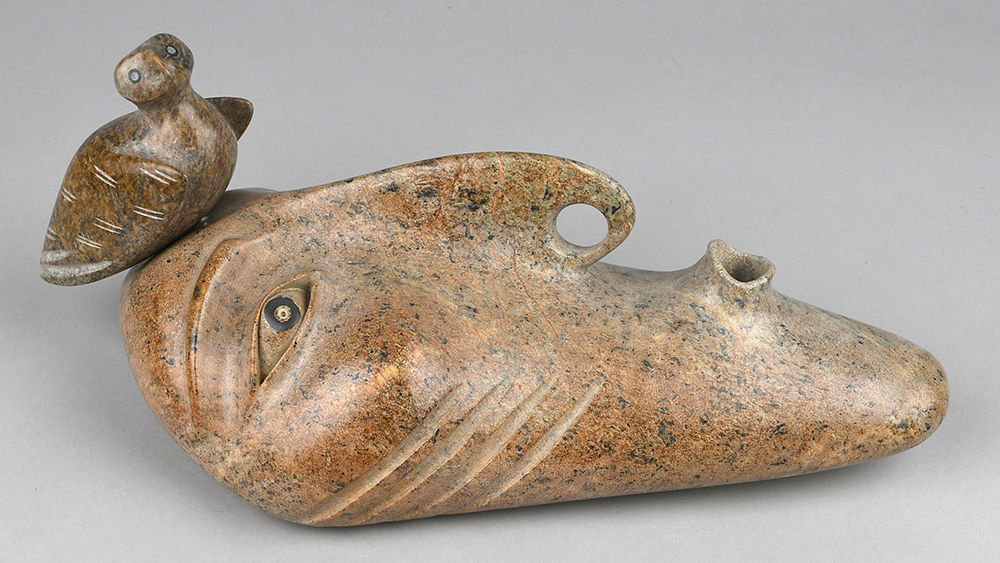
David Ruben Piqtoukun often features owls as shamans’ spirit helpers in his sculptures. Here an owl appears to roost on the forehead of a man, representing the shaman preparing to embark on a flight to the spirit world with the help of the powerful wings of the owl spirit.
David Ruben Piqtoukun, Owl Man, Paulatuk, Canada, 2020. Stone. Museum purchase.