

Dates:
Location:
Arctic Museum main galleriesToday people typically use modern equipment rather than traditional hunting and fishing tools, but the knowledge of how, what, and where to get these foods, and how to prepare them, continues to be passed on from generation to generation. Still, families face many barriers to including these local foods in their regular diet.
Explore the exhibit to discover some of the ways Inuit communities across the Arctic are working to ensure that they and their descendants can continue to enjoy these important and delicious foods.
Selected Works
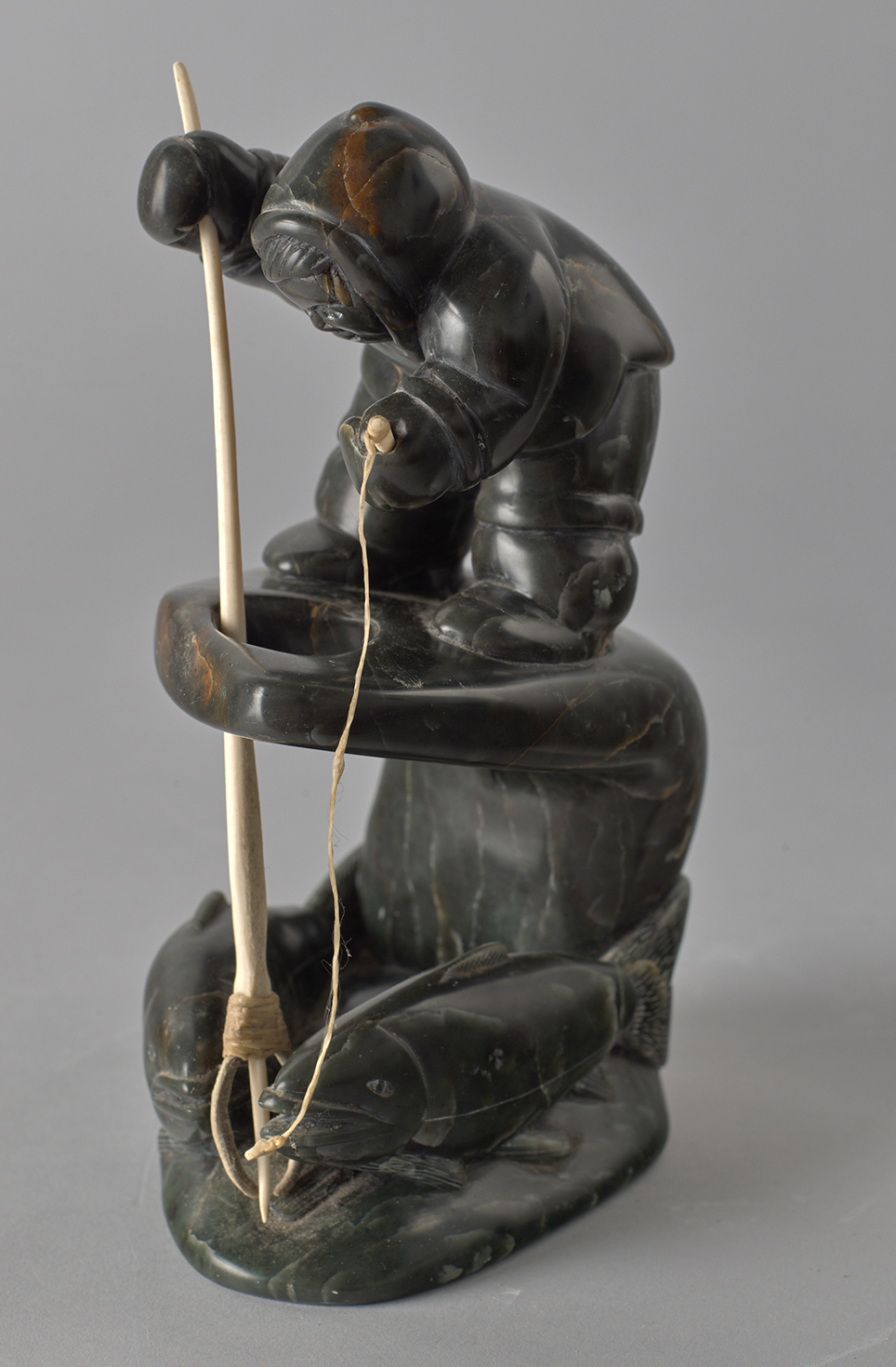
Man Fishing Through Hole In Ice with Three Prong Spear and Fish on Line, Jimmy Inaruli Arnamissak, Inukjuak, Cannada, stone.
Gift of Marie Elaine Tefft.
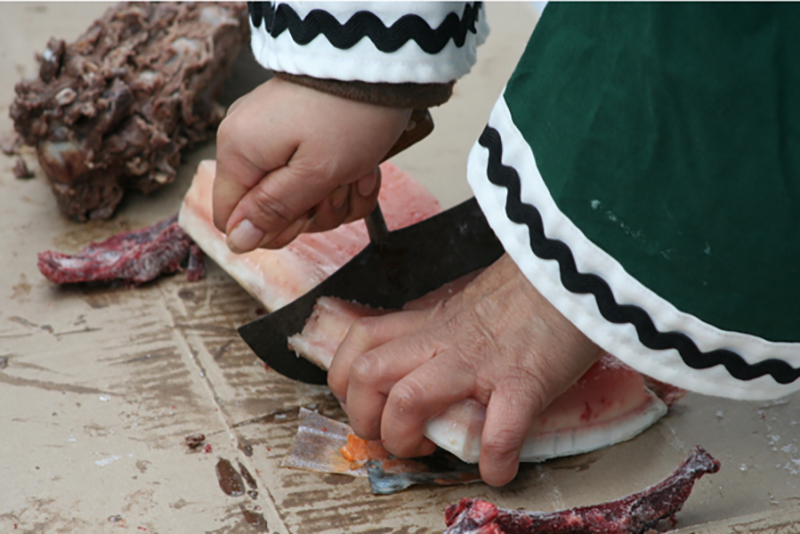
Starting the Feast
What is this woman cutting?
Inuk photographer Barry Pottle focuses on a woman’s hands as she uses her ulu, a traditional Inuit woman’s knife. She is cutting mattaq, delicious whale skin and blubber, for a community feast where a wide variety of traditional foods will be shared. Look carefully at her cardboard cutting surface and you can see the other foods she has already prepared: dark seal meat at the bottom right; a bright orange piece of salmon or char by her fingers; and some caribou by her right hand.
Starting the Feast, Barry Pottle, Ottawa, Canada, 2015, photograph. Gift of Clif Eliason.
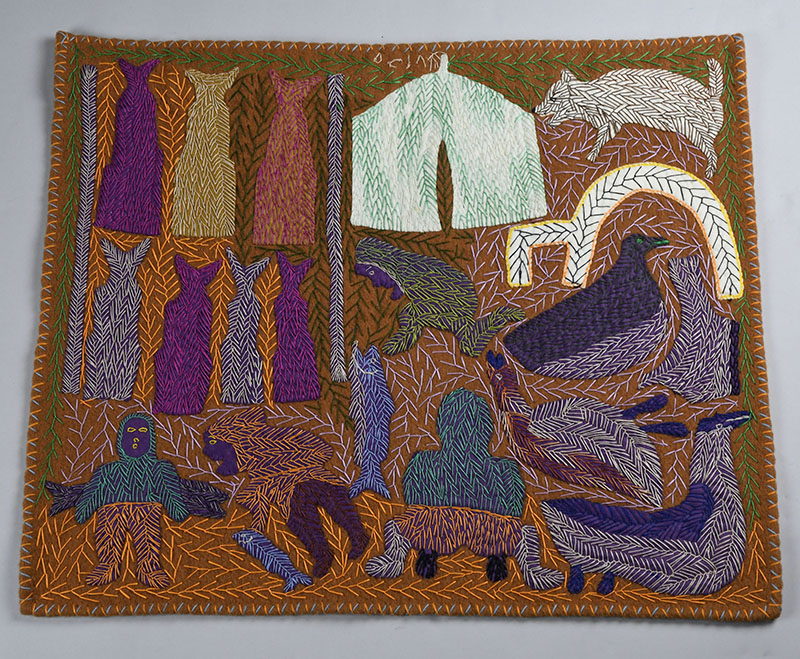
Spring Fish Camp
Elizabeth Angrnaqqaq uses wool duffle fabric and embroidery thread to illustrate activities at a spring fish camp. Family members are busy splitting and drying char, caught through the spring lake ice. The tent, traditionally used in the warmer months, sits next to an empty snow house and a group of birds, all sure signs of spring
Spring Fish Camp, Elizabeth Angrnaqqaq, Nunavut, wool duffle on embroidery floss. Gift of Bernadette and Bob Engelstad.
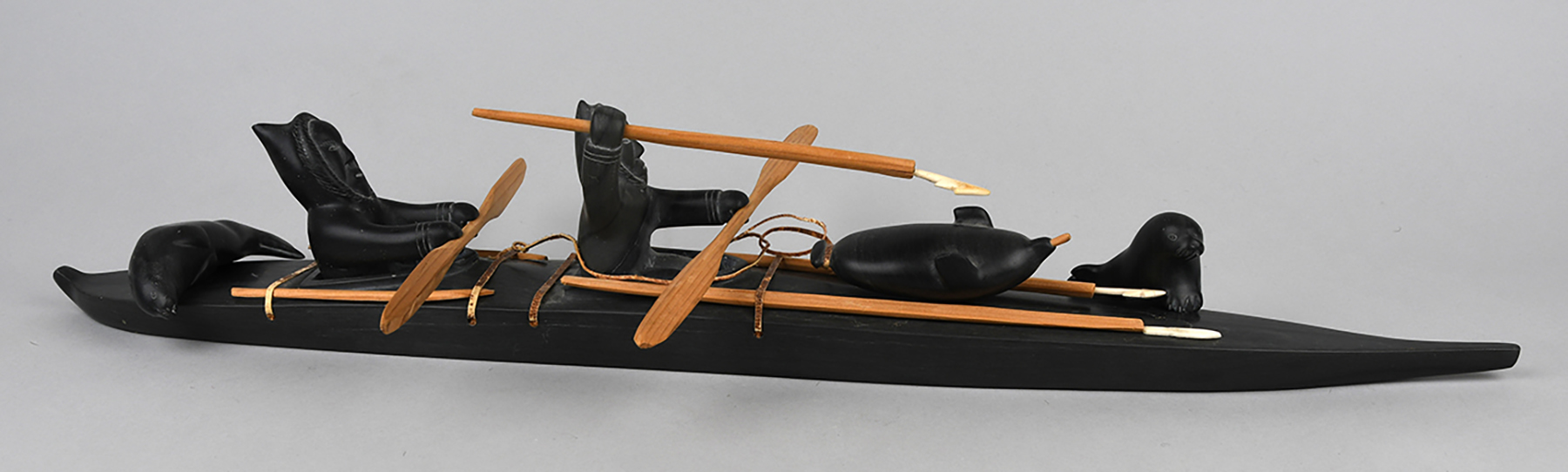
The Ultimate Hunting Tool
What does a kayak have to do with food?
Kayaks are used around the world as recreational and sporting boats, but Inuit developed them as hunting vessels. Singly or in groups, hunters in kayaks can capture anything from fish to walrus and even small whales while safely navigating icy waters.
The two hunters in this unusual kayak have already caught one seal and soon will have two. On the Belcher Islands in southeastern Hudson Bay, Inuit sometimes made two-person kayaks, called paatsaali. Such kayaks may have been designed to make it safer for hunters to navigate the stormy waters around these remote islands.
Kayak, Lucassie Takatak, Nunavut, steatite. Gift of Peter Witt and Joyce Nies.