While the phrase “lobster pot” may spark an image of buttery crustaceans, in the world of Ultimate Frisbee it conjures up a far different picture.
Every fall, the Lobster Pot tournament attracts between sixty and 100 frisbee teams for a two-day tournament in South Portland. Some years as many as 2,000 athletes converge on the playing fields, coming from as far away as Florida and Ohio, but mostly from northeastern New England.
This gathering is unique in that organizers not only allow but actively encourage participation by athletes who learned the rules of the game days (or even minutes) before playing.
Bowdoin has thirty-one varsity sports teams that have produced hundreds of All-American athletes over the years. With around 35 percent of Bowdoin students participating in varsity athletics, they are a highly visible part of campus life.
However, if you look closely, you will find another layer of Bowdoin athletics—the flourishing world of club and intramural sports. One of the teams in that world is Ultimate Frisbee.
Ultimate Frisbee, which is known for its silly team names and traditions, does have a competitive side. Every year, just as the leaves begin to fall, the frisbee team heads off to Lobster Pot for the friendly competition—and the free merch.
Lobster Pot is unusual within Ultimate competition in terms of its large size, its fall semester timing, and its accessibility. Spring frisbee tournaments are much smaller and the teams are made up of experienced players with a deep understanding of the sport.
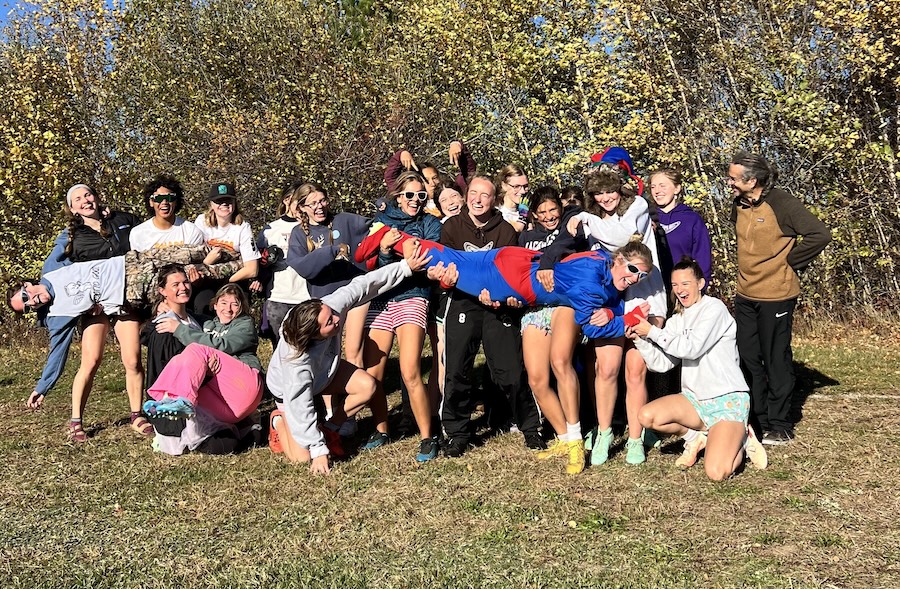
Because it is one of the only fall tournaments, competitors not only get to experience the beauty of Maine in October, they also have only just learned the rules of the game in recent weeks (with some only learning on the bus ride over).
In the words of Eleanor Adams ’27, the social captain of Chaos (Bowdoin’s non-male-identifying Ultimate team), Lobster Pot is special because, “It’s everyone’s first experience playing frisbee if they’re a rookie on the team, and I feel like it’s really low-stakes and a really safe, comfortable environment to get introduced to the game.”
The welcoming nature of Lobster Pot is representative of the important role that club and intramural sports play at Bowdoin. Whether they are former high school varsity athletes who aren't continuing with their sports in college, or students who have never participated in any form of organized athletics, these teams welcome everyone.
In that way, club and intramural sports foster a love for learning and developing new skills in athletics while giving non-varsity students the opportunity to be a part of a team throughout their college experience.
If Lobster Pot and Ultimate Frisbee as a whole embody the magic of club sports, it's the traditional post-game ‘spirit circle’ that, in turn, epitomizes the essence of Ultimate Frisbee.
A spirit circle is the post-game communing of both teams—the winner and the loser—to celebrate the competition and practice good sportsmanship. Players from opposing teams intermingle in a circle, and a player from each side gets elected by the opposing team to celebrate their performance or character in the game. The mini celebration ends with a cheer from everyone.
The spirit circle encapsulates the best components of frisbee—being part of a team and participating in healthy competition.
But let’s face it, a spirit circle is just a bit more fun after a win. And with that in mind—go Chaos!