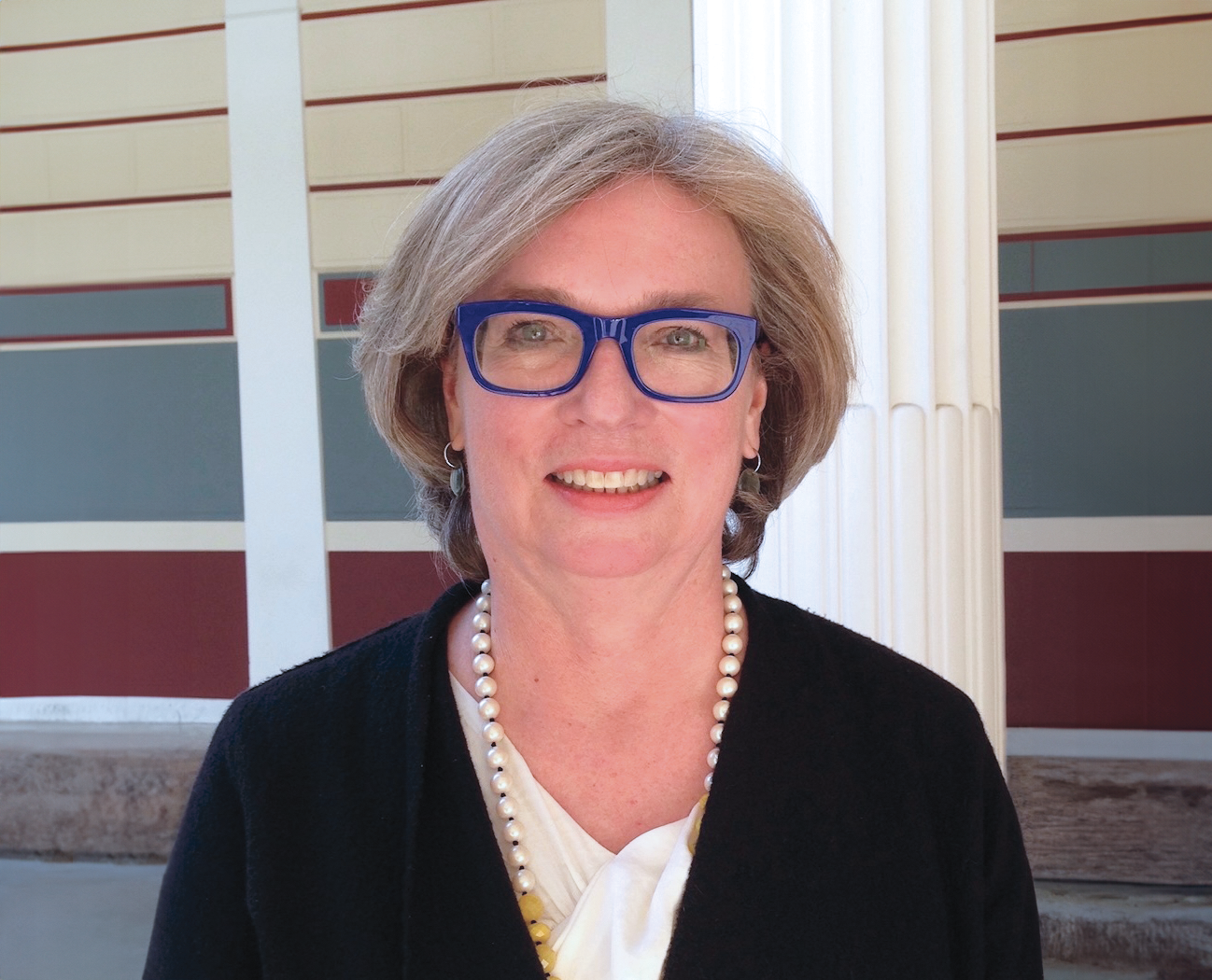
How did your career unfold?
It’s easy to pinpoint the moment when a future began to come into focus. Erik Nielsen had joined the faculty and took students on the excavation he directed at the Etruscan site of Poggio Civitate in Italy. Sometime in the first week, on the trip between Siena and the Tuscan landscapes surrounding our base at Murlo, I recall thinking “This is it.” Studies continued in the PhD program at Bryn Mawr College, on excavations in Greece and southern Italy, and at the American School of Classical Studies in Athens and the American Academy in Rome. Then a big leap west to Santa Monica and the J. Paul Getty Trust turned me toward a museum career.
What do you find rewarding, exciting, challenging about antiquities and museum work?
Encountering ancient art firsthand and delving into objects’ histories and meanings are intensely rewarding. The relationship is personal, whether it be with a national icon or with a modest fragment deserving a closer look. The challenges come both in their fragility and their distance from us, and how to bridge that gap for different audiences.
I’ve read that your projects tend to center on “the afterlife of antiquity” in culture—what does that look like? Why is that important?
Early on at the Getty Research Institute, I curated collections on the history of archaeology and the traditions of classicism and collecting. Antiquity is ever present, from the myths depicted in Renaissance art through the eighteenth-century rediscovery of archaeological sites by Mediterranean travelers, and these afterlives resonate right up to the present (as Christopher Nolan’s latest film, Odyssey, reminds us). Every generation takes what it needs and desires from the past. Since joining the museum as curator of antiquities in 2008, my attention recentered on ancient visual and material culture and the worlds that are embodied in objects.
Are there ways that your academic or extracurricular work at Bowdoin has come into play in your life or career?
There are through lines from my early morning Greek classes with John Ambrose and Nate Dane, and the legacy of ancient art that Edward Perry Warren left to the Bowdoin College Museum of Art, and they’ve led directly to where I am now. Some of my course texts are still on the shelf in front of my desk.
What are you most proud of in your career? How about outside of work?
Cultural heritage and the ownership of ancient art generate a good deal of controversy. Many museums have been called to address past practices that are at odds with today’s ethical standards. As an archaeologist, my aim has been to advance that mission, working to make object histories transparent to the public, to facilitate returns to countries when it’s the right thing to do, and to implement international cultural agreements that support the preservation of the antiquities under our care. These strategies have been effective, and I take some pride in helping to reach win-win solutions.
What brought you to Bowdoin?
My father, Bob Lyons, was raised in Freeport and Portland. Although he didn’t attend Bowdoin, Maine meant the world to him, and he was genuinely pleased when I suggested a trip to campus. The outcome was a happy one for both of us.
What inspires you?
Talented people at the Getty and around the world, with whom I have the great good fortune to collaborate, are an unfailing source of motivation and inspiration.
Is there something about your work or life that others would find surprising?
Visitors are often startled to learn that the exhibitions they enjoy normally take three or four years to produce, including negotiations with cultural ministries to obtain significant loans, installation design, writing the catalogue, and programming, not to mention the back-of-house arrangements for art shipping, conservation, IT, and not a little administration. I’m thinking especially of my recent exhibition The Kingdom of Pylos: Warrior-Princes of Mycenaean Greece, which spotlights the latest discoveries from the American and Greek excavations at Pylos and Bronze Age sites in Messenia. There were teams in Kalamata, Los Angeles, and Athens, and coordinating everything can be all-consuming. In the current venue at the Hellenic National Archaeological Museum in Athens, it’s gratifying that the curators recognized the many who contribute so much behind the scenes on the gallery walls.
Is there something about YOU that others might find surprising?
Archaeology seems to be inherently fascinating and being a novel topic, it often sparks conversations with people who are curious about how excavation is done and what’s being found. If there’s an element of surprise, maybe it lies in the contrast with the larger-than-life adventurers depicted in pop culture.
What do you enjoy doing in your spare time?
As much as I can manage, downtime is mostly devoted to our family place in Chatham (MA), which has been a gathering spot over summers past with grandparents. Endless labor on house and garden is a much-needed change of pace.
Best Bowdoin memory, or most-lasting lesson from your Bowdoin days?
Walks with friends on the path along the ocean side of Bailey Island.
This story first appeared in the Fall 2026 issue of Bowdoin Magazine. Manage your subscription and see other stories from the magazine on the Bowdoin Magazine website.