A Quad Full of Questions, and a Lot of Answers
By Rebecca GoldfineThe annual President's Summer Research Symposium is a broad, diverse showcase for research across the curriculum, much of it conducted alongside Bowdoin professors over the summer and during the academic year.
But many other students pursue opportunities at universities, labs, or field sites outside of Maine; these students, too, often receive financial support from the College through its grants and fellowships.


On Friday afternoon, October 30, students who conducted research this summer stood beside their posters, ready to answer questions from passing professors, staff, students, and family members in town for Family Weekend. The researchers shared not only what they had discovered, but also the questions that continue to pull at them.
Learn more about a few of the projects below.
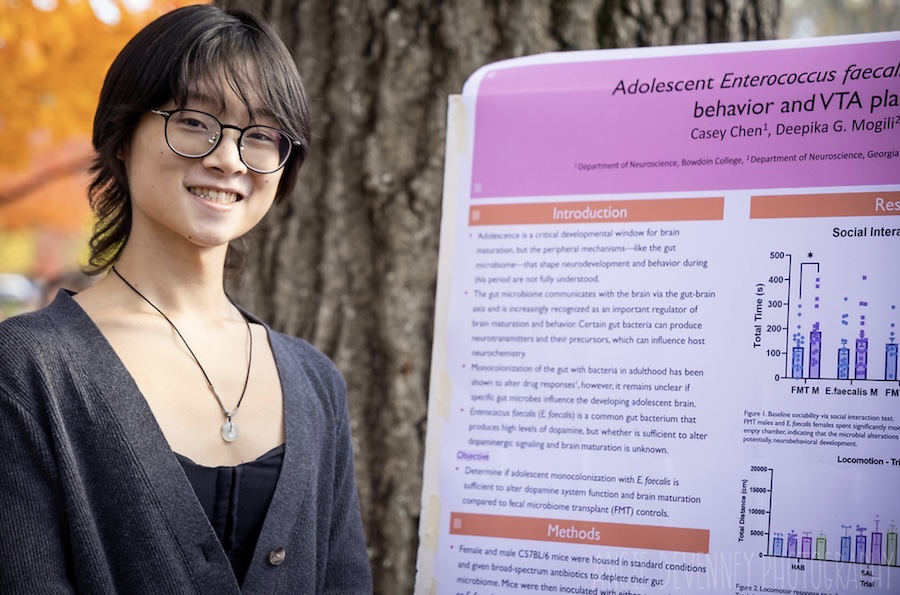 Casey Chen ’27: Can Gut Bacteria Influence the Developing Brain?
Chen spent the summer exploring how a single microbe that lives in our gastrointestinal tract might affect the teenage brain. Working in Santiago Cuesto’s Rutgers University lab, the neuroscience major investigated the social behaviors of adolescent male and female mice given E. faecalis, a common bacterium found in most human gut microbiomes. “We picked it specifically because other studies have found it linked to high levels of dopamine,” she said.
Their findings so far indicate that E. faecalis could alter the expression of a gene in the brains of male mice, but not in females. “We gave the mice a social interaction test, where we introduced one mouse to another one and measured how much time the mouse hung around that area,” Chen said. The male mice with the inserted bacteria tended to avoid unknown mice, which is uncharacteristic for normally sociable and curious mice.
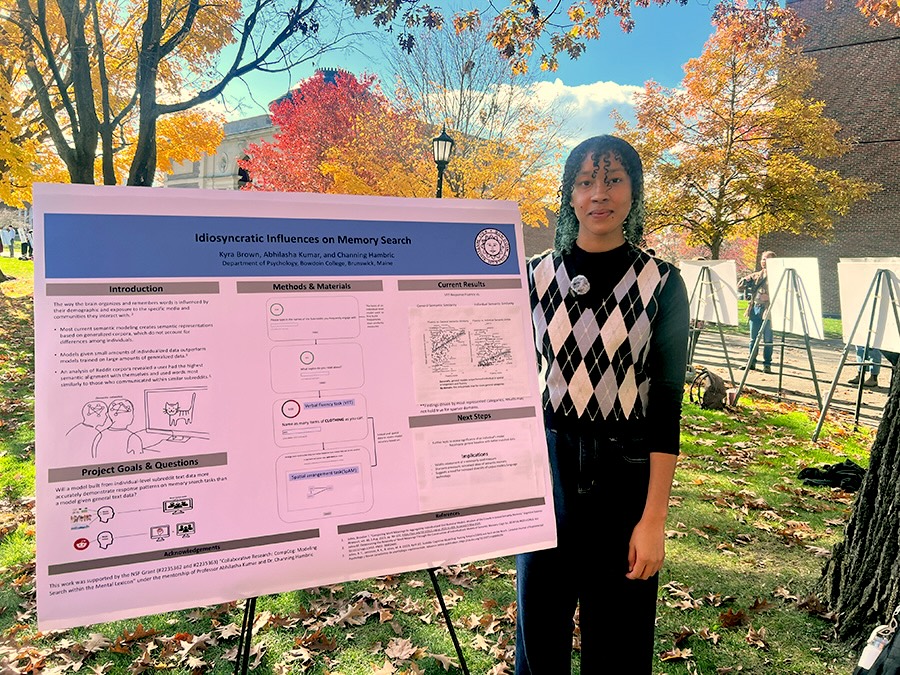
Kyra Brown ’28: How Do We Organize Our Thoughts?
When Brown, an education and psychology major and computer science minor, asked a couple of visitors at the symposium to jot down on her whiteboard as many animals as possible in thirty seconds, one came up with a list of animals based on their habitats, while the other worked their way through the food chain.
These different approaches open a window into how our minds organize knowledge and memories. Working with Assistant Professor of Psychology Abhilasha Kumar, Brown is investigating whether conventional models of human memory, which rely on generalized patterns, adequately capture the ways individuals think and remember.
“A semantic network, which is the way ideas and concepts are organized in relation to one another in the mind, differs so much from person to person, based on the environment they grew up in in, their interests, or the experiences throughout their lifetimes,” Brown said. These can vary even based on the media people consume.
Using information about people's interests and the communities they engage with on Reddit, she's developing personalized models of how people organize knowledge. While her preliminary findings suggest that generalized models are overall more accurate, in some cases, personalized memory models may better predict how people retrieve information. Her work raises questions about whose experiences are represented in standard measures of memory. “This calls into question whose knowledge is considered general and whose is being less considered in these models,” she said.
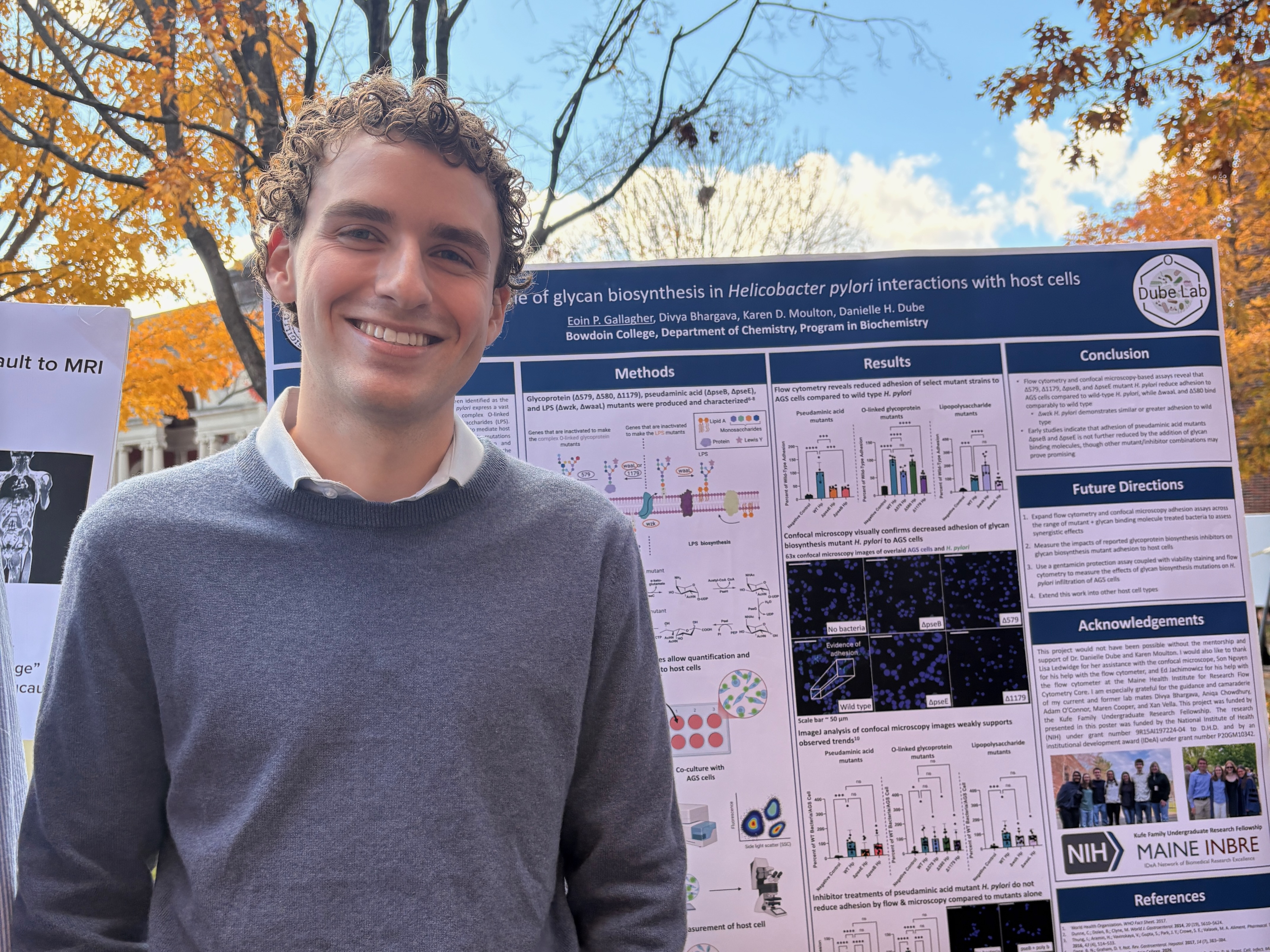
Eoin Gallagher ’27: Working Toward a New Antibiotic
A common bacterium that lives in the human stomach, Helicobacter pylori can sometimes cause ulcers and even stomach cancer. Eoin Gallagher ’27, a biochemistry and digital and computational studies major, is investigating how sugars on the bacterium’s surface help it attach to human cells, an important step in establishing an infection.
Working in the lab of Danielle Dube, Bowdoin's Norma L. and Roland G. Ware Jr. Professor of Chemistry and Biochemistry, Gallagher is studying how disrupting the production of these sugars affects the bacterium’s ability to adhere to cells. His research has found that certain genetic mutations significantly reduced this attachment, offering new insights into how the bacterium interacts with its human host.
The findings could eventually help researchers develop new ways to prevent or treat H. pylori infections, and even pave the way to new antibiotics. Drawn to chemical biology and its potential to improve human health, Gallagher plans to pursue a PhD and do the kind of research that leads to new treatments for diseases.
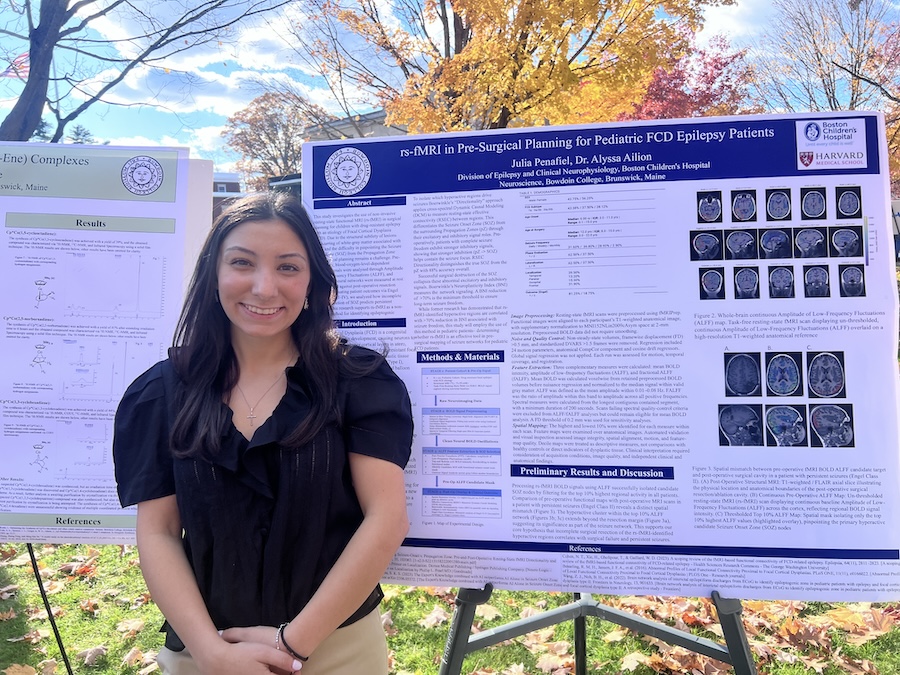
Julia Penafiel ’27: A Better Way to Locate Epileptic Seizures?
For some children with a certain kind of epilepsy known as Focal Cortical Dysplasia, preparing for surgery means spending time in a hospital waiting for a seizure so doctors can identify the area of the brain responsible.
This summer, Penafiel, a neuroscience major and sociology minor, worked in a lab at Boston’s Children Hospital to investigate whether functional MRI scans, which measure brain activity, could improve surgical planning by locating brain regions without waiting for a seizure, as well as improve surgical outcomes.
“One of the major goals is to develop a less invasive way of localizing seizure networks, but the other main goal is to improve surgical outcomes via rs-fMRI-identified hyperactive zones, as presurgical planning techniques are not always 100 percent accurate in localizing the seizure onset zone, resulting in incomplete resections and poor outcomes, like persistent seizures,” Penafiel said.
Penafiel received funding from the Office of Career Exploration and Development to support her off-campus research position, which she secured after sending an email to the head of the epilepsy department at the hospital. “I hope to be some kind of pediatric subspecialist,” she said. Though she’s not yet sure if that specialty will be neurology, she added, “I’ve always been interested in neuroscience because it bridges a gap between biological function and human behavior.”
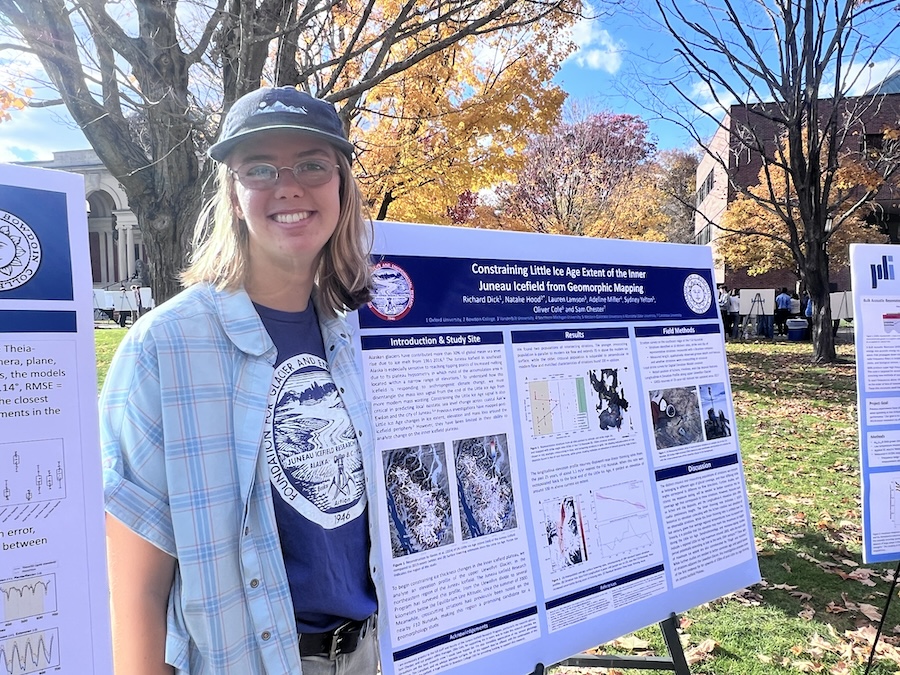
Natalie Hood ’27: How to Read a Retreating Icefield?
For seven weeks, earth and oceanographic science major Hood lived on Alaska’s Juneau Icefield, exploring how its vast interior has changed over time. While scientists have documented the retreat of glaciers around the icefield’s edges, less is known about changes in its interior, where enormous quantities of ice are stored.
Using GPS measurements and studying striations left on exposed rock by older glaciers, Hood and her fellow researchers pieced together clues about the icefield’s past. They found that ice at their study site has thinned at a nearly steady rate of about 3.6 feet per year over the past twenty-five years, and uncovered evidence that the ice was once roughly 100 meters thicker than it is today. Their findings help scientists better understand how this enormous icefield has responded to past climate changes and how it may change in the future.
Hood, who is from Anchorage, was drawn to the opportunity to do student-led research in her home state with the Foundation for Glacier and Environmental Research since, she said, “a lot of glaciologists get their start there.” Plus, doing research that is so significant to Juneau was meaningful. “I’m looking to do science in a way where research questions are driven by the local community and what is most important for those people to know,” she said. “Sea level change is very relevant to Juneau communities.”
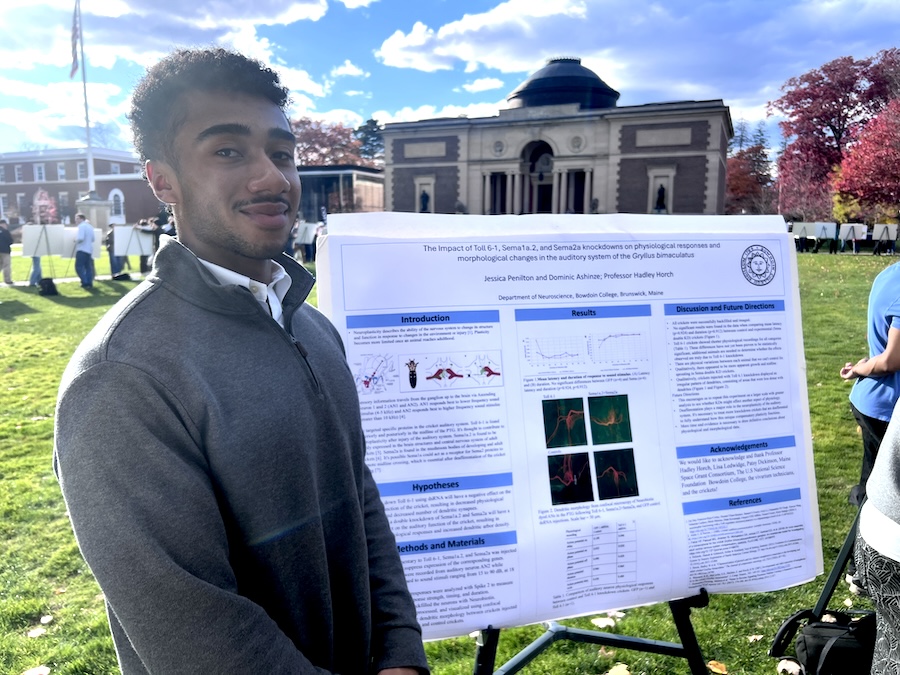
Dominic Ashinze ’28: What Can Crickets Teach Us About Brain Injuries?
Crickets have a remarkable ability to reorganize their nervous systems after losing an ear, which, surprisingly, is located on a foreleg. Working with Hadley Horch, Bowdoin's Norma L. and Roland G. Ware Jr. Professor of Biology and Neuroscience, biochemistry major Ashinze investigated the cellular mechanisms behind neuroplasticity to better understand how nerve cells respond to injury.
Ashinze and his lab partner Jessica Penilton ’28 focused on a protein that may play a role in the growth of neuronal branches called dendrites. By reducing the expression of the protein, they observed reduced dendritic branching—an exciting result made possible after getting a challenging procedure to work for the first time in several years. Understanding how nervous systems respond to injury could eventually shed light on neurological conditions and neurodegenerative diseases in humans.
The research has particular meaning for Ashinze, who worked as a certified nursing assistant at a nursing home in Chicago, where he cared for people with memory disorders. The kind of research he contributed to this summer, he said, could lead to a greater understanding of the mechanisms that lead to these diseases.
Slideshow photos by Angie Devenney.