With huge fields and a dense forest, leading down to “this big surrounding ocean,” the family farmhouse on Orr’s Island left quite an impression on the Thalheimer children over the many summers they spent there.
“For a child, it was like ‘Wow, this is really amazing,’” recalled Elizabeth “Betsy” Brett, née Thalheimer, who, along with her three siblings—Will, John, and Andrew—was interviewed for a new oral history project.
The interviews were conducted by Ruqayyah Abouraya ’28, who produced the project over the summer as an intern with the Schiller Coastal Studies Center (SCSC).
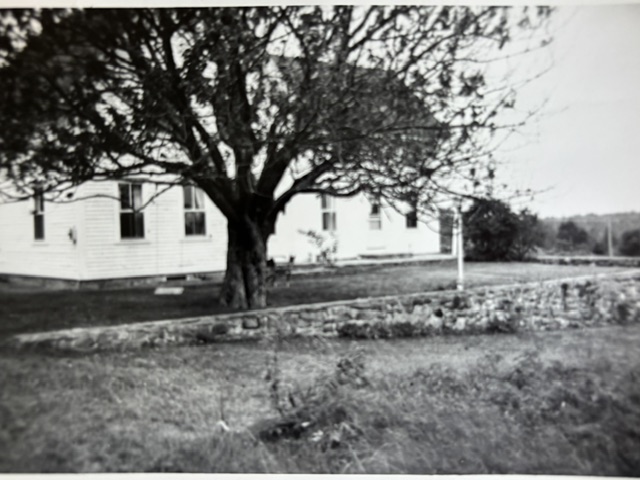
The Thalheimers of Orr's Island: A Story of Family and Home is a series of recollections in the form of text, audio, and photographs, introducing us to the family who once lived on the land that is now a key component in Bowdoin College’s educational mission.
The Schiller Coastal Studies Center is now a 118-acre facility located on Orr’s Island, Harpswell, about twelve miles from the main College campus in Brunswick. It serves as a hub for advanced marine research and interdisciplinary work focused on Maine’s coastal environments, economies, and communities. Before it was any of this, however, it was a beloved family home and before that a working farm—indeed the farmhouse remains as one of center’s administrative buildings.
The farm was purchased in 1957 by William Hastings Thalheimer, known as “Haste,” Bowdoin Class of 1927, and his wife, Irma. A few years later they expanded their property to encompass all of the land that the SCSC now occupies, including two and a half miles of pristine coastline.
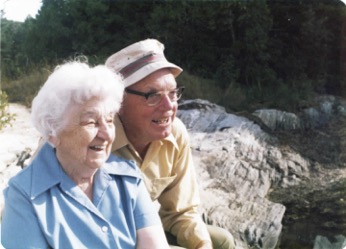
Haste and Irma retired to live there and for many years enjoyed hosting their four grandchildren and their families over the summer. In 1981, they deeded the land to Bowdoin, which transferred to the College in the 1990s when they had both passed away.
“In giving this land to Bowdoin,” the story notes, “the Thalheimers made a lasting choice: rather than see it sold off and built over, they ensured it would stay whole—a working coastal landscape kept for study, teaching, and the quiet appreciation of the place itself. What could have become a cluster of seasonal houses instead remains forest, field, and shoreline, much as the family knew it.”
Betsy Brett said the project brought back a “flood of memories” for her and her brothers, as well as “the opportunity for reflection and the positive emotions that came as we talked about our shared and individual experiences.”
Abouraya interviewed each of them separately, said Betsy, to obtain a better understanding of what life was like for their grandparents when they owned and lived on the property. “What was wonderful about Ruqayyah’s work was her understanding that each grandchild experienced the farm and those visits in a different way and remembered it a little differently. Ruqayyah displayed great writing and collaboration skills, understanding that by honoring and paying attention to those differences she received a more complete story of what life was like on the farm.”
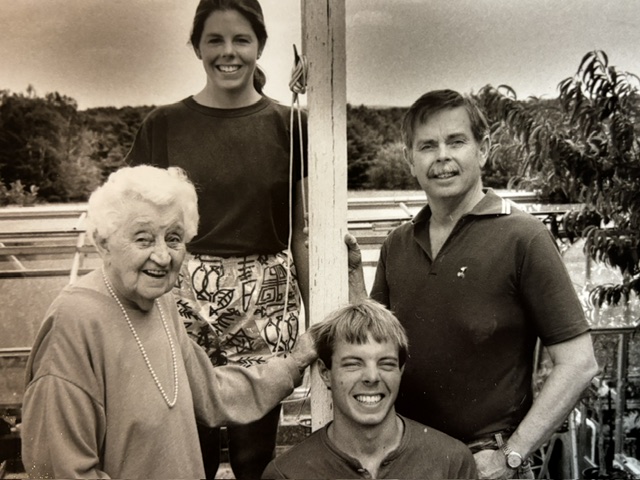
Betsy said the family also wishes to acknowledge that they were among many who loved and cared deeply for the land. “Looking back, we realize each group of people contributed to the history of the place, from Indigenous footsteps to the Hansons, who wrestled the rocky land into a productive farm. Our grandparents would be proud and appreciative of the intentional way Bowdoin has worked to ensure the property is utilized, both within the town and Bowdoin community and beyond.”
As she pieced together the stories of the various Thalheimer siblings she had interviewed, Abouraya said she spent much of the summer matching those memories with the photographs the family shared. “Some stories I knew would anchor the piece because all four grandchildren discussed them with me, like swimming down at the Point with their grandfather and watching for the flag as they came up the road.”
For her personally, said Abouraya, working on the project was an eye-opening experience. “Like a lot of students, I'd go out to the dock to jump off or walk the trails without ever stopping to think about where this beautiful place came from. After speaking with the Thalheimers and seeing photographs of what the land used to look like, I have a newfound appreciation for it. It could easily have been sold and developed into private waterfront homes. That kind of generosity is rare,” she added, “and I feel lucky to have spent a summer inside the story of it.”
"What could have become a cluster of seasonal houses instead remains forest, field, and shoreline, much as the family knew it.”
“My office is in the farmhouse,” remarked Holly Parker, who directs the center, “and from the moment I arrived here, I could feel that this was a family home that carried a lot of memories.” The project, she stressed, aims to capture and communicate that history to celebrate the Thalheimers' remarkable generosity. “The gift of their family home, Thalheimer Farm, that meant so much to so many, is central to our continuing story here on Orr's Island,” added Parker.