They are making electric vehicle charging more accessible, researching lower-energy manufacturing, creating sustainable buildings, protecting endangered wildlife, and helping communities pay for climate projects.
Though their internships span technology, finance, construction, government, and biology, they share a common goal: they’re working at places where innovation is being harnessed to solve environmental challenges.
Each summer, Bowdoin's Career Exploration and Development (CXD) awards students with competitive grants, called funded internships, to give them the financial freedom to pursue meaningful summer opportunities across the country and world. This year, the College awarded a record 223 funded internships to students in fields ranging the arts to science, public service, and education.
Much of the funding for these grants comes from alumni, families, and friends of the College—their gifts, which include over $18 million in new endowment and substantial current-use funding each year through the College’s annual funds, have more than tripled Bowdoin’s resources for internships over the last decade.
Below are profiles of four students working on environmental problems in creative ways.
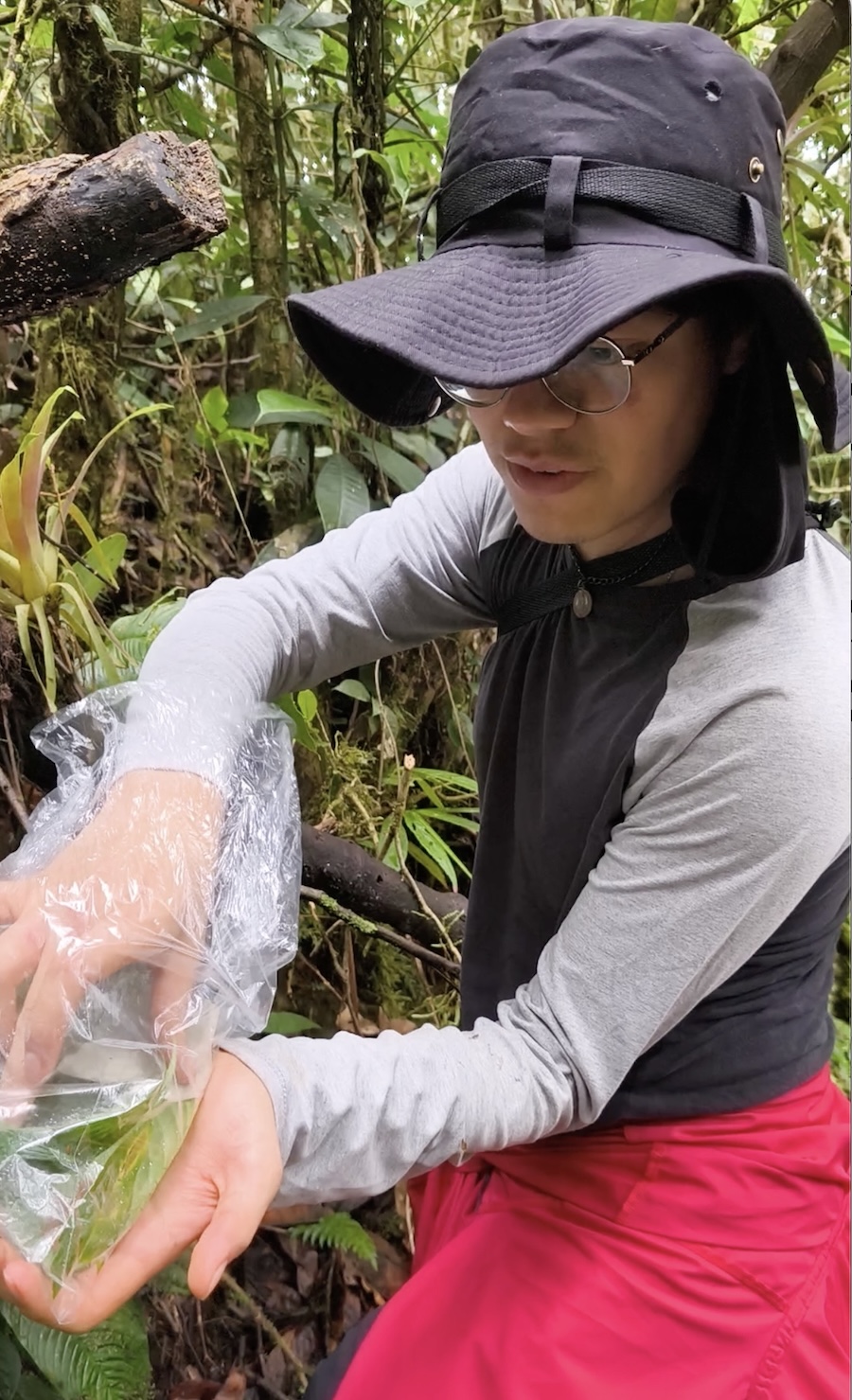
Mateo Morales Gómez ’29, Protecting the Rights of Nature
Los Cedros Biological Reserve, Ecuador
Rising sophomore Mateo Morales Gómez ’29 is researching an endangered frog in the Andes. Though the research is fascinating and worthwhile, the future economics major and government minor said he was more drawn to the opportunity to contribute to the site of a landmark legal victory for the environment.
“Los Cedros had a more specific pull for me, because Los Cedros isn't just a wildlife preserve, it's also the locus of a historic constitutional decision in Ecuador,” he said, referring to a case in 2021 when the nation’s highest court found that mining violated the constitutional rights of nature, thus protecting the rainforest and its huge biodiversity.
“The point where ecology, law, and economics come into conflict in a tangible, significant way is precisely the type of challenge that I plan to dedicate my career to solving,” he added. (He plans to also major in digital and computational studies at Bowdoin.)
For his internship, Morales Gómez is collecting data to aid the field study of Pristimantis cedros, an endangered rainfrog that is only found within the reserve.
The experience he’s had in the rainforest is changing the way he’s thinking about his future. “When I entered Bowdoin, I was confident that my path would lead directly through economics and multilateral policy to the UN, World Bank, etc.,” he said.
“That hasn't been altered by Los Cedros, but it has brought an element into the picture that I previously did not have: I am considering the possibility that my senior project might be in the form of an independent study or honors project in the realm of environmental economics, conservation finance, or the economics of Rights of Nature litigation.“
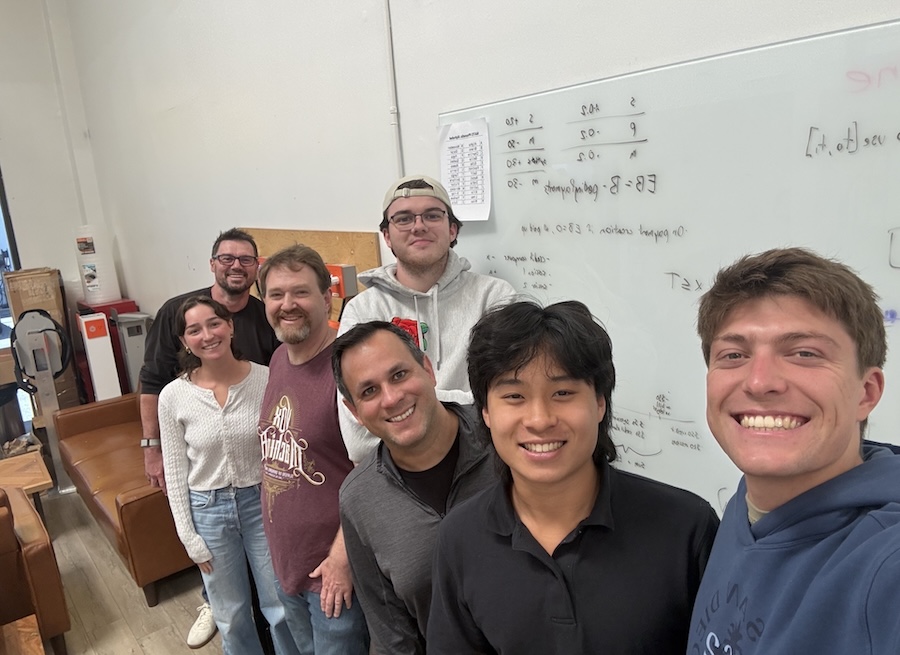
Zai Yang ’27, Expanding Electric Vehicle Access
Menlo Park, California
Apartment parking lots aren't usually where people imagine climate innovation happening. But Yang, a computer science major, is working at Orange Charger, a small start-up supplying multi-unit complexes, like apartment buildings and condominiums, with a suite of EV chargers.
The company is responding to the state's market conditions: gas is relatively expensive in California, many Californians drive EV cars, and the state has adopted building codes requiring that new multi-family complexes include pre-wired EV-ready parking.
Yang found his way to Orange Charger via a Bowdoin alumnus, Ian Matheson ’24, who Yang described as his “manager, mentor, and friend.” When Matheson told him about the internship opportunity, Yang was excited by the chance to both work for a start-up and to gain more coding experience with a small team.
“It’s helping me learn and grow as a developer. The learning opportunity here is immense,” he said. Last year, Yang was a coding intern at a much larger and more established company, L.L.Bean, in Freeport, Maine.
Additionally, he said he’s gaining an education beyond coding: “I'm not only learning about software engineering, but am becoming knowledgeable about business, EVs, and mechanical engineering.”
Yang credited his Bowdoin computer science classes with giving him a theoretical grounding in the field, as well as the free courses that CXD makes available to students. Two summers ago, he used Bowdoin licenses for Coursera to teach himself JavaScript and web-app development
“What I’m doing now is very practical,” he said. “I’m doing full-stack development, which means I’m working on the front-end and back-end of the website. Bowdoin doesn’t specifically teach that, but it gave me all the resources for me to learn this on my own time.”
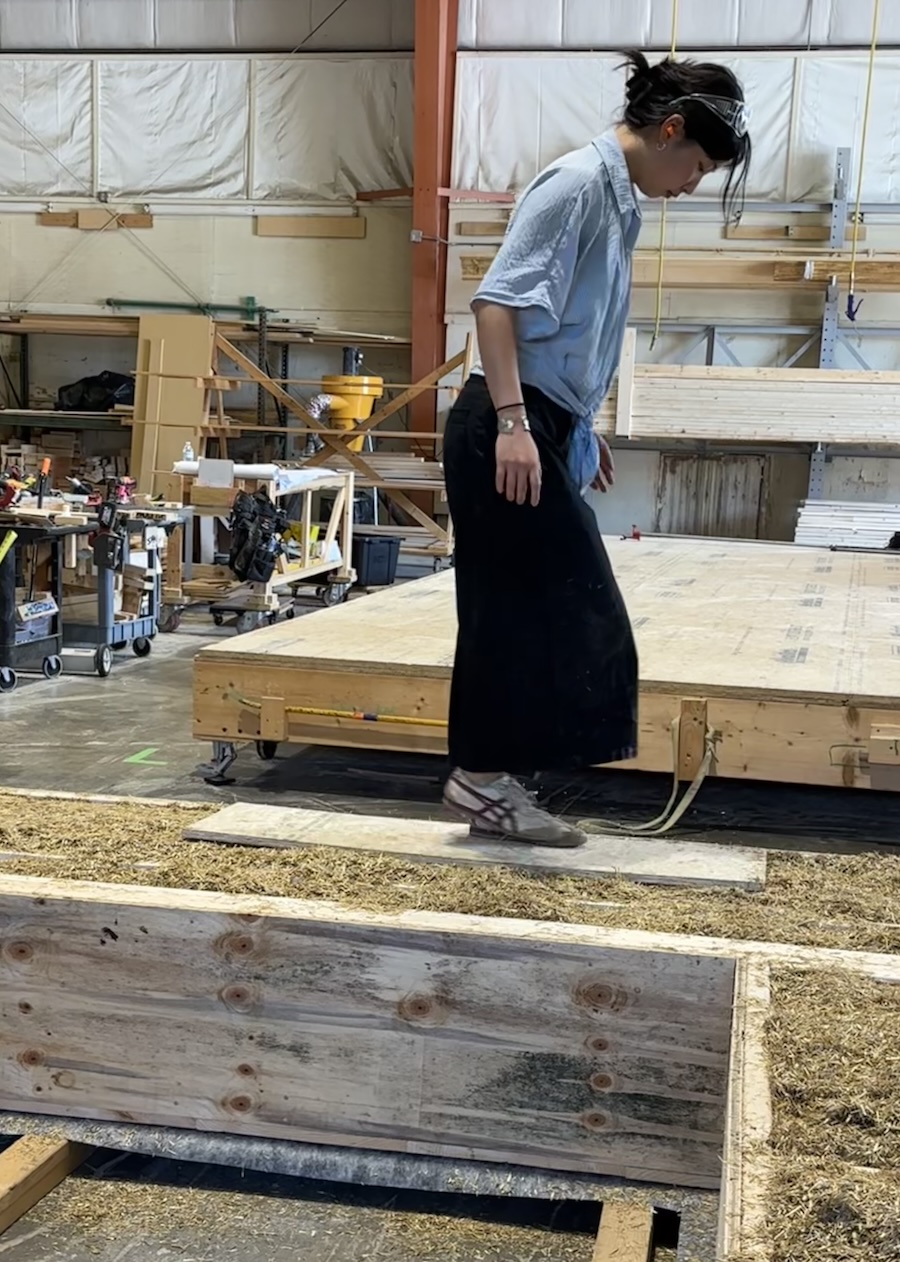
Miu Yatsuka ’28, Sustainable Homes
Inside a factory in Rockland, Maine where compressed straw is being turned into highly insulated building materials, Yatsuka is strengthening her design skills and learning about sustainable building.
Yatsuka, a government and visual arts major, is interning with Rockland-based Croft. The company designs and manufactures prefabricated buildings with all-natural materials sourced locally. The company has engineered a panel of compressed straw that it puts together “like building blocks” to make houses and other structures, offering a regenerative, healthier, and more efficient alternative to standard construction processes, she said.
With a personal interest in affordable housing, Yatsuka’s internship has involved her researching how Croft's building methods could be used to create high-quality, cost-efficient homes. She’s been researching land use ordinances and alternate financing models, as well as scouting possible locations for development. She’s even had a chance to design building floorplans.
One of the less tangible benefits of the internship has been the exposure she’s gained to the gap that often exists between design—often idealistic—and reality. “I’ve learned a lot about the technical side of architecture and the realities of money, regulation, and other limitations,” she said. “This is something I need to understand before pursuing architecture in grad school.”
She’s hoping to gain more work experience and eventually attend graduate school. Meanwhile, her internship has honed her sense of what kind of architect she wants to be: interdisciplinary and holistic—someone who contributes to the entire process of building from conception to actualization, with an eye toward social and environmental benefits.
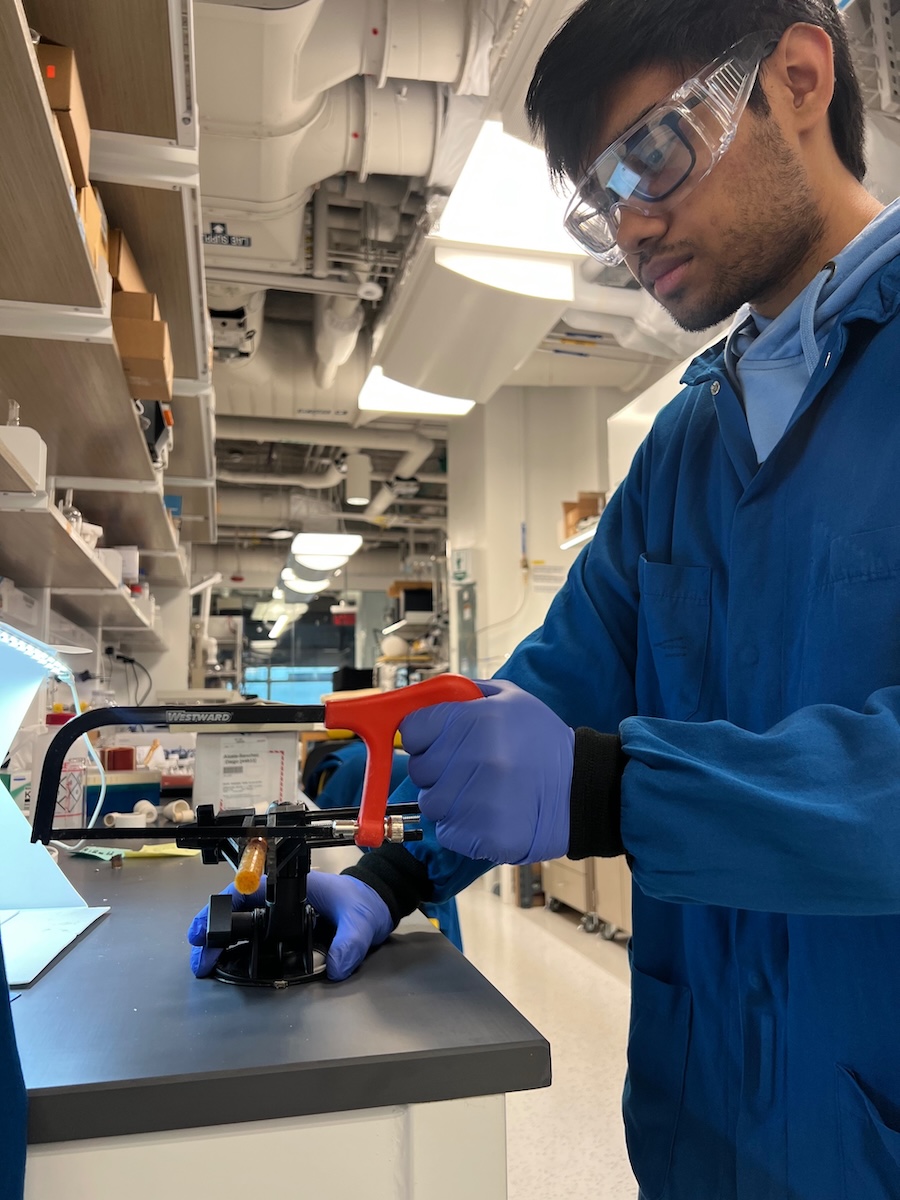
Siddhu Srivatsan ’27, Reducing Manufacturing Emissions
Boston, Massachusetts
It might not seem as if foams are the answer to our environmental problems, but based on research happening at the Northeastern University lab where Siddhu Srivatsan is working, they could one day cut the energy needed to manufacture everything from airplane doors to wind turbine blades—two products where lighter and stronger directly means greener.
Rising junior Srivatsan—a biochemistry and economics major with a math minor—is interning with the DMAS Research Group this summer to help develop more sustainable manufacturing techniques, an effort that aligns with the group's broader focus on polymer sustainability from both manufacturing and recycling perspectives.
He jumped on a scheduled Zoom call a few minutes late because he had been running an experiment to test the thermal properties of one of these new materials, a piece of data which will inform and enable tailored materials synthesis.
The lab utilizes a technique called frontal polymerization in which a temporary stimulus triggers a self-sustaining chemical reaction that drives the remainder of the manufacturing process, dramatically reducing the amount of outside energy required.
For example, Srivatsan explained, “Take an airplane part, they need to be strong and lightweight. However, in terms of making them from a traditional industrial standpoint, it uses a ton of energy.” But this new lab-tested approach “significantly reduces the amount of energy, time, and environmental burdens associated with traditional foaming methods.” They're fine-tuning the technique to make foams with various properties—some rigid and dense, others lightweight and flexible.
Srivatsan got interested in materials chemistry after taking an inorganic chemistry class at Bowdoin. “I thought it was super fascinating that you could make novel materials with very small building blocks. You ultimately have the scope to build something a lot bigger with useful properties across many industries, from aerospace to really niche structural components.”
Last summer, he worked in the lab of Amnon Ortoll-Bloch, an assistant professor of chemistry at Bowdoin, to improve pharmaceutical cocrystal synthesis methods. While the applications are different between these two labs—pharmaceuticals versus industrial manufacturing—the work is based on the same premise: control of a material’s structure can lead to many useful industrial applications.

Henry Burnham ’27, Financing Climate Resilience
Portland, Maine
This summer, Henry Burnham ’27 is helping communities find the funding they need to prepare for floods, storms, and other climate challenges.
He is interning with the New England Environmental Finance Center (NEEFC), where his specific tasks are to develop is educational materials for municipal leaders on funding mechanisms and to research the feasibility of publicly funded flood insurance.
Funded primarily by the EPA, NEEFC’s ten regional offices help states, tribes, local governments, nonprofits, community organizations, and private organizations finance water, climate, and sustainability projects.
Interested in law and finance, Burnham spent last summer in real estate private equity in New York. This year, he wanted to explore what he called “a different side of the job world.”
“I wanted to spend my summer doing something that had an impact for good,” he said. “I wanted to do something that aligned with Bowdoin’s mission.”
When he saw the NEEFC internship posting on the CXD job board, he said he was “drawn to the ability to make a difference in small, local communities, and to do it in a place I feel connected to.”
The internship has also expanded the possibilities he sees for his future career.
“It’s gotten me more interested in public-facing work and the importance for me personally to make sure that the work I’m doing is something I’m proud of and is making an impact,” he said. “Specifically, it’s gotten me interested in public law and public policy, as well as environmental law and environmental finance.”
A biochemistry and Italian studies major with an English minor, Henry Burnham said his liberal arts education has prepared him well for finance, even if his résumé doesn't appear to point in that direction.
“One of the things I’m most grateful for about my Bowdoin experience is that while nothing is specifically about finance or public finance, I’m asked to think critically about a wide set of problems,” he said. “The problems I’m asked to think about in Italian are different from those in biochemistry, and that has made me comfortable approaching many different kinds of challenges. In finance, I’m able to apply those critical thinking skills even without the technical background.”