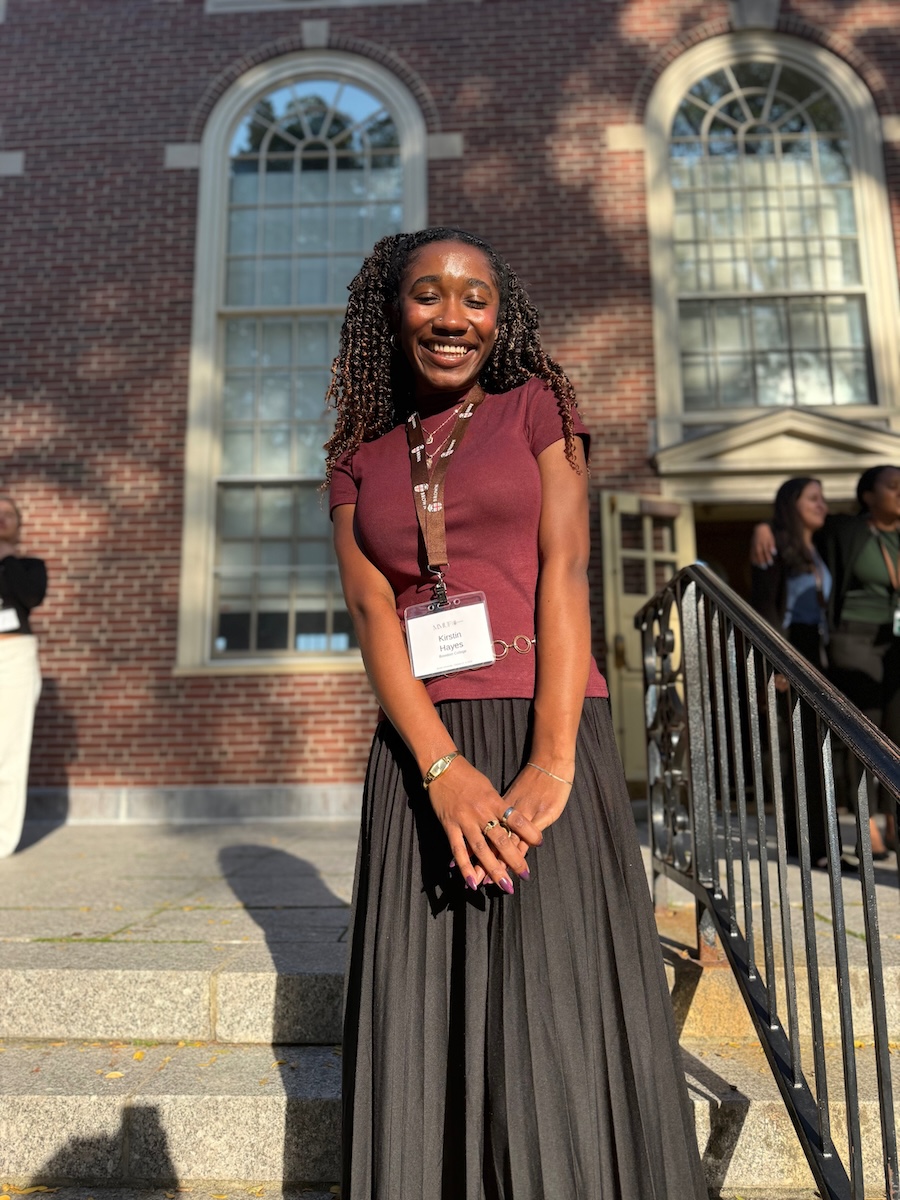
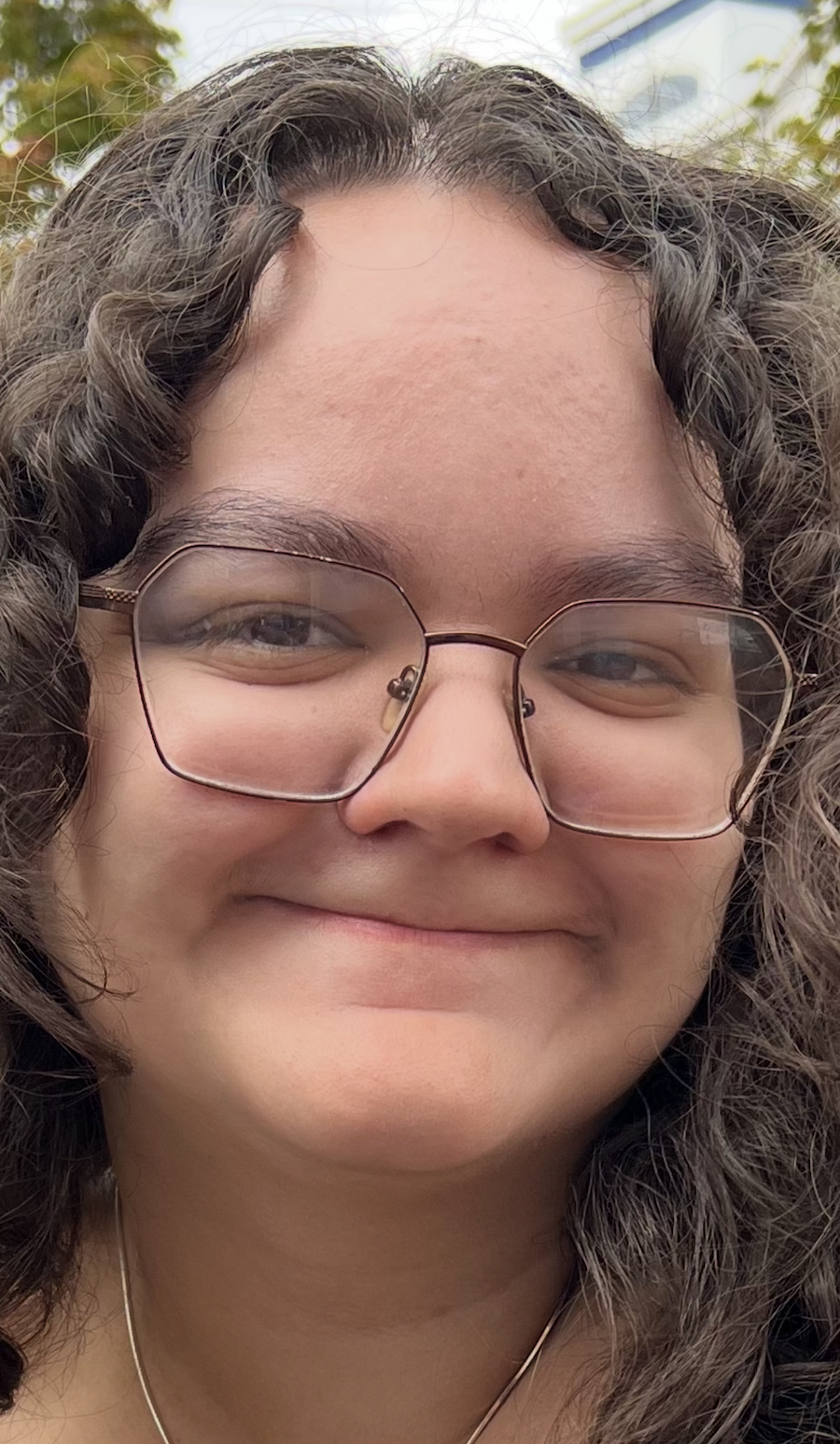
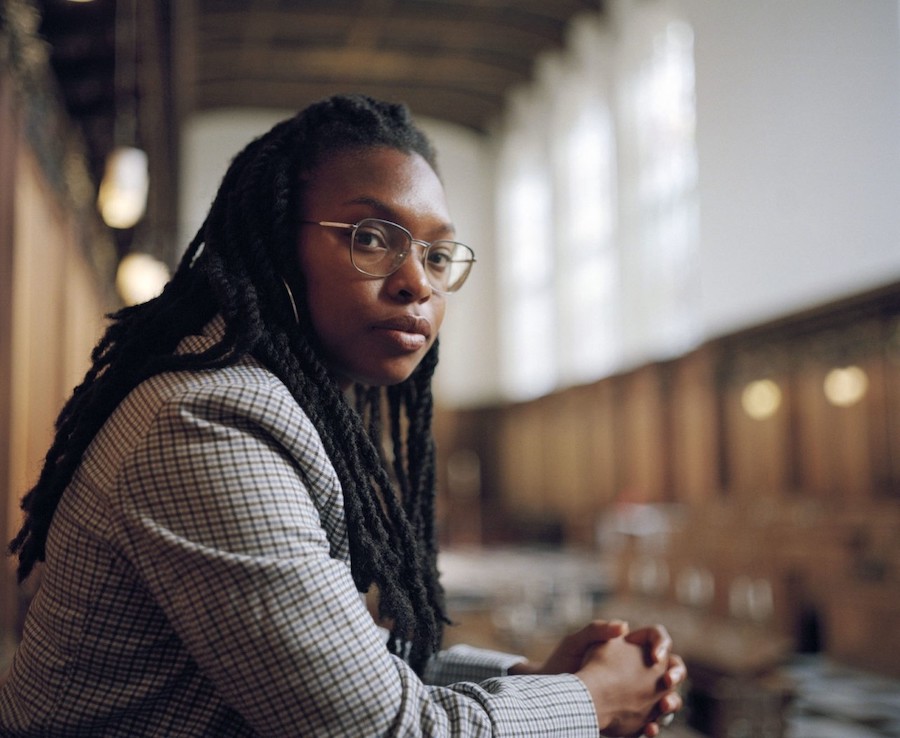
- Kirstin Hayes ’26 will begin a PhD program in history at Howard University.
- Phoebe Marin ’26 will attend Northwestern University to pursue a PhD in screen cultures.
- Julia Xiang-Wang ’26 will pursue a PhD in history at the University of Virginia.
- Liat Tesfazgi ’24 has been accepted into a PhD history program at New York University.
- Shandiin Largo ’23 will study comparative language and culture in a PhD program at Arizona State University.
(All Mellon Mays fellows have thirty-nine months after receiving their bachelor's degree to apply to graduate school and still be eligible for the program’s benefits, including loan forgiveness and stipends.)
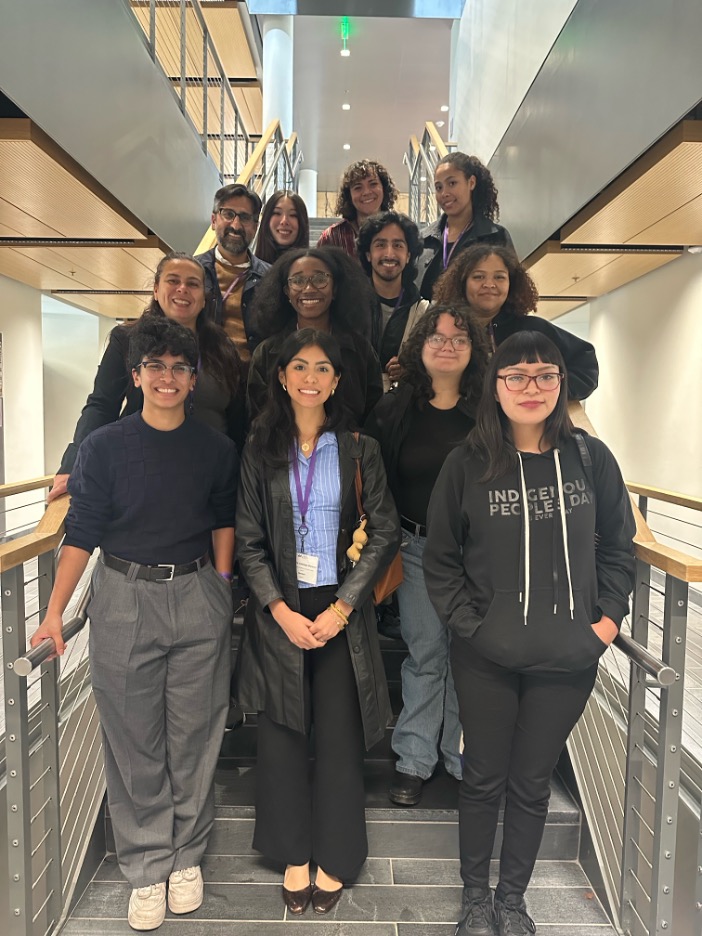
The MMUF is a national initiative funded by the Andrew W. Mellon Foundation to broaden scholarly perspectives in the humanities. It provides mentoring and financial support to promising students pursuing advanced study and academic careers, from undergraduate education through doctoral programs.
Bowdoin's MMUF program is one of forty-seven hosted by colleges and universities across the country. In 2023, Bowdoin MMUF director Zahir Janmohamed, assistant professor of English, reorganized the program to align it more closely with peer institutions.
“We have exceptionally talented students, but I wanted to give the program more structure and guardrails,” Janmohamed said. “Our students are so smart, they get pulled in many directions. What I have learned as a writer is that structure and accountability are so important.”
He continued: “It's about building a community and giving them support and what they need to thrive in humanities PhD programs.”
The revised program now offers a yearlong seminar instead of a summer program. Fellows meet twice a month, often with invited faculty guests, to develop their research skills, fine-tune their PhD applications, and discuss how the humanities help shape knowledge and public life.
“...Being around other people who similarly understand and want to champion the importance of the humanities has been pivotal in leading me to my path. ”
—Julia Xiang-Wang ’26
Each year, five rising sophomores are admitted to the program, joining the juniors and seniors, creating a cohort of fifteen. The newest students engage in a “research bootcamp” at the end of the academic year “to learn academia 101 in the humanities,” Janmohamed said.
For the next two years, every MMUF fellow pursues an independent research project, typically resulting in an honors project or thesis. Throughout the process, students are supported by faculty and graduate student mentors. This past year, Bowdoin received funding from the Mellon Foundation to hire two graduate mentors: Osa Fasehun ’18, a doctoral student at Oxford University, and Faith Macharia ’17, a doctoral student at Yale.
The influence of the mentors is significant, Janmohamed said. “I’ve found that students who have contact with graduate students are more likely to get into graduate school.”
MMUF fellow Xiang-Wang plans to specialize in twentieth-century American immigration policy and foreign policy history, focusing on US treatment of refugees in the interwar and postwar periods. She said that her Bowdoin education and the MMUF program were both critical to her path.
“I didn’t grow up with a culture around me that emphasized academia as an option, and certainly not in the humanities. Being at Bowdoin and being part of the program really helped familiarize me with the culture of academia and helped prepare me for the prospect of taking on a PhD straight out of undergrad,” she said.
“I can wax on about how important I think the humanities are, but I think being around other people who similarly understand and want to champion the importance of the humanities has been pivotal in leading me on my path.”
Janmohamed said one of the most fulfilling aspects of his work with MMUF is engaging with its scholarly community—not just at Bowdoin but also more broadly in the Northeast. MMUF students travel fairly frequently to visit one another's campuses, particularly the ones with graduate programs.
“Students are meeting other students, I’m meeting other directors. It's a lot of work, but it's a lot of fun,” he said. “Academics in any climate are hard, so community is so important.”