Scharnau grew up in what she calls a "nontraditional, transracial family." She has an older brother adopted from Russia. She was adopted from China. And her two younger siblings were adopted locally in Iowa, where she grew up.
"Our parents are white, three of us are Asian, and my little sister is Black, Latina, and white," Scharnau said. "When we're out and about, people look at my mom, who is a tall, lovely Irish lady, and they look at me, and I am, admittedly, a short Chinese girl, and they wonder, 'How did that happen?'"
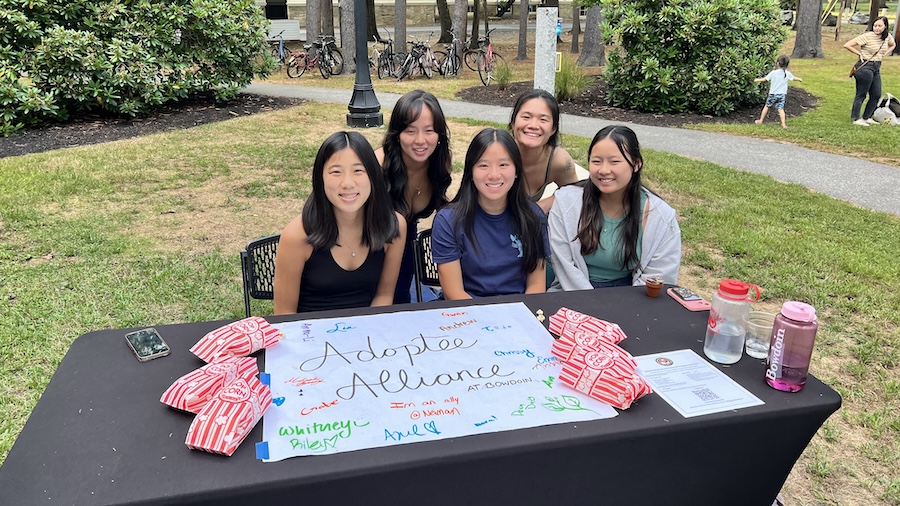
To raise awareness about families like hers, Scharnau last fall chartered a new student group at Bowdoin for adoptees from nontraditional families.
"People don't really know about nontraditional families," she said, explaining that she uses the term in this context to refer to families with children who are not biologically related to their parents. "And they don't know how to talk about them," she added. "So we want to start a conversation on campus about how you talk about adoption and what adoption looks like in today's world."
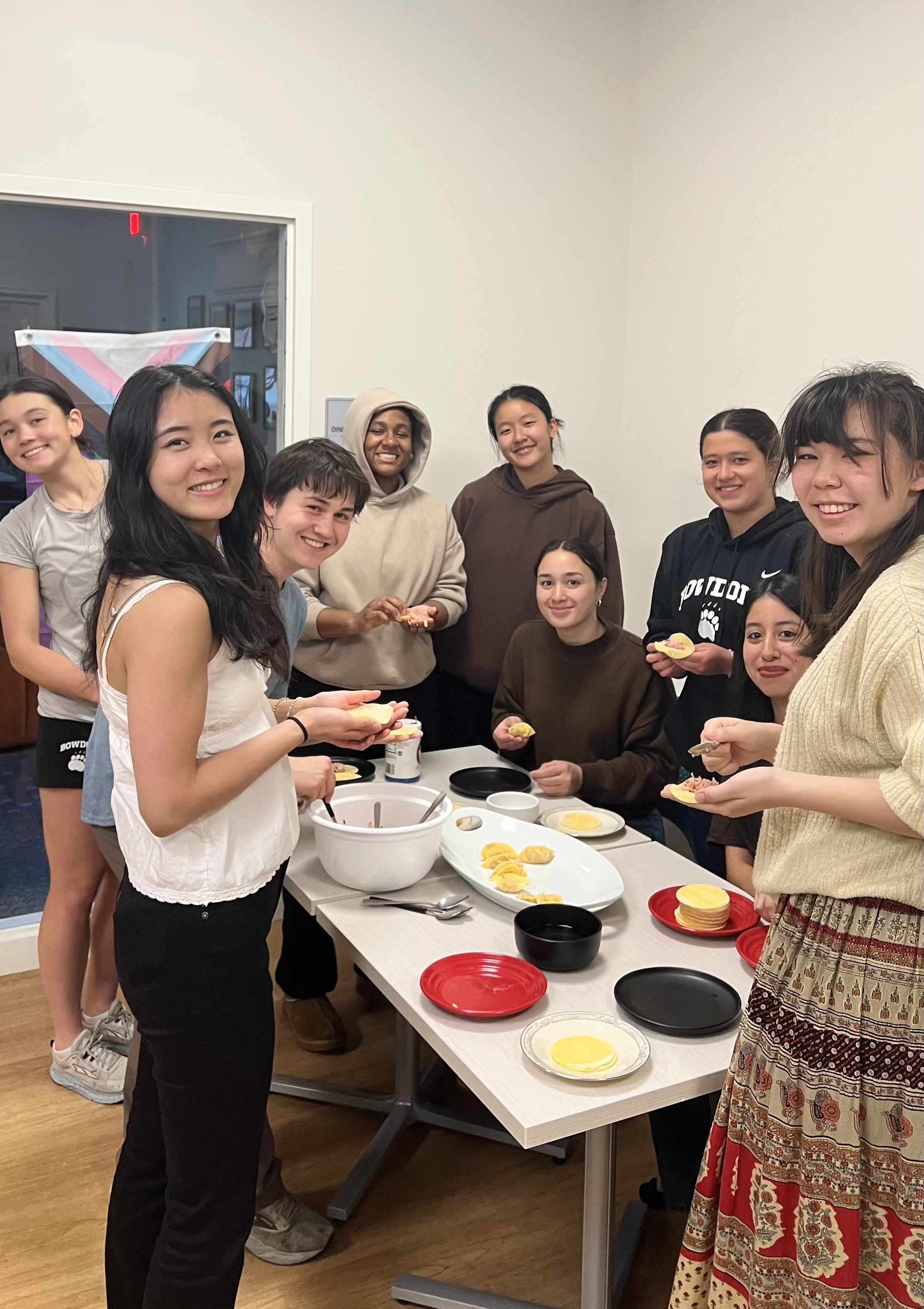
The group also provides a place where students can find others with backgrounds similar to their own, where they can be at ease and talk about their lives, families, and identities.
The Alliance currently has twenty-eight members. While most are adoptees, others have siblings who are adopted or have another connection to adoption. One member, for instance, was adopted by her stepfather. Scharnau said they share a lot of laughs and also commiserate about some of the harder parts of their childhoods.
Whitney Pellegrino ’27, who will step up as the Alliance's president next year, said, "This club gives me a community that I've never had before but always wanted."
Other members say they appreciate the community, as well as the opportunity for greater visibility. "This club is a meaningful opportunity to connect with other students who share this identity, one that often goes unnoticed and unspoken," said Sydney Lillis ’27.
In its first year, the Adoptee Alliance has held several events on campus, including screenings of Lion, Found, and Instant Family—films that feature adopted characters or explore themes of adoption. They also invited author Nicole Chung to campus to speak about her memoirs, in which she explores growing up in rural Oregon as a Korean adoptee.
In April the group participated in Bowdoin’s Asian American and Pacific Islander Heritage Month, organizing a dumpling-making event. (It was at a dumpling event the year before that Scharnau first connected with other Asian adoptees and was inspired to start the club.)
"Demographically, we have a lot of Chinese adoptees in the club," Scharnau said. "And we wanted to take the chance to highlight Asian adoptee stories, especially because a lot of the one-child-policy children are starting to grow up."
China implemented its one-child policy for families in 1980, causing a surge in international adoptions. As these children have grown up, they've begun contributing their perspectives to the public discourse on identity, adoption, and race. "We're getting to be the age where we share our stories," Scharnau said. "A lot of Chinese adoptees are doing their own research or writing books, fleshing out this experience."
Being part of the Adoptee Alliance this year has strengthened Scharnau's connection to her Chinese heritage, she said. "The club has helped me feel that my identity is part of the broader ideas of the Chinese experience. I'm leaving college more confident about the complexities of my identity."