Student Club Lingers on Our Collective History
By Harper Stevenson ’27 and Rebecca Goldfine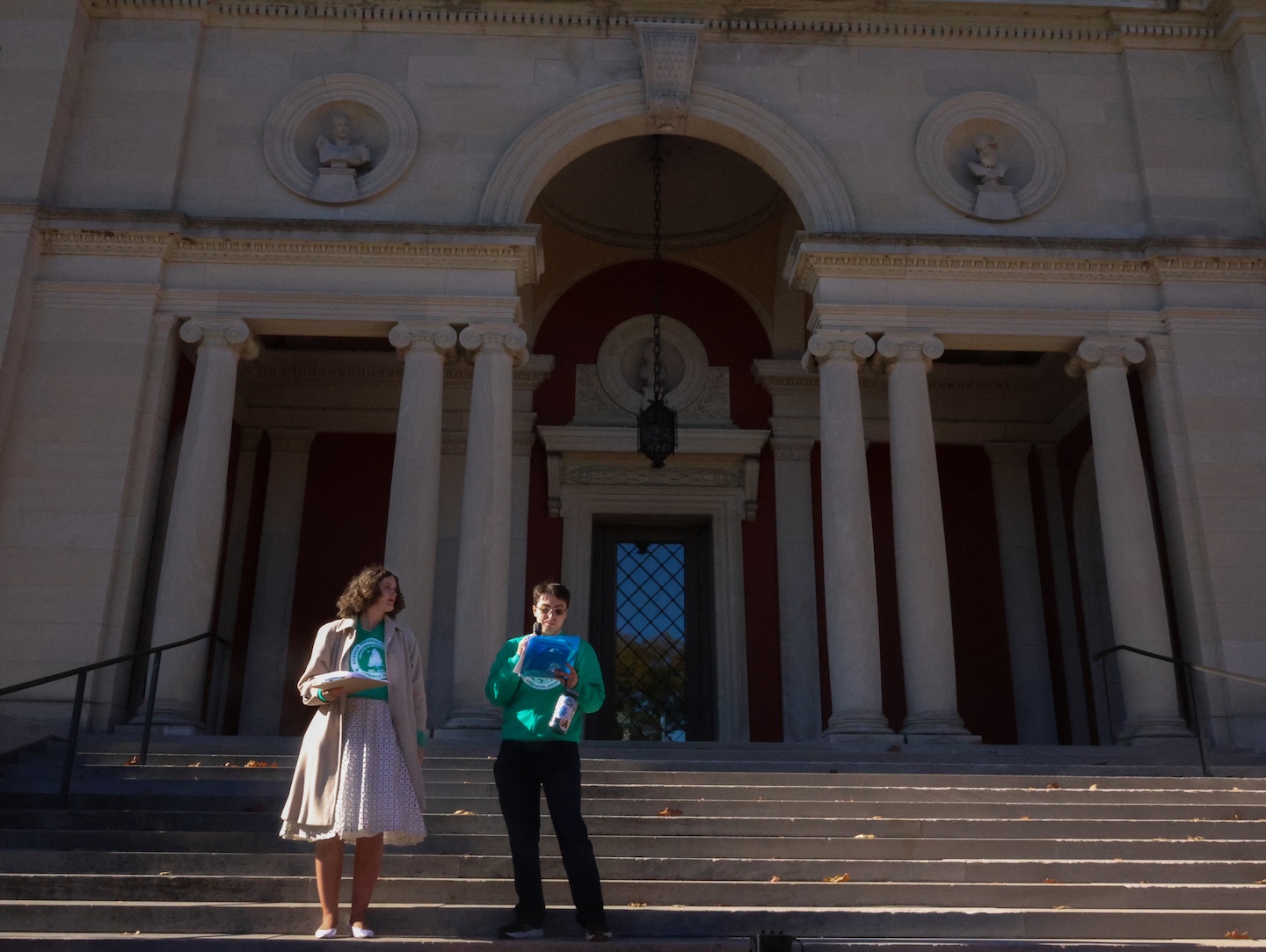
Over Family Weekend at Bowdoin, two student history buffs with a penchant for community service offered free campus history tours, at 1 p.m. and 3 p.m.
“Join the Bowdoin Preservation Collective for a historic journey through Bowdoin's Campus!” they advertised on the Family Weekend schedule. “Learn how the campus evolved over time, and hear some wild, wacky, and wonderful stories of Bowdoin's past!”
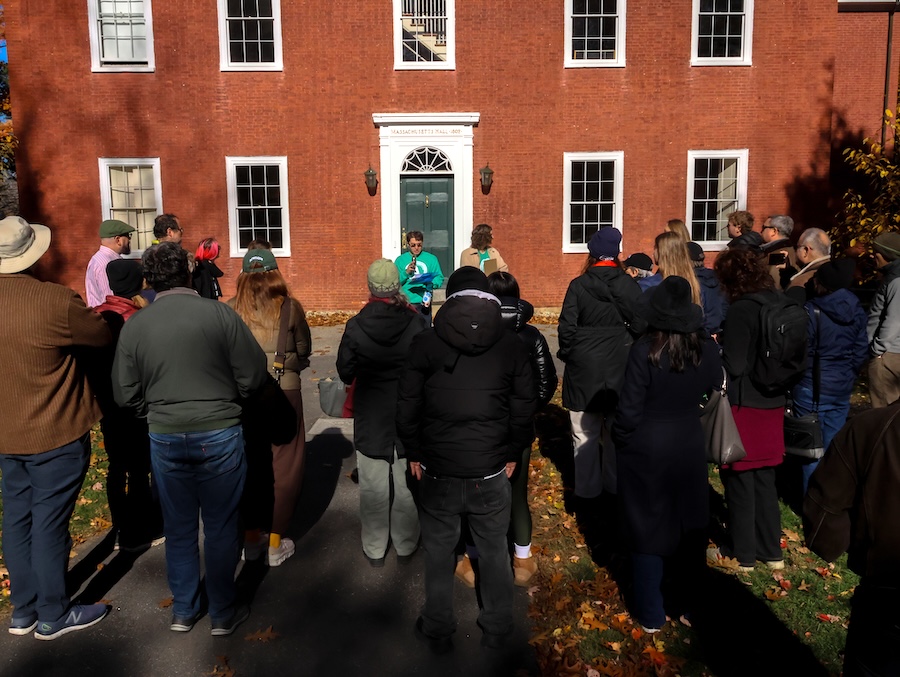
A large group turned up for the first tour, and Andy Robinson ’27 and Grace Campbell ’27 steered them to their first stop: the red-brick Massachusetts Hall. In 1802, it was the College’s sole building, offering dorm rooms, classrooms, a dining hall, and kitchen all in one.
The two tour guides dwelled on how much the student population has changed at the College since then—when it was more a “finishing school for the elite”—to today, when it admits “a broad diaspora of students from all backgrounds.”
The tour also explored the College's sixteen presidents and the unique ways they contributed to its evolution. The presidents each built “bridges from historical traditions to modernity”—to continue offering a liberal arts education for the times “while keeping Bowdoin’s spirit alive,” Robinson said.
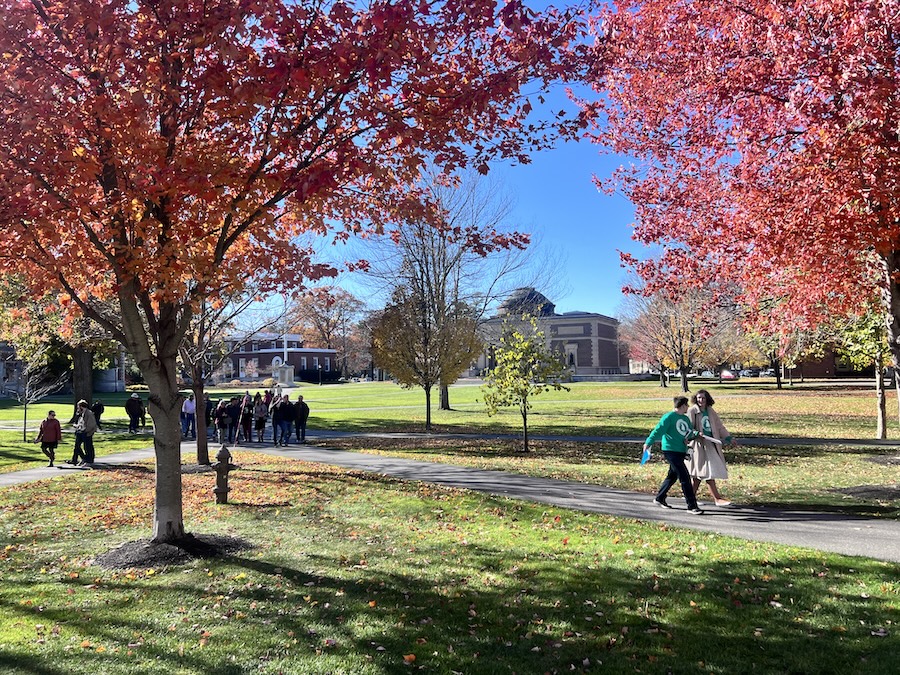
This is the fourth year that Robinson and Campbell’s club, the Bowdoin Preservation Collective, has offered these campus tours, which are just one of several ways the club engages students and the public in local history.
Campbell said that history “is not something you have to learn by sitting down and completing a 30-page dense reading.” Especially at an old institution like Bowdoin, history is tangible and accessible. “You can get your hands on history,” she said, including by “volunteering in engaging ways.”
The club is open to students from all academic backgrounds; its members study everything from psychology and religion to biology, each bringing a different lens to the past.
“History is for everyone, and you don’t have to be a history major to be in the Bowdoin Preservation Collective,” Robinson said.
“I seek to enhance history at Bowdoin to help current students understand how the College has evolved and how they can keep it evolving socially, academically, and otherwise.”
—Bowdoin Preservation Collective co-founder Andy Robinson ’27
The History of the Collective
Halfway through his first year at Bowdoin, Robinson put out a query on his Instagram story asking if anyone would be interested in starting a history club with him.
Campbell ’27, also a first-year then, responded to Robinson’s online call with a definitive “yes.”
In fact, when Campbell visited campus for Bowdoin Bearings programming the year before, she had been surprised to not see a history club at the Student Activities fair.
Gaining momentum for the club, Robinson that winter walked over to the Pejepscot History Center on Park Row and asked the center’s director if they had any interest in creating a partnership with a new Bowdoin student organization focused on history. Pejepscot was excited about the prospect of collaboration, he said, so Robinson then talked with staff at the McKeen Center for additional support.
The McKeen Center advised Robinson and Campbell to form their Bowdoin Preservation Collective as a College-backed Bowdoin Volunteer Corps group. The BVC is made up of student-led organizations that address community needs and work in partnership with local agencies.
“We really love the McKeen Center, and we’re really thankful for their support in our club. They always go above and beyond,” Robinson said.
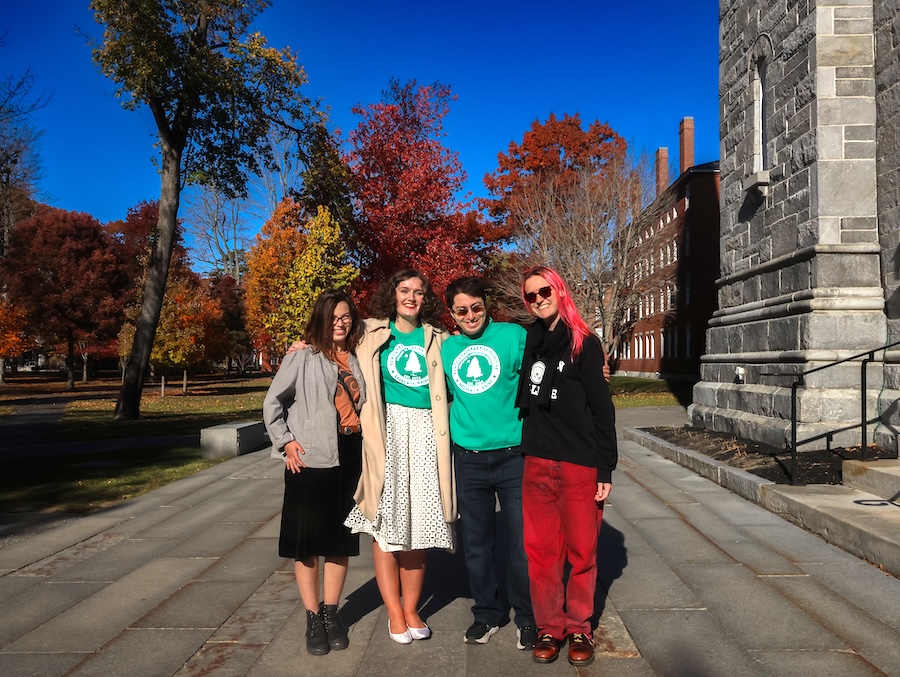
Since then, Robinson and Campbell have grown the Collective into a vibrant group—offering programming for students and the public by leading historical campus tours, curating exhibitions with Special Collections, and volunteering at the Pejepscot History Center.
On October 25, for example, they hosted a “Centennial Soiree” event with the Pejepscot Center. The Halloween-themed program at the Skolfield-Whittier House was “like a murder mystery—participants are given a scenario before going through different rooms of the house, collecting clues and following the story.”
As participants go about solving the murder, they learn the history of the Skolfield-Whittier home—once the home of forensics pioneer and pathology professor Frank Whittier, Class of 1885.
“We really want to be involved with folks in the community,” Robinson said. ‘That has been the real treat—getting to know people in the town of Brunswick, who live here, who have spent their lives in and around Brunswick, Topsham, or Maine in general. It’s been lovely to get to know these volunteers who come in every week.”
He added: “In my experience they are also finely attuned to how they can present historical information to modern audiences and are really interested in getting younger people involved in local history.”
While the Collective focuses on the history of midcoast Maine, its research turns up connections to places all over the world. Campbell, who is from Maine, said, “It’s not just about Mainers in Maine doing Maine stuff!”
“With our current group of students, we are working on the history of the Maine Medical School at Bowdoin,” she continued, “and we are touching on students as far away as South America and the Carribbean. One student we’re researching, Salustiano Fanduiz, [Class of 1892] was from the Dominican Republic.”
Why They Pursue History
From a young age, Robinson has been intrigued with remnants from the past. “I have loved lighthouses since I was a young child, and learning more about the structures got me more excited about local history, and then eventually American history more broadly,” he said. (It seems fitting that the California-native has found himself at school in Maine, which has lots of old lighthouses.)
“I love history because it’s a tool for us to confront the present,” Robinson continued. He's majoring in history and government and legal studies. “One cannot deal with the modern challenges of our time as a society and as a democracy without a thoughtful understanding of history and the choices we have already made that have led us to our current point, whether for good or for bad.”
Campbell, a history and classics double major, said she’s been interested in history since she was a kid, “especially connecting with the stories of those who came before us. I used to read only historical fiction books, which led to my study of history in college.”
She added: “It’s important for us to understand who and what has come before us so that we may learn and grow as a society, building upon our predecessors.”
Fangirling Over Chamberlain
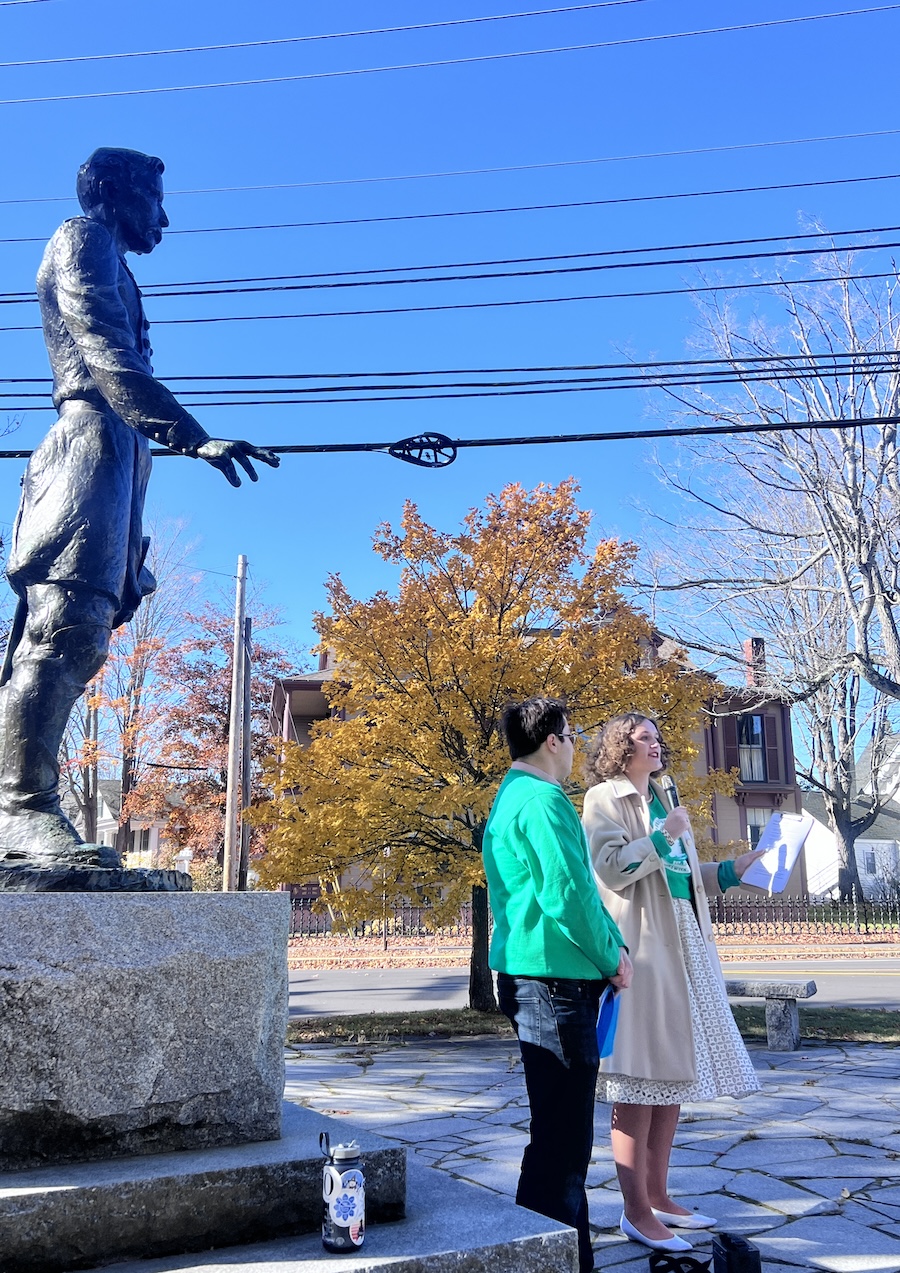
Halfway through the campus tour, Robinson and Campbell brought the group to the statue of Joshua Chamberlain on Maine Street, where they stood below the big bronze replica. Campbell introduced the next chapter of the tour: a brief biography of Chamberlain, who graduated from Bowdoin in 1852 and served as president from 1871 to 1883.
“I’m his biggest fan,” she mentioned. A person in the tour asked a follow-up: “I know people who are big fans of Joshua Chamberlain, so that's impressive! Did you become a fan once you were a student at Bowdoin?“
Campbell answered that growing up in Maine, she's been a follower for years. Indeed, when she first visited Bowdoin as a high school student thinking about applying here, she toured the Joshua L. Chamberlain Museum before she went on an official Admissions tour. Then, right after the Admissions tour, she stopped by Chamberlain’s grave site at the nearby Pine Grove Cemetery.
She then turned the group's attention to the house (now a museum) across the street, where Chamberlain had lived. She wanted to point out a historical thread.
“Henry Wadsworth Longfellow lived in this house,” she said. The poet graduated from Bowdoin in 1825 and worked as a professor and librarian here from 1829 to 1835.
“So Chamberlain wanted to live there, too.”
Photos by Ana Beatriz Lopes de Souza ’30.