Marigolds, Mariachi, and Memories: Students Celebrate Día de los Muertos at Bowdoin
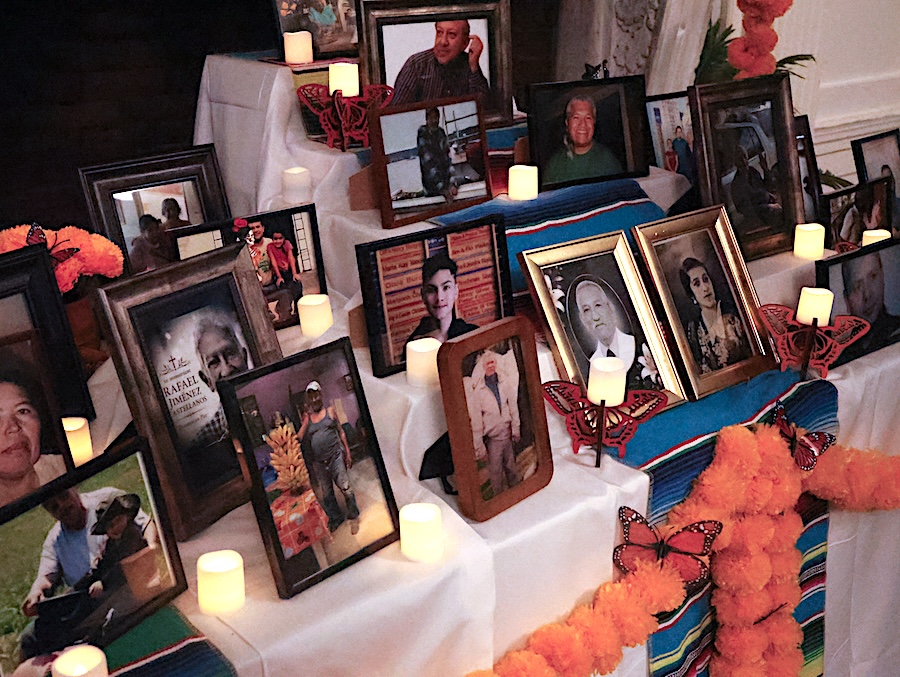
By Vic'Kaysha Rivera ’30Marigold garlands, flickering candles, papel picado (cut-up decorative paper), and nearly thirty framed photographs transformed Ladd House into a space of remembrance and celebration on November 1.
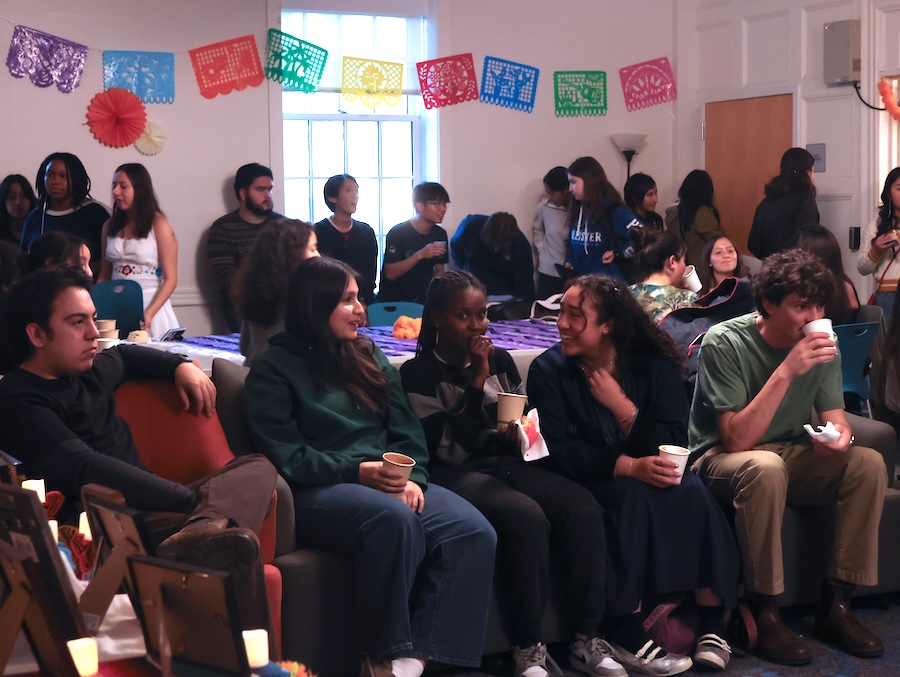
Hosted by the Latin American Students Organization (LASO), Bowdoin's Día de los Muertos celebration drew students, faculty, and families together to remember loved ones.
The Mexican holiday honors those who have died—not through mourning alone but through storytelling, music, food, and customs that connect people across generations. Guests were invited to reflect and share memories of those they had lost and to contribute to the ofrenda, or altar.
LASO copresident Carlos Hernandez Santiago ’27 said gatherings like this help make Bowdoin feel more like home for students who grew up with this tradition, while also introducing others to its significance.
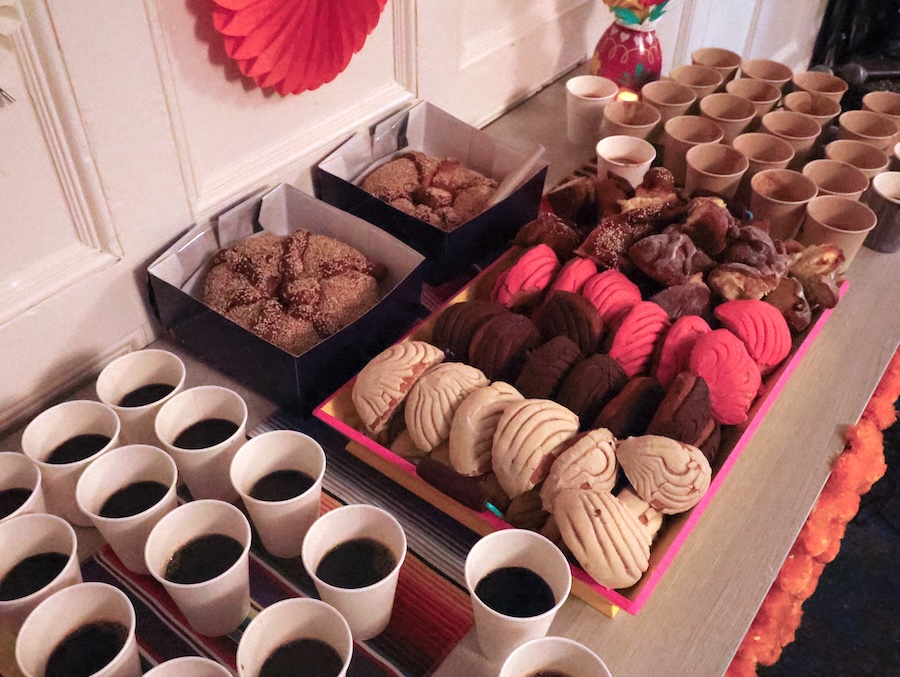
He explained that typically, Día de los Muertos centers around an ofrenda where families place photographs, favorite foods, drinks, and objects connected to those they wish to pay tribute to. The practice reflects the belief that those being honored return, in spirit and memory, on this day.
At Bowdoin, he continued, “LASO wants the celebration to be open and welcoming, letting everyone engage with it in whatever way feels most meaningful.”
LASO copresident Melisa Vaca ’28, who helped introduce the program in partnership with Santiago, described it as “one of [her] favorite LASO traditions,” noting that this year’s celebration drew out “one of the largest turnouts yet.”
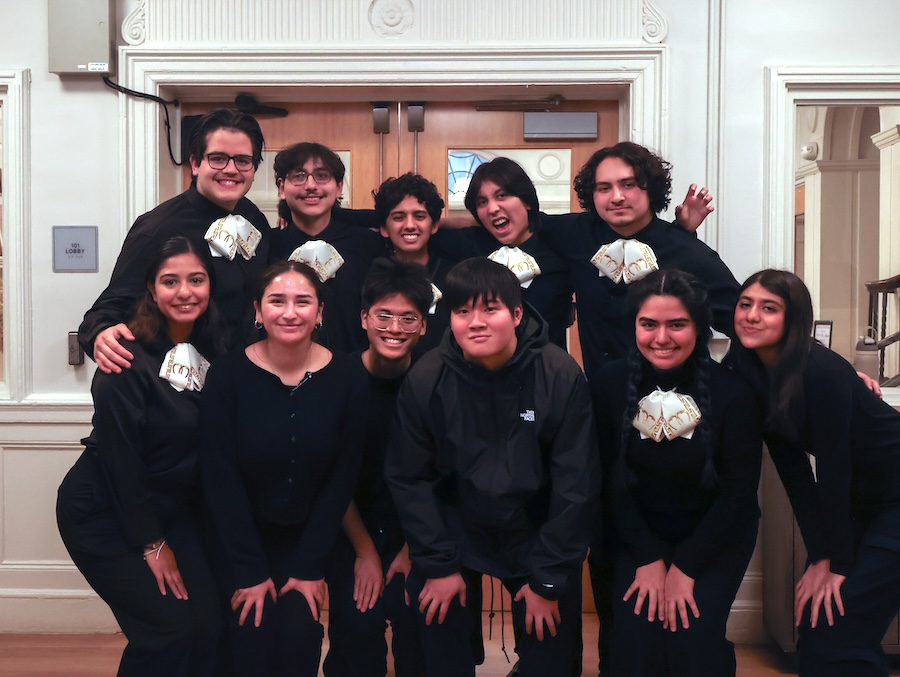
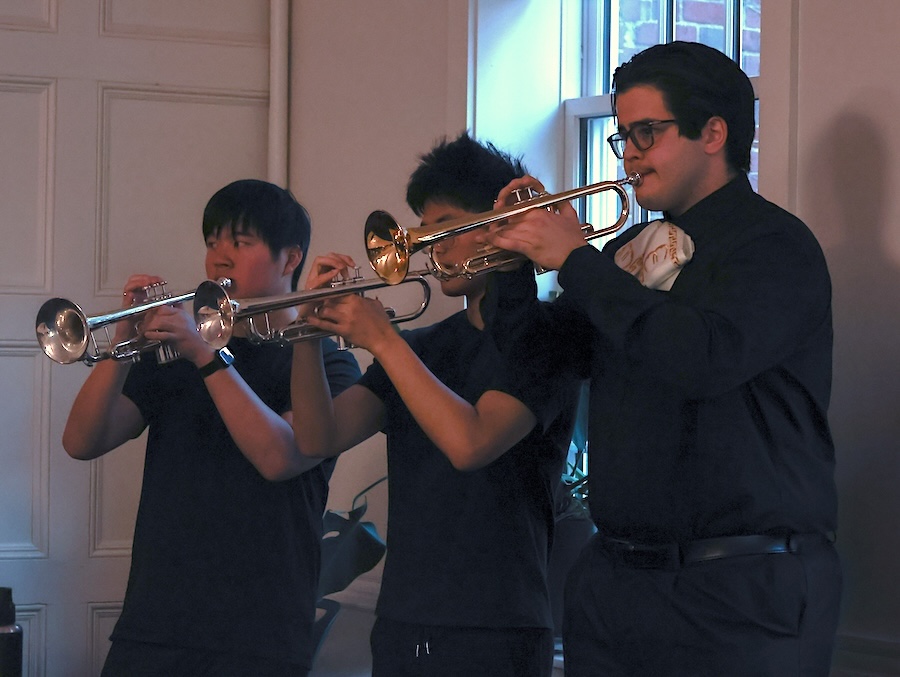
She also highlighted a new addition to the program: a performance by Mariachi Los Osos Polares, Bowdoin’s first student mariachi band, which she cofounded last year with classmates and recent alumni.
Throughout the evening, members of the Bowdoin community shared stories of the people whose memories continue to guide them.
Vaca spoke about her grandfather who had led a band in Mexico and played a central role in inspiring her love of singing and mariachi.
Fatima Hernandez ’29 shared a Spanish piece written by her father about his aunt—her great-aunt—remembering her as someone who cared deeply for her family and community. Through the stories passed down to her, Hernandez practiced the custom of honoring someone she came to know only through other people's memories rather than firsthand experience.
Camila Alvarado Campoverde ’30 and Oscar Martinez Mendoza ’29 recalled their grandparents and the challenges they faced during the COVID-19 pandemic.
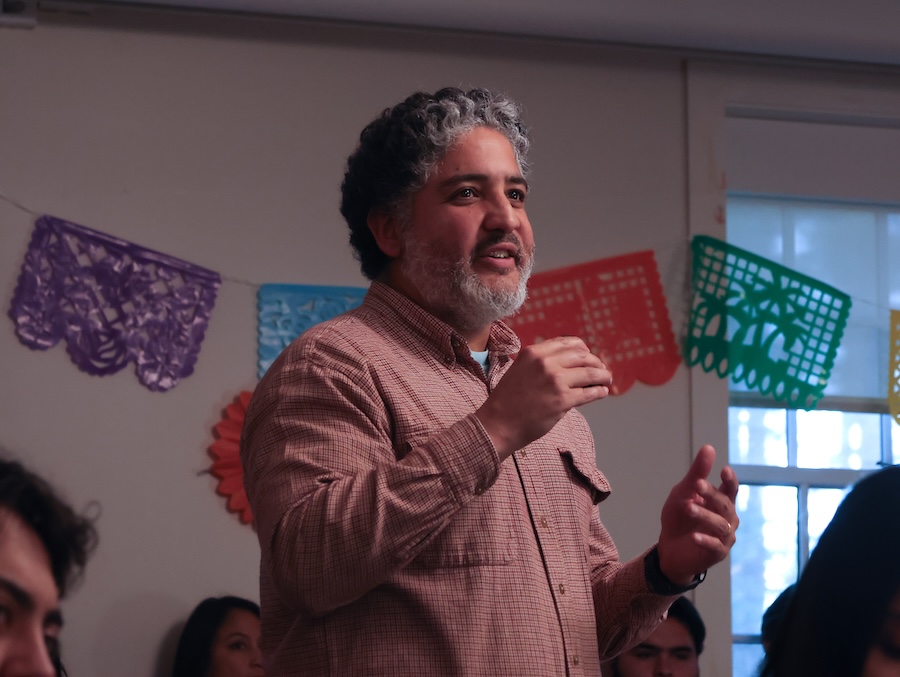
Campoverde’s story prompted laughter from the audience as she described her grandfather’s love of El Chavo del Ocho—a favorite sitcom in many Latino households—and how “[she and her sister] still watch it to this day and feel as if he were watching with [them].”
Ángel Saavedra Cisneros, assistant professor of government, honored Dolores Huerta, the labor leader and civil rights activist who worked alongside César Chávez to cofound the National Farm Workers Association in 1962. Her enduring public legacy, he said, also belongs in conversations about memory and those whose impact continues after death.
For many students, the celebration offered a way to think about loss through gratitude rather than sorrow. Gio Sanchez Hernandez ’30 said Día de los Muertos and dwelling upon the dead “teaches us to value our time with our loved ones because it is limited.”
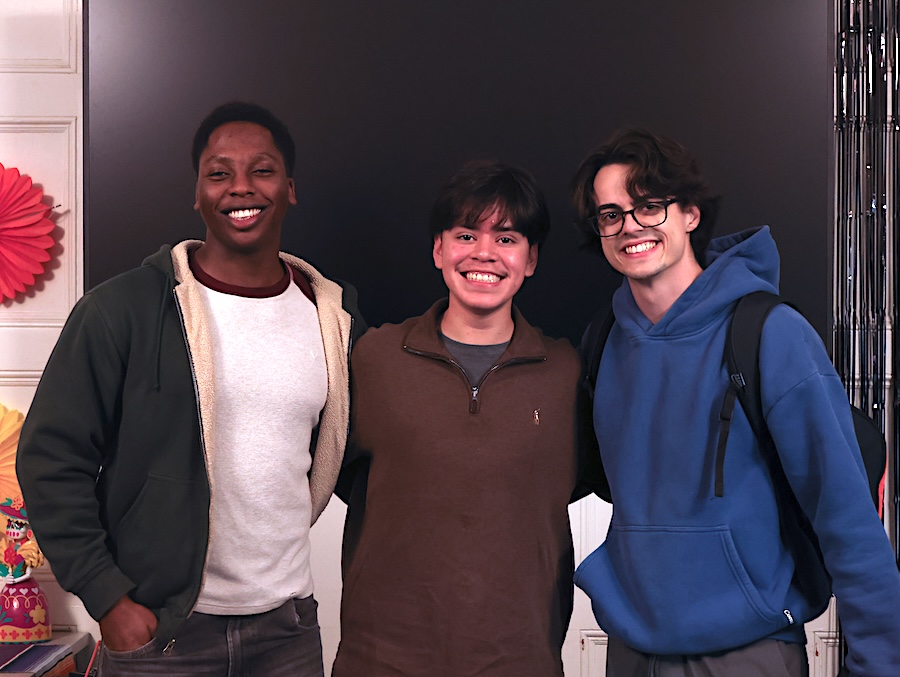
Pablo Lavagnino ’30 attended the event with his grandmother, Ingrid Ibarra, since the event fell on Family Weekend.
Speaking in Spanish, Ibarra reflected on both the emotional meaning of the day and the significance of seeing it celebrated on campus. “Me parece muy interesante porque estás lejos de tu país, pero también está cerca,” she said. “Es importante la unión. Es importante estar unidos para que puedan seguir las costumbres y tradiciones con las que han crecido.”
(“I find it very meaningful because you are far from your country, but it also feels near. Unity is important. It is important to stay connected so that you can continue the customs and traditions you grew up with.”)
Preserving those customs, she added, is especially important for younger people, because once traditions are lost, they can be difficult to recover.
Mauricio Cuba Almeida ’27, in his introduction to Mariachi Los Oso Polares, said he sees similarities between la Día de los Muertos and mariachi, which brings people together through shared feeling, vulnerability, and emotional expression.
The mariachi ensemble performed “Amor Eterno” by Juan Gabriel, a song associated with enduring love and remembrance.
Photos by Ana Beatriz Lopes de Souza ’20.