Putting Coastal Studies into Practice in Harpswell
By Rebecca GoldfineStudents in this fall’s Coastal Studies Semester at the Schiller Center are collaborating with townspeople in Harpswell to address issues affecting residents, from coastal erosion to housing affordability.
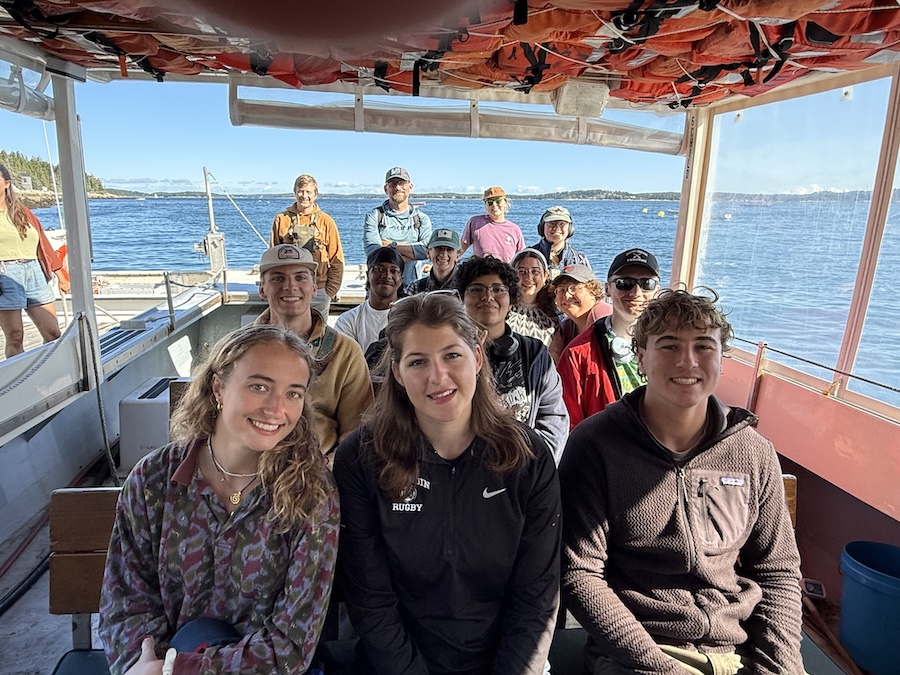
For biology and education major Ella Kennedy ’28, the new class on local policy has quickly become a favorite part of her semester.
“I like the amount of conversations and hands-on experiences we have with people, and how much we see the influence local people have,” said Kennedy, who intends to pursue a career in marine biology.
Blue Monreal ’28, also a biology major, has been struck by how directly residents can shape what happens around them.
“I like learning about policy, I like learning how people live here and do things, and I like how active Mainers seem to be in their communities,” Monreal, who is from Texas, said.
This fall, Kennedy and Monreal are among the twelve students getting real-world experience with local government through a new course taught by Holly Parker, director of the Schiller Coastal Studies Center, called Public Policy for Coastal Maine.
Their classroom extends throughout Harpswell—to its town office, shores, harbors, wetlands, sea farms, and fishing boats—where students are partnering with town staff and local volunteers to research current challenges and develop possible solutions.
Being A Good Neighbor
The long, narrow peninsulas and many islands that make up Harpswell encompass more than 200 miles of shoreline and 104 square miles of bays, inlets, coves, and channels. The town, an ideal seaside base for the Coastal Studies Semester, is also a close-knit community of about 5,000 people, including families with long ties to fishing and lobstering, as well as retirees and seasonal residents.
Students in Parker’s class are working on six of the town’s concerns:
- Coastal Erosion Mitigation, with the town’s Resiliency and Sustainability Committee
- Freshwater Wetland Conservation, with the Conservation Commission
- Pesticide Use, with the Conservation Commission
- Aquaculture and Heritage Fisheries, with the Fisheries Committee
- Waterfront Zoning and Infrastructure Environmental Impacts, with the Harbor and Waterfront Committee and Marine Resources Committee
- Housing, with the Housing Committee
Like ocean-side communities up and down Maine, Harpswell is grappling with issues linked to climate change and shifting socioeconomic patterns, including worsening erosion from powerful storms and a shortage of affordable housing for working people.
“I believe firmly that in this moment in particular, local policy making is where it’s at,” Parker said. “You can see it being made and feel its impacts right away, it’s very personal. And I don’t think college students generally get the opportunity to dive into that.”
The partnership also fits with a program rooted in Harpswell, she said. “We're so place-based and we embrace our identity as a neighbor in Harpswell,” Parker said. “This seemed like an opportunity to get students digging in and hopefully contributing to the conversation and creation of policy.”
In June, Parker met with Harpswell Town Administrator Kristi Eiane ’83 and Town Planner Margaret McIntire to identify areas where students’ work could be useful to the town while also providing a meaningful educational experience.
“We landed on these six as being a good representation of the range of different types of policy happening at a local level,” Parker said.
Students then ranked the six topics according to their preferences. Two students have been assigned to each issue.
“We're so place-based and we embrace our identity as a neighbor in Harpswell”
—Holly Parker, director of Schiller Coastal Studies Center
Both Eiane and McIntire noted that Harpswell has limited staff resources—the planning office, for instance, consists of just one person—and said the students’ research could help advance work already underway.
“I think they can help move along the policies we’ve been trying to move forward with their research,” McIntire said.
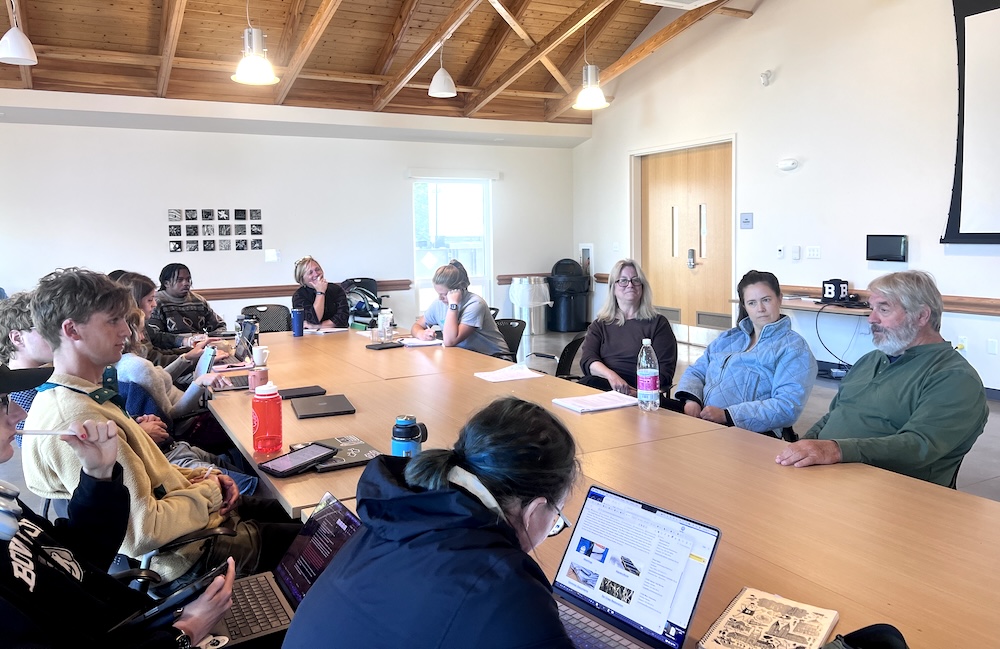
One of the students’ tasks will be to create an inventory of related policies and laws that municipalities and states have adopted elsewhere, Parker said, “to see what has been tried before.”
“Then they will create a community engagement plan, and finally, they’ll write their recommendations for next steps.”
In a mid-September meeting with the class at the Schiller Center, McIntire and Eiane explained the process of policy making in a small town like Harpswell. Residents adopt local ordinances at an annual town meeting after a small group of elected officials propose them, making an informed and engaged constituency critically important.
“I work for elected officials, making sure they have good information, since they have to make decisions about regulations that they move forward to the town meeting,” Eiane told the class.
“I feel like what you’re all going to be involved in is developing that good information that can go to decision makers and voters.”
Science in a Community
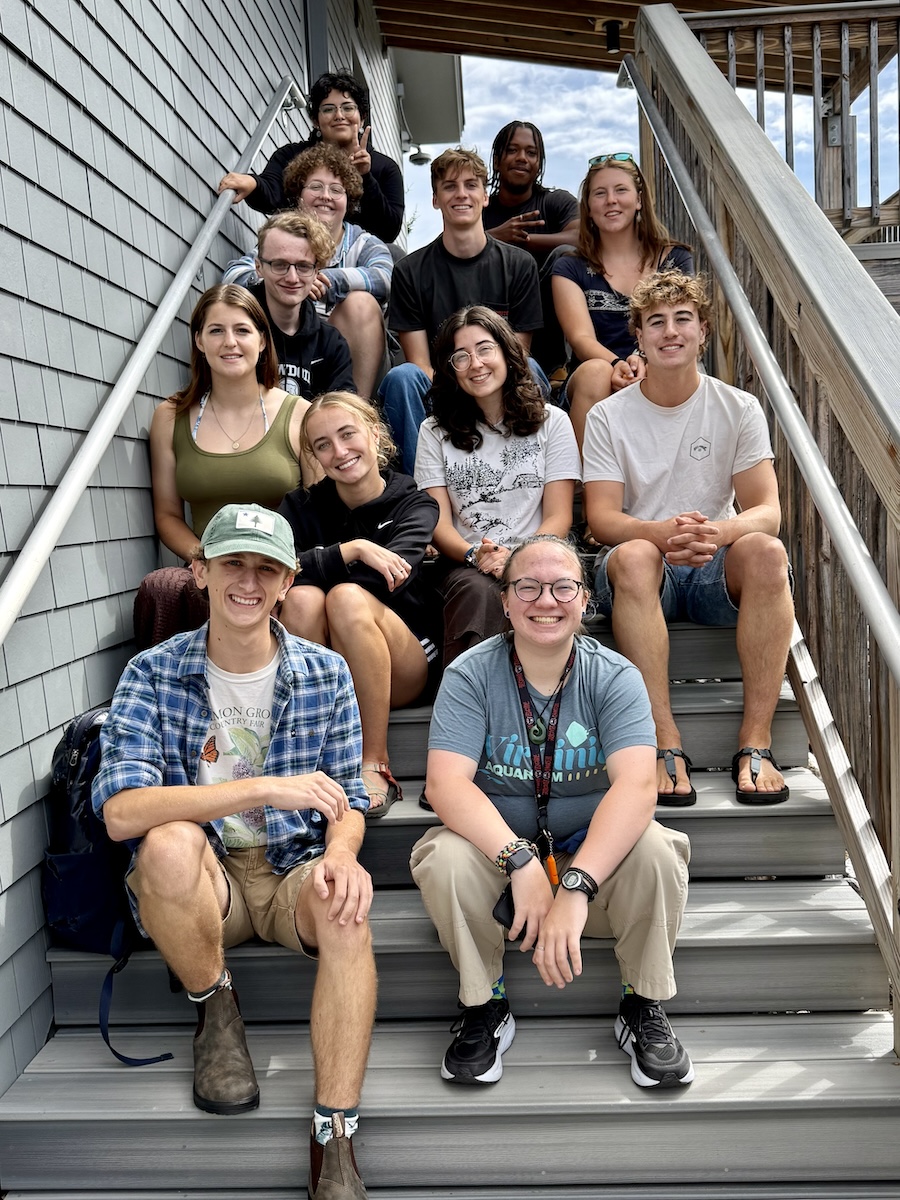
While the program is open to students of any major, it has traditionally attracted students studying biology, biochemistry, and earth and oceanographic science.
But the policy course reflects the Coastal Studies Semester’s interdisciplinary approach. Along with Parker’s class, students this fall are studying benthic ecology and ocean acidification and taking an English course, The American Shore Ode.
Parker said bringing the social sciences and humanities together with the physical sciences is a key element of the program.
“One of the opportunities we have in the semester program and at the Schiller Center at large is to educate and model how you can work in coastal communities and the kinds of information you need to know about culture and government, so that when you move in these communities, you move respectfully and effectively.”
“This course also allows us to understand where people are at when we think about our science, and the questions they need answering,” she added.
For students immersed in the sciences, the policy class offers a chance to consider not just marine systems, but the people whose lives and livelihoods are entwined with them.
Junior Ella Kennedy, who said the Coastal Studies Semester was one of the programs that drew her to Bowdoin, has appreciated that broader perspective. Whether you’re a scientist, a large corporation, or a small business, she said, “You have to have the community’s input and support to get what you want done. You can’t just walk in somewhere.”
For junior Blue Monreal, who grew up far from the ocean in Dallas, Texas, the experience has given her what she sought when she chose to study at Bowdoin: a chance to live by the sea and learn about its ecology and people. Plus, it’s put her in closer contact with Maine.
“Living in a college town is way different than being in the broader Maine culture,” Monreal said, “and this class makes me feel like I’m actually living in Maine and not just at Bowdoin.”