Bowdoin’s Schiller Coastal Studies Center Supports Eelgrass Restoration Effort in Casco Bay
By Bowdoin NewsThe Schiller Coastal Studies Center (SCSC) at Bowdoin College is contributing to an ongoing effort to restore the vital but deteriorating eelgrass ecosystem in Casco Bay.
Building on work that began in 2024, SCSC, in collaboration with several local partners, secured grant funding from Restore America’s Estuaries and has led the design of eelgrass seed maturation and storage facilities and seed processing methods in support of seed-based restoration efforts in Casco Bay.
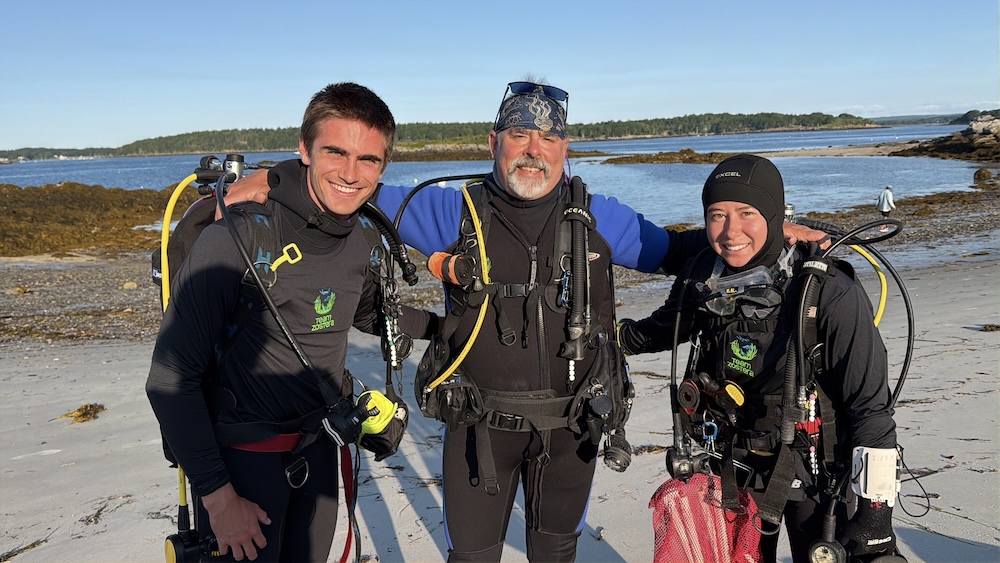
Image: COBALT/Team Zostera
A key collaborator is the Collaborative for Bioregional Action Learning and Transformation (COBALT), specifically its Maine-based Team Zostera, whose scientific dive team leads the underwater harvesting and fieldwork that makes the restoration effort possible. Its name comes from zostera, the genus of eelgrass.
“This project seeks to build capacity and pathways to support long-term, large-scale eelgrass restoration and recovery in Casco Bay, where we have lost more than 60 percent of our eelgrass meadows,” said SCSC director Holly Parker.
“These meadows are vital habitats that support healthy water quality, support coastal fisheries and working waterfronts by providing essential nursery habitat, sequester carbon, and reduce coastal erosion.”
In addition to COBALT, SCSC is partnering with the Casco Bay Estuary Partnership, Friends of Casco Bay, USFWS Gulf of Maine Coastal Program, Manomet, and the Maine Department of Environmental Protection.
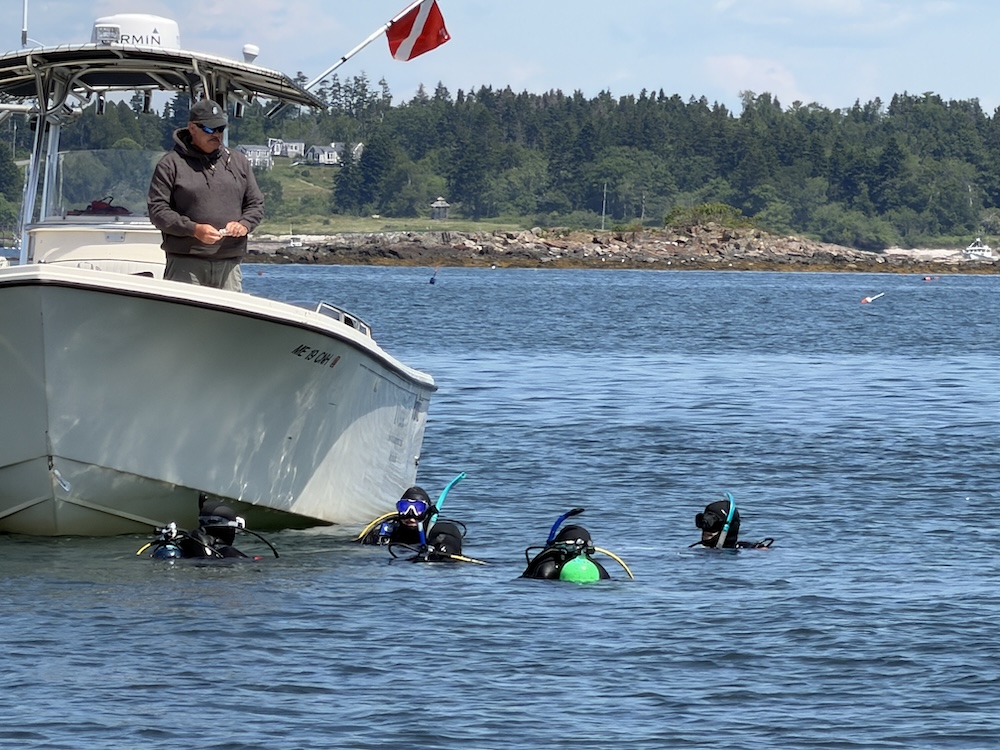
July 30 kicks off a two-week period of intensive harvesting and processing, with Team Zostera providing the scientific diving and leading the underwater fieldwork.
Six Bowdoin students will work on the project, and three have received training in scientific diving and monitoring as well as harvesting and reseeding eelgrass meadows.
Community involvement is a key part of the process. Team Zostera musters dozens of volunteers from the community to help contribute directly to the eelgrass restoration effort.
“Restoring eelgrass in Casco Bay is one of Maine's great coastal restoration challenges, and scientific diving is at the heart of making that vision a reality,” said Glenn Page, executive director of COBALT.
“Through our extraordinary partnership with Bowdoin College's Schiller Coastal Studies Center, we are bringing together scientists, students, trained divers, and community volunteers to build the knowledge, skills, and long-term commitment needed to restore these vital underwater meadows. Every dive, every reproductive shoot collected, and every person who joins this effort helps lay the foundation for healthier coastal ecosystems and a more resilient Casco Bay for generations to come.”
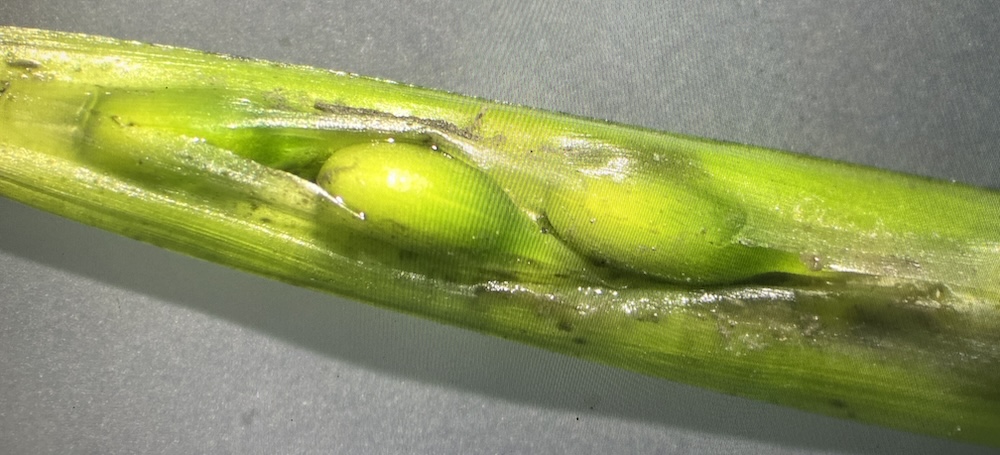
Once the eelgrass reproductive shoots have been harvested from thriving meadows in Casco Bay, volunteers separate the seed pods, or spathe, from the shoots.
“Imagine a quilting bee, with folks in a circle working on a project together and building community,” Parker said. “Swap out the quilting for spathe plucking and set it on the deck of the SCSC dry lab, and you get a sense of what this part of the project looks like.”
In the fall, the seeds will be separated from the spathes and be ready to support replanting efforts.
The work is an important step toward meeting the SCSC’s goal of building the capacity needed to process one million seeds by the end of the grant term in 2027.
“This stage of the project allows us to engage students and others in local science in a way that allows them to see the impact of their work both in the long and short term,” Parker said. “They are participating in a project larger than themselves and also helping build a community of like-minded environmental stewards.”
These projects have been funded wholly or in part by the United States Environmental Protection Agency under cooperative agreement 4T-00A01151 to University of Maine and Casco Bay Estuary Partnership and cooperative agreement 84044301 to Restore America’s Estuaries. The contents of this document do not necessarily reflect the views and policies of the Environmental Protection Agency, nor does the EPA endorse trade names or recommend the use of commercial products mentioned in this document.