Asking Big Questions About Everything: Bowdoin's New Data Science Laboratory Launches with a Summer of Research
By Rebecca Goldfine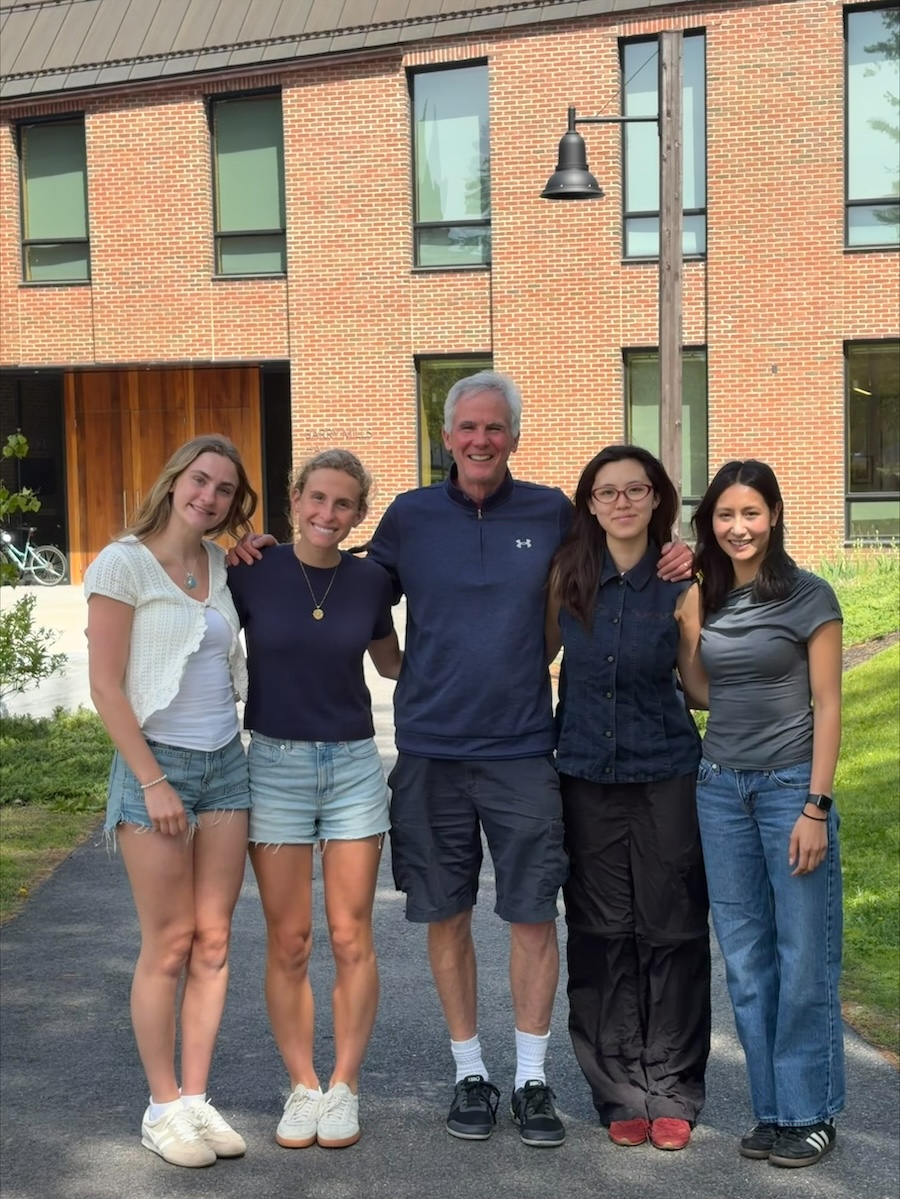
The inaugural season of the Gomezgil Yaspik Data Science Laboratory marks the beginning of a new chapter for for Bowdoin. Data science combines statistics, computing, and machine learning to extract insights and answer questions across fields as diverse as biology, economics, public policy, and the humanities.
Founded by Assistant Professor of Digital and Computational Studies Vianney Gomezgil Yaspik, the lab gives students something that's difficult to find during the academic year: uninterrupted time to pursue ambitious research in a collaborative setting.
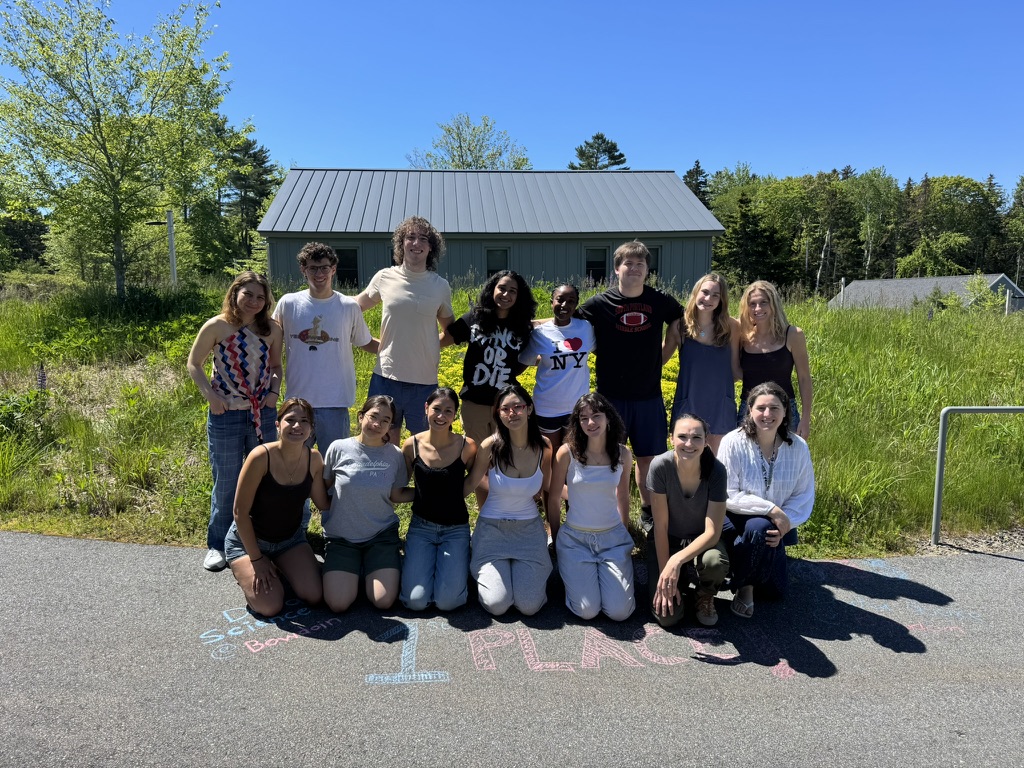
Each weekday morning, the students gather around a table in Mills Hall with “Professor V,” as they call Gomezgil Yaspik. They meet one-on-one with Gomezgil Yaspik and as a group before getting to work. Additionally, different professors have come in to teach an advanced workshop: computer scientist Eric Chown led a session on cognitive reserach, economist Martin Abel on survey methods and experimental design, AI expert Adrianne Kinney on machine learning, and Gomezgil Yaspik on advanced data science topics.
The lab reflects Gomezgil Yaspik's broader vision of weaving data science throughout Bowdoin's liberal arts curriculum. A 2018 Bowdoin graduate who was hired to help build the College's growing data science program, she sees the subject not as a specialty reserved for computer scientists, but as a tool for students in every discipline.
“I want to bring people from different fields together to learn how to use data science tools, whether you're a philosopher or an economics student,” she said.
The 2026 fellows—Cindy Dai ’27, Grace Kinum ’28, Kate Saccaro ’28, Maddy Ohta ’28, and Madina Sotvoldieva ’27—represent majors in biology, economics, math, digital and computational studies, and computer science.
Each student proposed an original research project (with two fellows choosing to collaborate), submitting literature reviews, identifying gaps in existing scholarship, and explaining how their work would contribute new knowledge. More than twenty students applied for the five fellowships.
Saccaro said the research opportunity appealed to her because “the new data science program at Bowdoin is very exciting. It feels incredibly relevant and applicable to the real world.”
Each student received a $7,000 fellowship, plus a housing stipend, from Bowdoin. By the end of the summer, they will have completed an independent research paper—potentially suitable for publication—while also contributing to a group research project. This year, the students are working with data scientist and sports medicine researcher Randall Dick ’79 to mine a massive medical database for patterns that could help health care providers recognize illnesses sooner. Dick is a fellow and former board member of the American College of Sports Medicine and worked for twenty years with the NCAA, managing its sports medicine and injury prevention programs, as well as with Major League Baseball.
“I think students do a lot of individual research at Bowdoin,” Gomezgil Yaspik said. “But in the real world—whether they're working in think tanks, government agencies, companies, or research labs—they'll almost always be collaborating.”
“The new data science program at Bowdoin is very exciting. It feels incredibly relevant and applicable to the real world.”
—Kate Saccaro ’28
Modeling Invasion Risk for an Invasive Tunicate in the Gulf of Maine
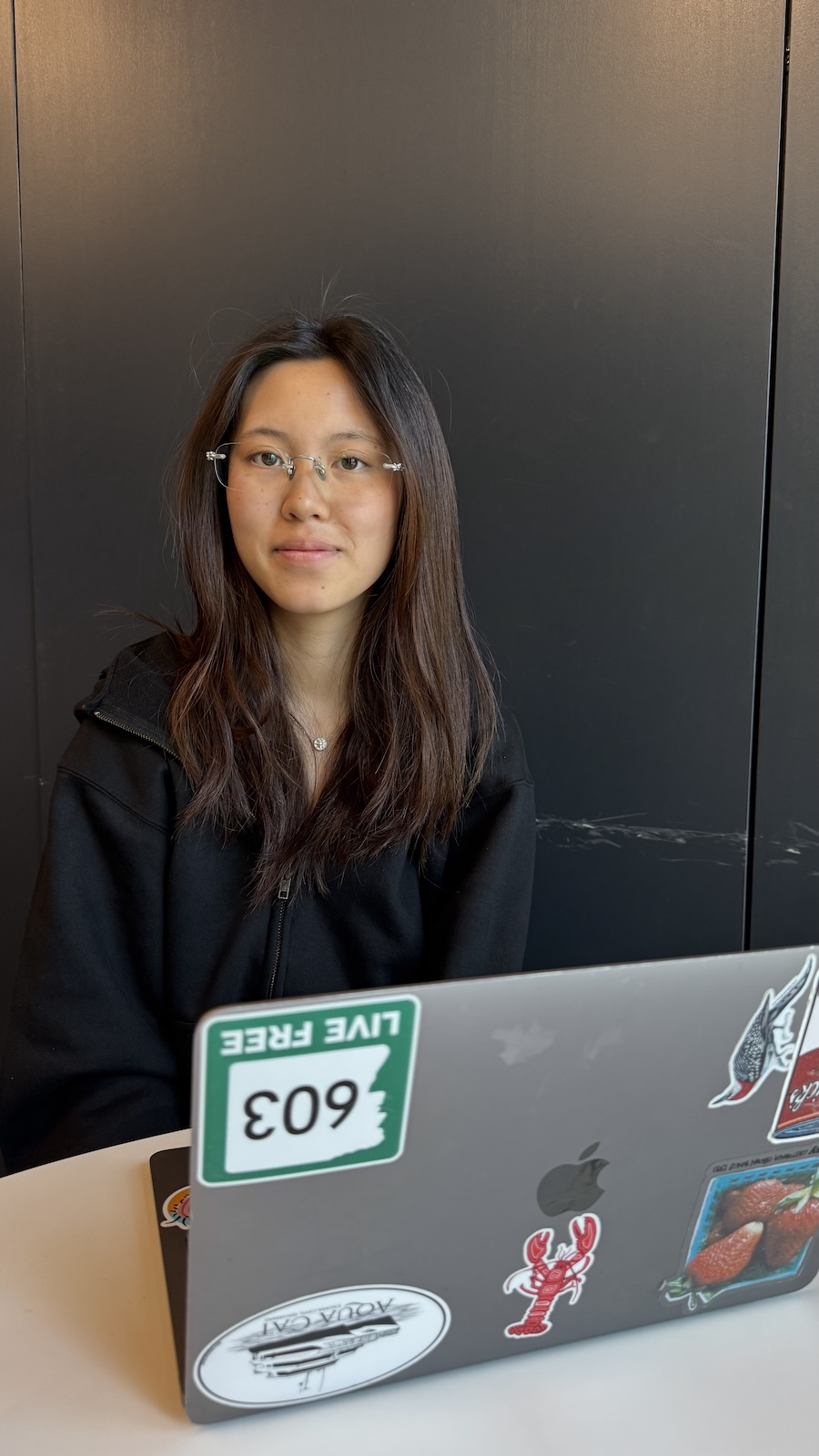
For her independent project, biology and math major Dai is using data science to study one of the Gulf of Maine's ecological challenges. Her project focuses on Didemnum vexillum, an invasive tunicate that clings to dock pilings, aquaculture gear, and other hard underwater structures, creating problems for shellfish farmers.
Aquaculture operators find the tunicates a nuisance because they grow on their scallop and clam cages and compete with these filter feeders for nutrients in the water. “You can imagine that scrubbing them off takes a lot of time, people, and effort,” Dai said.
Traditional species distribution models often use environmental predictors such as water temperature, salinity, depth, and substrate to estimate where a species is likely to occur. Dai is asking whether those models become more useful when they also account for human activity—specifically aquaculture operations, marinas, and shipping traffic—all of which are common in the Gulf of Maine.
Her findings could ultimately help resource managers and policymakers better identify coastal areas at greatest risk of invasion and develop more effective strategies to slow its spread.
Dai first became interested in researching D. vexillum after completing a Bowdoin Coastal Studies Semester. Through lunch-and-learns and other meetings, the students met many people who make their living on Maine’s waterfront, learning about both their challenges and opportunities.
“Data science is such a powerful tool to help me answer the questions I’m interested in,” Dai said.
Retention Rates in Women's College Basketball Programs
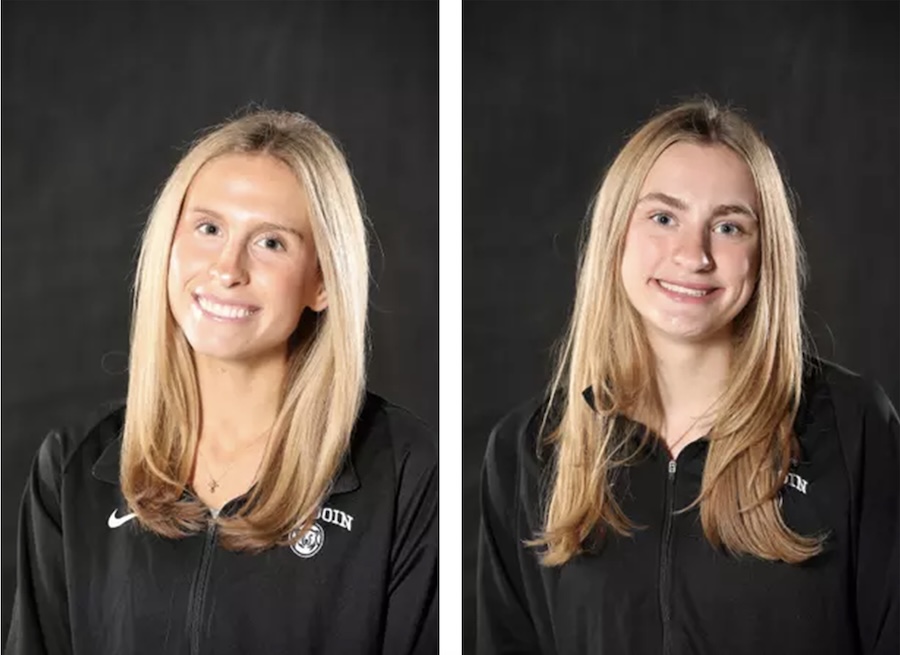
Both Saccaro and Kinum play on the women's basketball team at Bowdoin, making them well positioned to investigate a question that matters to them: What keeps women athletes on their teams?
To find out, the pair is analyzing player retention across NCAA Division I, Division III, and professional basketball. Their research examines factors ranging from coaching experience and roster size to coaching turnover and player compensation.
They began by exploring whether a coach's gender influences player retention. “At Bowdoin, this is my first time having a female head coach [Megan Phelps ’15]," said Kinum, who is majoring in economics and digital and computational studies. “I've loved it, and I was curious whether other people have that experience too.”
So far, however, their data suggests other factors play a larger role. Coaches who once competed at the institutions where they now coach (like Phelps), for example, appear to have higher player retention rates. Team size also matters.
“Smaller teams have players who are more likely to stay, which makes sense," said Saccaro, a math and digital and computational studies major. “We have a small team here, and it’s so much easier to get close with your team and build connections.”
Those relationships, however, can also make coaching changes more disruptive. “We found that women players are more likely to leave after a coaching change,” Kinum said.
The pair is also examining salary equity in the WNBA by comparing players' compensation with their on-court statistical performance to identify athletes who may be underpaid or overpaid. “There is a gap between how much interest a player is bringing to the league and their salary,” they said.
By summer's end, they hope to supplement their statistical analysis with interviews that capture something numbers can’t: the relationships between coaches and players, as well as coaching behaviors.
Their goal is to use their research findings to help strengthen women's sports and improve the experiences of women athletes—a subject they say remains understudied.
“There’s always more to learn with data science. You go down one path and it opens up so many more doors for what you can do and look at.”
—Maddy Ohta ’28
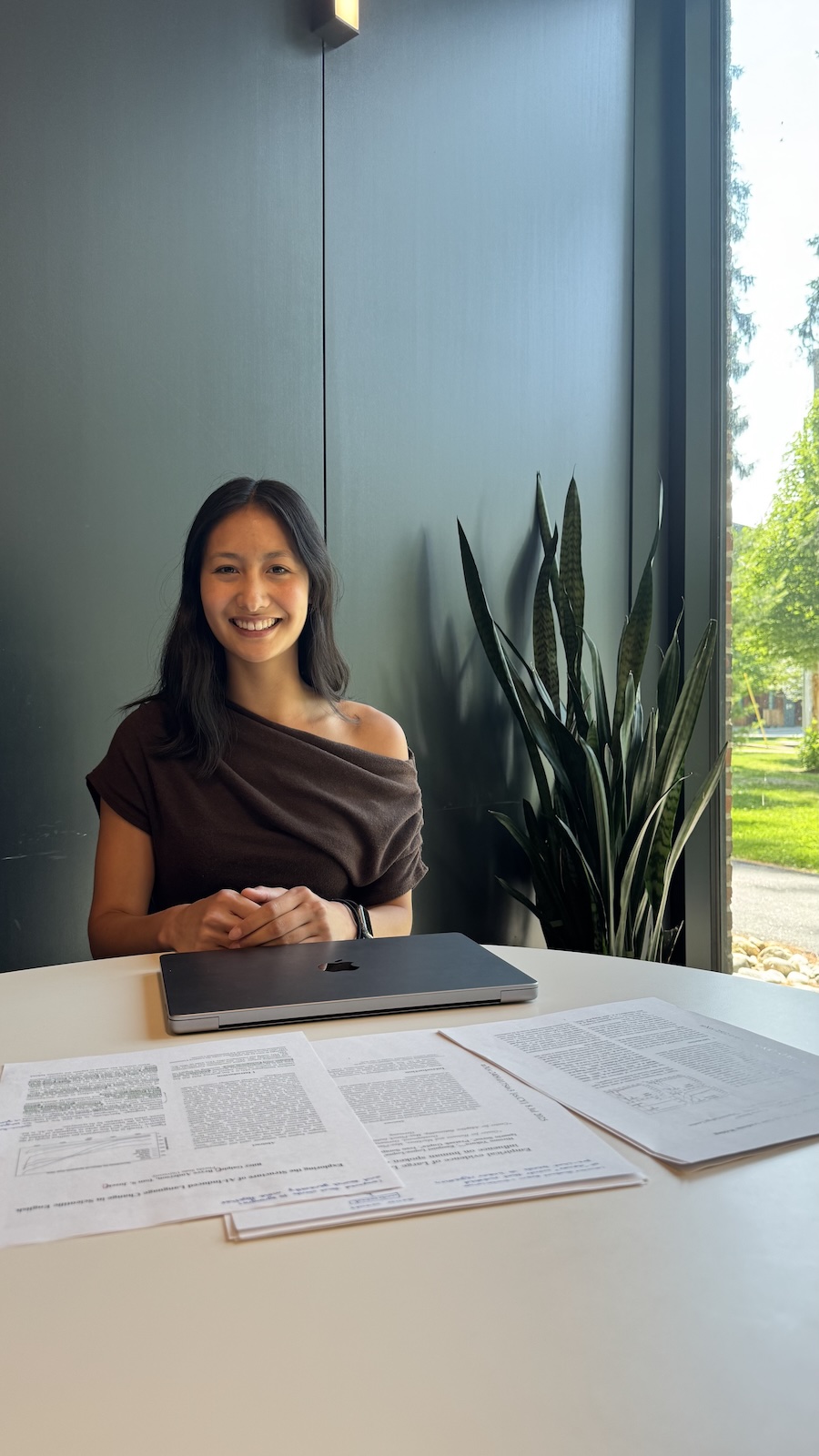
AI Vocabulary Adoption on Reddit
Maddy Ohta is exploring whether the widespread adoption of AI chatbots is changing the way people use language.
Using millions of comments collected from twenty-two Reddit threads, she is tracking the rise of words that have become more common following the emergence of user-friendly large language models (LLM)—words like delve, meticulous, and intricate. “We don't know the exact mechanism for how or why these words have increased in Reddit comments—perhaps through LLM-human interaction, social diffusion, trickling down from academia, or AI text proliferation. So that's also piece of the puzzle.”
Ohta is comparing these changes with earlier shifts caused by events like the COVID pandemic and the Black Lives Matter movement, when words like unprecedented, exponential, and systemic became more widespread.
“I’m still waiting to see whether this pattern with AI is very different from other big events when new vocabulary entered our common language,” Ohta said. “If we do see a real difference, it would tell us something meaningful about how AI is filtering into our language and how people are interacting with LLMs."
The math major said she saw the summer as a chance to work through and answer interesting and complex questions with data analysis. “I really like the idea of data storytelling: how you can look at an event and find the data, understand it, and interpret it in a way that is interesting to other people and grounded in analysis.”
Though she’s not yet sure of her path ahead, she said she finds data science exciting. “There’s always more to learn. You go down one path and it opens up so many more doors for what you can do and look at.”
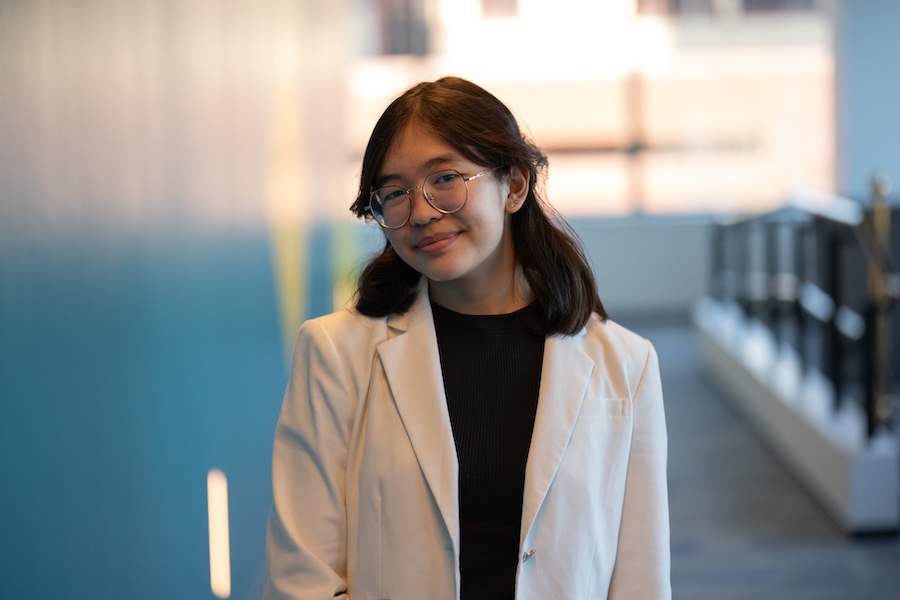
Predicting Air Quality in Tashkent
Computer science and math major Sotvoldieva, who is from Uzbekistan, is developing models to predict air quality in the capital city of Tashkent. She's testing different variables, such as day of the week, weather patterns like humidity or rain, and population density. Gathering reliable data has been one of the project's biggest challenges, since relatively little research has focused on the region.
“Being away from my homeland for the last couple of years has made the changes that happen in the city really noticeable,” she said. “Tashkent is becoming a global hub with many opportunities. However, the urbanization and development came at the cost of degrading air quality.”
Last winter, the city repeatedly ranked among the most polluted in the world.
“Watching my own family, especially my grandparents, navigate this air motivated this project,” she said. “I believe that working alongside Professor V will teach me a lot about how research is done, the ups and downs of the process, and help me gain the technical skills required for more advanced projects.”