Here to Hope
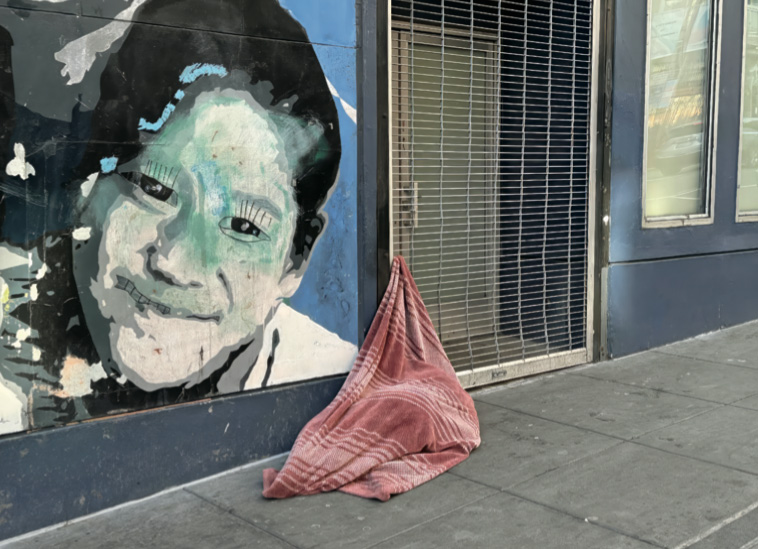
By Alyce McFadden ’20 for Bowdoin MagazineJeffrey Hom ’04—physician, public health officer, recipient of Bowdoin’s Common Good Award—is a native of San Francisco, a city known for crisis-level overdose deaths and an infiltration of fentanyl, and streets with evidence of both the drugs and the homelessness that often accompanies them.
A Harvard-trained doctor, art history major, and scientist in San Francisco’s Department of Public Health, Hom is determined to use every tool at his disposal in the fight.
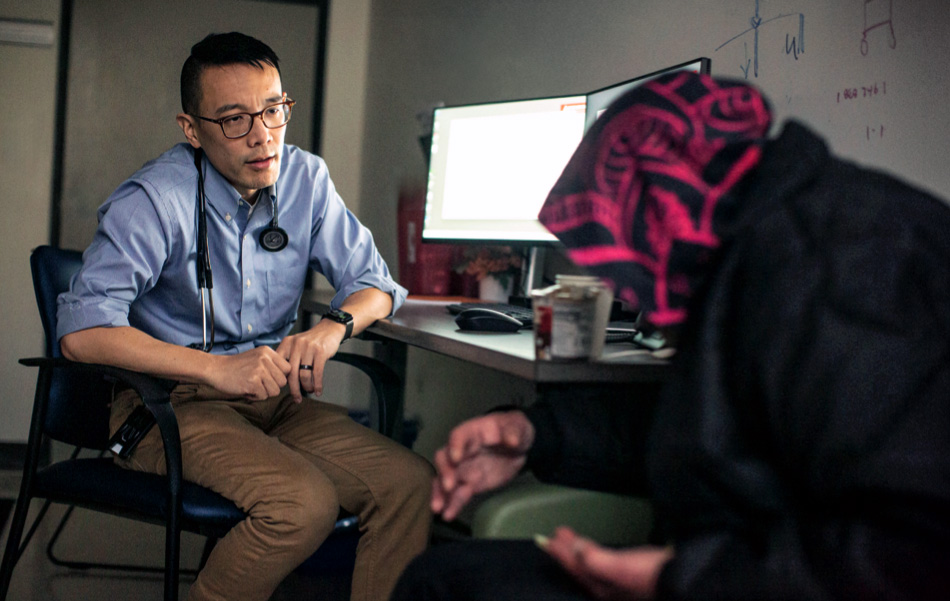
The clinic on Howard Street is warm and inviting on a brisk San Francisco morning. Small, framed paintings hang on exam room walls, quiet chatter fills the waiting room with a gentle hum. Soft January light filters through shaded windows.
In an office down the hall, Dr. Jeffrey K. Hom ’04 awaits his first patient of the day. Like his surroundings on this quiet Wednesday, Hom radiates a kindly presence. He smiles readily when he talks about his work, though there is sometimes gentle sadness in his eyes.
It’s hard to tell in this vibrant clinic and comfortable office, enclosed in an unassuming grey building, that you are in the middle of San Francisco’s fight against a fearsome epidemic that claims new lives every day and that intersects in multiple ways with another scourge of the city: homelessness. But there are clues—a pile of pharmaceutical boxes balanced precariously by the door, a canister of overdose reversing Narcan next to Hom’s keyboard.
Above his desk hangs a poster with an illustration of a poppy blooming out of the tip of a syringe and next to it, in all caps, the words “Meet people where they’re at.”
Last year, in a city with fewer than 830,000 inhabitants, 621 people died of accidental overdoses in San Francisco. In 2024, the “point in time count” showed that more than seven thousand households were experiencing homelessness.
The city has been locked in a frustrating, tragic battle with opioid addiction for years. Hom is on the front lines here at the clinic, where San Franciscans of all stripes come to seek treatment for substance use disorder. Hom is a foot soldier in this war, but he is also the one drawing battle plans and directing strategy.
Hom is the medical officer for science and policy in the substance use services section of the San Francisco Department of Public Health. The job involves treating patients but also thinking big picture about what substance use disorders mean for San Francisco, the city where he grew up that has now beckoned him back. The work is heavy. Hom has had patients die from overdoses; he’s seen others revived in the nick of time. In other public health departments in other cities, it’s normal for higher-ups like Hom to spend their weeks working in tidy municipal office buildings, removed from the hard truths of recovery. But Hom says he loves his days in the clinic. They can be among “the most rewarding and uplifting” parts of his job, and his hours here help him cope with the weight of it all.
“This time with patients helps me,” he said.
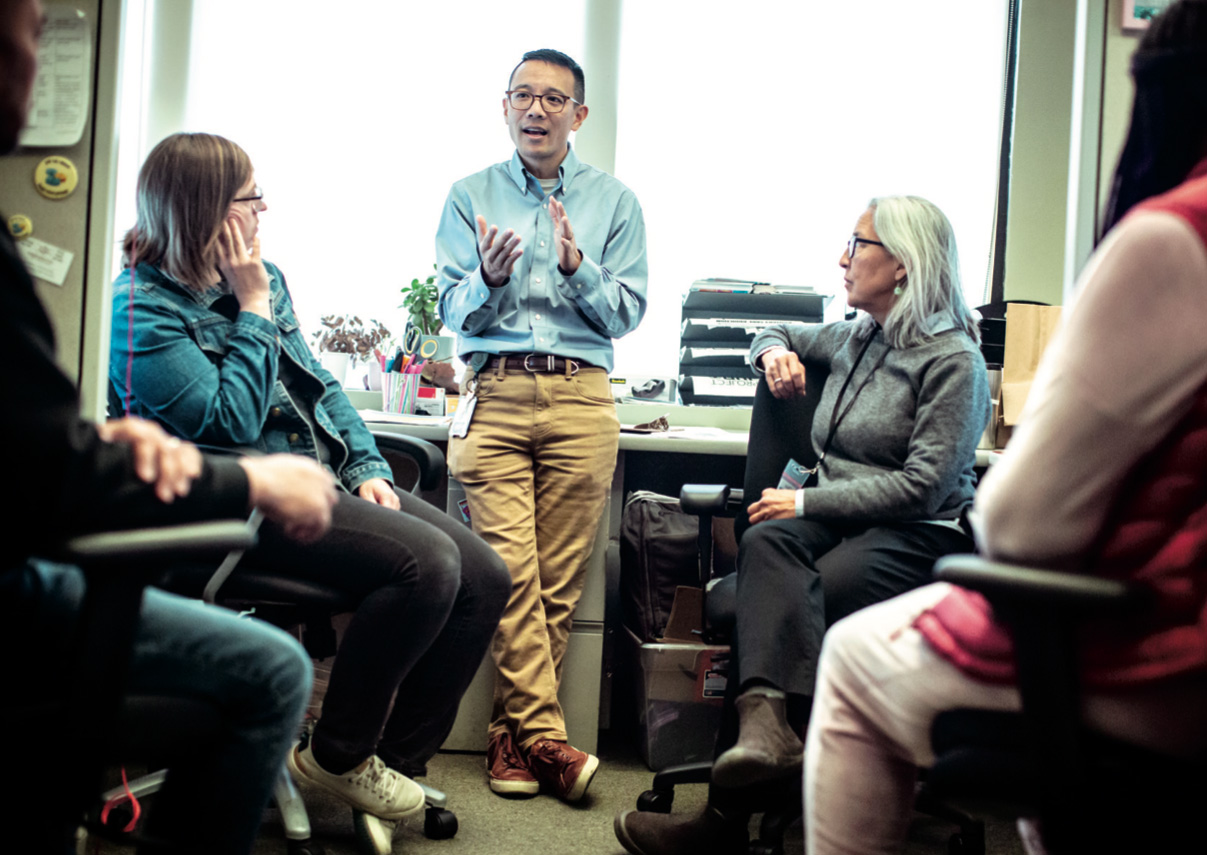
Meet People Where They're At
Hom comes from a medical family. He grew up in San Francisco’s Richmond district, raised by an anesthesiologist father and a mom who worked as a geriatric nurse. His grandmother worked in the public health department at University of California, Berkeley. He always knew he wanted to follow in their footsteps and ultimately settled on public health as a career path that would allow him to work with patients and advocate for them on a policy level. After graduating from Bowdoin in 2004, he considered pursuing global health and spent time in clinics in Lesotho and Cambodia. But a stint working on a Navajo reservation that made him realize the sharp disparities in care between the haves and have-nots in the United States meant there was just as much opportunity to make an impact closer to home.
After medical school at Harvard and residency at the University of California, San Francisco, Hom embarked on his public health career in earnest, completing a fellowship at the University of Pennsylvania and working for Philadelphia’s public health department.
He loved Philadelphia, but when the opportunity to come back to California presented itself in 2022, he took it. He settled in Marin County with his wife, Tiffany, and their two elderly dogs, Piccolo and Crimson. Life is good here: the dogs have space to roam and Hom gets to spend precious weekends, holidays, and birthdays with his family.
He had always known that he might want to come back to the Bay Area. But by 2022, the city that raised him had changed. The tech boom brought newfound wealth and the relentless vigor of young professionals hungry to make their mark on the future to San Francisco. It also meant yawning inequality, rendering life in the city simply too expensive for many of the working families who had called it home for generations.
And then there was COVID.
The pandemic wrung San Francisco out like a wet rag. Five years later, it’s still on the mend, still figuring out how to be a city again. Riders are coming back to public transit lines, and companies are returning to the downtown office buildings that have awaited them, vacant, for years. Residents are optimistic, confident that the city’s darkest days are behind it. But those days were dark indeed. Crime spiked and parts of downtown imploded. Overdose deaths soared. Many of them were caused by a new drug, a massively potent synthetic opioid that has become a boogeyman and a byword for addiction, death, and crime in America: fentanyl.
This new drug wasn’t new to Hom in 2022. Fentanyl began its reign in earnest on the East Coast, rippling through streets and morgues and treatment centers in cities like New York, Baltimore—and Philadelphia, where Hom was living and working.
“I was there around the time that it was really starting to escalate,” Hom said. “We could see the deaths increasing.”
This was the start of a new chapter in the desperate tale of the opioid epidemic, with its familiar corporate villains and thousands of victims, each a person and each—at least at one time—with friends, neighbors, parents, spouses and partners, or children who loved them.
By the time Hom made his way to California, fentanyl had arrived.
The drug tends to be cheaper than heroin and between fifty and a hundred times stronger than morphine. “Because it’s just so potent, it can cause an overdose very quickly, even in someone who may have a high tolerance,” Hom said.
And it is, of course, addictive. Hom likes to remind the graduate students he teaches that many people who use fentanyl or other opioids just want to feel well, just want to hold off punishing withdrawals with debilitating symptoms like vomiting, severe aches, sweats, and diarrhea.
“Most of the people that you’re seeing are not using to feel high, they’re using just to feel normal,” Hom said. “I think that helps us humanize this, to remember that people are struggling.”
In general, Hom wants us all to “humanize this.” He wants us to see people who use drugs as people, foremost. Some of them want to stop using, and others aren’t quite ready, but each is worthy and deserving of care, dignity, and autonomy.
That’s the lens through which he views this crisis, and that’s the framework on which he is building solutions. Like the poster above his desk in the clinic reminds him: Meet people where they’re at.
“At an individual level, it’s understanding ‘Ok, well, where is someone at, and can we offer them some sort of a service that can meet their need?’” Hom said.
For people who want to escape addiction, Hom’s goal is to make off-ramps as accessible as possible. Part of that work means breaking down barriers to treatments like methadone and buprenorphine, federally approved medications that can cut the risk of dying from overdose or other causes in half. Hom sees them, almost literally, as miracle drugs.
“There is no other medication that I can prescribe in primary care for a chronic illness that has a 50 percent reduction in mortality,” Hom said. “So, these really are lifesaving medications.”
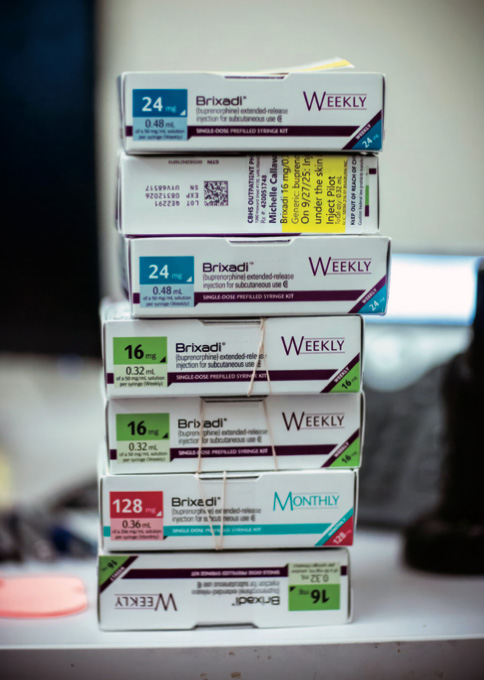
Unlike methadone, which must be administered by health care workers in clinical settings, buprenorphine can be prescribed by a doctor and filled by a pharmacy. Federal rules allow doctors to prescribe it over the phone, and Hom helps staff a city-run telehealth hotline that can connect people with the drug, among myriad other services.
But even with the telehealth hotline, Hom saw barriers to connecting patients with these medications. Fewer than half of the pharmacies in San Francisco were stocking them, a study by the San Francisco Department of Public Health found. So, Hom and his colleagues pushed city-wide legislation in 2024 requiring them to have it on hand, ensuring critical same-day access for patients. San Francisco was the first city in the country to pass such a law.
“At the end of the day, it’s really about trying to create a system in which people can access a service that would meet their needs, including treatment with life-saving medications,” Hom said.
Many of the people who use drugs in San Francisco aren’t ready or willing to start recovery treatments. It’s Hom’s job to consider them and care for them too. The question he asks is not how to get them to stop but “What are the harm reduction programs and policies that we can offer to help reduce their risks?”
In San Francisco and other liberal cities across the country, that proposition has become harder, even since Hom returned to the Bay Area four years ago. The concept of harm reduction (an approach to substance use that can include needle exchanges and overdose-reversing treatments like Narcan) doesn’t lend itself to overnight solutions to the crisis that has gripped San Francisco for the last half-decade. Political headwinds have shifted; Hom says he sees a growing impatience among residents and some elected officials, who have turned away from harm reduction and some of the programs that grew out of it.
San Francisco shut down its safe-use sites, spaces where people could go to use illicit substances in a medically supervised, sanitary environment, in 2022, just a few months after Hom joined the department.
In a recent citywide speech, San Francisco mayor Daniel Lurie boasted about his administration’s hardline approach to substance use.
“We stopped freely handing out drug supplies and letting people kill themselves on our streets,” he said. “It is not a basic right to use drugs openly in front of our kids.”
To an extent, Hom gets it. As a public servant, he knows his responsibility is not just for people who use drugs but also for the rest of the community that is shaped by substance use. Like Lurie, he said, he does not “want kids walking down the street to be encountering this.”
“I’m sad that we have had such high overdoses,” he said. “I’m sad that people who live in those communities see it, I am.” But Hom also wonders whether politicians have given up on harm reduction too soon, whether the pendulum of public opinion has swung too far too fast.
“I don’t think harm reduction has failed,” Hom said. “I think it’s never been funded to the level that it deserves to succeed.”
A Moral Thing
But before any of that—before recovery, before harm reduction, before politics, and before medication—comes a more basic question for him. “The first thing is, can we create spaces where people feel open and able to talk about their substance use?” Hom said.
In order to meet people where they’re at, you have to be willing to meet them at all.
In his work, Hom thinks a lot about prejudice and how history and social norms shape drug policy and complicate treatment. All too often, Hom said, the public tends to understand substance use as a “moral thing.” But it isn’t, at least in his line of work. He approaches substance abuse like the doctor he is, understanding it “as a chronic illness” that can be treated like any other.
“Substance use disorders are highly stigmatized. There’s a lot of judgment,” he said. “We’ve taken a very punitive approach historically, and a lot of policies are grounded in racism.”
A deep commitment to social justice is the beating heart of Hom’s work and outlook on life. It’s what got him into this line of work in the first place, inspired by sociology courses at Bowdoin that showed him how he could apply “medicine and public health to my community and social justice.”
Public health is a profoundly interdisciplinary field. It involves thinking on a systems level, understanding how diseases and disorders manifest in the broader context of a community. In his work, Hom must think about the patients he treats on Howard Street but also about San Francisco’s school children walking to class, the mayor, doctors, pharmacists, drug makers, cops and—crucially—how they all interact.
This kind of interdisciplinary work seems to suit Hom. He knew early on that he wanted a career in medicine, just like his parents. But he chose to attend Bowdoin, drawn to a liberal arts education that would allow him to fulfill the coursework he needed to apply to medical school while pursuing other intellectual curiosities, like art history, his major.
He discovered art history in high school and loved how it used visuals to understand bygone societies and the narrative thread of the past. Images matter to Hom, and a few years ago he started thinking seriously about how photographs were shaping contemporary understandings of substance use. Could these images, taken by professional photojournalists and published by news outlets, be shaping how society views people who use illicit drugs? In a study published in July, Hom proved that they could.
“That always drew me to art history, the opportunity to learn about people, about events, about how those were perceived,” he said. “I just think that images are so powerful, they’re so evocative.”
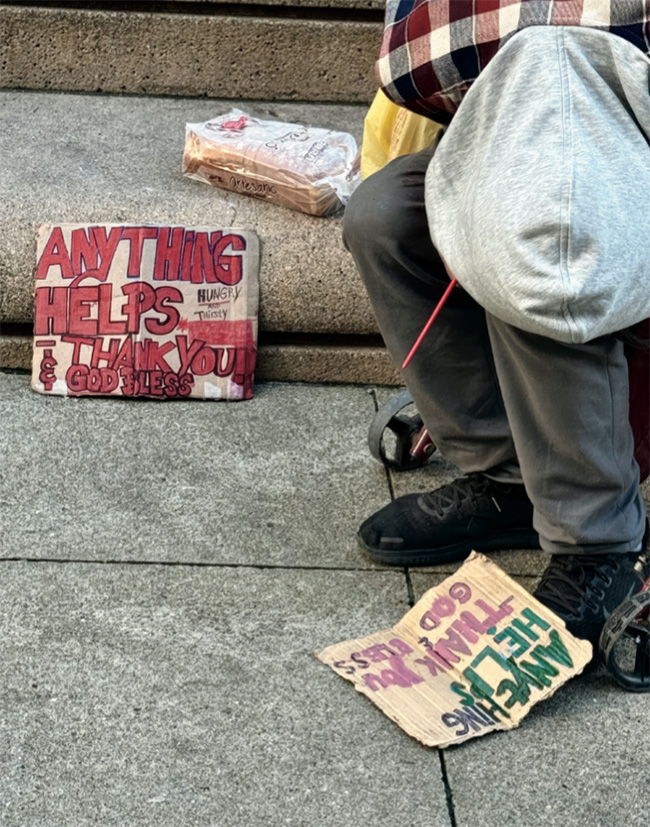
To test his theory, Hom conducted a survey of some 3,400 participants. Eight groups were each shown an image that depicted one reality of substance use disorder: a person injecting drugs, a patient receiving methadone therapy, someone being treated after overdosing, the family member of someone who had died because of substance use, or a person in recovery shown in a workplace setting. After viewing the photos, each survey participant was asked various questions to assess their perceptions and feelings about substance use.
The results were substantive. People who saw pictures of drugs being injected were more likely to say they felt disgust or pity, and participants who saw pictures representing recovery were more likely to say they were open to working alongside people in recovery from substance use disorder.
“The findings weren’t surprising, but it was nice to have the empirical data showing that images of people who are in recovery reduce this stigma,” Hom said. “My art history background made me believe that it had an impact.”
Stigma and prejudice matter to Hom, not just because they perpetuate injustice, but because they can constitute real barriers to recovery. If we give in to stigma and let ourselves shut out, judge, castigate, or demean, if we treat addiction as a “moral thing,” he asks, how can we be ready to treat, to support recovery, to offer care? Hom has dedicated his professional life to breaking down those barriers: between people and the treatments that can help them, policy and practice, doctors and patients, the haves and the have-nots. It can be strenuous, political, and emotionally intense.
Hom loves the city where he grew up. And he wants it to be better. With his art historian’s eye, his training as a doctor, and his deep capacity for compassion, this native son is ready to work for San Francisco.
Alyce McFadden ’20 joined the San Francisco Chronicle, where she covers the San Francisco Board of Supervisors, after three years as a writer at The New York Times.
Timothy Archibald is a commercial and editorial photographer based in San Francisco.

This story first appeared in the Winter 2026 issue of Bowdoin Magazine. Manage your subscription and see other stories from the magazine on the Bowdoin Magazine website.