The plan includes focused recommendations for residential and athletic spaces, as well as a series of integrated improvements that will reach all campus stakeholders.
College House Renewal
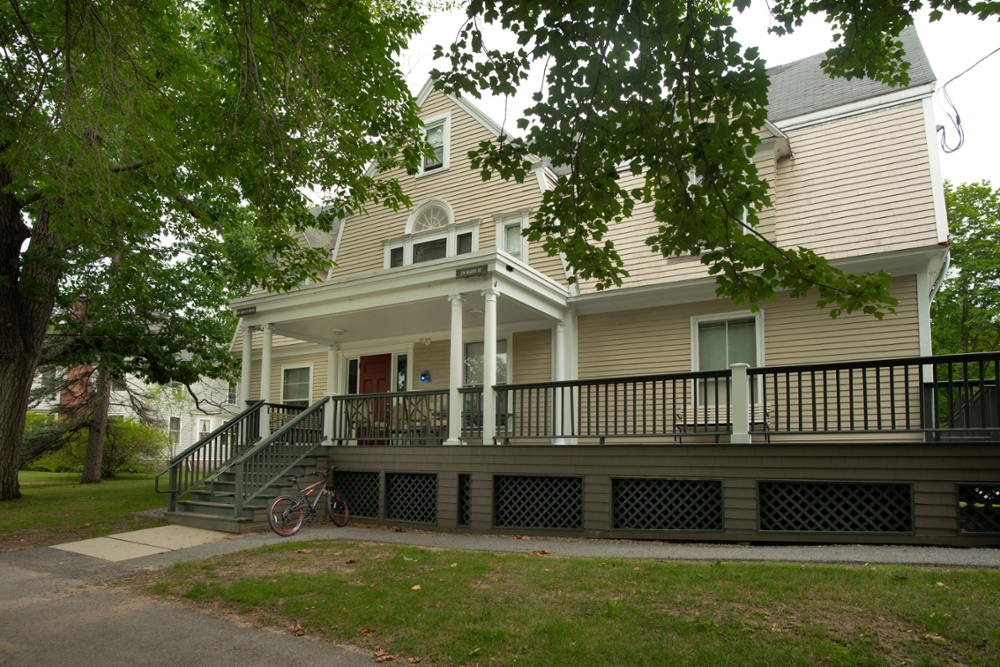
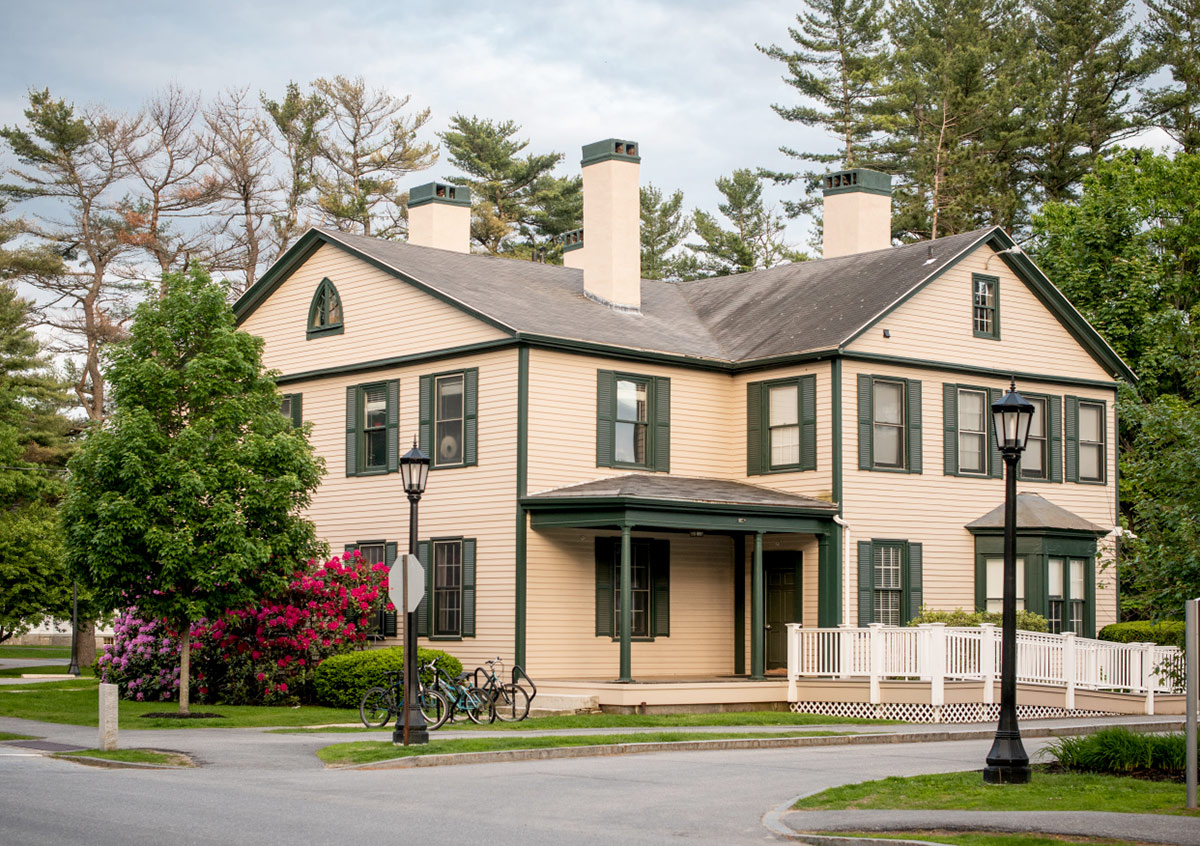
The College Houses are among the most distinctive elements of Bowdoin's residential model.
These unique spaces accommodate nearly 40 percent of sophomores, and serve not only their residents, but also the broader student body. This intentional social infrastructure is difficult to build and easy to lose, and significant deferred maintenance persists across most houses.
The plan recommends a phased, incremental renovation of Bowdoin’s College Houses, beginning with Reed House in the upcoming academic year, followed by Burnett and Helmreich.
The scope of work may include building envelope renewal, accessibility improvements, interior refreshes, and mechanical upgrades to prepare the Houses for a transition to more sustainable heating systems.

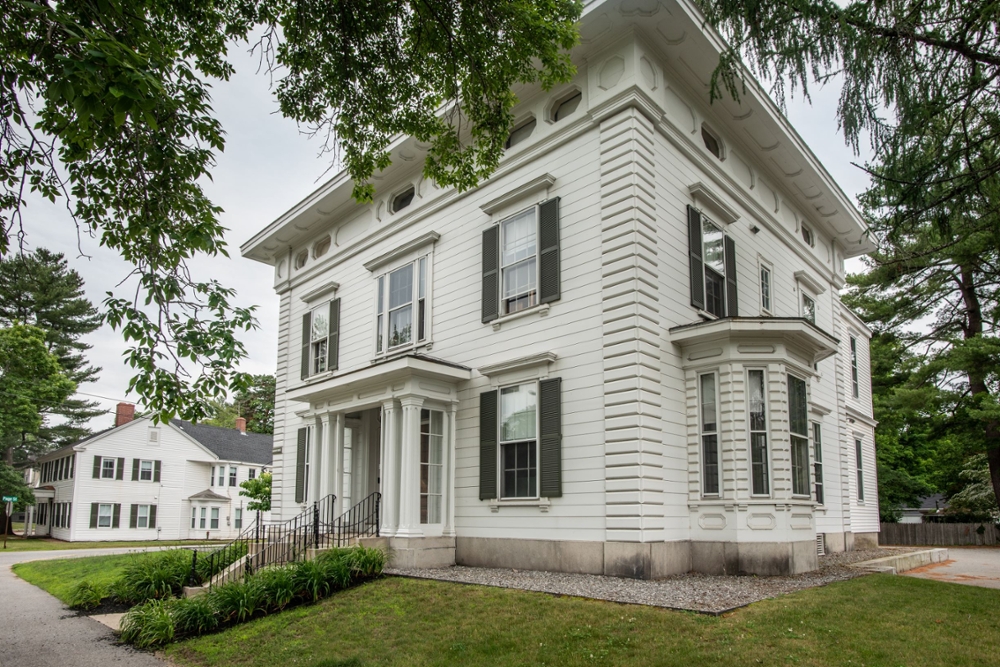
Russwurm House Renewal
The building that houses the John Brown Russwurm African American Center was originally built in 1827 for Professor Alpheus Spring Packard, Professor of Ancient Language and Classical Literature.
The house was rededicated in 1970 as the John Brown Russwurm Afro-American Center in honor of Bowdoin's first black graduate, class of 1826. Presently, the Center houses a library of nearly 2,000 volumes and scholarly journals, accommodations for house managers, a large upstairs lounge for meetings, classes and dances, and various other public rooms.
The house is in need of weatherization improvements, electrical service upgrades, and refreshed interior finishes, as well as consideration of programmatic enhancements.
The Athletics Precinct
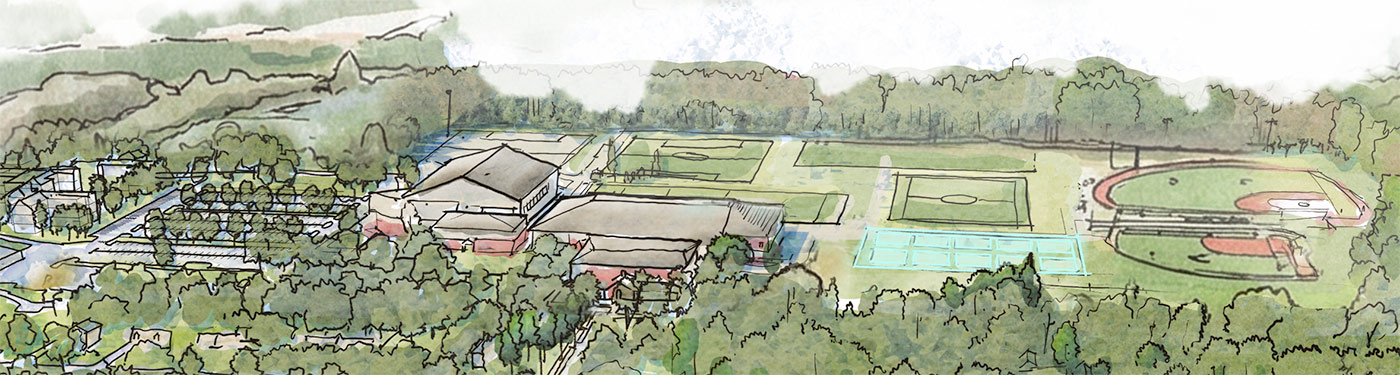
New tennis courts west of Farley Fieldhouse address deferred maintenance of the existing courts and provide a permanent space for large outdoor events such as Commencement and Reunion.
Once replaced, the existing tennis courts provide an opportunity to expand parking capacity for game nights and student vehicles, relieving pressure on other campus lots.
Integrated Improvements
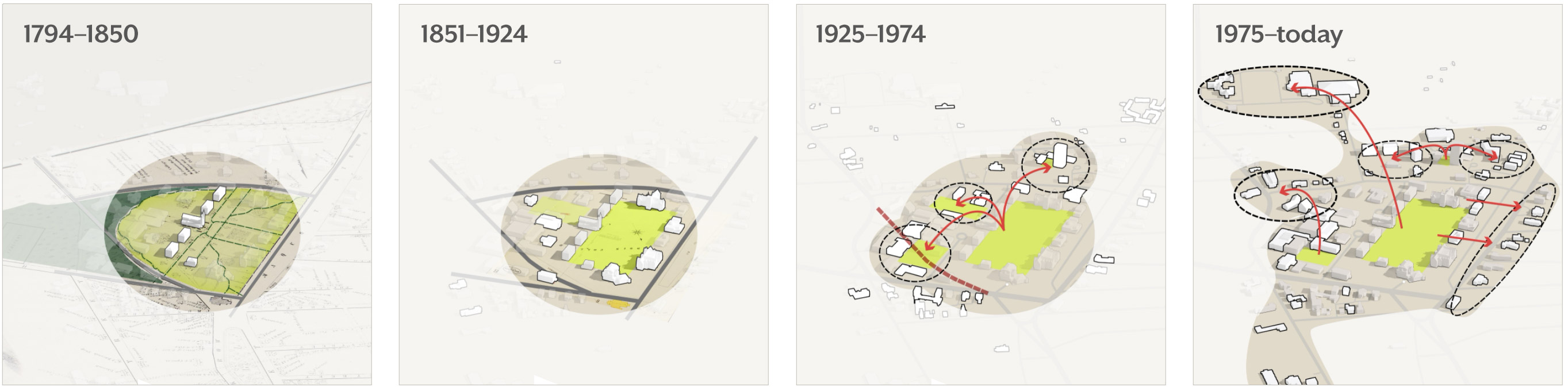
The Quad serves as the heart of Bowdoin’s campus, knitting together buildings with diverse architectural styles. As the College has grown, it has done so through infill around the Quad, expansion southward, and acquiring buildings along its edges.
This provides key opportunities to strengthen the connections between these areas, so that our entryways, edges, and borders feel visible, distinctive, safe, and welcoming.
Accessibility
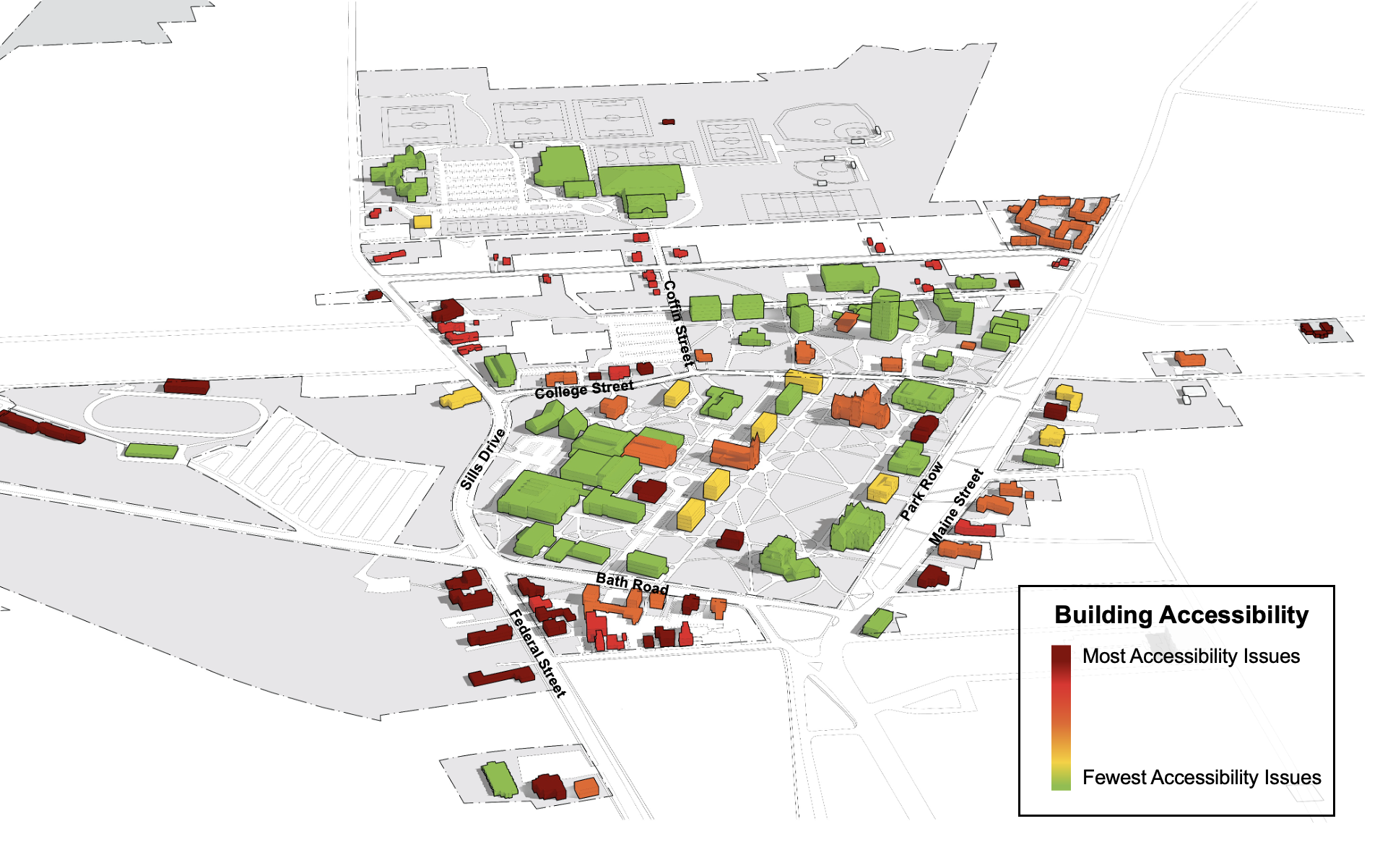
Bowdoin's relatively level topography provides advantages, but many historic facilities sit elevated above grade or lack elevators, creating persistent challenges. While recent renovations have improved accessibility, meaningful gaps remain.
Plan Recommendations
- College Houses: One of Bowdoin's most distinctive traditions, the houses are overdue for maintenance and upgrades. We will renovate one house each year, starting with Reed House in the fall of 2026, and each renovation will move us closer to our accessibility and sustainability goals.
- Gibson Hall: The home to Bowdoin’s music department, the plan recommends installation of an elevator and improvements to address accessibility at the building entries.
- Visual Arts Center: With only portions of the building accessible, the plan recommends providing an elevator capable of making the upper floors and lower lecture hall accessible.
- Hubbard Hall: The proposed renovation and expansion gives us the opportunity to address the unique accessibility challenges of one of our most memorable buildings.
Campus Edges and Gateways
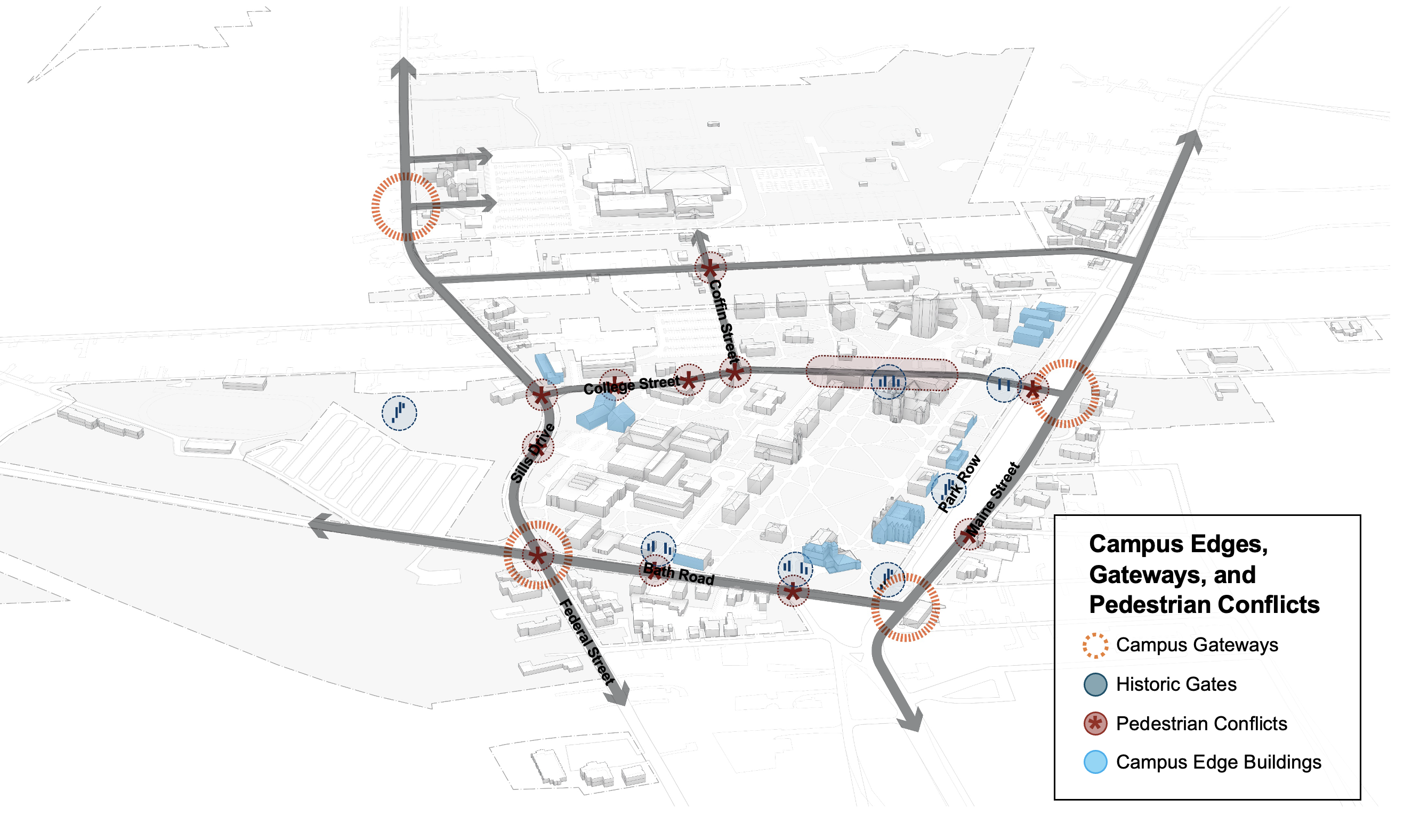
Sills Drive, Maine Street, and Bath Road each mark a distinct edge between Bowdoin and its surroundings, presenting opportunities to strengthen the College's identity, improve wayfinding, and make arrival feel intentional.
A coordinated strategy for signage, lighting, and streetscape across all three corridors will require early engagement with town and state partners.
Plan Recommendations
-
Sills Drive: Recent investments along Sills Drive have strengthened Bowdoin’s presence along this important edge. Signage and lighting near the athletics facilities would strengthen the corridor and signal the entrance to visitors—lessening the likelihood of cars turning around in residential driveways.
-
Bath Road: The wood-frame houses read as residential rather than as part of a campus—with students, faculty, and staff frequently crossing the busy thoroughfare. Streetscape improvements are needed to signal the campus connection and increase pedestrian visibility.
Infrastructure and Sustainability
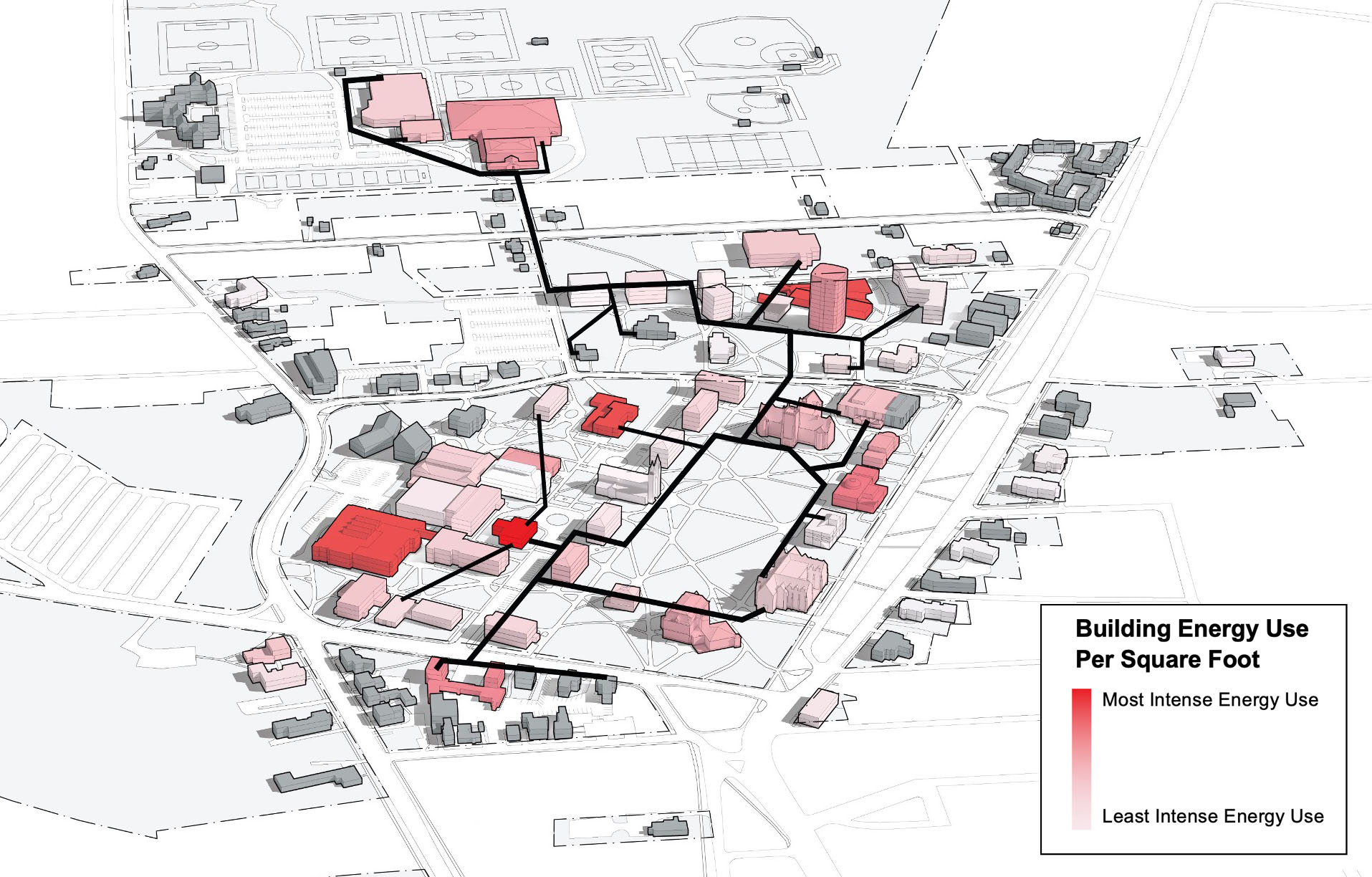
In 2022, Bowdoin launched Sustainable Bowdoin 2042, a commitment to achieve a fossil-fuel-free campus by 2042, only achievable through systemic transformations of campus infrastructure.
To date, Scope 1 emissions remain the primary challenge due to a central plan powered by natural gas as well as legacy facilities on campus with dated building envelopes and mechanical systems.
Plan Recommendations
-
College Houses and Russwurm House: Phased renovations would improve performance across a significant portion of Bowdoin’s historic wood-frame buildings, with opportunities to transition to geothermal systems.
-
Hatch Redevelopment: New, high-performance lab space would provide modern, energy-efficient building systems and potential shell space for a replacement of the existing central plant.
- Hubbard Hall: Transformation would address building envelope and mechanical challenges at one of the College’s most prominent historic buildings.
Pedestrian Circulation and Connectivity
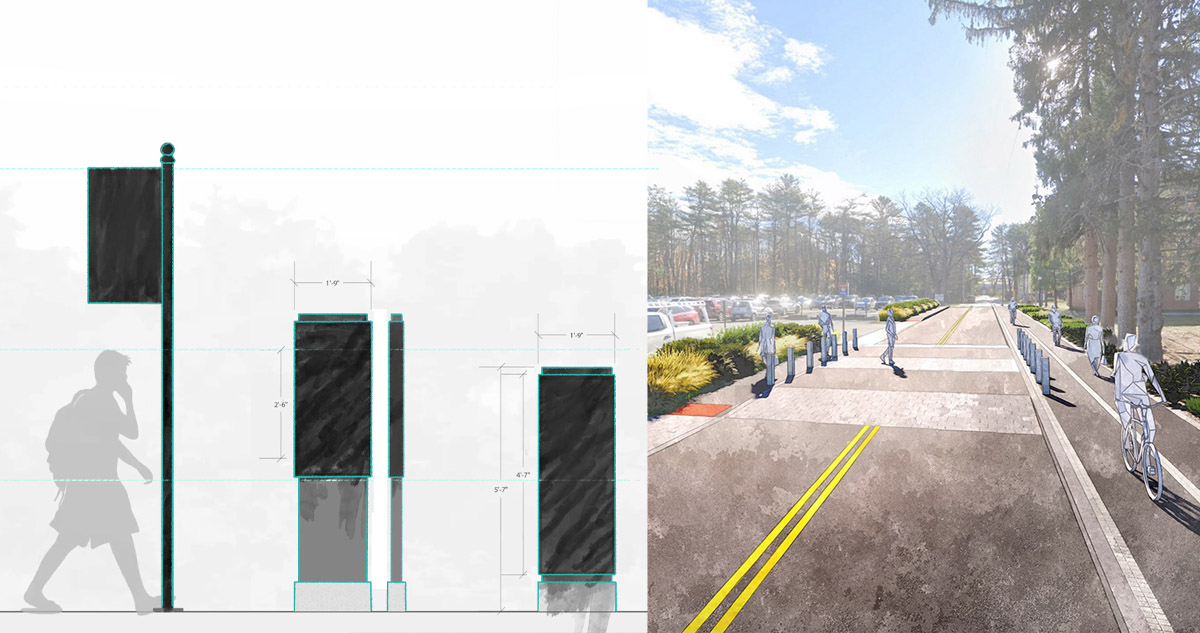
The campus pedestrian network reflects two centuries of evolution. In the historic core, a logical grid reinforces the formal open space network; to the south, paths adopt an organic character weaving between buildings and through pine groves. The network's logic becomes apparent with familiarity but can be challenging for newcomers.
Plan Recommendations
- Pedestrian Crossing Enhancements: Signage and markings along Sills Drive, Bath Road, Park Row, and Maine Street to improve safety at crossings.
- Coffin Street Walk: Continuous pedestrian connection from campus core to athletics precinct.
- Campus Priority Paths: Granite paving hierarchy along major pathways establishes legibility without overwhelming the material palette.