The planning team identified four key programmatic drivers that can shape our campus footprint in the next decade.
Each of these major investments will require hard work, a lot of detailed planning, and visionary philanthropic support.
The generosity of Bowdoin alumni, families, and friends has always powered our most ambitious ideas—including need-blind, loan-free financial aid, funding for student and faculty research, and our enduring commitment to the common good. We expect that each of these projects will connect with donors in a different way, and provide them with new opportunities to strengthen the parts of Bowdoin they most cherish.
In short: don't start packing up your office just yet.
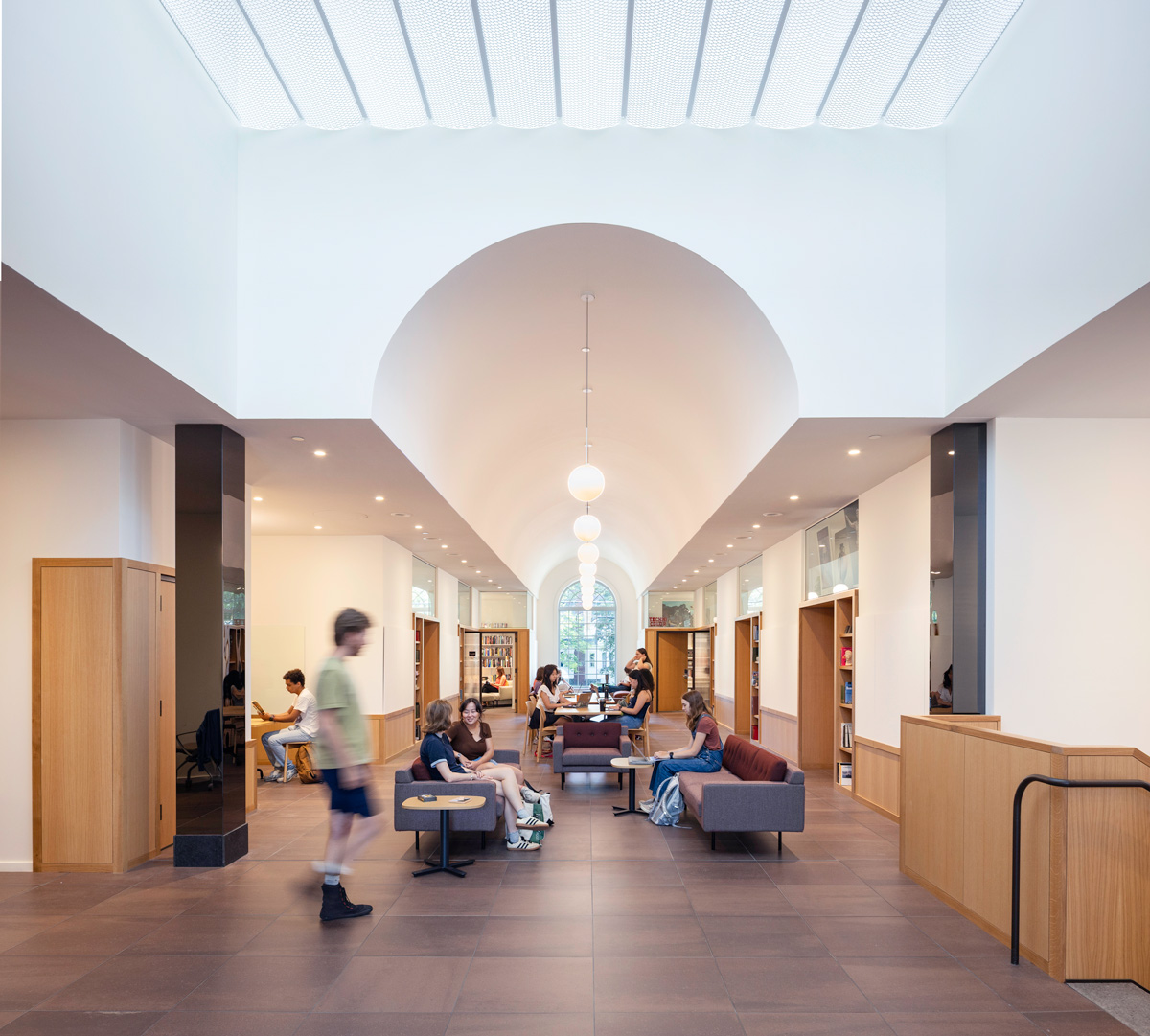

Science Facilities that Advance Innovation
Bowdoin’s research space is operating at full capacity; the plan invests in modernized research and teaching space that matches the College’s curricular ambitions.
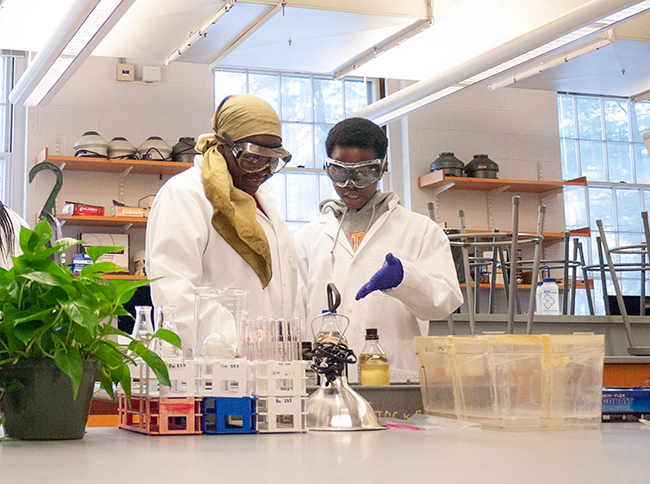
Student demand for the sciences at Bowdoin has never been higher. To meet this moment, we must continue to invest in cutting-edge labs and expanded facilities that attract exceptional faculty and deliver transformative research opportunities for our students.
Elevated science facilities ignite the curiosity, confidence, and creativity that empower Bowdoin students to make a difference in the world.
Classrooms designed for discussion-based learning increasingly must meet contemporary standards for flexibility and technology.
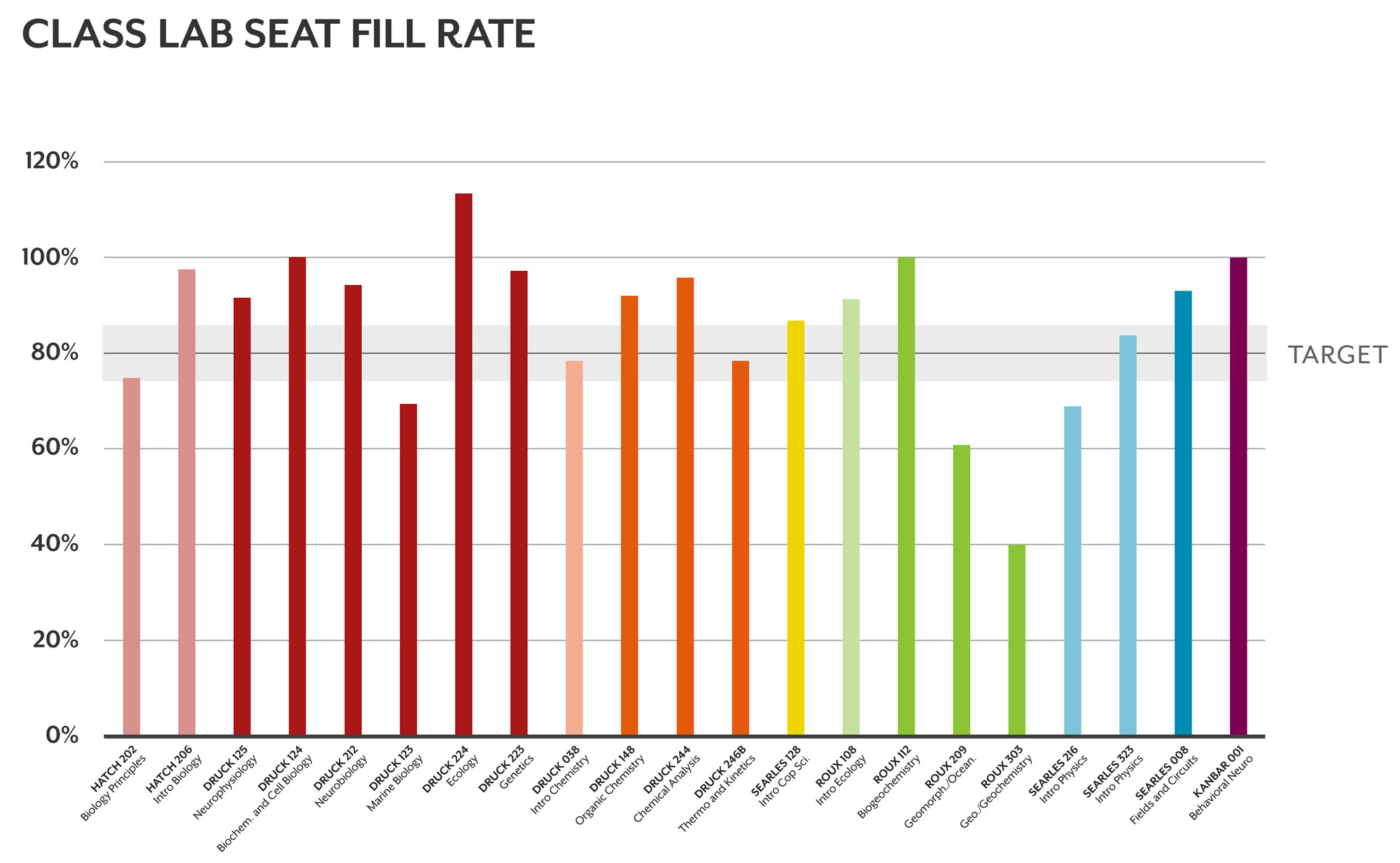
Laboratories now face enrollment pressures, technological expansion and refitting, and increasingly ambitious hands-on pedagogical methods.
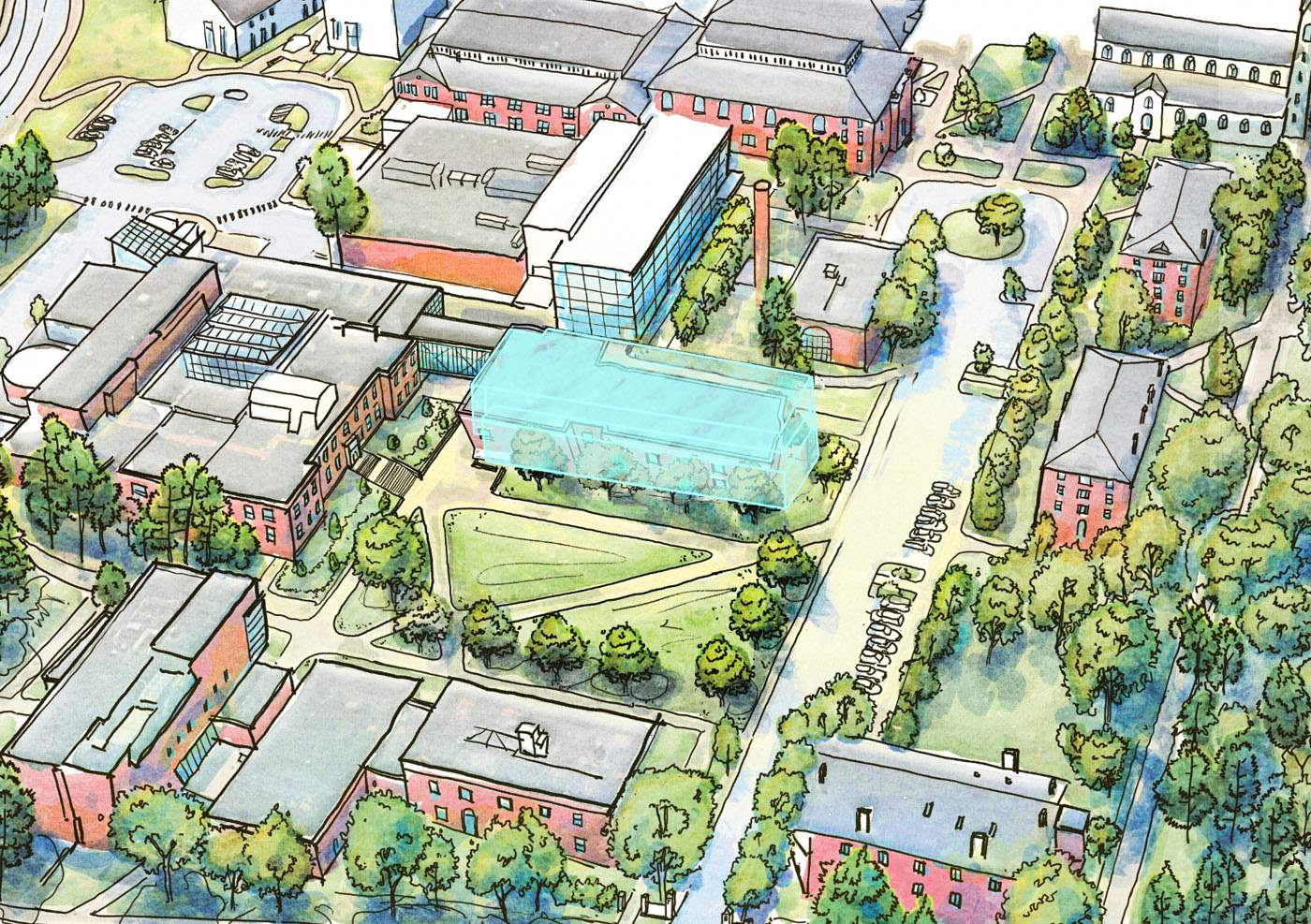
The site of the Hatch Science Library emerged as the most promising path, enabling the construction of high-performance lab space within the existing campus core—without fragmenting the sciences or adding pressure on parking and loading along Sills Drive.

Druckenmiller Hall’s air-handling systems have reached their limits, compounding constraints on research and instruction alike. Less visible but equally consequential, the absence of shared prep space limits scheduling flexibility across the inventory.
The path forward requires infrastructure investment and a careful rethinking of how lab spaces are designed, balancing flexibility with the dedicated resources faculty depend on.
New lab space on the Hatch site would enable an update to Druckenmiller’s mechanical systems and the shifting of programmatic uses to better align with existing systems.

Space for Growing Faculty
The hallmarks of Bowdoin’s faculty—their curiosity, their scholarship, their presence in students' lives—are the defining feature of a Bowdoin education.
A new academic building would be an investment in our faculty: space for ideas to flourish in flexible, light-filled environments designed for the kind of close, collaborative intellectual work that distinguishes Bowdoin. As research and teaching methodologies evolve, we will need facilities that can shift and flex to support new scholarship in all its forms.
Faculty Office Space
Thanks to meaningful gifts to support our academic program, the College will add many new faculty positions over the next several years, creating the need for additional office, teaching, and collaboration space. This pressure on faculty office space presents an opportunity to reinforce a more cohesive campus core.
Classrooms
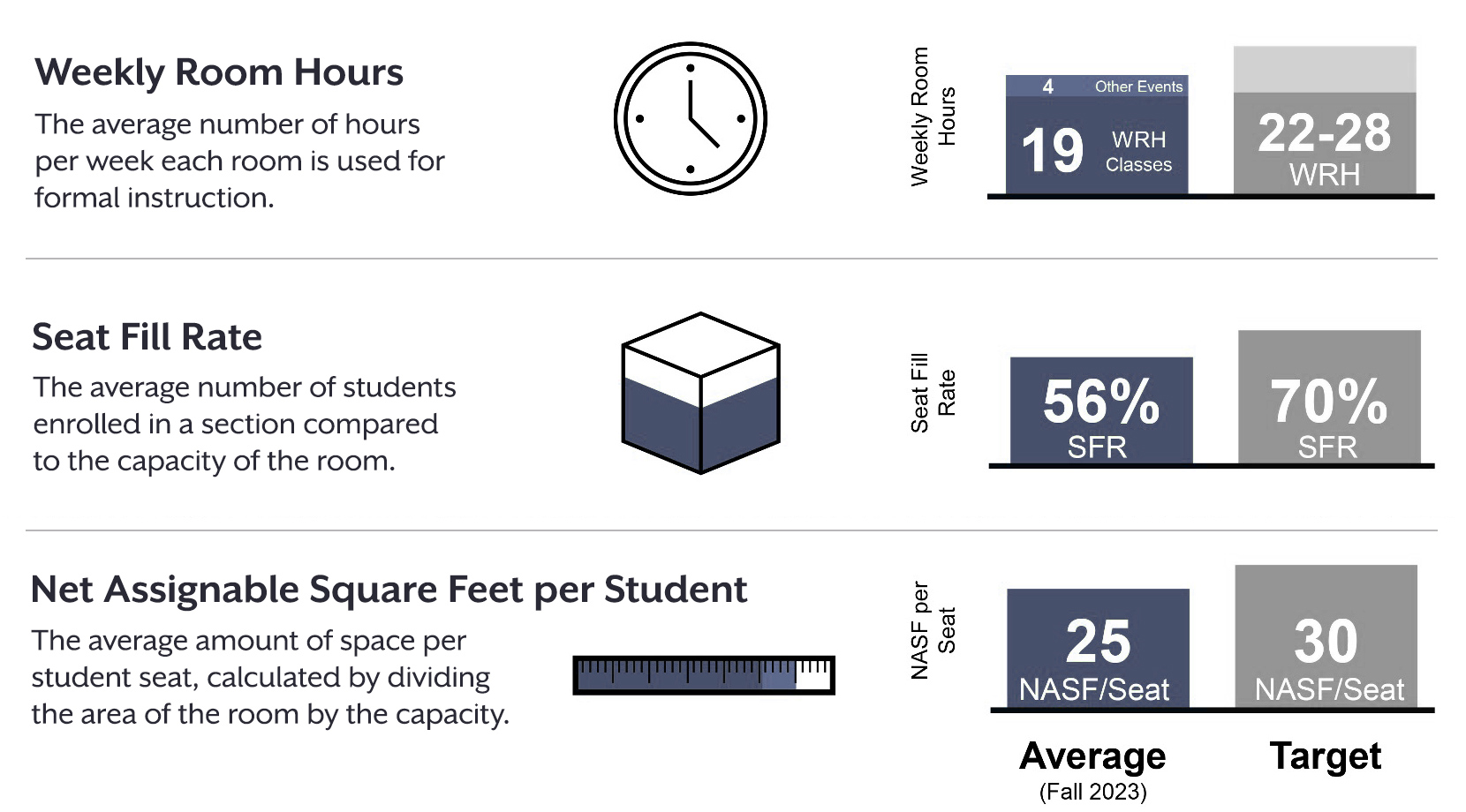
Bowdoin's classroom inventory skews small by design, reflecting a pedagogy built on discussion, collaboration, and close faculty mentorship.
Classroom inventory varies widely and is reflected in utilization patterns: facilities with technology-forward spaces, such as Mills, Roux, and Sills, operate near full capacity during peak hours, while older rooms, such as those in Searles, see significantly lower utilization.
The plan recommends tactical improvements, such as updating furnishings and reducing seat density, as well as targeted renovations to underperforming facilities and the introduction of new instructional space.
A new academic building on College Street will accommodate new faculty lines and provide technology-forward teaching spaces.
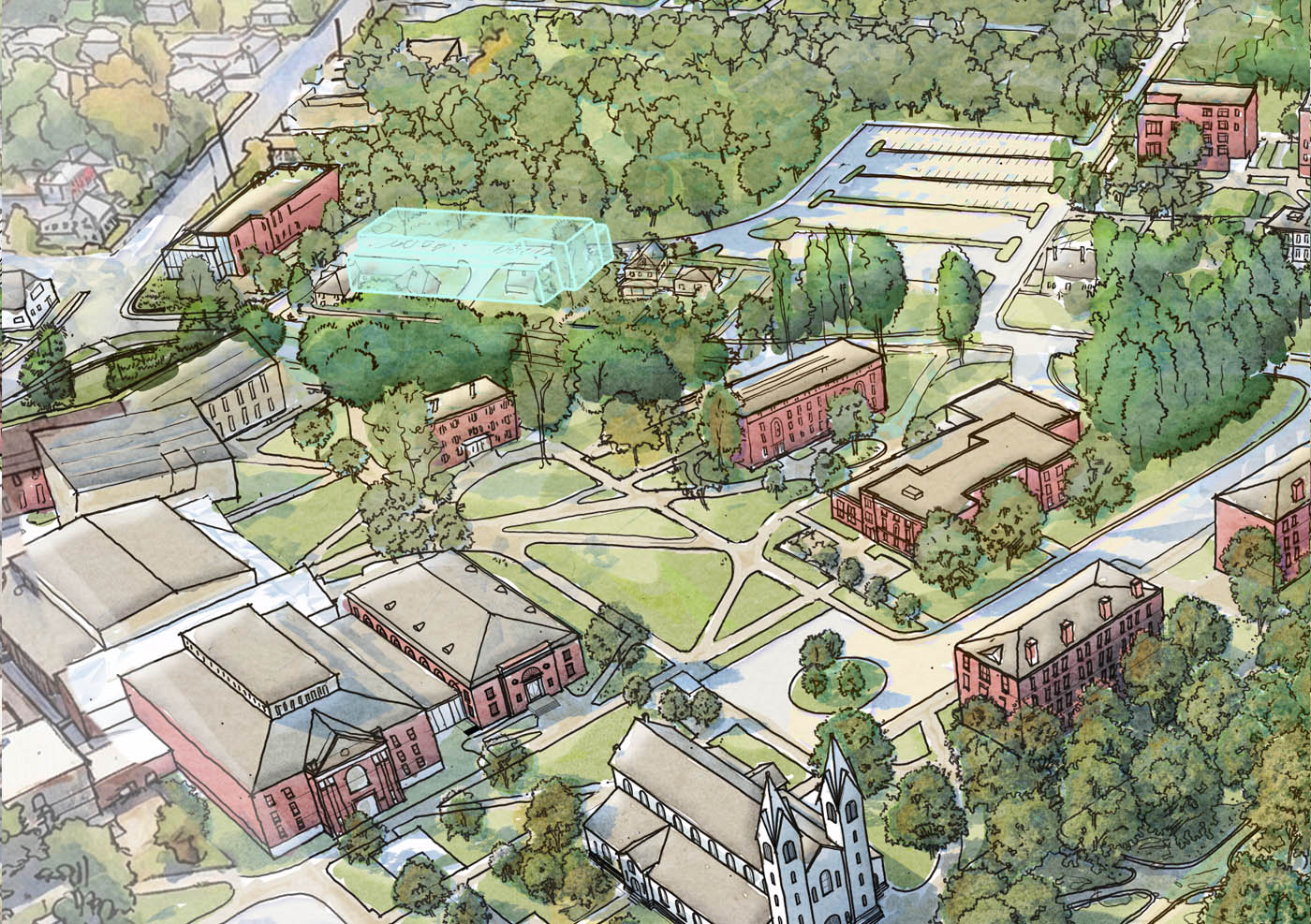
- The new academic building would advance the academic activity on College Street in conjunction with Mills and Roux, integrating that area further into the core of the campus.
- Using lessons from the Sills Hall renovation, the new building would modernize offices and shared collaboration space for faculty and students.
- The College's main data center and core network infrastructure is currently located in Hubbard Hall's basement. The opportunity to relocate and expand this infrastructure in a new building would increase reliability and reduce risk.

A Library for the Future
A new library can provide modern, expanded space for collections, collaboration, and study.
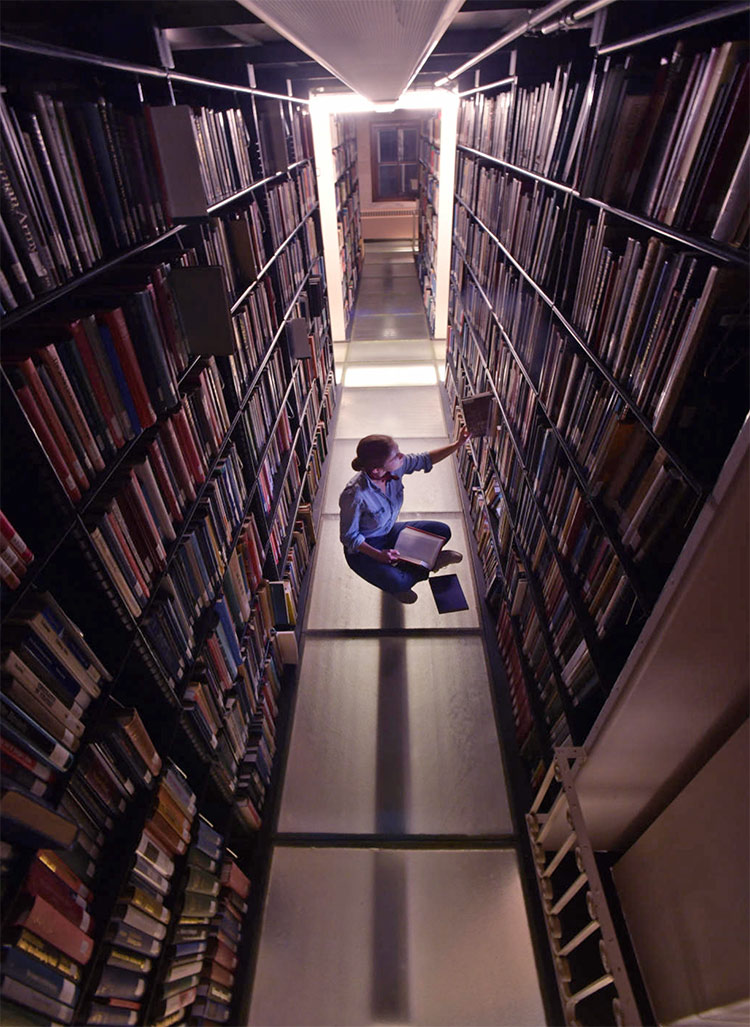
Flexible, technology-enabled spaces need to support the full spectrum of intellectual life at Bowdoin—individual reflection, collaborative discovery, and community connection.
State-of-the-art climate control systems will ensure our exceptional collections are accessible to today’s scholars and preserved for future generations.
Renovating and expanding Hubbard Hall emerged as the approach best positioned to meet the library's comprehensive needs: large enough to serve a 21st-century research community, and anchored to the Quad in our most iconic building.
Students, faculty, and staff each rely on the library in a range of ways—it is an intellectual hub, a research resource, and a steward of archival and historic materials.
This expanded space will allow for collections held elsewhere on campus (including Hatch Science Library, Gibson Hall, and the Visual Arts Center) to be housed together under one roof, freeing up square footage in those locations.
An expansive addition to Hubbard Hall would allow for the programmatic flexibility to provide modern study areas, instructional spaces, special collections, staff offices, and proper loading facilities.
Additionally, the proposed renovation and addition would provide updated mechanical systems for collections preservation, ADA-compliant elevators, and a building envelope renewal.
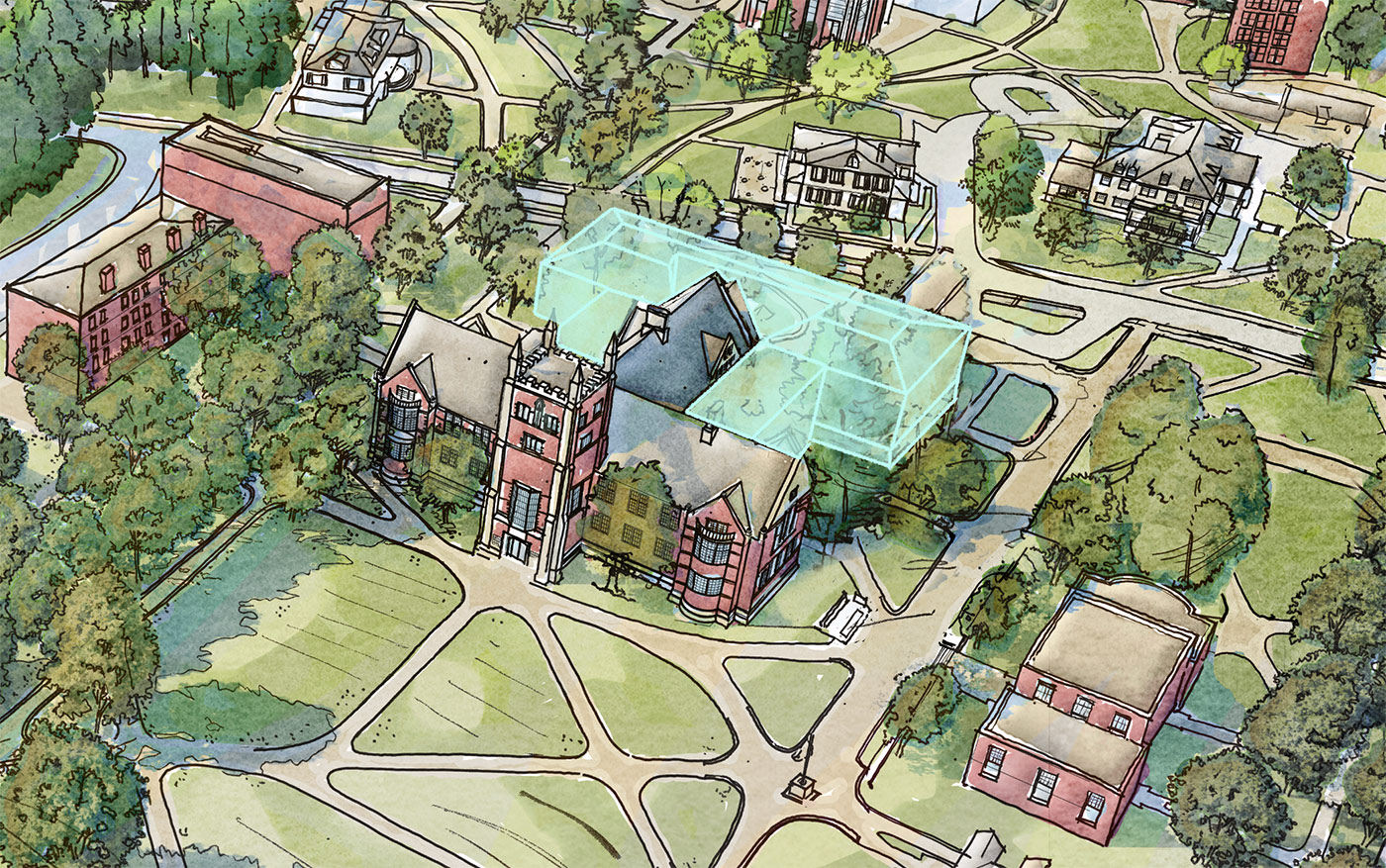
The new addition to Hubbard Hall would bring Bowdoin's library services under one roof. Consolidating these satellite libraries will allow the reconfiguration of vacated spaces in VAC and Gibson Hall.
The demolition of H–L provides a future building site, as well as possibilities for integrated landscaping and public art.

Dining and Community Space
Demand for dining has grown alongside its reputation; the plan reimagines one of the core dining and event spaces to support the College’s sense of community.
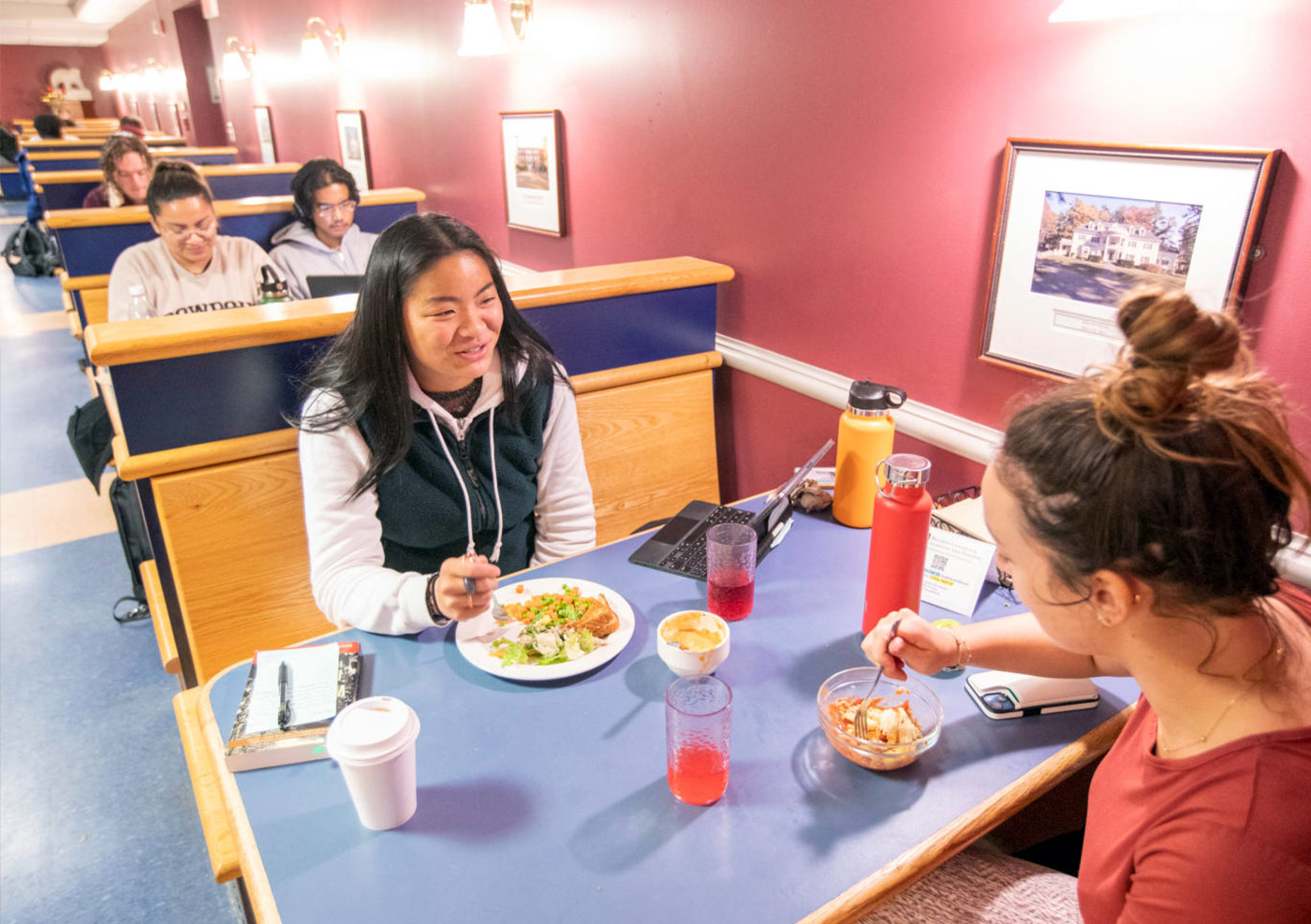
A new dining hall will anchor student life at the heart of campus, and help to define the Coe Quad as a vibrant community space. This addition will allow Dining Services to continue providing a world-class program that outscores our peers in every category, including food quality, cleanliness, variety, and service.
Moulton Union became a dining facility at a time when many more students lived off-campus—and thus didn't purchase meal plans or eat in the dining halls.
Thorne Dining Hall faces related but less urgent pressures. Additionally, the practice of taking either facility offline for catered events creates tension between the need for daily dining and the desire to support campus events.
This tension reflects a shortage of event and event support space on campus. Bowdoin also needs a flexible event venue with a larger capacity and in closer proximity to catering support and services.
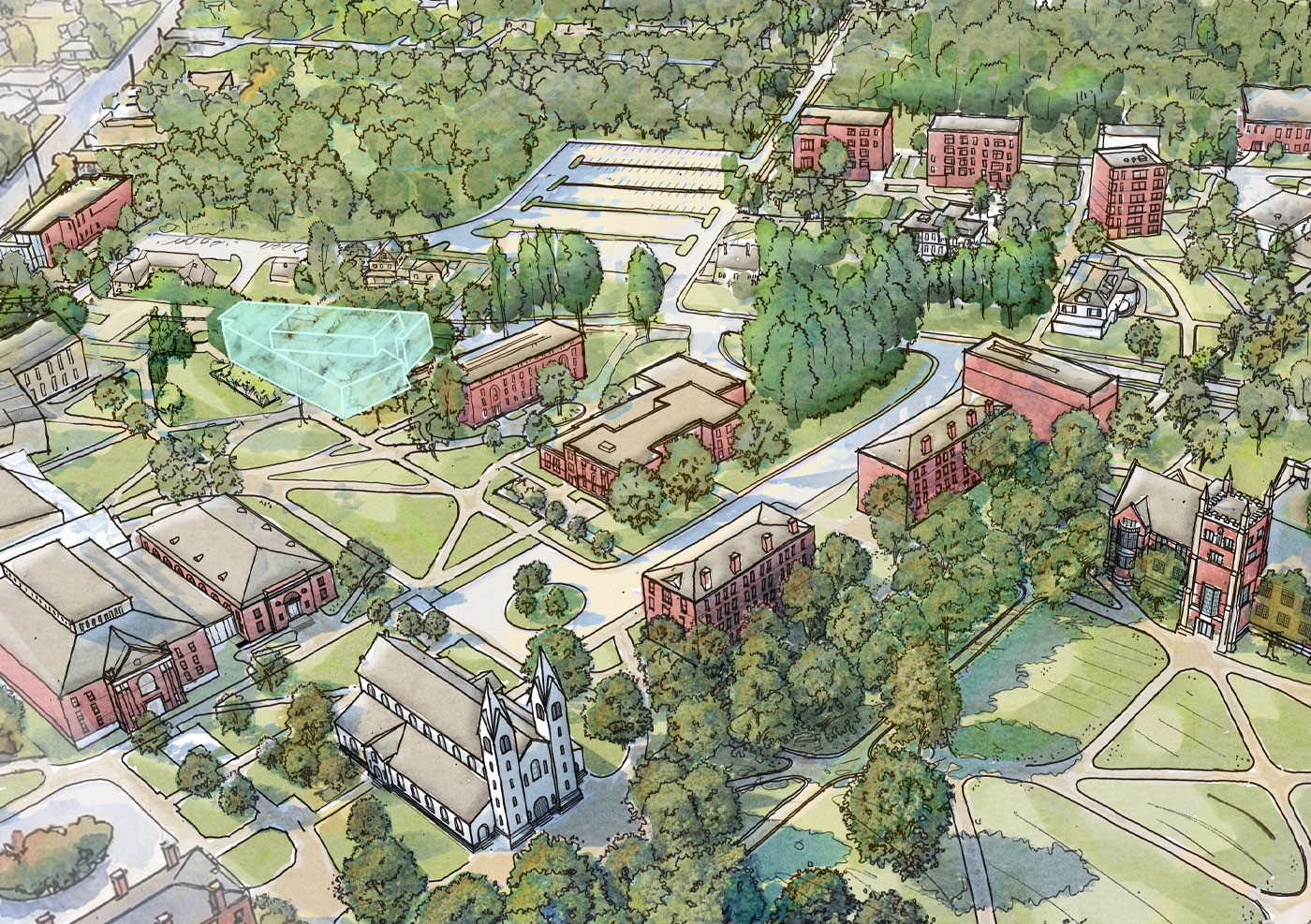
A new dining facility anchoring the southeastern corner of Coe Quad, sharing the site of the Dudley Coe building, would right-size our dining capacity while transforming the Quad into a community hub for every season.
Within the new facility, new event spaces with full AV and catering support would relieve system-wide pressure for special events.
During and after construction:
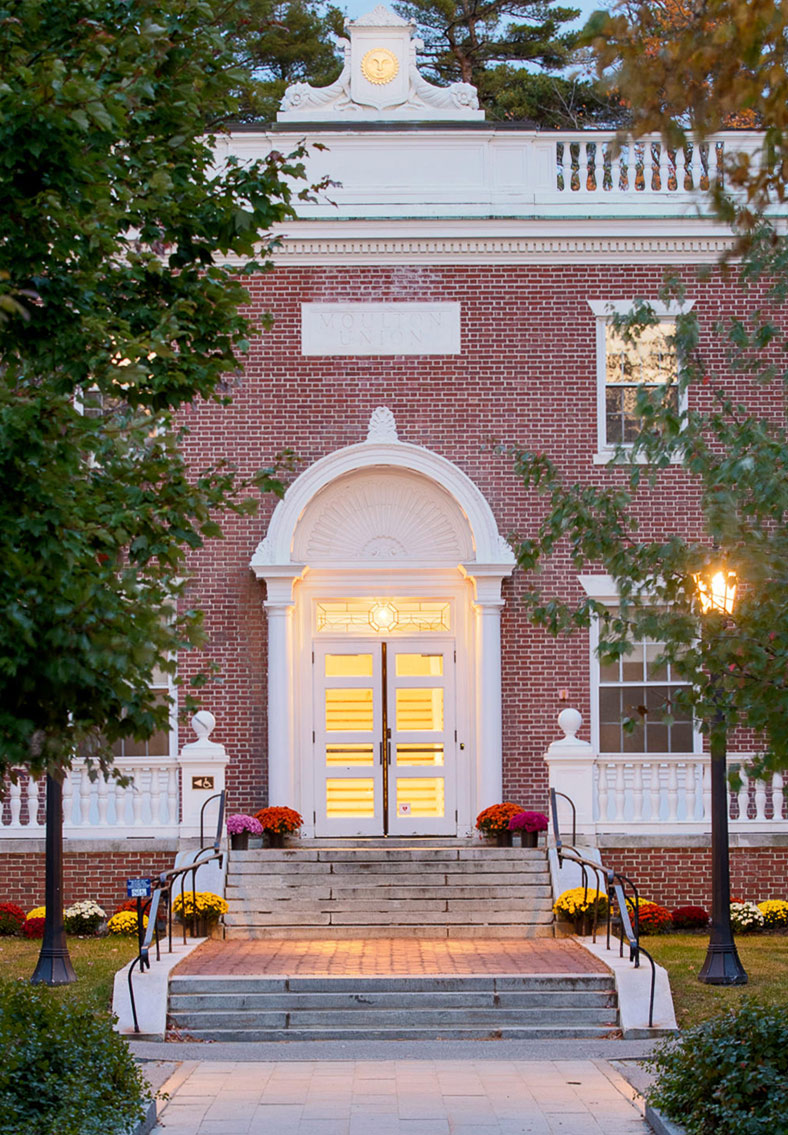
This plan allows the Moulton Dining facility to stay in operation during construction, which is critical to serving the entire campus community.
Following the opening of the new facility, Moulton Union would undergo renovations that allow more flex space, as well as enabling student-facing services and supports to relocate to that central location.
This provides an opportunity to rebalance student services between Smith Union and Moulton Union, and refresh Smith Union interiors.
Demolition of Dudley Coe would extend the Coe Quad, integrate Gibbons and Mills Hall, and provide additional open space for gatherings and more structured events.
Next section: Focused Investments »