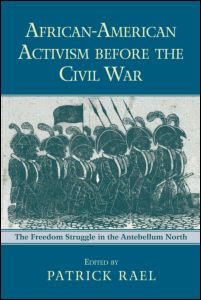
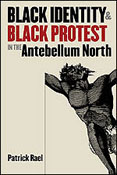
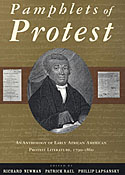
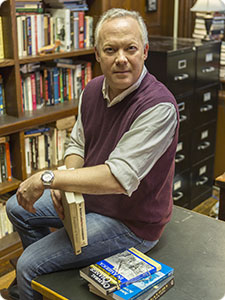
Patrick Rael (pro. "rail") is a specialist in African-American history (1995 Ph.D. in American History, University of California, Berkeley). He is the author of numerous essays and books, including Black Identity and Black Protest in the Antebellum North (North Carolina, 2002), which earned Honorable Mention for the Frederick Douglass Prize from the Gilder Lerhman Center for the Study of Slavery, Resistance, and Abolition. He is also the editor of African-American Activism before the Civil War: The Freedom Struggle in the Antebellum North (Routledge, 2008), and co-editor of Pamphlets of Protest: An Anthology of Early African-American Protest Literature(Routledge, 2001).
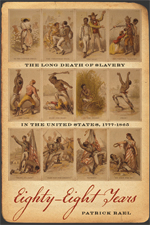
His most recent book, Eighty-Eight Years: The Long Death of Slavery in the United States, 1777-1865 (University of Georgia Press, 2015), explores the Atlantic history of slavery to understand the exceptionally long period of time it took to end chattel bondage in America. The book was a finalist for the Harriet Tubman Prize, awarded by the New York Library’s Lapidus Center for the Historical Analysis of Transatlantic Slavery, at the Schomburg Center for Research in Black Culture.
Rael has received fellowships from the Library of Congress; Smithsonian Institution; American Historical Association; Gilder Lerhman Center for the Study of Slavery, Resistance, and Abolition (Yale U.); the Center for the Study of Religion (Princeton U.); American Antiquarian Society; and Library Company of Philadelphia. He is a co-editor for the series Race in the Atlantic World, 1700-1900 by the University of Georgia Press, and a Distinguished Lecturer for the Organization of American Historians.
Rael's established record in history education is well documented. He has explored the uses of technology in teaching history through his online simulation of the fugitive slave experience, and has long collaborated with Bowdoin’s Information Technology Division to create historical maps using GIS. His online writing guides have assisted student writers for fifteen years. He has written extensively about teaching, has contributed to the development of African-American history curricula, and has for over a decade led seminars and workshops on teaching American history in primary and secondary schools (notably, several of the Maine Humanities Council’s Teaching American History institutes).
Rael’s most recent work has concerned the representation of history in modern board games. He starts from the premise that games constitute important instances of cultural ephemera that perform work of representation in ways bounded by the medium’s form. In examining the place in games occupied by histories of slavery, genocide, and exploitation, Rael seeks to understand how games shape our understanding of the past. At the same time, he has been exploring the uses of historically-themed board games in History courses. Can games make arguments? Can games teach history? Addressing these questions makes for exciting and important work in the classroom.