 Museum of Art
Fundraising Under Siege
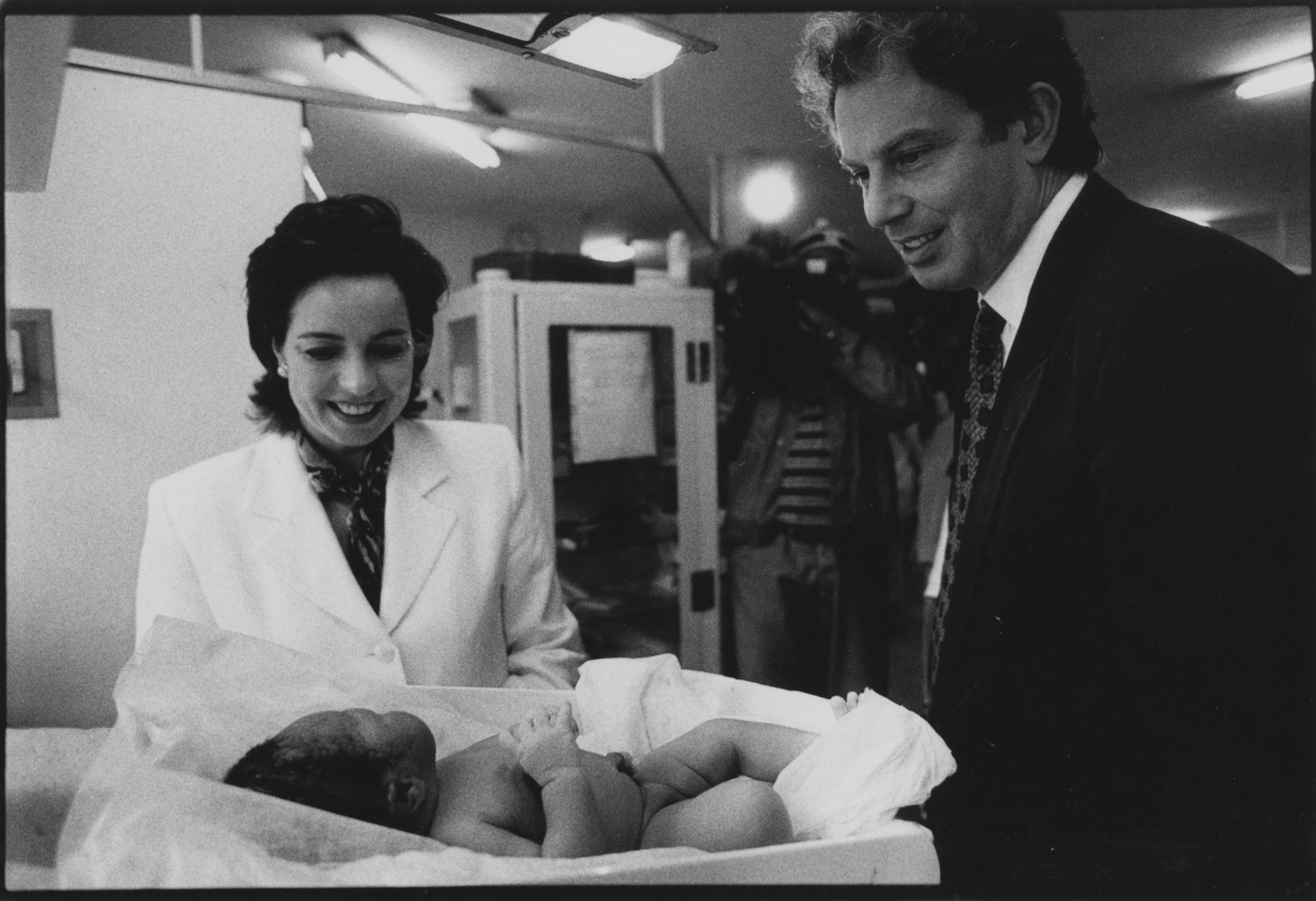
Michael Goldblatt, Tony Blair visits Alex Clinic, 1980s, silver gelatin
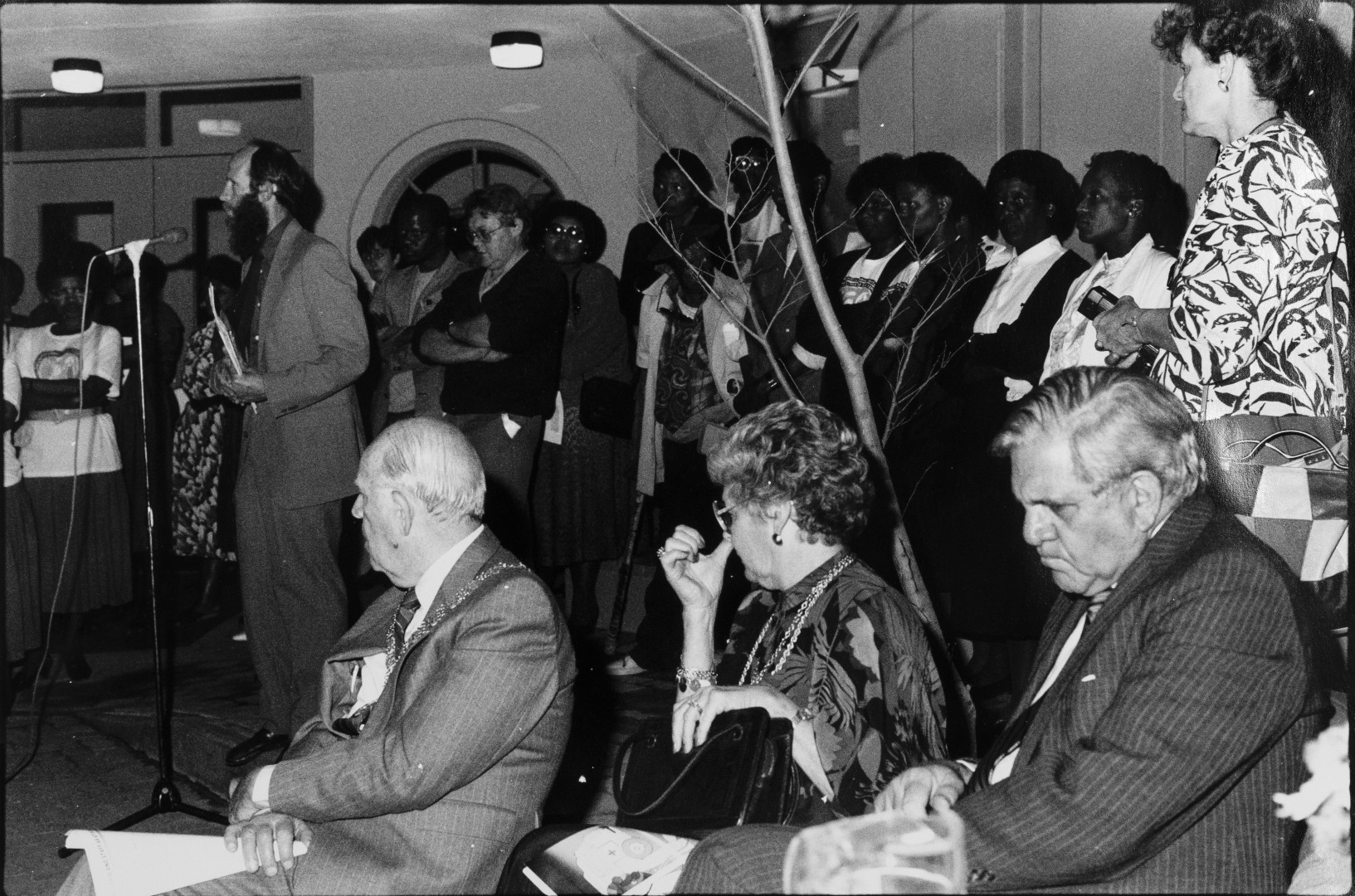
Michael Goldblatt, Charity Outreach for Clinic, Michael Goldblatt, 1980's, silver gelatin
The director of the Alexandra Health Centre and University Clinic (AHC), Tim Wilson, and staff members are depicted fundraising in Sandton, the wealthy and predominantly white suburb adjacent to Alexandra Township. These outreach efforts kept the AHC open through the increasingly violent 1980s and 1990s despite the lack of resources provided by the national government. As expenditures surged during the political violence of the early 1990s, donations became increasingly critical to funding the clinic, providing an ever-increasing portion of annual income. Following the democratic election in 1994, the clinic’s finances came under the control of the post-apartheid government. Independent charity donations dwindled. Nonetheless, the AHC remained a model for possible urban healthcare for a post-apartheid South Africa through the late 1990s, as evidenced by British politician Tony Blair’s visit in 1996.
Collier Zug '28
Scroll down to read additional materials collected by Collier Zug '28 as part of class work for After Apartheid: History and Identity in Contemporary South Africa, Spring 2026.
Additional Materials
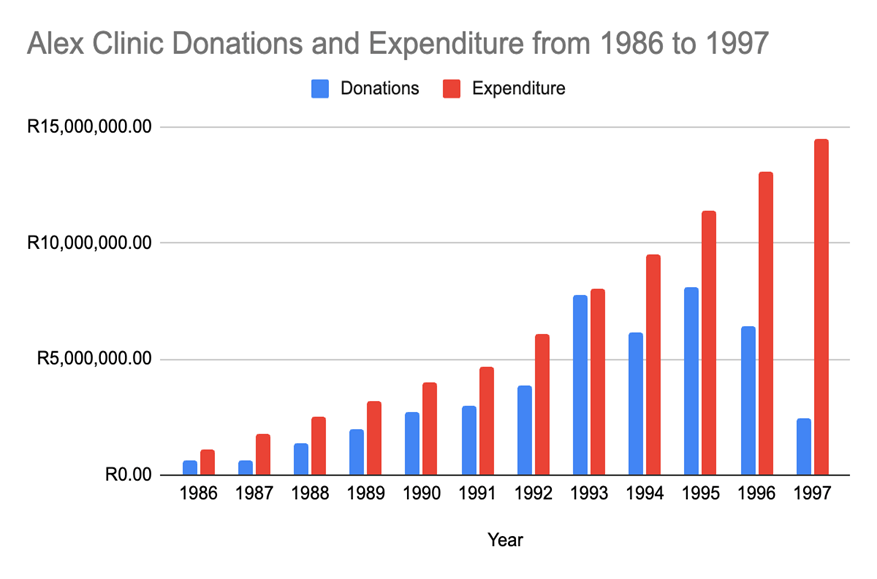
In nearly every year during which annual reports were circulated, donations surpassed and doubled the clinic’s other income. Such aid was essential as the clinic frequently operated at a financial loss, often unable to pay its doctors and staff. This bar graph displays the Alexandra Health Center’s annual donations and expenditures from 1986 to 1997 in South African Rands. Donations were key to the survival of the Alexandra Health Center, yet fell precipitously after 1994. The new provincial health system removed local and international funding sources as inflation and the HIV/AIDS epidemic drove up expenditure. According to the South African inflation calculator, the value of one Rand fell roughly 259% from 1986 to 1997, which helps to explain the explosive rise in expenditure for the clinic.
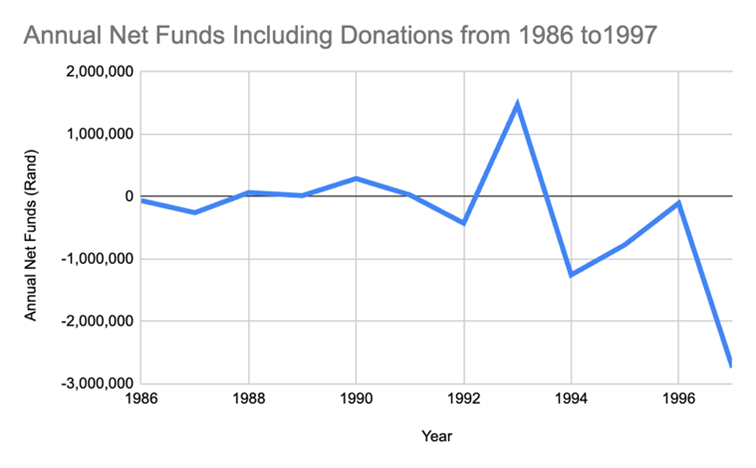
This line chart shows the Alexandra Health Centers' annual net funds at the end of each fiscal year. Over the twelve years studied, the clinic ended seven years at a loss and saw debt increase substantially following 1994. As donations accounted for most of the clinic's income, their disappearance, combined with surging expenditures related to the HIV/AIDS crisis, gutted the clinic's funds.
Tim Wilson and Michael Goldblatt. Alexandra Health Center Annual Reports 1986-1997. Graphed by Collier Zug