 Museum of Art
Sanitation Infrastructure and Community Health in Apartheid-Era Alexandra
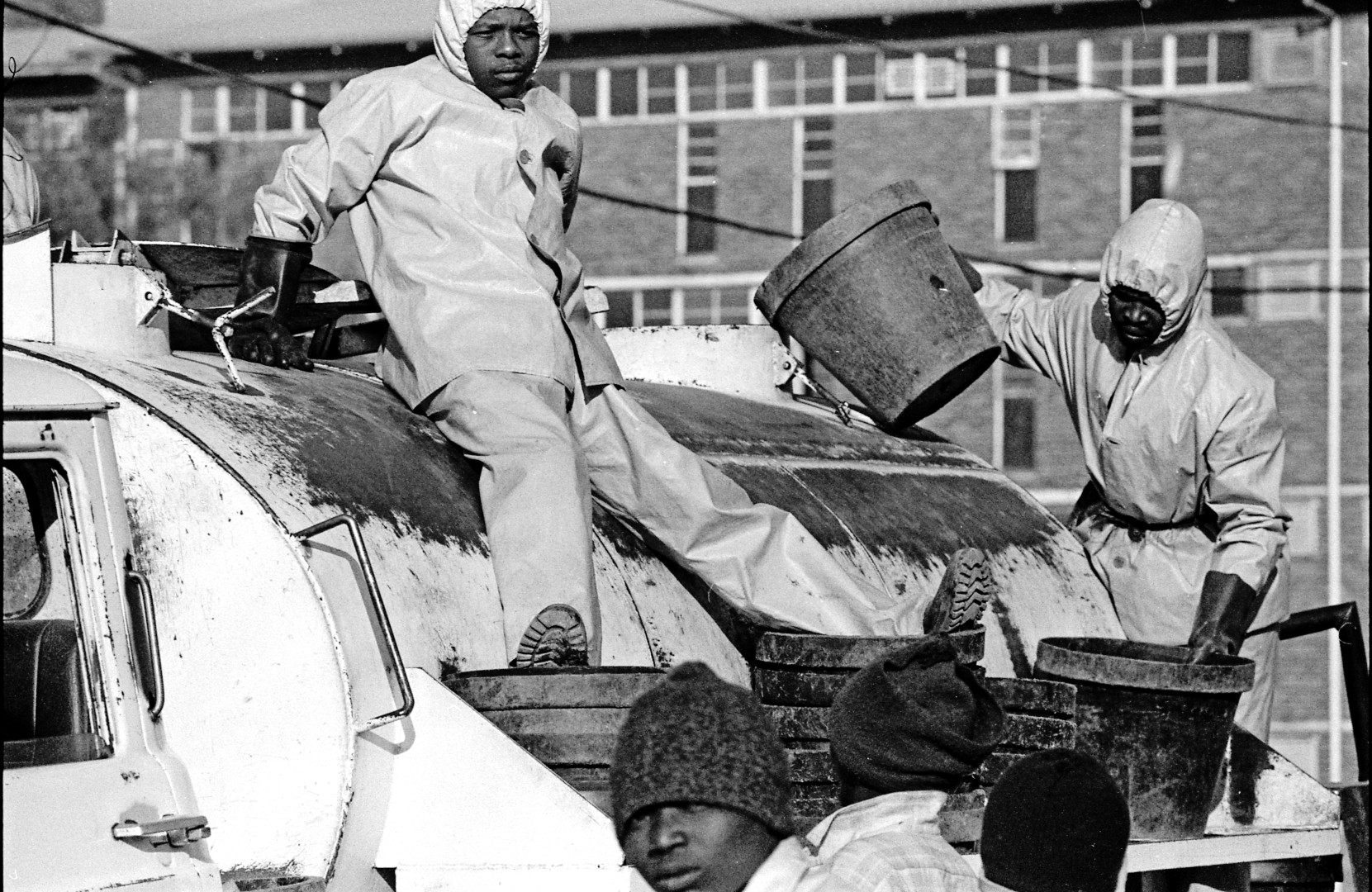
Michael Goldblatt, Alex Sanitation Workers, 1980s silver gelatin print
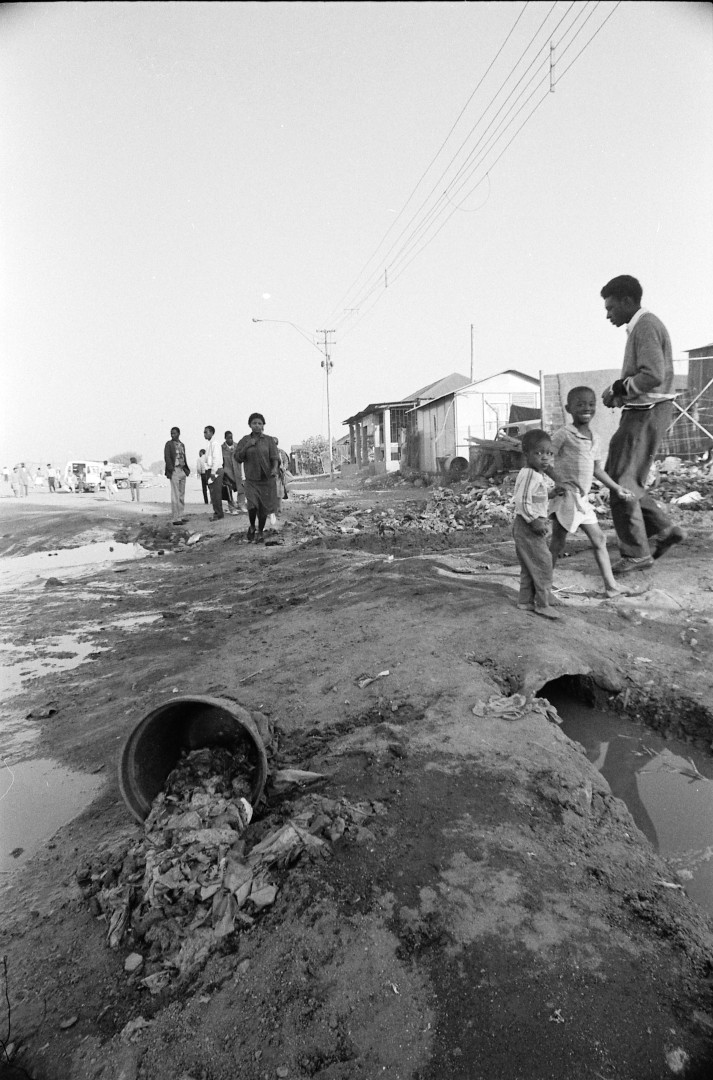
Michael Goldblatt. Refuse on the Street, 1980s silver gelatin print
These photographs show the bucket system, a sanitation system used widely in apartheid-era South African townships, including Alexandra, in which human waste was collected in buckets rather than removed through a sewage system. These buckets were shared among large numbers of residents and emptied only a few times per week, meaning that waste remained present within living spaces and surrounding environments for extended periods. As a result, sanitation depended not on infrastructure, but on the physical labor of workers. These conditions shaped everyday life, as workers and residents were exposed to contaminants that contributed to the spread of waterborne diseases such as cholera, polio, and gastroenteritis. Sanitation was not simply a technical issue, but a lived reality that structured health, labor, and social tensions within the community. Rather than ending with apartheid, these conditions have continued to shape daily life in Alex today.
Lilliana Spartz '28
Scroll down to read additional materials collected by Lilliana Spartz '28 as part of class work for After Apartheid: History and Identity in Contemporary South Africa, Spring 2026.
Additional Materials
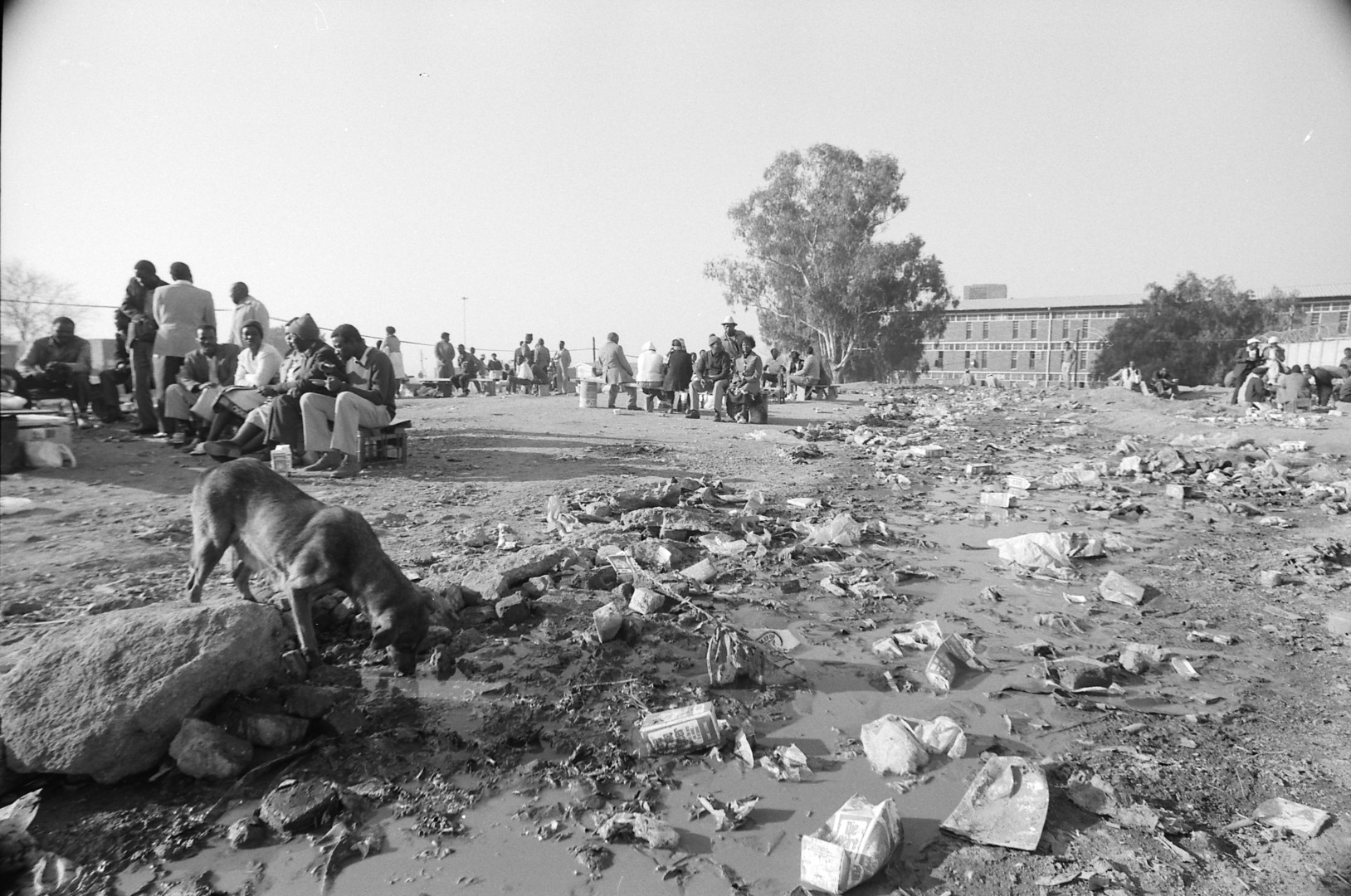
Men gathered outside a hostel while a stream of waste and trash runs through the foreground, with a dog sniffing it, highlighting how sanitation failures structured everyday environmental exposure for residents in Alexandra.
Firsthand testimony from Dr. Tshepo Moloi of the University of Johannesburg, who lived under the bucket system in Alexandra during the 1980s-mid 1990s, describing its daily realities and the tensions it created within the community.
I used the bucket system throughout the 1980s until mid-1990 when my parents bought a bond-house located in Alex Mews. At 3rd Avenue, number 32, we had five toilets serving more than households. Each household would have close to 8 people. On weekends, it was chaotic. Relatives would visit families and other people would descend in the yard to purchase liquor. All these people, including the residents, were forced to use the five toilets.
Sometimes the workers employed by Peri-Urban to remove night soil would not come to take out the full buckets and replace them with empty buckets to be used for a week. A foul smell would engulf the yard for the whole week. In 1982, our family, consisting of two parents and two boys, moved to a two-roomed house at 2nd Avenue, number 114. Six families lived in that yard. In some instances, there were 6 people living in a one room house. In our yard, there were three bucket toilets. My family lived in that yard until June 1990. In the eight I spent in that yard, the lasting memory I have related to the bucket system is the constant fights the residents, especially women, had over the cleaning of the toilets. Some of the residents refused to clean the toilets. In the mid-1980s, I still remember, my mother and two other ladies in the yard bought a key and locked the toilet which they cleaned. This caused tension in the yard.”
A 2022 article written by a student at the University of the Witwatersrand, Johannesburg, documenting how inadequate sanitation infrastructure continues to shape daily life in Alexandra and highlighting the ongoing local impact of Apartheid-era systems
