 Museum of Art
Polio Vaccination Campaign During the State of Emergency
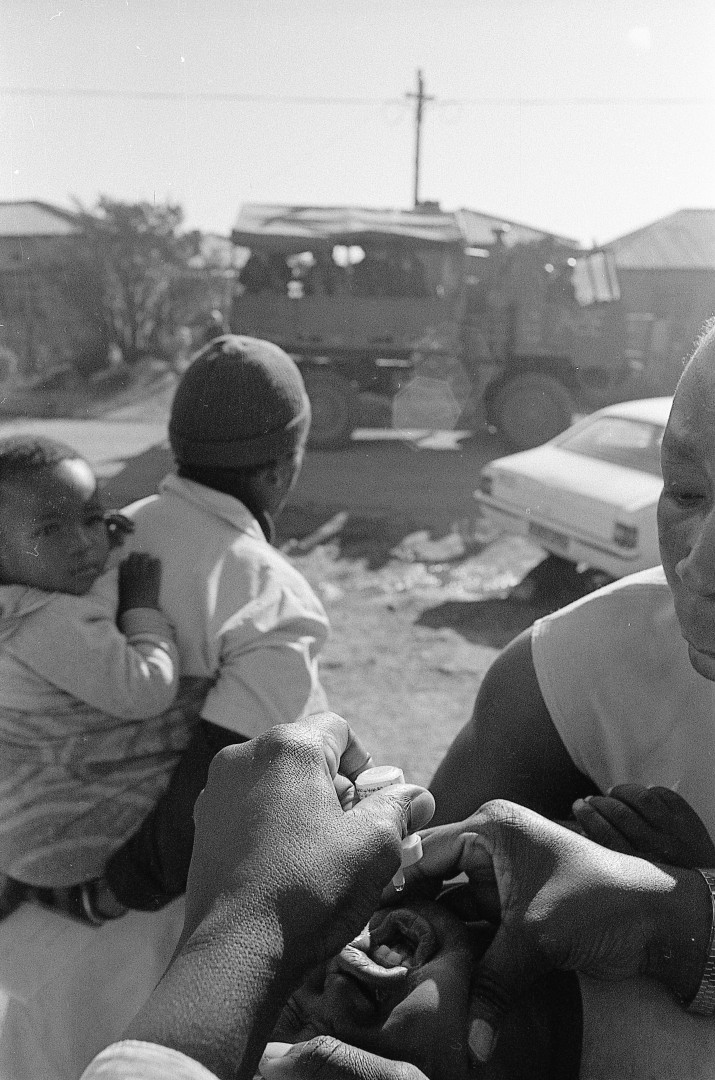
Michael Goldblatt, Polic Vaccine in State of Emergency, 1986, silver gelatin print
Violent urban rebellions and apartheid repression through the 1980s impacted public health initiatives. In June 1986, the apartheid government declared a State of Emergency, which restricted movement, banned community meetings, placed residents under surveillance, and shut down public health outreach channels. That same month, Alexandra faced a polio outbreak. Crumbling infrastructure, overcrowding, and poor sanitation not only made disease likely but also contributed to the possibility of an epidemic. Recognizing the need for urgent action, the Alexandra Health Centre and University Clinic (AHC) formed teams of clinic staff and National Union of South African Students (NUSAS) volunteers. The teams launched a door-to-door vaccination campaign targeting more than 15,000 children under the age of five. By July, the teams had curbed the spread of polio, bringing the AHC national attention and demonstrating what community-driven healthcare could achieve when the government failed.
Alec Davis '28
Scroll down to read testimonies collected by Alec Davis '28 as part of class work for After Apartheid: History and Identity in Contemporary South Africa, Spring 2026.
Additional Materials
The following testimony taken from clinic staff, doctors, and clinic records demonstrates how the polio epidemic began, what constituted an epidemic, how the vaccination campaign brought the clinic national attention, and the particular challenges the State of Emergency posed for public health outreach.
The following testimony by Dr. Paulo Ferrinho.
A mother brought in her baby, initially complaining of diarrhea. But, as the conversation
continued, she mentioned a detail that changed everything: the baby hadn't moved his left leg
since the day before. That observation triggered Dr. Ferrinho’s concern. He called in Dr. Silvia
Danzig, a senior pediatrician, who assessed the child and confirmed his suspicion. Dr. Ferrinho
was looking at his first case of polio. The diagnosis was immediately escalated to Tim Wilson,
who made a swift, on-the-spot decision to launch a massive vaccination campaign.
Did you actually think there was a polio epidemic about to happen in Alexandra?
Ferrinho: In public health we have a definition, if you have one clinical case of polio that means
that there are hundreds of thousands of sub-clinical cases of polio in the community… One case
of polio in a situation like Alex is an epidemic.
- Paulo Ferrinho, Interview by David Gordon, April 28, 2026.
The following testimony was taken from an interview of Dr. Peter Barron:
What is the implication of the State of Emergency for this campaign?
Barron: Previously, we were able to easily consult with community organizations, but now, leaders have disappeared for various reasons, so that is obviously a setback for the program.
What were the objectives of the previous June 1986 immunization campaign?
Barron: The campaign had three major objectives. Firstly, we wanted to avert a possible polio
epidemic. Secondly, we felt it would be important to get involved directly with the community
and this gave us the opportunity to do so. Finally, we wanted to bring health services to the
people in the community, particularly those people who did not normally come to the clinics.
- Dr. Peter Barron, Interview by David Gordon, April 28, 2026.
Statement from the Health Centre in 1986-1987 Annual Review
Much more remains to be done but the immunisation campaigns in June and August 1986 were important milestones on this road. In addition to preventing the threat of a massive epidemic, people were helped to see that they could deal with the problem themselves if we provided them with the tools.
Additional images of the polio campaign
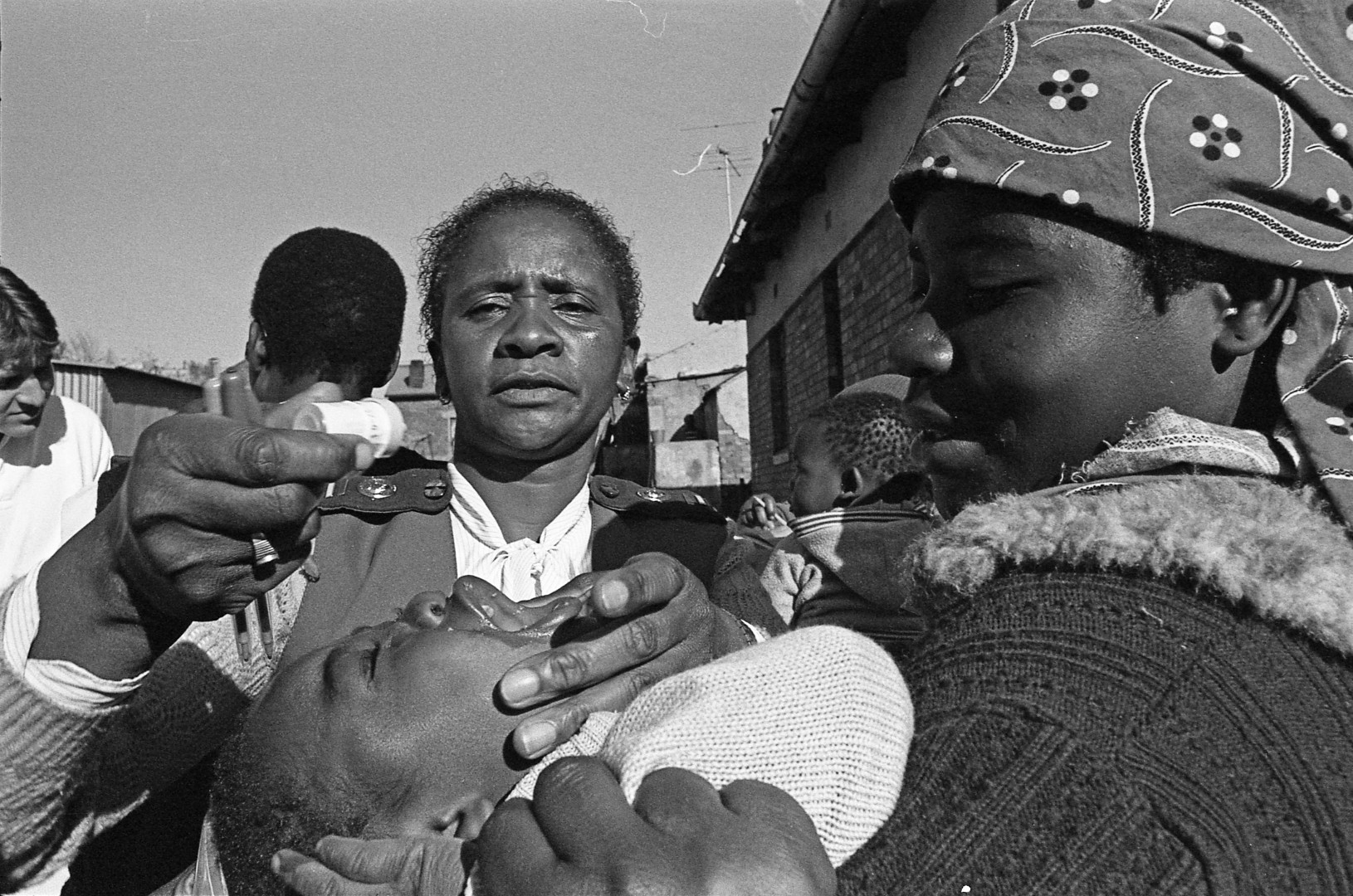
Michael Goldblatt. Administering Polio Vaccine, 1986, silver gelatin print
This image reflects the role the media played in the 1986 immunization campaign, alongside the unusual. Use of the injection. The presence of various cameras and camera crews is notable. Was this a staged event?
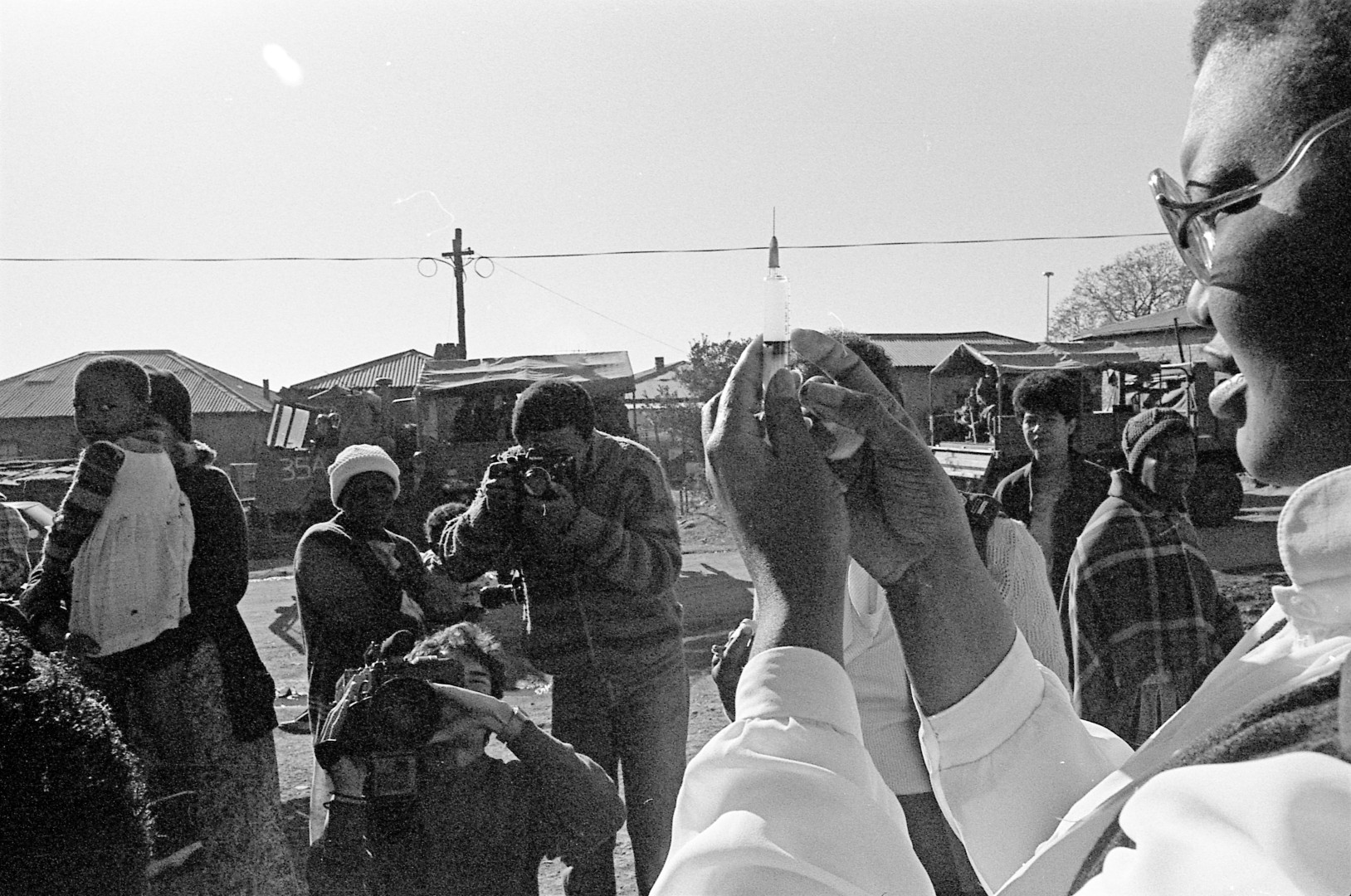
Michael Goldblatt. Media Coverage of Vaccination Campaign, 1986, silver gelatin print