 Museum of Art
Childcare in Alexandra Township
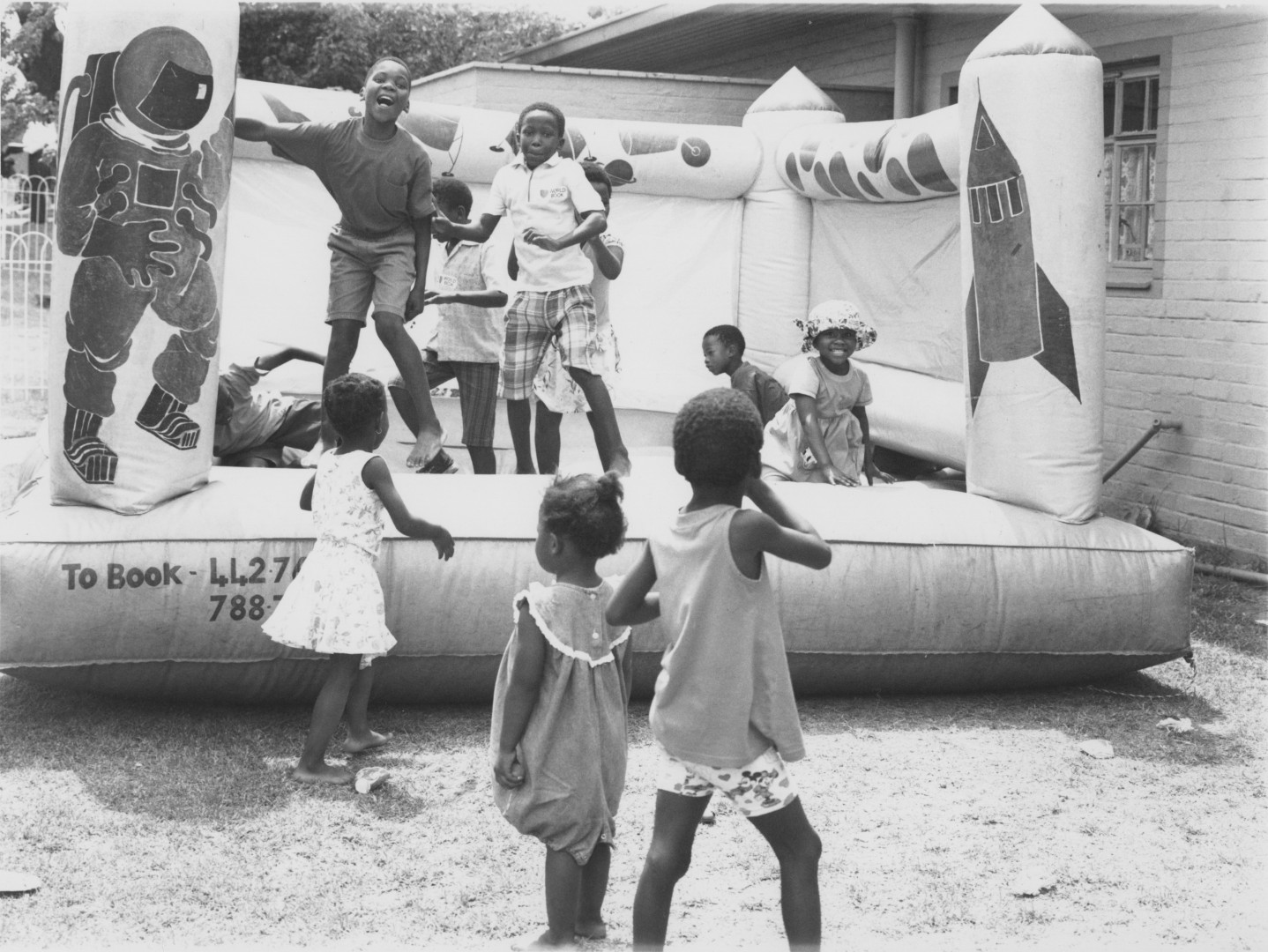
Michael Goldblatt, Children Playing Outside of Clinic, 1980s silver gelatin print
In Alexandra, structured forms of childcare were difficult to find. Initiatives from the Alexandra Health Centre and University Clinic (AHC) attempted to alter the landscape of care for children experiencing poverty, illness, or neglect. AHC interventions in the 1980s and 1990s could not transform the sociopolitical context for childhood under apartheid but they enriched the experiences of children through vaccination, healthcare education, recreation opportunities, improvements to childcare systems, specific care for children with disabilities, and welfare initiatives. In the wake of childhood oppression and violence nationwide—including Bantu Education initiatives and subsequent anti-apartheid school boycotts—the AHC exposed Alex’s children to resources and systems of care that attempted to combat these violent realities and narratives. Receiving care from the AHC may not have itself been a political act, but these interventions did engage with the political and social landscapes of the time.
Avery Cutler ’26
Scroll down to read the additional materials collected by Avery Cutler '26 as part of class work for After Apartheid: History and Identity in Contemporary South Africa, Spring 2026.
Additional Materials
Dr. Tshepo Moloi, son of Alex Clinic nurse and childhood resident of the township. reflects on the Alex Clinic playground as a sight of recreation and play for children in Alex.
The playground was used by different children, especially those who would have accompanied their parents to the clinic. But also children living close to the clinic used the playground. In the mid-1980s, I’d go to the clinic occasionally and rarely used the playground but I’d see children playing there….The playground was open to every child. I remember that the gates at the clinic, especially along 1st Avenue, were not locked. So, anyone could walk in and use the playground. Because there weren’t many playgrounds in Alex, most of the children took advantage of the clinic’s playground. This may also explain why the equipment was damaged….The structure was not cared for. Of course, the worker/s employed to keep the clinic clean would sweep around and pick up papers and plastics lying around, but generally the area was not well maintained. I remember that some of the equipment in the playground were damaged and never repaired.
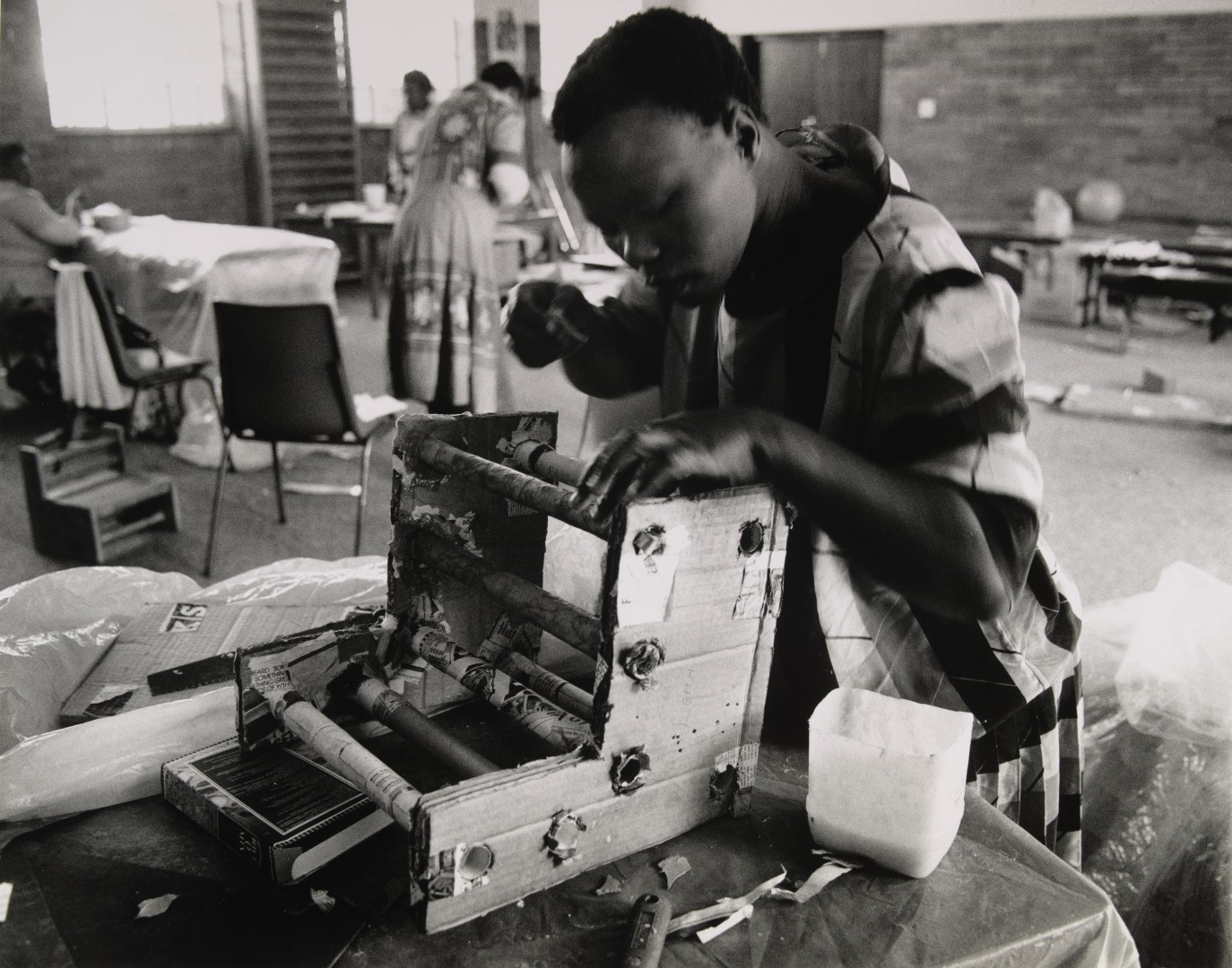
Michael Goldblatt’s photo of a child working at The Nokuthula Centre for Mentally Handicapped Children. Originally established in 1984 by an independent committee, the Center accepted children on a referral basis to house and support them. This Center offered speech and hearing support while aiding children in various recreational activities like cooking, sewing, dancing, and gardening through recreational therapy initiatives. (Goldblatt, Michael. Nokuthula Centre Photograph. Photograph.)
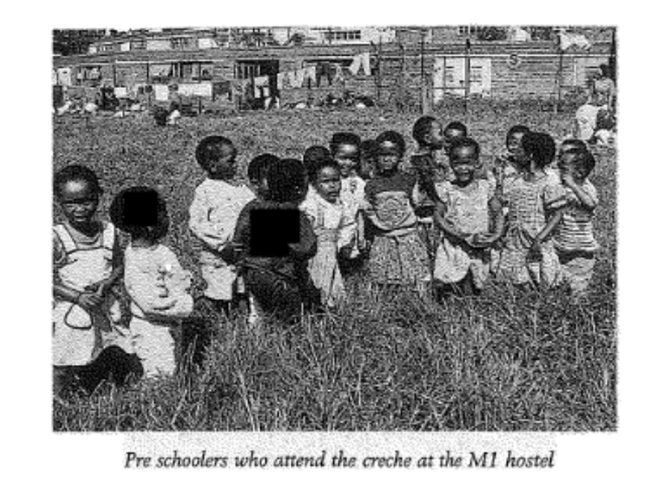
Published in the 1996-1997 Clinic Report, this photograph taken by Michael Goldblatt shows young preschool children who attended the creche at the M1 hostel. This childcare service was highlighted as a part of the Child Health Outreach Program (CHOP) which worked to support childcare and healthcare after birth. (David Robb, 1986-87 Annual Report Alexandra Health Center. 1987.)
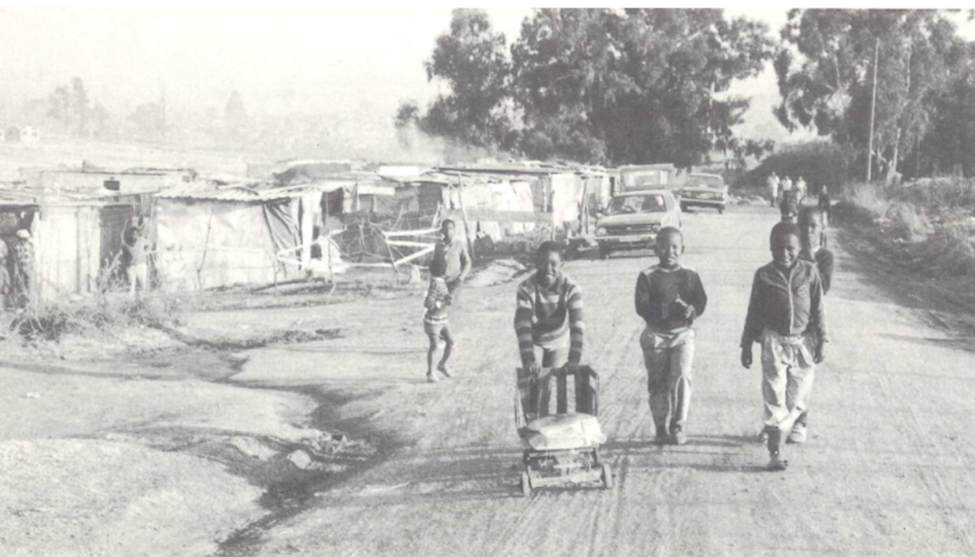
Published in the 1987-1988 Clinic Annual Report, this Goldblatt photograph depicts children walking down a street in Alex. In the report, this photo is not published alongside any specific child-oriented programming but rather helps the reader contextualize Clinic interventions through depictions of child experiences more generally. (David Robb, 1987-1988 Annual Report Alexandra Health Center. 1988.)
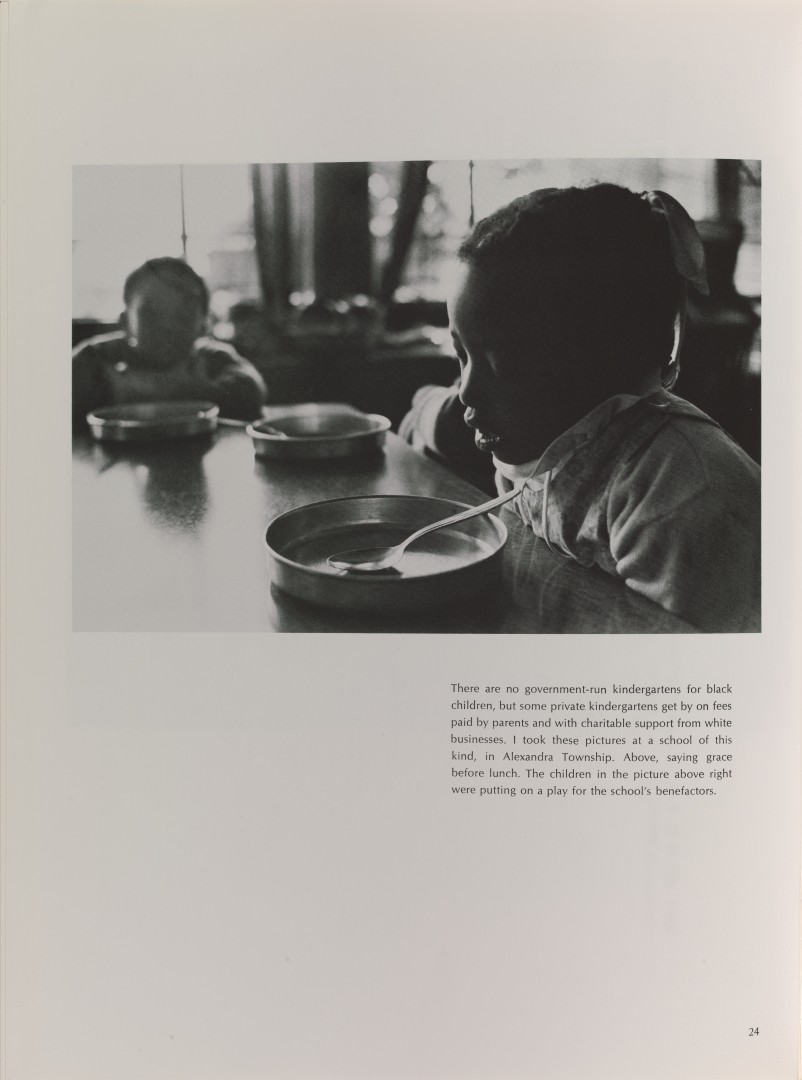
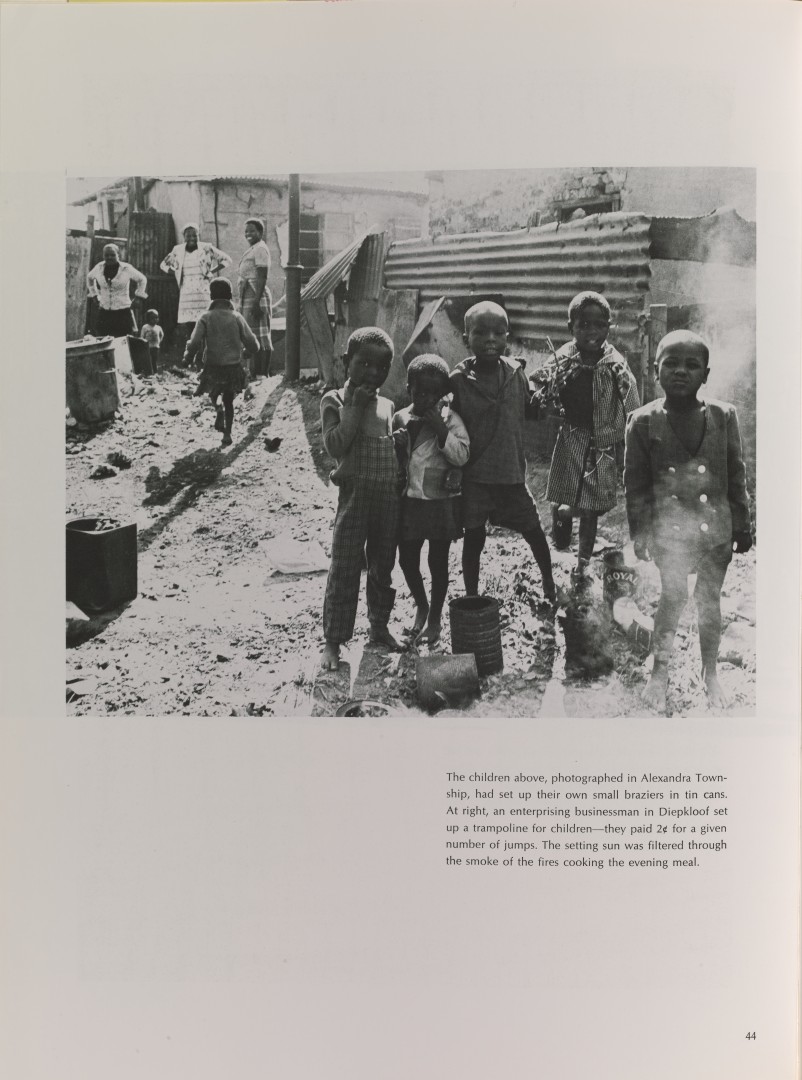
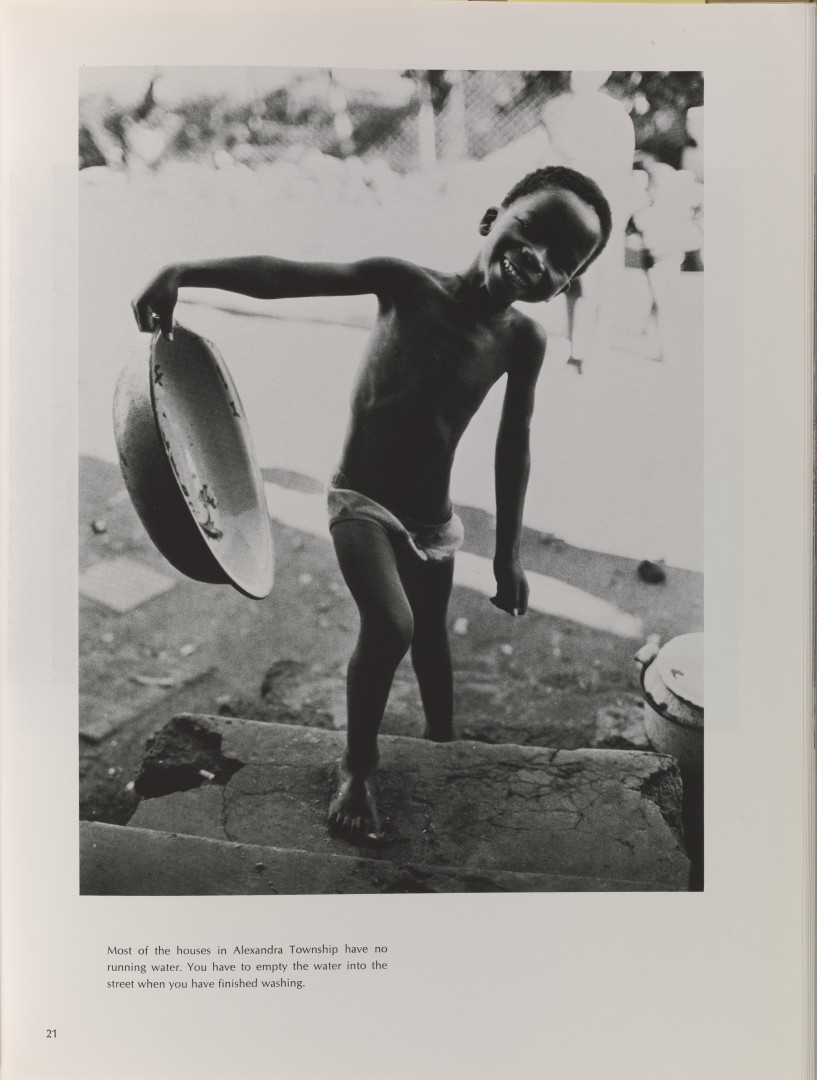
Published in 1982, Peter Magubane’s Black Child provides a visual vocabulary for understanding the experiences of Black children under apartheid. Black Child has photos of childhood across the country, with several focused on the Alex township. Peter Mugabane and Michael Goldblatt worked together. Michael Goldblatt expanded on Peter Mugabane’s portrayal of children’s daily realities om Alex. (Peter Magubane,. Black Child. First. Alfred A. Knopf, 1982.)