Bowdoin Magazine
We publish Bowdoin Magazine three times a year and send it free of charge to all Bowdoin alumni, parents of current and recent undergraduates, members of the senior class, faculty and staff, and members of the Association of Bowdoin Friends.
Inside the Winter 2026 issue
Features
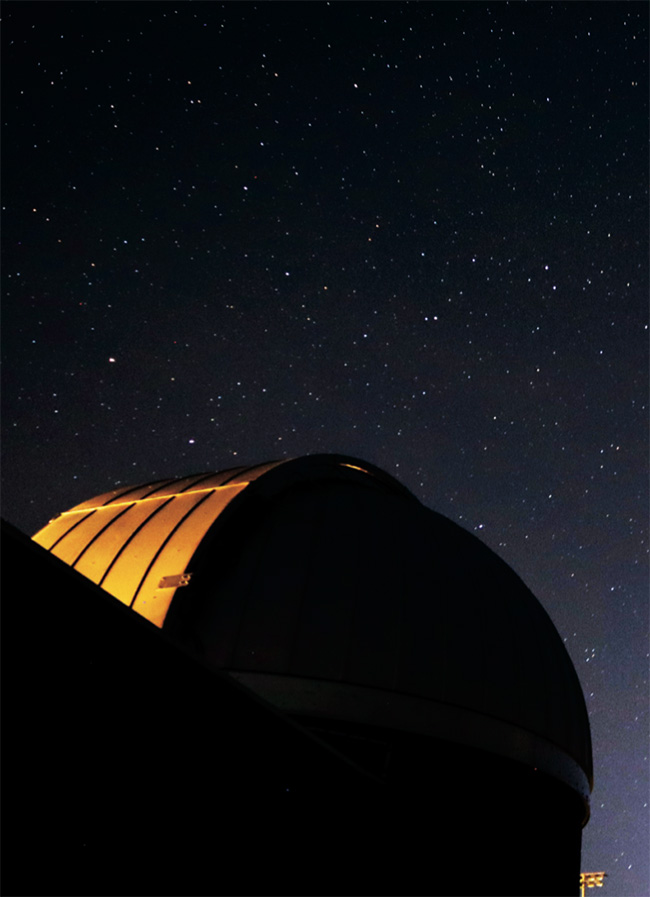
Look to the Sky
From our earliest recorded days, humans have looked up to the heavens. After two years of renovations and a move, the refurbished Ben Hill-Lam ’13 Observatory is ready to play its part in our contemplation and wonder.
Here to Hope
Public health expert Jeffrey Hom ’04 is using every tool he has to save the people and streets of his hometown.
I Found a Theater
Savannah Horton ’17 talks about the conduit of emotion that runs between actors and audiences and how theater serves as a hearth for humanity.
Q&A
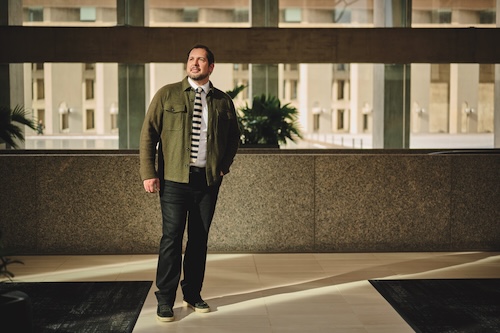
- New Rules: Media and technology expert and author John Wihbey ’98 on AI's power to shape and influence media and communications.
Column

-
The Play's the Thing: Isabella Ardell ’26 on what she learned from four years of intramurals about competition, friendship, and finding joy in imperfection.
Profiles

- Jon Clayborne ’69 returned to a love of performing after twenty-five years in library work.
- Dan Coyne ’98 makes the common good a focus of his work at the United Way.
- Ouda Baxter ’11 on being hands-on as an artist and a teacher.
Forward
- Discipline and Dedication: Elsbeth Paige-Jeffers ’10 has a day job in university administration and a side venture as a world champion masters weightlifter.
Dine
-
Dean for Academic Affairs Jen Scanlon shares a recipe for Irish soda bread from one of her two grandmothers named Rose.